More than 1,000 firefighters have been sent to extinguish new fires that broke out in the radiation-contaminated area around the defunct Chernobyl nuclear plant.
Three new fires broke out on April 16 and were continuing to burn on April 17 but were "not large-scale and not threatening," Ukrainian officials said. Gusty winds fanning the flames have made it harder to put them out.
Volodymyr Demchuk, director of the Emergency Response Department, said in a video statement the “radioactive background” in Kyiv and the Kyiv region “is within normal limits."
Emergency workers aided by rain on April 14 were able to extinguish wildfires burning in the forests near the plant, which has a structure covering its destroyed section.
The earlier fires began on April 3 in the western part of the uninhabited exclusion zone and spread into the forest. They posed no threat to facilities holding radioactive waste, the emergency service said in a statement.
Environmental experts feared that the fires could stir up radioactive ash in the ground, potentially blowing contamination-laden smoke into Kyiv, about 100 kilometers to the north.
How Ukrainian Firefighters Battled Wildfires Around Chernobyl
1/18Wildfires burn in the 30-kilometer Chernobyl exclusion zone on April 10, not far from the defunct nuclear power plant. The acting director of Ukraine's State Ecology Inspection, Yehor Firsov, said on April 14 that firefighters had managed to finally extinguish the blaze.
For 10 days, hundreds of Ukrainian firefighters battled wildfires burning near the defunct Chernobyl nuclear power plant. Environmental experts had warned the wildfires could throw up radioactive ash from the site of one the world's worst nuclear accidents.
Show moreShow less
2/18A fire burns in the exclusion zone around the Chernobyl nuclear power plant outside the village of Rahivka on April 5.
For 10 days, hundreds of Ukrainian firefighters battled wildfires burning near the defunct Chernobyl nuclear power plant. Environmental experts had warned the wildfires could throw up radioactive ash from the site of one the world's worst nuclear accidents.
Show moreShow less
3/18Ukrainian firefighters battle flames near the village of Rahivka on 10 April.The fires began on April 3 in the western part of the uninhabited exclusion zone before spreading to nearby forests.
For 10 days, hundreds of Ukrainian firefighters battled wildfires burning near the defunct Chernobyl nuclear power plant. Environmental experts had warned the wildfires could throw up radioactive ash from the site of one the world's worst nuclear accidents.
Show moreShow less
4/18An aerial view shows a forest fire in the exclusion zone around the Chernobyl nuclear power plant on April 12. Ukraine's National Police said they had detained two people suspected of setting the initial fire.
For 10 days, hundreds of Ukrainian firefighters battled wildfires burning near the defunct Chernobyl nuclear power plant. Environmental experts had warned the wildfires could throw up radioactive ash from the site of one the world's worst nuclear accidents.
Show moreShow less
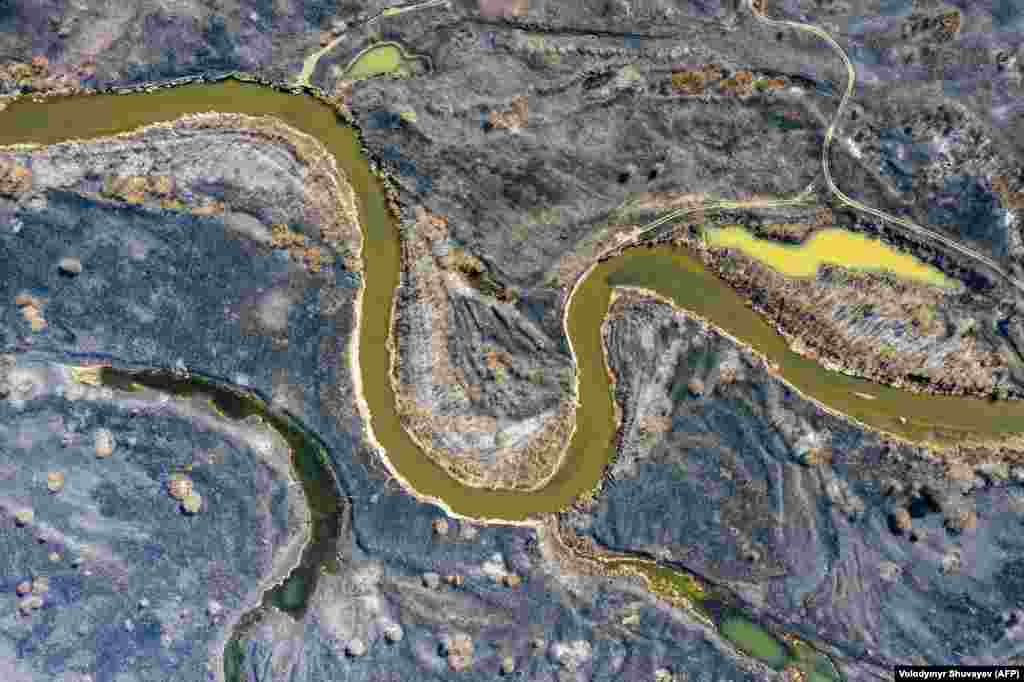
5/18This aerial picture taken on April 12 shows the aftermath of a forest fire not far from the Chernobyl nuclear power plant.
For 10 days, hundreds of Ukrainian firefighters battled wildfires burning near the defunct Chernobyl nuclear power plant. Environmental experts had warned the wildfires could throw up radioactive ash from the site of one the world's worst nuclear accidents.
Show moreShow less
6/18A column of smoke rises from the wildfire near the Chernobyl plant on April 10. Greenpeace Russia warned that fires blazing through the exclusion zone were much larger than authorities in Kyiv were admitting and that they posed a radiation risk.
For 10 days, hundreds of Ukrainian firefighters battled wildfires burning near the defunct Chernobyl nuclear power plant. Environmental experts had warned the wildfires could throw up radioactive ash from the site of one the world's worst nuclear accidents.
Show moreShow less
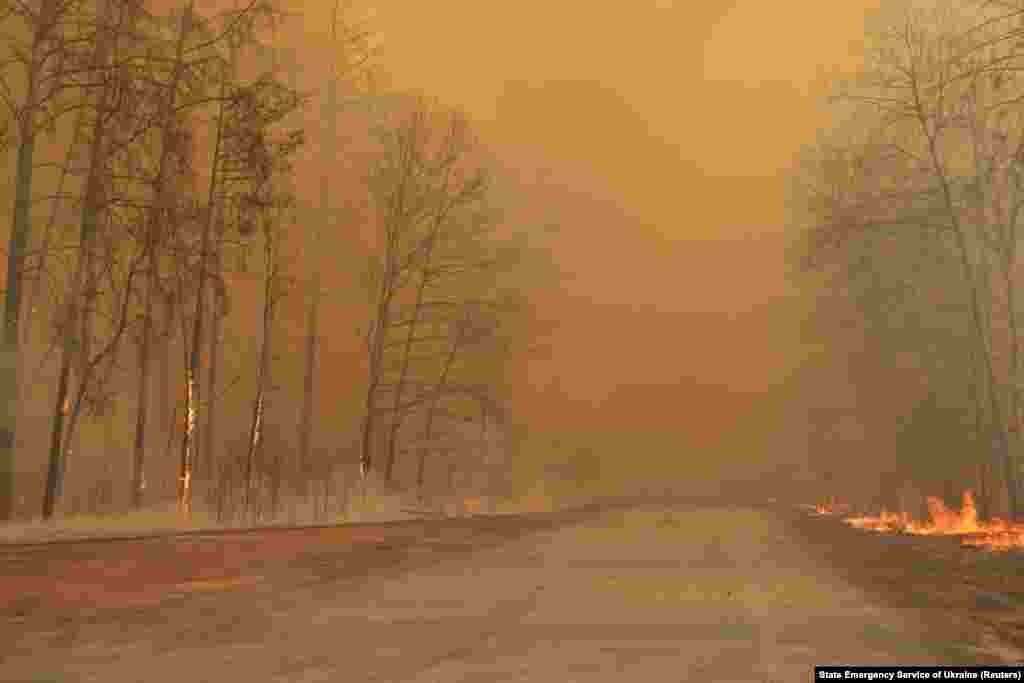
7/18Smoke and flames gave the forest in the exclusion zone an eerie orange glow on April 10. Officials with Ukraine's Emergency Situations Service said that radiation in the region and in the capital, Kyiv, was within "permissible" levels.
For 10 days, hundreds of Ukrainian firefighters battled wildfires burning near the defunct Chernobyl nuclear power plant. Environmental experts had warned the wildfires could throw up radioactive ash from the site of one the world's worst nuclear accidents.
Show moreShow less
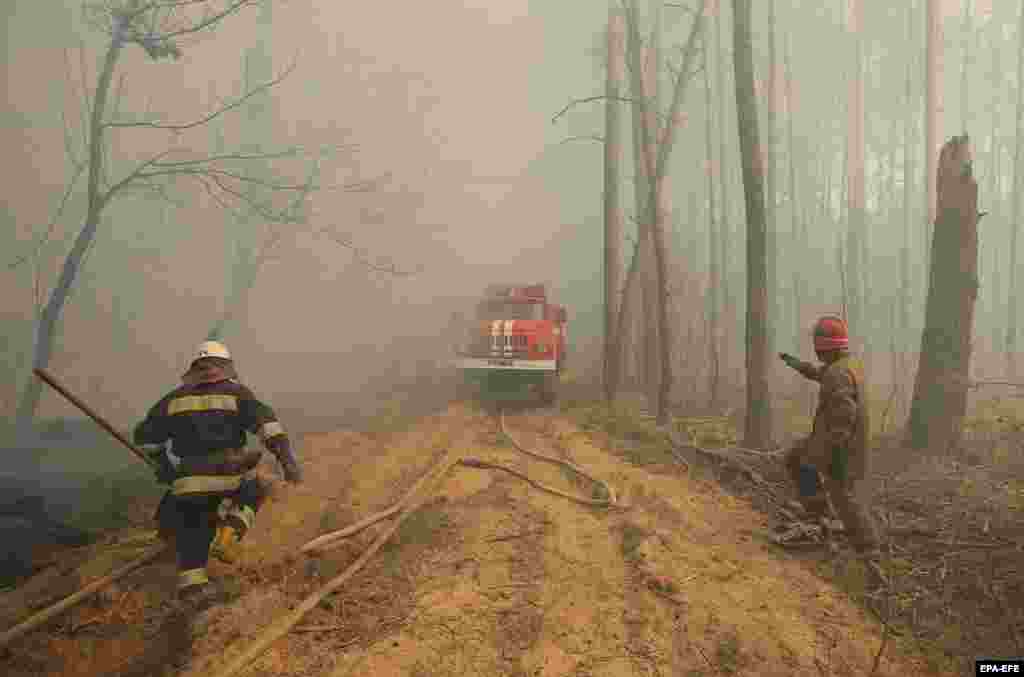
8/18Ukrainian firefighters near the village of Rahivka. More than 400 firefighters were trying to extinguish the flames since April 3.
For 10 days, hundreds of Ukrainian firefighters battled wildfires burning near the defunct Chernobyl nuclear power plant. Environmental experts had warned the wildfires could throw up radioactive ash from the site of one the world's worst nuclear accidents.
For 10 days, hundreds of Ukrainian firefighters battled wildfires burning near the defunct Chernobyl nuclear power plant. Environmental experts had warned the wildfires could throw up radioactive ash from the site of one the world's worst nuclear accidents.
Show moreShow less
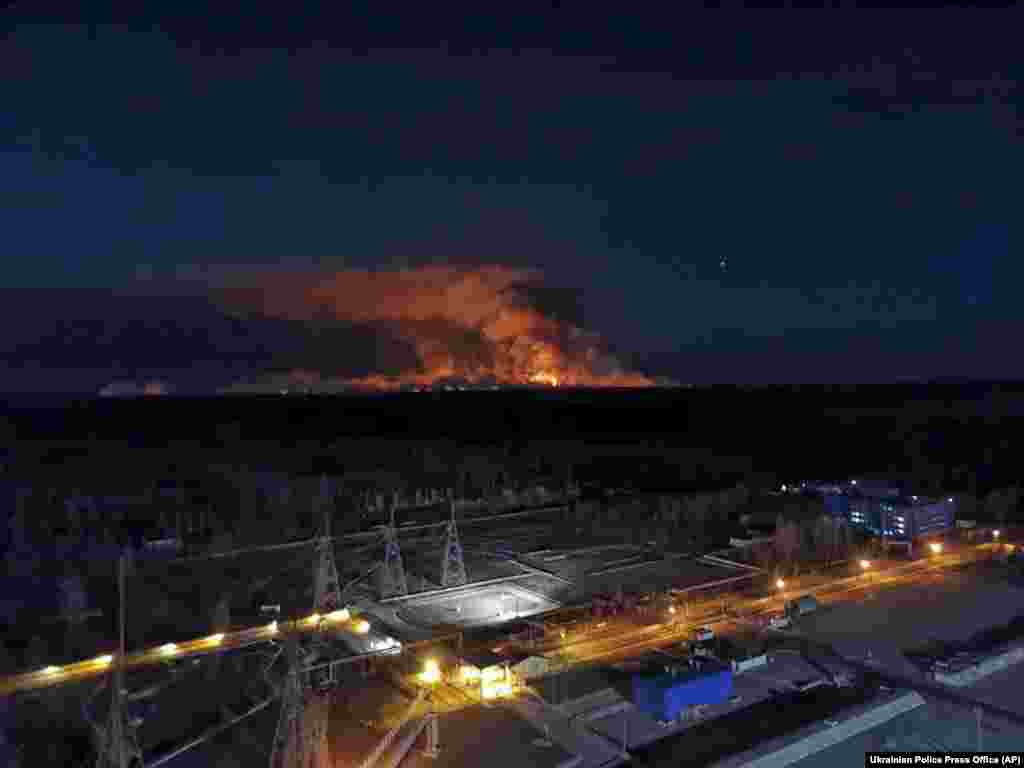
10/18The view from the roof of the Chernobyl nuclear power station on April 10. Greenpeace Russia said one blaze was just a kilometer from the defunct plant.
For 10 days, hundreds of Ukrainian firefighters battled wildfires burning near the defunct Chernobyl nuclear power plant. Environmental experts had warned the wildfires could throw up radioactive ash from the site of one the world's worst nuclear accidents.
Show moreShow less
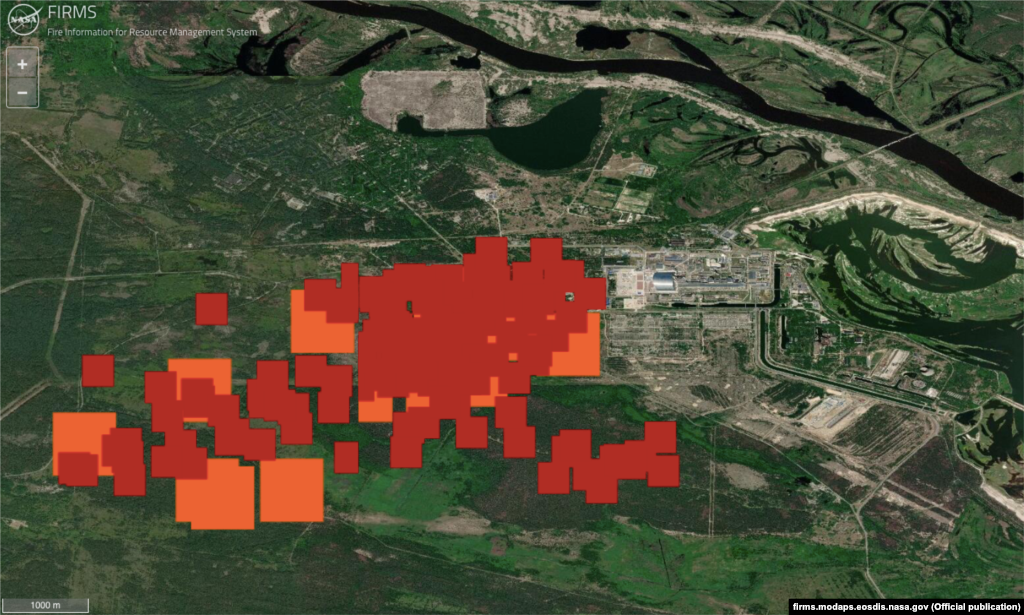
11/18A satellite image from NASA's Fire Information for Resource Management System (FIRMS) shows the area of fire nearby Chernobyl. The Chernobyl power plant sarcophagus is seen as a silver rectangular object on the left of the map. Red and orange squares indicate the location of fires on April 13.
For 10 days, hundreds of Ukrainian firefighters battled wildfires burning near the defunct Chernobyl nuclear power plant. Environmental experts had warned the wildfires could throw up radioactive ash from the site of one the world's worst nuclear accidents.
Show moreShow less
12/18A Geiger counter showed an increase in radiation levels near the village of Volodymyrivka in the exclusion zone around Chernobyl on April 5.
For 10 days, hundreds of Ukrainian firefighters battled wildfires burning near the defunct Chernobyl nuclear power plant. Environmental experts had warned the wildfires could throw up radioactive ash from the site of one the world's worst nuclear accidents.
Show moreShow less
13/18Nearly 100 firefighting vehicles were being used to battle the wildfires.
For 10 days, hundreds of Ukrainian firefighters battled wildfires burning near the defunct Chernobyl nuclear power plant. Environmental experts had warned the wildfires could throw up radioactive ash from the site of one the world's worst nuclear accidents.
Show moreShow less
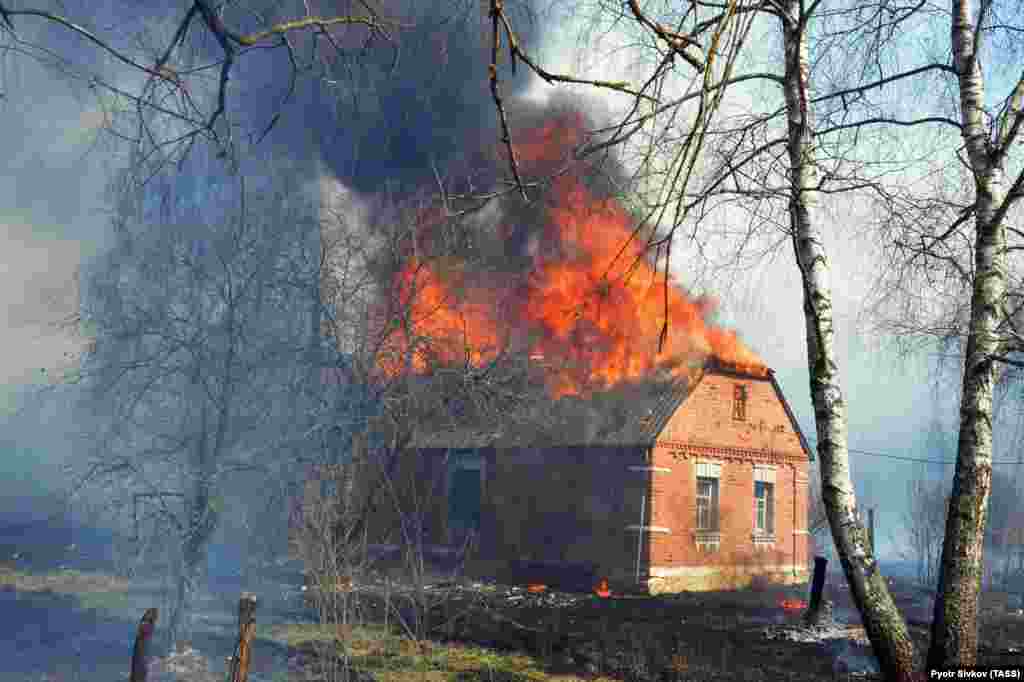
14/18A house burns in the village of Stara Markivka, Poliske district, that was inhabited by squatters, in the exclusion zone on April 9. Many abandoned villages burnt down in the area.
For 10 days, hundreds of Ukrainian firefighters battled wildfires burning near the defunct Chernobyl nuclear power plant. Environmental experts had warned the wildfires could throw up radioactive ash from the site of one the world's worst nuclear accidents.
Show moreShow less
15/18Three planes and three helicopters were used to drop water on the wildfires. According to the Emergency Situations Service, more than 530 tons of water were dropped on the fires as of April 13.
For 10 days, hundreds of Ukrainian firefighters battled wildfires burning near the defunct Chernobyl nuclear power plant. Environmental experts had warned the wildfires could throw up radioactive ash from the site of one the world's worst nuclear accidents.
Show moreShow less
16/18Heavy machinery plowed more than 100 kilometers of land in order to stop the spread of fire.
For 10 days, hundreds of Ukrainian firefighters battled wildfires burning near the defunct Chernobyl nuclear power plant. Environmental experts had warned the wildfires could throw up radioactive ash from the site of one the world's worst nuclear accidents.
Show moreShow less
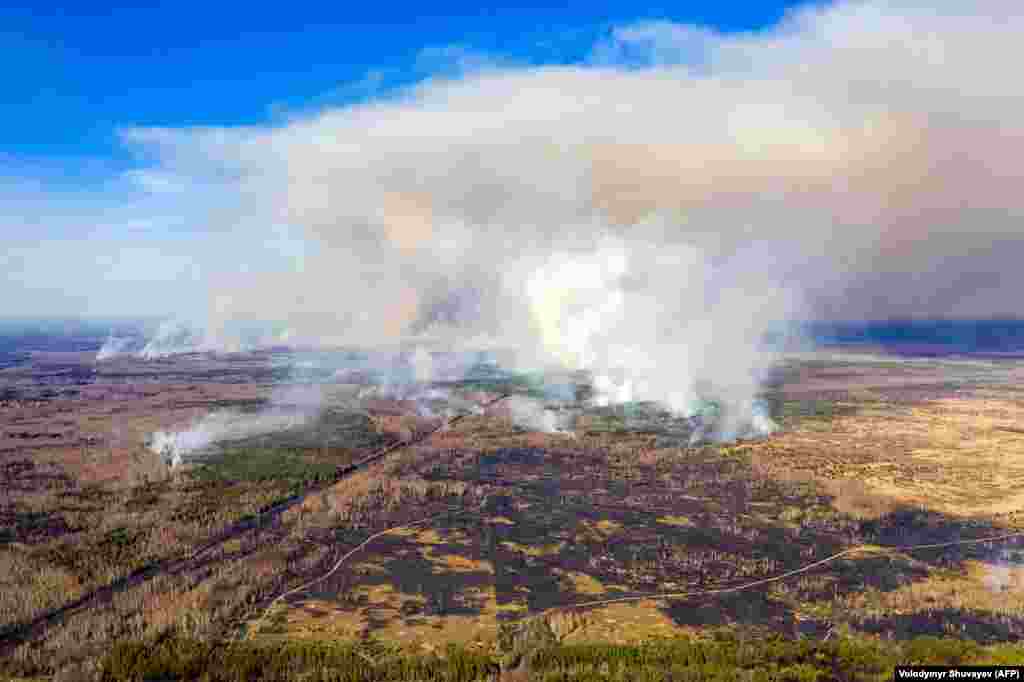
17/18This aerial picture taken on April 12 shows a forest fire burning in the 30-kilometer Chernobyl exclusion zone.
For 10 days, hundreds of Ukrainian firefighters battled wildfires burning near the defunct Chernobyl nuclear power plant. Environmental experts had warned the wildfires could throw up radioactive ash from the site of one the world's worst nuclear accidents.
Show moreShow less
18/18Burned trees were left by the forest fire outside the settlement of Poliske on April 12. A senior official from the emergency service, Volodymyr Demchuk, said that the fire did not pose a threat to the nuclear power plant.
For 10 days, hundreds of Ukrainian firefighters battled wildfires burning near the defunct Chernobyl nuclear power plant. Environmental experts had warned the wildfires could throw up radioactive ash from the site of one the world's worst nuclear accidents.
Show moreShow less
Previous slide
Next slide
But two senior Ukrainian officials on April 17 denied that smoke from forest fires in the radiation-contaminated Chernobyl exclusion zone was blowing into Kyiv, contradicting an earlier statement by the city government.
The head of Ukraine's State Emergency Service, Mykola Chechotkin, told President Volodymyr Zelenskiy on April 17 that "this smell of smoke in Kyiv is in no way related to the fires in the Chernobyl zone."
Interior Minister Arsen Avakov echoed Chechotkin's assessment, saying smoke in Kyiv was not from the vicinity of the devastated Chernobyl nuclear power plant.
Avakov said that 90 percent of the smoke in Kyiv was from the Zhytomyr region, near the Chernobyl zone.
Emergency workers used planes and helicopters to help put out the fires earlier this week, but heavy winds prevented them from doing so on April 16, Deputy Interior Minister Anton Herashchenko was quoted by the Interfax news agency as saying.
The reactor meltdown and explosion at the Chernobyl plant in 1986 sent clouds of nuclear material across much of Europe. It is considered the worst nuclear disaster in history.
With reporting by RFE/RL's Ukrainian Service, AP, AFP, Reuters, TASS, and Interfax
RFE/RL journalists report the news in 24 languages in 18 countries where a free press is banned by the government or not fully established. We provide what many people cannot get locally: uncensored news, responsible discussion, and open debate.