

Here's an update on Akhtem Chiygoz from the Crimean Desk of RFE/RL's Ukrainian Service:
Crimean Tatar Leader Vows To Return To Russian-Held Homeland

Crimean Tatar leader Ilmi Umerov, who was released from custody in his Russian-occupied homeland this week along with colleague Akhtem Chiygoz, has vowed to "try to return" to the Black Sea peninsula.
Umerov and Chiygoz -- deputy chairmen of the Mejlis, the Crimean Tatar self-governing body that has been outlawed by Russian authorities -- were unexpectedly released from Russian custody and flown to Turkey on October 25.
Speaking to journalists at the Ukrainian Embassy in Ankara on October 26, Umerov said he and Chiygoz have no information about the conditions of their release and do not know whether Russian authorities would permit them to return to Crimea.
"I have given no promises or assurances to anyone that I will not try," said Umerov, who was expected to fly to Kyiv with Chiygoz on October 27. "After some period of time I will certainly try to return to Crimea."
Russia seized control of Crimea from Ukraine in Mach 2014, sending in troops with unmarked uniforms and staging a referendum denounced as illegitimate by 100 countries including the United States and Ukraine.
Rights groups say Russia has conducted a campaign of pressure and abuse against the Muslim Crimean Tatar minority and others who opposed the takeover.
'Cruel Repressions'
At the same appearance at the embassy in Ankara, Chiygoz said that he and Umerov did not know that they were headed for Turkey -- and freedom -- when they were on the plane.
"We were completely unaware what was going on. They took me from the detention center, Ilmi was taken from a hospital," said Chiygoz, suggesting they feared they were being sent to prison or some other fate in Russia.
"Known that the cruel repressions toward our people in Crimea are of a large scale, the only thing we could imagine then was an even worse development of events for us," he said.
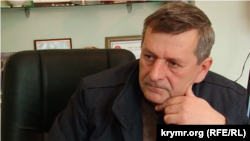
Chiygoz was convicted of organizing an illegal demonstration and sentenced to eight years in prison on September 11 after what Amnesty International called a "sham trial."
Umerov was convicted of separatism on September 27 and sentenced to two years in a colony settlement, a penitentiary in which convicts usually live near a factory or farm where they are forced to work.
Umerov, who suffers from diabetes and Parkinson's disease, was confined to a psychiatric hospital in August 2016, a decision condemned by Human Rights Watch as "an egregious violation of his rights."
Rights groups and Western governments have condemned their convictions and calling them part of a pattern of oppression imposed by Russia since it seized Crimea.
In March, the European Parliament called on Russia to free more than 30 Ukrainian citizens it said were in prison or other conditions of restricted freedom in Russia, Crimea, and parts of eastern Ukraine that are controlled by Russia-backed separatists.
Most of them remain in custody. In a statement welcoming the release of Umerov and Chiygoz on October 25, the European Union demanded the immediate release of "all illegally detained Ukrainian citizens on the Crimean Peninsula and in Russia."
"The European Union expects Russia to reverse the decision to ban the activities of Mejlis, the self-governing body of the Crimean Tatars, and respect the rights of the Crimean Tatars, including those of freedom of assembly and expression," it said.