

Good morning. We'll start the live blog today with this item posted overnight by RFE/RL's Washington bureau:
UN Approves Measure Condemning Rights Violations In Russian-Annexed Crimea
The UN General Assembly has approved a resolution strongly condemning human rights violations in Russian-annexed Crimea and referring to Russia as an "occupying power" there.
The resolution,put forward by Ukraine and 30 other countries, was approved by 70 states. Twenty-six, including Russia, Belarus, Kazakhstan, and China, voted against. Seventy-six countries abstained from voting.
Ukraine's Permanent Mission to the United Nations said that the resolution confirms there is an armed conflict between Ukraine and Russia and condemns the retroactive application of Russian laws to the territory, which Russia illegally annexed in 2014.
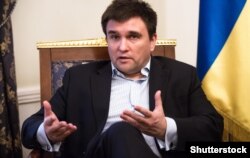
Ukrainian Foreign Minister Pavlo Klimkin said the resolution was the "toughest one" yet to pass the UN, which adopted its first resolution condemning human rights abuses in Crimea with a similar vote a year ago.
"The pressure on Russia is being increased," Klimkin said on Twitter.
Ukrainian diplomats at the UN said Russia, which claims that Crimeans voted to join Russia in a March 2014 referendum that has not been internationally recognized, put "enormous pressure" on UN member states to reject the resolution or abstain from voting.
Ukrainian's UN mission said the resolution condemns the compulsory naturalization of Ukrainian citizens under the Russian occupation and calls for the immediate release of unlawfully detained Ukrainians.
The measure calls for an immediate end to all rights violations, including "arbitrary detentions, torture and other cruel, inhuman or degrading treatment," and demands that Russia fulfill the interim decision of the International Court of Justice on the restoration of rights and freedoms for Ukrainian citizens on the peninsula.
It urges Russia to revoke its decision declaring the Mejlis, the Crimean Tatar people's assembly, an extremist organization and banning its activities. It also called on Moscow to reverse other limitations imposed on Crimean Tatars.
The resolution also appeals to Russia to maintain the teaching of the Ukrainian and Crimean Tatar languages in the territory.
The measure condemns Russia for failing to provide access to Crimea for the UN Human Rights Monitoring Mission while it commends Ukraine for providing unhindered access to Crimea for journalists and human rights activists, and for supporting media and non-governmental organizations that were forced out of Crimea after Russia's takeover.
Ukrainian President Petro Poroshenko thanked those who co-authored and voted for the resolution, calling them the "real friends of Ukrainian Crimea" in a Twitter post.
With reporting by Unian and Kyiv Post
This ends our live blogging for December 19. Be sure to check back tomorrow for our continuing coverage.
U.S. envoy says 2017 deadliest year in Ukraine conflict, warns of spiking violence:
By RFE/RL
The U.S. special envoy for the Ukraine conflict has said 2017 was the deadliest year in the region since the outbreak of violence three years ago, and warned that hostilities are again ratcheting up.
Kurt Volker's comments on December 19 came as international monitors reported intense shelling overnight near the town of Novoluhanske, part of the eastern Ukrainian region known as the Donbas.
UN officials reported eight civilians injured and dozens of homes damaged, with winter temperatures complicating matters.
"A lot of people think that this has somehow turned into a sleepy, frozen conflict and it's stable and now we have...a cease-fire. It's a problem but it's not a crisis," Volker said in a speech at the Atlantic Council, a Washington think tank.
"That's completely wrong. It is a crisis. This has been the most violent year, 2017, and frankly last night was one of the most violent nights, certainly since February, and possibly this year," he said.
Volker later posted several message to Twitter, suggesting that just before the "massive escalation" in cease-fire violations, Russia had withdrawn its officers from a coordinating body run jointly with Ukraine that is helping to implement the cease-fire.
He also warned that Russia-backed forces were close to seizing a water-treatment plant in the city of Donetsk, and he called for the withdrawal of heavy weapons from the area.
The chief monitor for a mission led by the Organization for Security and Cooperation in Europe said a sharp deterioration in the security situation had seen cease-fire violations reaching levels not recorded since February.
More than 10,300 people have been killed, and more than 1 million displaced, since the conflict erupted in April 2014, pitting Russia-backed separatist fighters against government forces.
Volker was appointed earlier this year to try and push forward an agreement reached between Ukraine and Russia, along with France and Germany in February 2015 in the capital of Belarus, Minsk, to end the conflict. But the agreement has gone unfulfilled.
The United States and European Union have pushed Moscow to allow a United Nations peacekeeping force to be deployed in eastern Ukraine, but there are disputes over where the force would be located, and whether it would be allowed to patrol Ukraine's border with Russia.
Volker indicated that no progress had been made in negotiations with Moscow.