



New Footage Shows Final Hours Of Slain Ukrainian Lawyer
By Christopher Miller
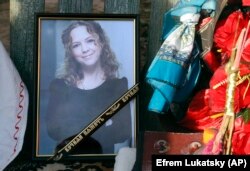
KYIV -- Iryna Nozdrovska's trip home on December 29 should have been routine: a short walk from her Kyiv office to a subway station, then a 31-minute ride north before taking a bus to the village of Demydiv, where it stops 150 meters from her home.
But the crusading human rights lawyer never made it.
Her body was found on New Year's Day floating in the shallow Kozka River just a kilometer down the road. She had been stabbed multiple times in what police described as a “violent death” and “revenge killing.”
On January 17, the Interior Ministry and police released security-camera footage showing the last images and movements of Nozdrovska, who was 38.
The video, published on the personal Facebook page of Interior Ministry spokesman Artem Shevchenko, shows Nozdrovska walking in a heavily policed government district at about 3:40 p.m., before arriving at the Khreshchatyk metro station two minutes later. Nozdrovska, wearing a brown winter coat, does not appear to be in distress in the footage.
At 4:11 p.m., in what is the last known image of Nozdrovska, she is captured by a surveillance camera exiting the Heroiv Dnipra metro station, where she would normally catch a bus. While the news site Ukrayinska Pravda reported that a witness saw Nozdrovska waiting in line for the bus, it is unclear whether she made it on.
The last contact Nozdrovska made with anyone came in a phone call to her mother around 5 p.m., according to local media reports.
While the video footage may not reflect a break in the case, it is an important piece of evidence in terms of the timeline of the killing, and it shows the public that “the police are doing their job,” Shevchenko told RFE/RL by phone.
Ukraine just banned a decades-old historical bestseller about the Red Army's heroic defense of Stalingrad. Author Antony Beevor is flabbergasted.

Historian Beevor Bemused At Ukraine Ban On Best-Selling 'Stalingrad'
British historian and best-selling author Antony Beevor says he is dumbfounded at Ukrainian authorities' decision to ban the import of a Russian translation of his award-winning account of a major tipping point in World War II.
"I must say, this sounds absolutely astonishing," he told RFE/RL on January 17 in response to Ukraine's refusal to allow the import of 30,000 copies of his book Stalingrad. "There's certainly nothing inherently anti-Ukrainian in the book at all."
The State Committee for State TV and Radio Broadcasting announced the ban on a Russian translation of Stalingrad along with 24 other books, mostly by Russian authors, including crime novelist Boris Akunin, historian Boris Sokolov, and ultraconservative Russian Orthodox priest Vsevolod Chaplin.
Read the entire article here
Hmm