

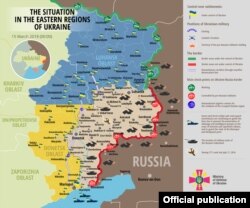
Here is today's map of the latest situation in the Donbas conflict zone, according to the Ukrainian Defense Ministry. (CLICK IMAGE TO ENLARGE)
A tweet from Ukraine's deputy prime minister of Ukraine for European and Euro-Atlantic integration
Now that she's been making headlines again, it's probably a good time to re-up RFE/RL correspondent Christopher Miller's profile of Nadia Savchenko, which he wrote shortly after she had been released from Russian captivity in 2016.
The Many Faces Of Nadia Savchenko
Now Home Free, Is Ukraine's Hero Up For Another Fight?
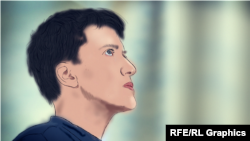
Nadia Savchenko had been in the air for nearly an hour when the pilot radioed to the cabin that they had reached Ukrainian airspace. She took a deep breath and then joined the others on board in celebrating her freedom with a shot of vodka. After almost two years of sobriety, the alcohol gave her a rush. She thirsted for more, but was told not to drink too much before facing journalists and delivering a statement with Ukrainian President Petro Poroshenko. Savchenko, however, wasn't listening.
"I picked up the bottle and took as much as I wanted," she told me during an interview in Kyiv. Then she slammed down the bottle and went to smoke, taking long, deep drags on a cigarette in a small corridor at the back of the president's plane. Nobody, it seemed, wanted to be the one to stop her.
The plane soon touched down at Kyiv's Boryspil International Airport. As she was reunited with her family, Savchenko, a Ukrainian military helicopter navigator who spent nearly two years in Russian captivity, donned a white T-shirt adorned with the Ukrainian trident. Elated supporters lined up to greet her with bouquets of flowers. One of them was Yulia Tymoshenko, once a political prisoner herself, a former prime minister who famously adopted a peasant's braid to appeal to voters and now the leader of the Fatherland party on whose list Savchenko was elected to parliament. Savchenko turned away the bouquet from Tymoshenko and dodged her attempt to go in for a hug. "We aren't well enough acquainted," Savchenko told her.
Savchenko didn't want to be a part of anyone's photo op. She removed her shoes and started to walk barefoot along the runway. A mob of reporters took notice, as did the thousands watching a live stream of the event. Her bare feet and erratic behavior led many to comment on social media that she might have lost her mind in prison. Her first words were a warning for reporters: "Back up…. I'm not used to so many people being around." For Savchenko, though, there was nothing strange about removing her shoes. It was something that she had done before. "I love the feeling of the concrete under my feet, the smell of spilled jet fuel," she said.
After 708 days behind bars, many Ukrainians' hopes and prayers had been answered. Savchenko, a woman who became a symbol of Ukrainian resilience in the face of Russian aggression and whose first name means "hope" in Ukrainian, had finally come home.
Like many homecomings, Savchenko's has been bittersweet. Now under the public microscope as a parliamentary deputy, a neophyte in Ukraine's notoriously rough-and-tumble political life, Savchenko will inevitably struggle to maintain the sky-high popularity she enjoyed while a martyr in prison. And while the mostly hagiographical accounts in Ukrainian media have led the public to dub her Ukraine's Joan of Arc, after the French heroine who was burned at the stake, the reality of Savchenko is much more complex: a firebrand fraught with flaws and contradictions, uncompromising, troubled, and hard to pin down.
Read more here