


Pink Floyd's Roger Waters Backs Russian Takeover Of Crimea, Causing Backlash
The co-founder of the rock band Pink Floyd, Roger Waters, has expressed support for Russia's 2014 annexation of Ukraine's Crimea Peninsula, causing a backlash in Ukraine.
The Ukrainian nongovernmental organization Myrotvorets (Peacemaker), which aims to inform local law enforcers about foreign citizens who allegedly commit crimes against Ukraine, put Waters on its unofficial blacklist late on August 27.
The group is accusing Rogers of engaging in anti-Ukrainian propaganda, violating Ukraine's territorial integrity, and attempting to justify the illegal annexation of Crimea.
Ukrainian authorities have not responded to the British rock musician's statements.
In an interview published by the Russian daily newspaper Izvestia, Waters defended the annexation, saying that "many agreements and other papers" exist that prove Russia's claims for Sevastopol, a major military port in Crimea.
He went on to say that Moscow's actions were "provoked" by the ouster of Ukraine's pro-Russian President Viktor Yanukovych by street protests in 2014, which he claimed were orchestrated by Washington.
Waters' statements echo the Kremlin's rhetoric justifying the takeover of Crimea, and have enraged many people in Ukraine.
Since Russia seized Crimea, a number of international entertainment personalities have ended up on Peacemaker's blacklist. In some cases, Ukrainian authorities also take action, banning entertainers who have publicly supported the annexation from entering the country.
Those targeted with bans include French actor Gerard Depardieu and Serbian filmmaker and musician Emir Kusturica.
Waters performed in St. Petersburg on August 29 and is scheduled to do so in Moscow on August 31. His band has already performed in Moscow twice, in 2006 and 2011.
Based on reporting by Billboard Magazine and Interfax
Fighting Picks Up In Eastern Ukraine, Despite Calls For School-Year Truce
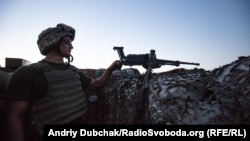
Fighting in eastern Ukraine has flared up, despite renewed calls for peace at the start of the school year, the Organization for Security and Cooperation in Europe said on August 29.
There have been "more than 70 cease-fire violations" in the fighting between the Ukrainian military and Russia-backed separatists since the purported truce began, said the organization, which deploys unarmed monitors in the conflict zone in eastern Ukraine.
The "sides need to honor their recommitment" for peace, the OSCE said. "Firing has to stop now, to protect Ukrainians on both sides of the contact line."
Last week, the Ukrainian military said that at least four of its soldiers had been killed as fighting escalated, despite renewed commitments to a school-year truce.
The day before that announcement, the OSCE had said this was the "calmest summer since the beginning of the conflict" in 2014, with no civilian fatalities recorded up to that point.
The conflict erupted after Ukraine ousted its pro-Russian president in a pivot to the West in 2014. More than 10,300 people have been killed, according to estimates by the United Nations.
Russian President Vladimir Putin, who has backed the separatists in peace talks, indicated support this month for a potential UN peacekeeping mission in the conflict area.
German Chancellor Angela Merkel, who has led the repeated extension of European Union sanctions on Russia in an effort to pressure the Kremlin into ending the conflict, has also expressed support for a peacekeeping mission.
Ukraine has also proposed introducing UN peacekeepers, but its proposal is far broader than Russia's and periodic talks on ending the conflict have not narrowed the differences.
Based on reporting by dpa and Interfax
That concludes our live-blogging of the Ukraine crisis for Wednesday, August 29, 2018. Check back here tomorrow morning for more of our continuing coverage.