



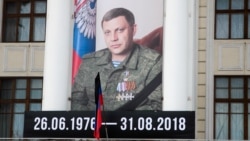
OSCE Envoy Warns Ukraine Over Treason Accusations Against Journalists
By RFE/RL
The Organization for Security and Cooperation in Europe (OSCE)'s media freedom representative has expressed concern over an Internet post in which a Ukrainian official suggested that several journalists and other public figures were traitors.
“The publishing of a list, including names of journalists, accusing them of being traitors is unacceptable and dangerous," an OSCE statement on June 5 quoted media freedom envoy Harlem Desir as saying in a letter to the Ukrainian authorities.
This can have serious repercussions for the safety of journalists,” Desir wrote. "I strongly encourage the authorities to intervene and suspend such practices, especially those undertaken by government officials, given the sensitive and difficult environment in Ukraine at the moment.”
The rebuke referred to a Facebook post in which Larysa Sarhan, a spokeswoman for Prosecutor-General Yuriy Lutsenko, listed about 25 people whose remarks -- in some cases criticism of the state regarding journalists’ safety and alleged impunity for crimes against the media -- she asserted were treasonous.
Sarhan's post and the OSCE representative's criticism came amid controversy over the faked killing of Russian journalist Arkady Babchenko in Kyiv on May 29.
The list Sarhan posted included journalist Miroslava Gongadze, National Union of Journalists Chairman Serhiy Tomilenko, and former Odesa region Governor Mikheil Saakashvili, who is a vocal foe of President Petro Poroshenko's government.
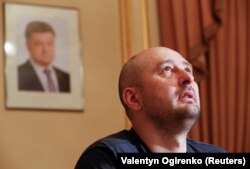
In Ukraine, Prominent Journalists Targeted By 'Russian Hit List' Question Its Authenticity
By Christopher Miller
KYIV -- The leak of an alleged “Russian hit list” has stirred anxieties and raised more questions about the bizarre Ukrainian staging of journalist Arkady Babchenko’s death after journalists on the list said they doubt its authenticity.
Ukraine is still reeling nearly a week after authorities here faked the contract-style killing of Babchenko, a Russian dissident journalist, as part of a controversial and elaborate ruse they claim was necessary to foil a real Russian assassination plot.
Instead of details in the bizarre case becoming clearer, they have grown murkier by the day, with authorities fingering the director of a Ukrainian arms manufacturer that provides sights to snipers of its armed forces as the organizer who hired a right-wing, anti-Russian, former monk-turned-volunteer soldier to be the shooter.
Both have claimed to have been in league with Ukraine’s intelligence services, something Ukrainian officials first denied, then partly corrected, saying the would-be shooter, Oleksiy Tsimbalyuk, had indeed been working with them. The manufacturer, Borys Herman, was remanded in custody by a Kyiv court on May 31.
The whole affair took a strange new turn on June 4 when a purported “hit list” of 47 people -- mainly journalists and political activists -- that the Security Service of Ukraine (SBU) claims to have discovered during the Babchenko operation was leaked to Strana.ua, an opposition news site, and published online.
SBU spokesperson Olena Hitlianska told Interfax-Ukraine on June 5 that she was not familiar with the Strana.ua list and could not comment on its authenticity.
“The list is a secret of the investigation,” she said.
READ THE FULL STORY HERE.
Washington Highlights Importance Of Ukraine Anticorruption Court
By RFE/RL
The United States has highlighted the importance of establishing an independent anticorruption court in Ukraine as it called on Kyiv to implement comprehensive reforms and put an end to systematic corruption in the country.
In a statement issued on June 5, the U.S. State Department said, “The establishment of a genuinely independent anticorruption court is the most important, immediate step the government can take to meet those demands and roll back corruption that continues to threaten Ukraine’s national security, prosperity, and democratic development.”
The statement points out that the United States fully supports the International Monetary Fund (IMF), which will determine whether a new law establishing the court is consistent with Ukraine’s commitments under its IMF program.
“We agree with the IMF that any legislation establishing an anticorruption court must include a central role for a council of international experts to ensure the selection of qualified judges,” the statement says.
The bill to create an anticorruption court was approved by Ukraine’s parliament in its first reading on March 1, and President Petro Poroshenko said it should win final approval before spring ends.
The legislation has been demanded by protest groups and international institutions that provide Ukraine with financial support.
In March, European Union foreign policy chief Federica Mogherini told Poroshenko in Kyiv that establishing an independent anticorruption court would "help the business environment and the investment climate.”
However, some reformists in Ukraine and backers in Europe have said the bill in its current form does not meet standards set by the Council of Europe’s Venice Commission, a group of independent experts in constitutional law, and the requirements of the IMF.
The IMF has called the establishment of an anticorruption court a "benchmark" of Ukraine's progress toward Western legal standards and has said it would help ease the release of its loans in the future.