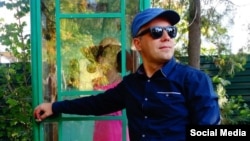
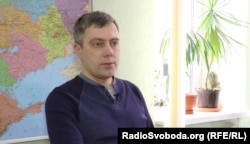
"They let me know clearly that I shouldn't write anymore," Ukrainian journalist Oleh Baturin said of his week in Russian captivity. "They let me know that they were avenging me for my articles."
On March 12, Ukrainian journalist Oleh Baturin got a phone call from an acquaintance asking for a meeting.
When he got to the place they had agreed upon, his acquaintance wasn't there -- "but there was a car with Russian soldiers," Baturin told RFE/RL's Ukrainian Service, ahead of World Press Freedom Day on May 3. "They jumped out of the car and began beating me. They put me in handcuffs, dragged me into the car, and took me to the city of Nova Kakhovka."
The abduction marked the beginning of an eight-day ordeal of captivity for Baturin, a correspondent with the Noviy Den media outlet in Ukraine's southern Kherson region, which has been largely occupied by Russian forces since the early days of Moscow's invasion of Ukraine.
Many others, like Baturin, have been detained, tortured, and interrogated by occupying Russian forces and their proxies in parts of eastern and southern Ukraine.
"They told me: 'You know, this is martial law. There is a war going on, and we can try you just like in a war. We'll just summon a tribunal and sentence you to be shot,'" Baturin said. "They began to threaten me, to describe in detail how they were going to skin me with a knife so that I would die slowly in agony, how they were going to pull out my eyes, cut off my ears and limbs."
Baturin said he was taken to the municipal government building in Nova Kakhovka, where he was interrogated by Volodymyr Leontyev, a pro-Russian Ukrainian who had been appointed as the administrator of the occupied city.
"He spoke to me in Russian," Baturin recalled. "'Do you recognize me? You dared to publish photographs of me in a Nazi uniform?' He spoke extremely roughly. It was just a flood of swearing."
Earlier, Baturin had written articles about Leontyev's cooperation with the invading forces and the likelihood that he would be named the city's administrator. The articles were illustrated with photographs of Leontyev wearing a Nazi uniform while participating in a historical reenactment.
"That's when I realized who had ordered my abduction," Baturin said, adding that there were also a large number of armed Russian soldiers in the room. "All of the threats I heard had to be taken seriously. I was completely at their mercy."
Baturin said he was severely beaten during the initial hours of his captivity.
"They beat me when they detained me," he told RFE/RL in April, speaking from Odesa. "They beat me while they were taking me to Nova Kakhovka. They beat me while I was at the police station in Nova Kakhovka. While I was being questioned in the office of the mayor, they beat me there, too."
A medical examination later revealed that Baturin had suffered four broken ribs.
Oleh Baturin: "They told me openly at the first interrogation that they intend to completely suppress journalism and simply prevent journalists from fulfilling their professional obligations."
"They let me know clearly that I shouldn't write anymore," he said. "They let me know that they were avenging me for my articles. Particularly Leontyev, regarding the publications with those photographs…. He was very angry that those photographs from a decade ago where he's wearing a Nazi uniform cropped up now."
After more than a day in the custody of the occupation administration in Nova Kakhovka, Baturin was transferred to the custody of Russian forces and taken to Kherson, the regional capital, where he was held under appalling conditions.
It doesn't matter," one Russian soldier said. "We'll capture Mykolayiv and then make it to Odesa, and then we'll take care of all these people once and for all. They won't be conducting any more demonstrations.'"
"There was nothing in the cell except a bench that was quite uncomfortable to sleep on," he said. "The first days it was very cold, because the weather was freezing…. There was a tap with water, which was good because we could drink as much as we wanted."
"There was a hole in the floor that was a toilet," he continued. "But there was no toilet paper…no soap to wash your hands with."
Only cold food was served, once or twice a day. His coat served as blanket and pillow.
"I was very glad I had been wearing a coat when they abducted me," he said. "Because of that, I didn't freeze or get sick."
In Russian custody, Baturin was asked more generic questions, such as to provide the names of "Ukrainian fascists" or "Belarusian journalists and activists who might be in Kherson Oblast."
"For instance, they asked me who is behind various Telegram channels in the Kherson Oblast and to provide the names of active, pro-Ukrainian journalists…[or] the names of activists organizing protests in Kherson," he said.
The protests of local residents against the occupation of Kherson seemed to have rattled the Russians, who couldn't understand that people might spontaneously take to the streets, Baturin said.
Undercover In Ukraine's Occupied Kherson: 'You Don't Know What Will Happen Tomorrow'
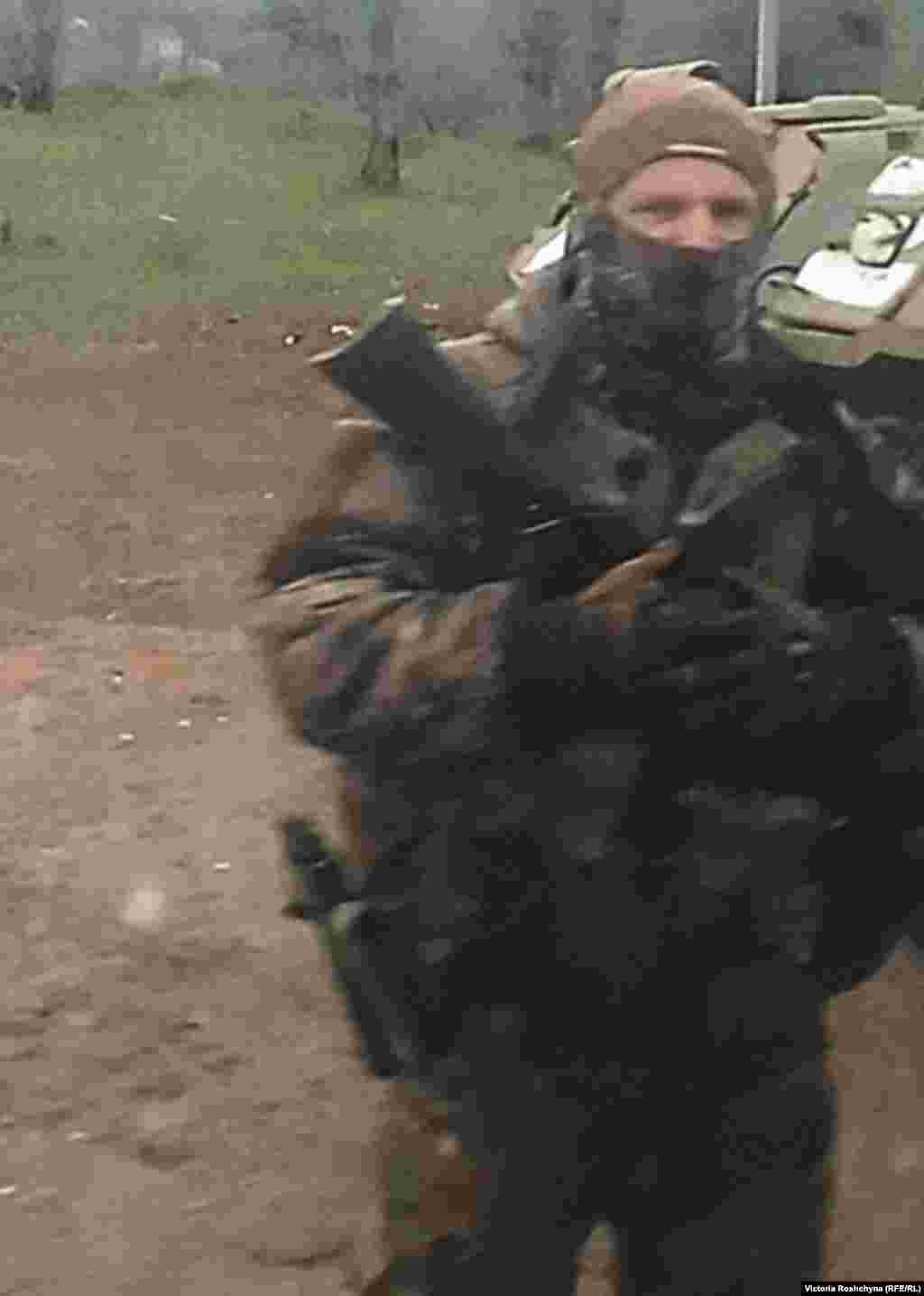
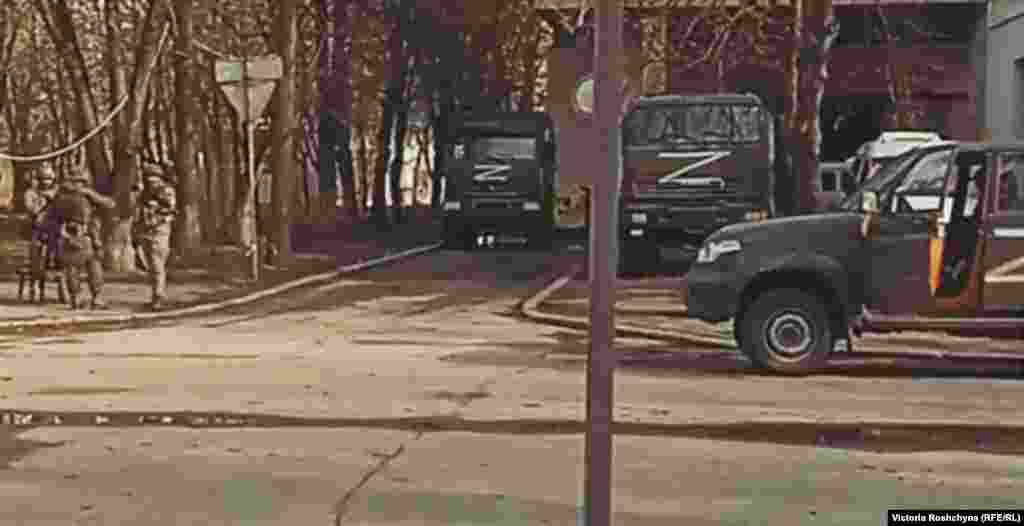
1/16A Russian servicemen outside one of the occupied villages near Kherson.
"We are from Donetsk. How do you feel about May 9?" one soldier asked RFE/RL at a checkpoint, referring to the date on which Russia commemorates Victory Day over Nazi Germany. After checking documents, those manning checkpoints often ask for cigarettes.
Kherson is the only Ukrainian provincial capital to have fallen during Moscow's invasion of its western neighbor. Earlier this month, RFE/RL reporter Viktoria Roshchyna traveled undercover to the city and nearby settlements to speak with people who are living under Russian occupation and to discuss the problems they face.
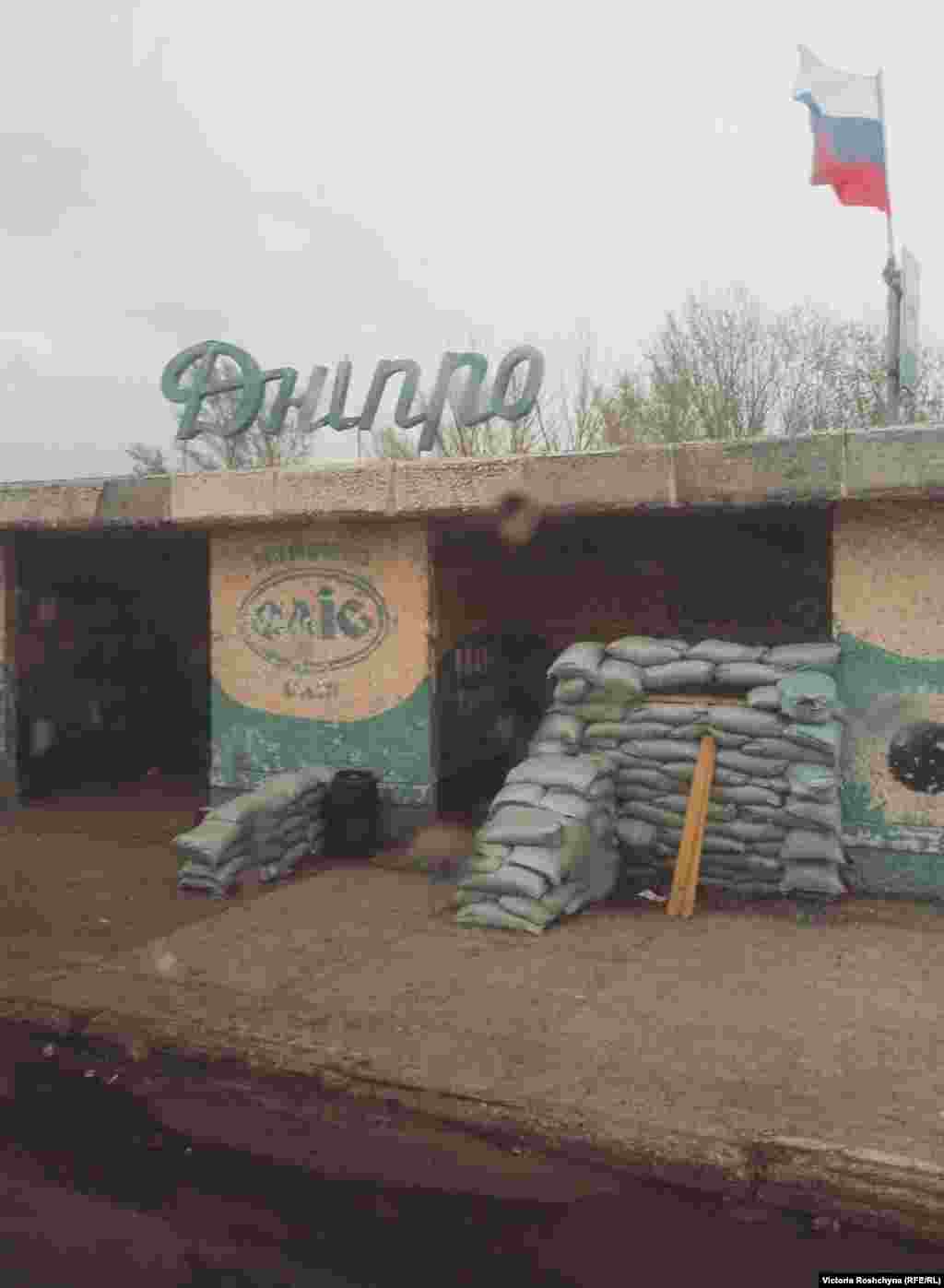
2/16A Russian checkpoint in the occupied Kherson region in April 2022.
The road to Kherson is nearly empty. On the way you can find broken equipment, plundered gas stations, and shell craters. Fields and forests -- what the Kherson region has always been famous for -- are now "sown" with the equipment of the Russian occupiers.
“People were sowing and planning the harvest. And now what? ” one local driver told RFE/RL.
Kherson is the only Ukrainian provincial capital to have fallen during Moscow's invasion of its western neighbor. Earlier this month, RFE/RL reporter Viktoria Roshchyna traveled undercover to the city and nearby settlements to speak with people who are living under Russian occupation and to discuss the problems they face.
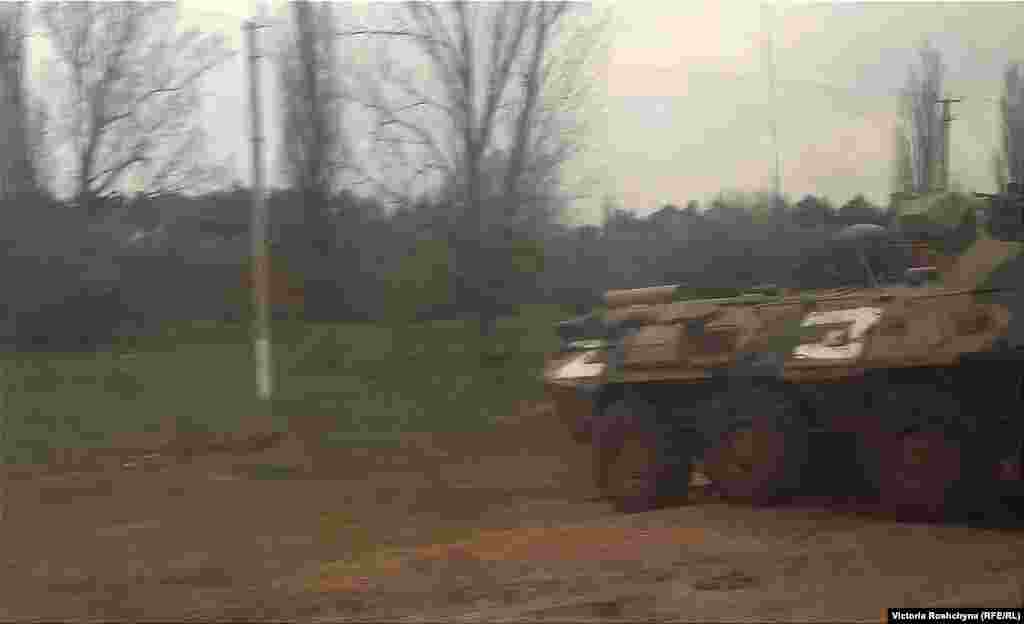
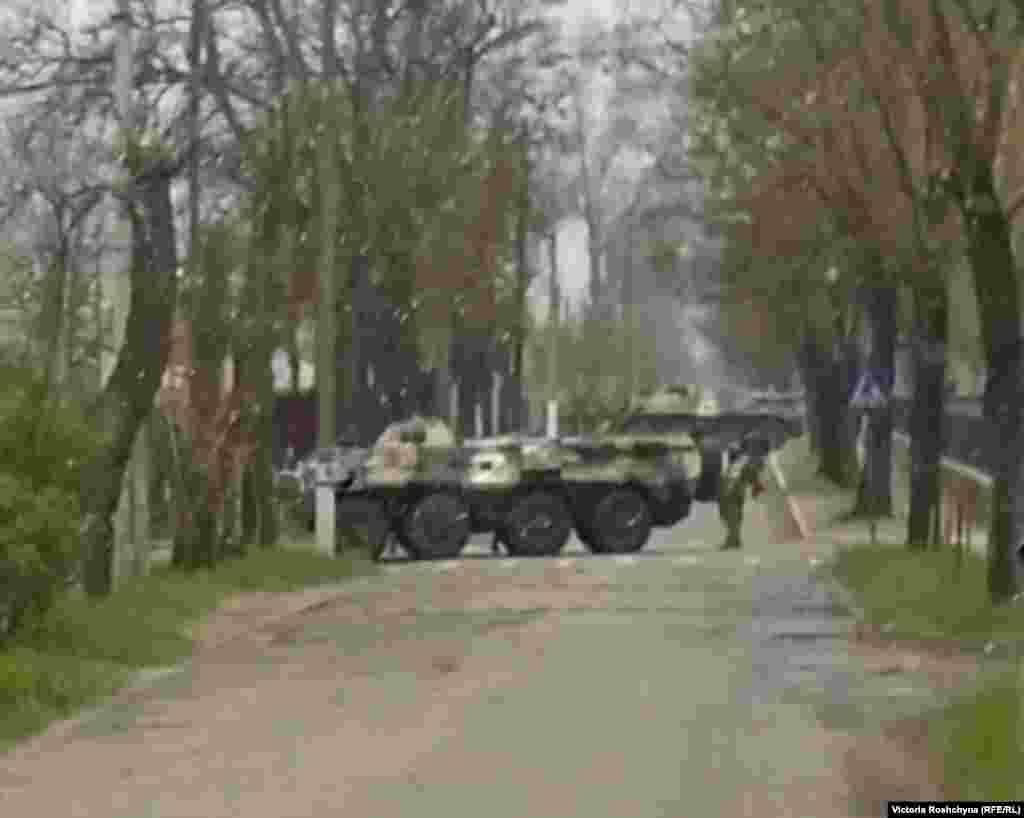
3/16A Russian armored personnel carrier near one of the villages in the occupied Kherson region.
"A lot of vehicles are coming in from Crimea. Every night, we hear them move," one local resident said. "When our troops start a counterattack, it will be hot."
Kherson is the only Ukrainian provincial capital to have fallen during Moscow's invasion of its western neighbor. Earlier this month, RFE/RL reporter Viktoria Roshchyna traveled undercover to the city and nearby settlements to speak with people who are living under Russian occupation and to discuss the problems they face.
4/16Occupying troops raise a Soviet victory banner, featuring the hammer and sickle, at Park Slavy (Park of Glory) in central Kherson. It's a copy of the flag raised over Berlin's Reichstag and is now an official symbol of the U.S.S.R.'s victory over Nazi Germany.
Kherson is the only Ukrainian provincial capital to have fallen during Moscow's invasion of its western neighbor. Earlier this month, RFE/RL reporter Viktoria Roshchyna traveled undercover to the city and nearby settlements to speak with people who are living under Russian occupation and to discuss the problems they face.
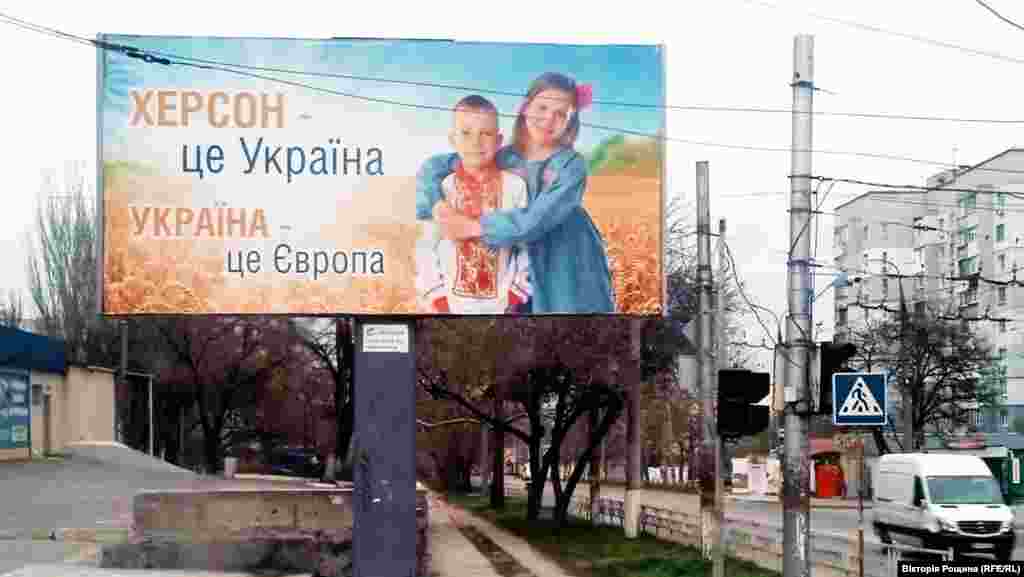
5/16A billboard in Kherson says: “Kherson is Ukraine. Ukraine is Europe."
"The occupiers are deeply disappointed because there is no support for them," says one local farmer. "They are not wanted here. The Kherson region is a deeply pro-Ukrainian territory. They were lucky with Crimea because there really was a large pro-Russian population there. Here, no."
Kherson is the only Ukrainian provincial capital to have fallen during Moscow's invasion of its western neighbor. Earlier this month, RFE/RL reporter Viktoria Roshchyna traveled undercover to the city and nearby settlements to speak with people who are living under Russian occupation and to discuss the problems they face.
6/16Russian vehicles move through the streets of occupied Kherson.
"The sense of protection is completely absent," says one city resident. "When a person comes to you with a machine gun, you clearly understand that he can do anything with you."
Kherson is the only Ukrainian provincial capital to have fallen during Moscow's invasion of its western neighbor. Earlier this month, RFE/RL reporter Viktoria Roshchyna traveled undercover to the city and nearby settlements to speak with people who are living under Russian occupation and to discuss the problems they face.
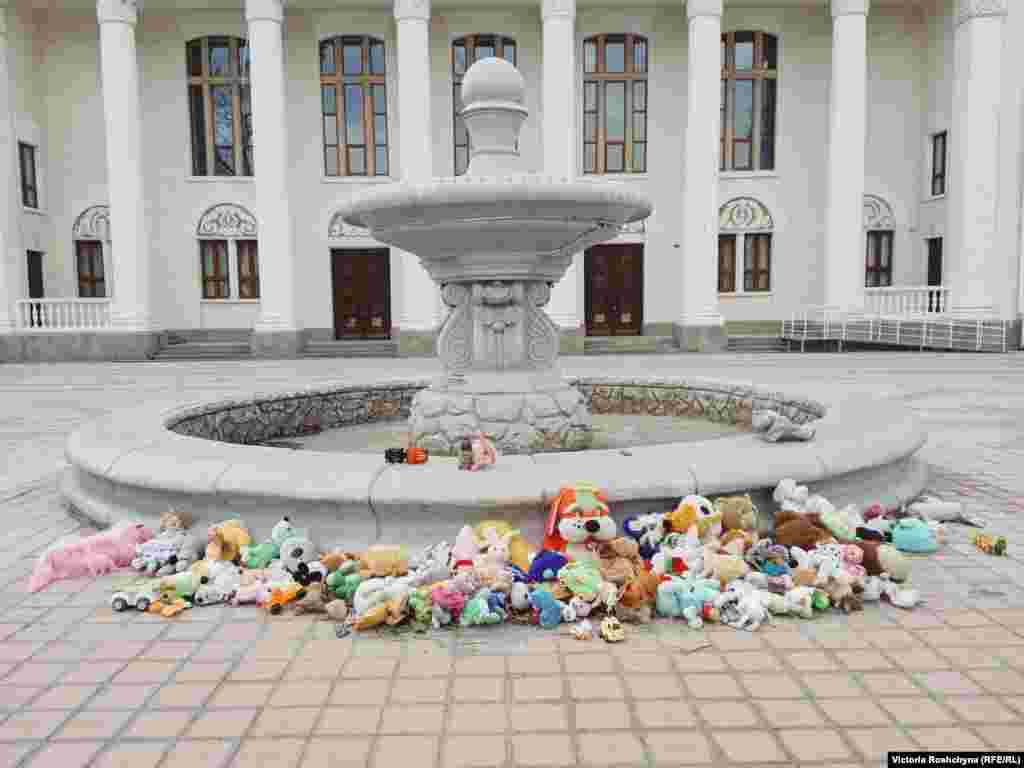
7/16An impromptu memorial for children who have died during the war in front of the Palace of Culture in the town of Nova Kakhovka in the Kherson region.
"This building is opposite the Russian commandant's office," said one man as he walked by. "They bring toys here so that they can see and remember."
Kherson is the only Ukrainian provincial capital to have fallen during Moscow's invasion of its western neighbor. Earlier this month, RFE/RL reporter Viktoria Roshchyna traveled undercover to the city and nearby settlements to speak with people who are living under Russian occupation and to discuss the problems they face.
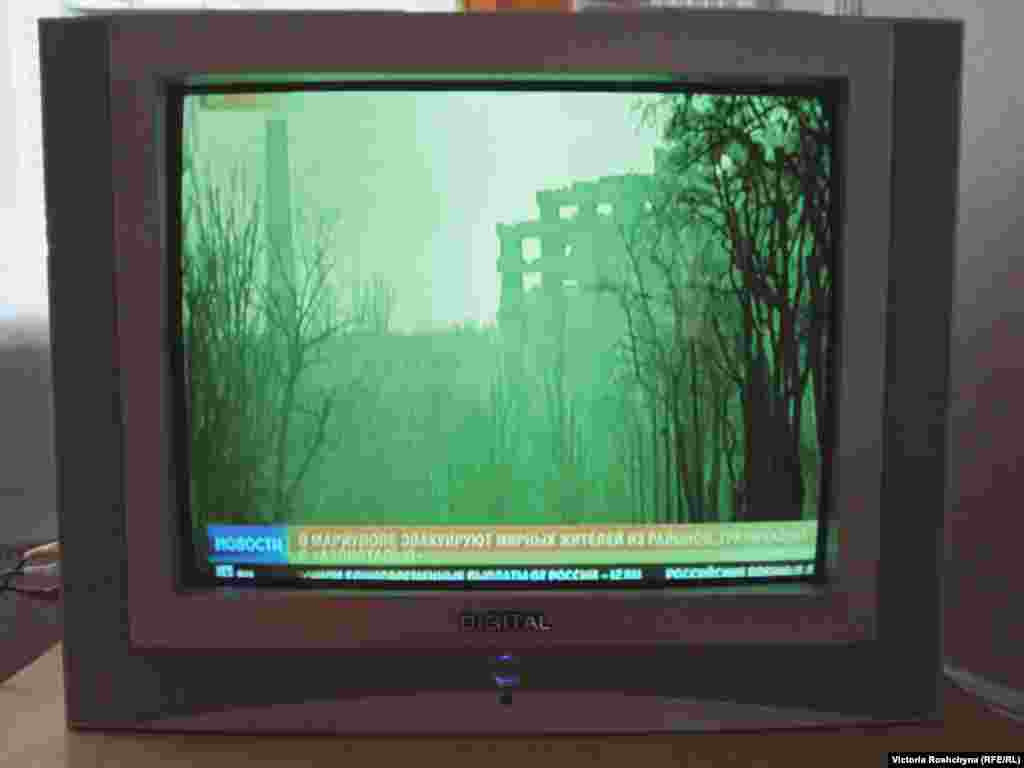
8/16A pro-Russia TV channel broadcasting the "liberation operation" in occupied Kherson.
"As soon as they entered the city, they drowned out the Ukrainian channels and launched their own. After a while, cable TV and radio stations were turned off. Not a single Ukrainian newspaper is published in Kherson," said a local media expert, who also warned of the dangers of reporting in the occupied territories.
"You know, we used to think that a camera and a microphone were a means of protection," he said. "But now, it is a 'red rag' to the occupiers. Going out and filming something is putting yourself in danger.”
Kherson is the only Ukrainian provincial capital to have fallen during Moscow's invasion of its western neighbor. Earlier this month, RFE/RL reporter Viktoria Roshchyna traveled undercover to the city and nearby settlements to speak with people who are living under Russian occupation and to discuss the problems they face.
9/16Russian troops patrol near the Kherson Regional State Administration.
"All thinking Kherson residents are for Ukraine, of course," one local resident told RFE/RL. "But now there is some uncertainty -- and this gives rise to fear. You don't know what will happen tomorrow."
Kherson is the only Ukrainian provincial capital to have fallen during Moscow's invasion of its western neighbor. Earlier this month, RFE/RL reporter Viktoria Roshchyna traveled undercover to the city and nearby settlements to speak with people who are living under Russian occupation and to discuss the problems they face.
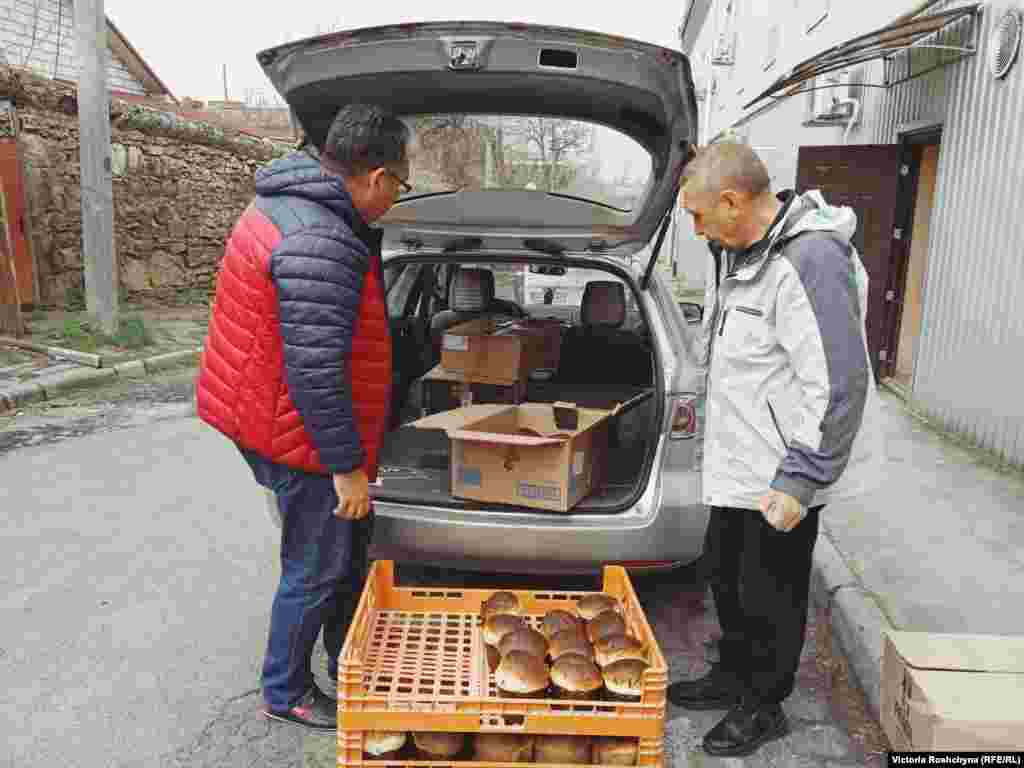
10/16Volunteers from occupied Kherson prepare and distribute Easter cakes for residents of nearby settlements who are under heavy shelling.
According to one local volunteer, the occupiers have "artificially created a humanitarian catastrophe in Kherson in order to import goods from Crimea. They do not allow any humanitarian convoys from Ukraine to pass through. All of this is delivered by volunteers at their own risk."
Kherson is the only Ukrainian provincial capital to have fallen during Moscow's invasion of its western neighbor. Earlier this month, RFE/RL reporter Viktoria Roshchyna traveled undercover to the city and nearby settlements to speak with people who are living under Russian occupation and to discuss the problems they face.
Kherson is the only Ukrainian provincial capital to have fallen during Moscow's invasion of its western neighbor. Earlier this month, RFE/RL reporter Viktoria Roshchyna traveled undercover to the city and nearby settlements to speak with people who are living under Russian occupation and to discuss the problems they face.
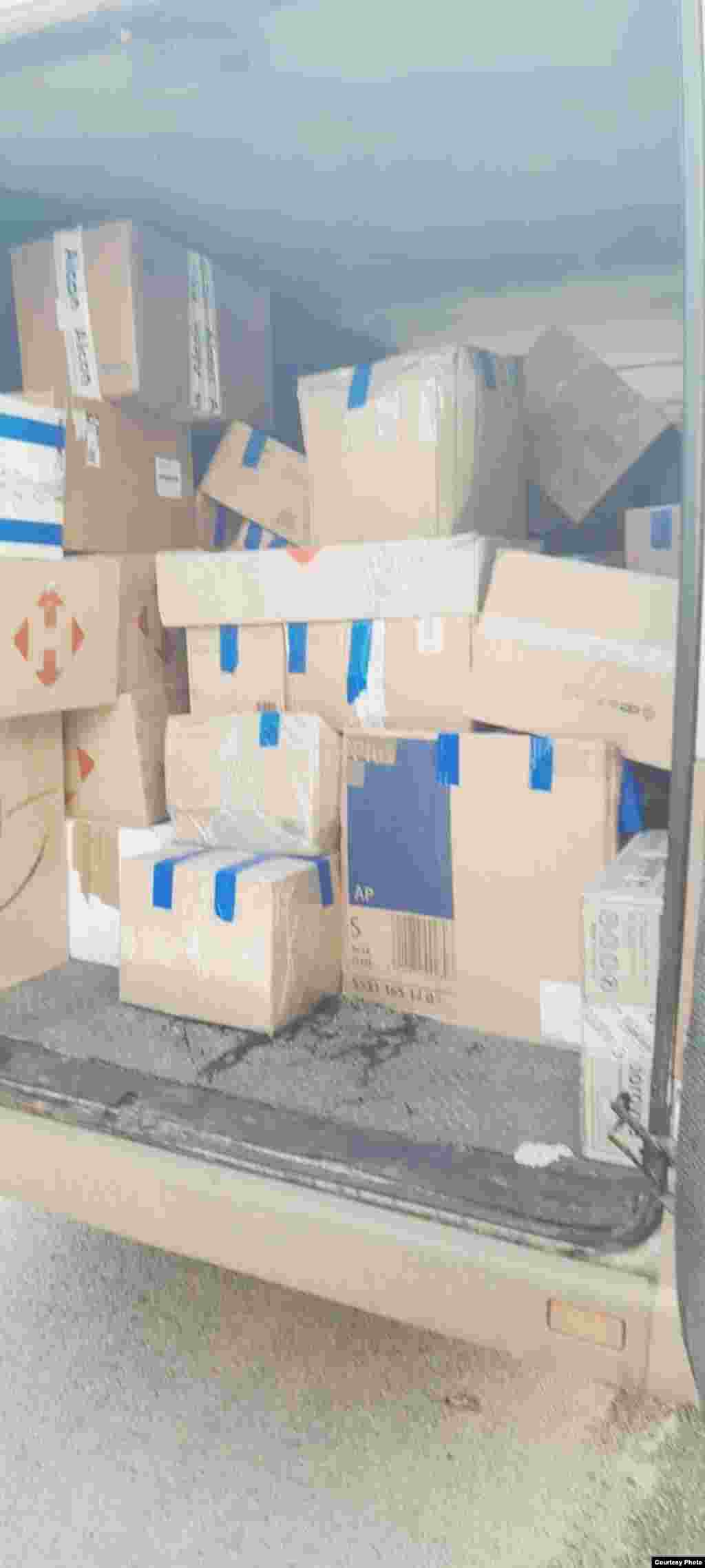
12/16Medicines are prepared for delivery in occupied Kherson.
"It is very difficult to supply medicines to the Kherson region now," says Iryna, a local volunteer. "The invaders do not give us 'green corridors.' Drivers who carry medical supplies often disappear. They take away their phones, cars, and the medicines themselves."
Kherson is the only Ukrainian provincial capital to have fallen during Moscow's invasion of its western neighbor. Earlier this month, RFE/RL reporter Viktoria Roshchyna traveled undercover to the city and nearby settlements to speak with people who are living under Russian occupation and to discuss the problems they face.
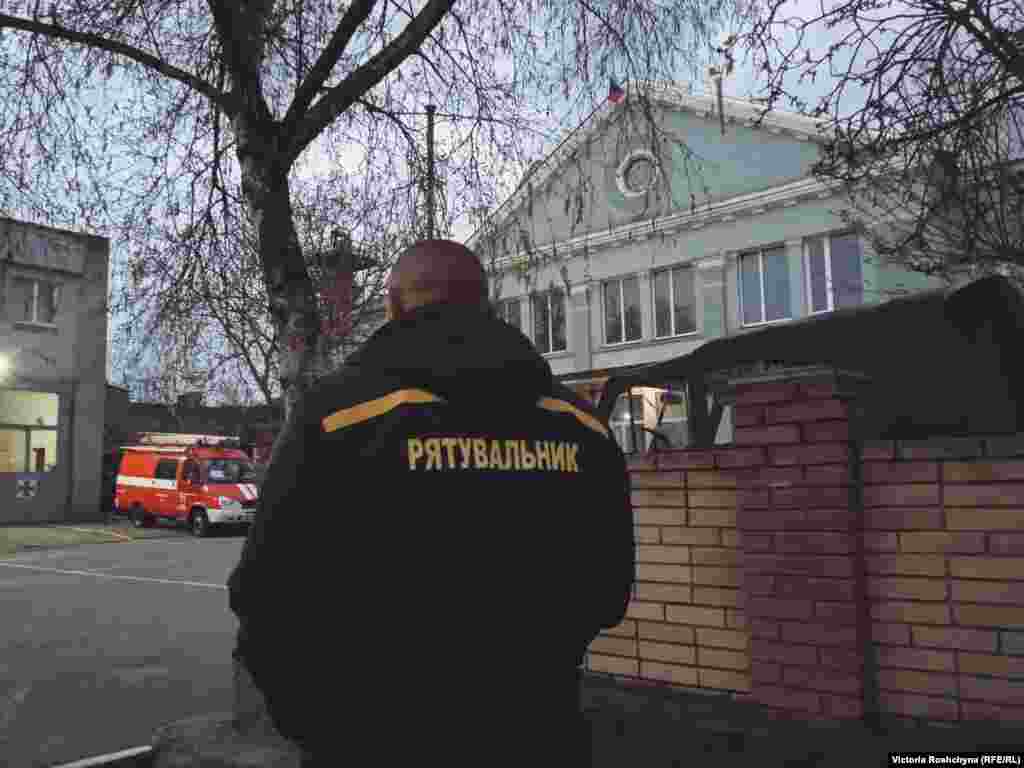
13/16A rescue worker in occupied Nova Kakhovka walks toward the State Emergency building where a Russian flag now flies.
While some rescue workers left when the occupation began, others remained to assist their fellow citizens. "As for the fact that the government abandoned Kherson, this is just an insult," said a local volunteer. "There is no feeling yet that we will be liberated."
Kherson is the only Ukrainian provincial capital to have fallen during Moscow's invasion of its western neighbor. Earlier this month, RFE/RL reporter Viktoria Roshchyna traveled undercover to the city and nearby settlements to speak with people who are living under Russian occupation and to discuss the problems they face.
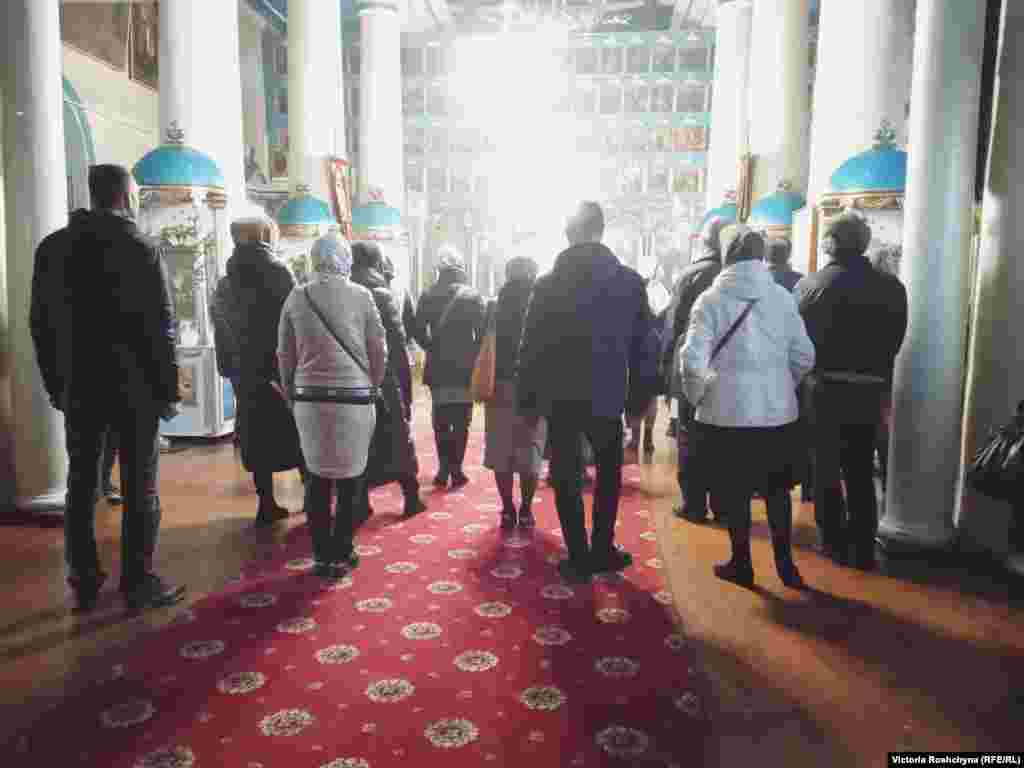
14/16People attend a church service in occupied Kherson.
"We pray. We do our jobs. Of course, we want Ukraine to be here," said a local clergymen. "I also have a family. They also cry. But I try to avoid politics."
Kherson is the only Ukrainian provincial capital to have fallen during Moscow's invasion of its western neighbor. Earlier this month, RFE/RL reporter Viktoria Roshchyna traveled undercover to the city and nearby settlements to speak with people who are living under Russian occupation and to discuss the problems they face.
15/16A Russian checkpoint in occupied Nova Kakhovka in the Kherson region.
According to Kherson Mayor Ihor Kolykhayev, more than 40 percent of residents have left the city, including more than 3,000 children. In a Facebook post on April 16, Ukraine's ombudswoman for human rights, Lyudmyla Denisova, said that Russia intends to hold a "referendum" to create a "People's Republic of Kherson."
According to the Denisova, Russian troops intend to turn off all communications in Kherson and to stop anyone entering or exiting the city between May 1 and May 10. The vote they reportedly plan to stage mirrors what occurred in the occupied Luhansk and Donetsk regions in 2014.
Kherson is the only Ukrainian provincial capital to have fallen during Moscow's invasion of its western neighbor. Earlier this month, RFE/RL reporter Viktoria Roshchyna traveled undercover to the city and nearby settlements to speak with people who are living under Russian occupation and to discuss the problems they face.
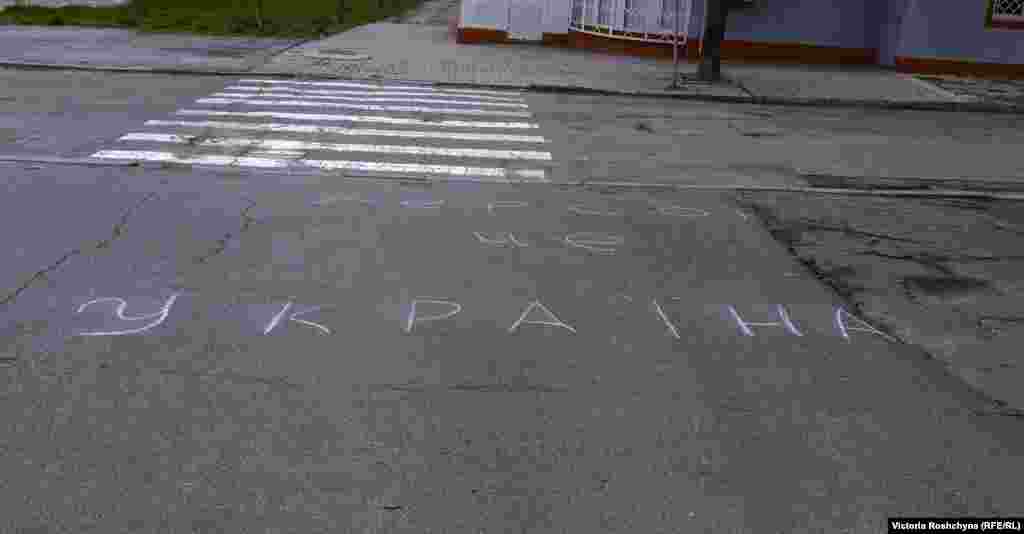
16/16An inscription on the asphalt: "Kherson is Ukraine."
Kherson is the only Ukrainian provincial capital to have fallen during Moscow's invasion of its western neighbor. Earlier this month, RFE/RL reporter Viktoria Roshchyna traveled undercover to the city and nearby settlements to speak with people who are living under Russian occupation and to discuss the problems they face.
Previous slide
Next slide
He quoted one Russian interrogator as saying: "'It doesn't matter. We'll capture Mykolayiv and then make it to Odesa, and then we'll take care of all these people once and for all. They won't be conducting any more demonstrations.'"
"They are trying to establish their own order," Baturin said. "They want to completely suppress any manifestation of public activity. They told me openly at the first interrogation that they intend to completely suppress journalism and simply prevent journalists from fulfilling their professional obligations…. They are showing through their actions that they consider that territory to be theirs. They believe they will be there forever."
After eight days of captivity, Baturin was released. He was told to stay in his home for an additional five days.
"It is clear to me that they were relatively gentle with me, particularly in comparison with prisoners who had been fighting against them," Baturin said. Those prisoners were "constantly being tortured."
"That treatment and the fact that they released me indicates that the abduction was a warning that I should watch out," he said.
Shortly thereafter, Baturin left the region and made the dangerous trip through the front lines to government-controlled territory, fearing that if the Russians came for him again, "the consequences would be completely different."
"I still remember that first night, the first 24 hours as a prisoner," he recalled. "I don't want to think about it again, but it is constantly in my mind."
Oleksandr Yankovskiy is a correspondent for RFE/RL's Ukrainian Service. Originally from Crimea, Yankovskiy has worked as the editor in chief and presenter of the Crimea.Realities TV and radio projects. Since 2021, he has been a presenter for The News of Azov Region project.