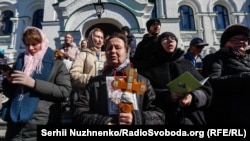
UOC supporters gather at the Kyiv-Pechersk Lavra in Kyiv on March 30.
KYIV -- Clerics of the Ukrainian Orthodox Church (UOC) who have been ordered to leave the Kyiv-Pechersk Lavra in the Ukrainian capital on March 30 defied the eviction order and refused to allow officials from the Culture Ministry and journalists into the historic Orthodox Christian monastery.
Scuffles between members of the UOC and journalists broke out outside the 11th-century monastery and UNESCO World Heritage site when clerics pushed reporters away from Metropolitan Pavlo, the monastery's abbot.
The UOC clerics refused to communicate with the journalists, who were at the monastery to cover the standoff, which developed after the agency overseeing the property notified the UOC earlier this month that it was terminating the lease as of March 29.
An RFE/RL correspondent's camera was struck and journalists of the Suspilne (Public) television channel were jostled as the clerics attempted to keep the journalists away from Pavlo.
Pavlo, meanwhile, threatened to hit journalists with a stick, urging them "instead of gabbing away" for "seas of money" to do "real" work, like "milking cows, gardening, etc."
The National Union of Journalists of Ukraine said on March 30 that journalists' rights were violated as UOC followers did not allow them to use their cameras, covering their lenses with different objects, insulting reporters, and pushing them away from the entrance to the monastery, which is owned by the Ukrainian government.
Inside Kyiv's Sacred Cave Monastery As 'Eviction' Deadline Looms
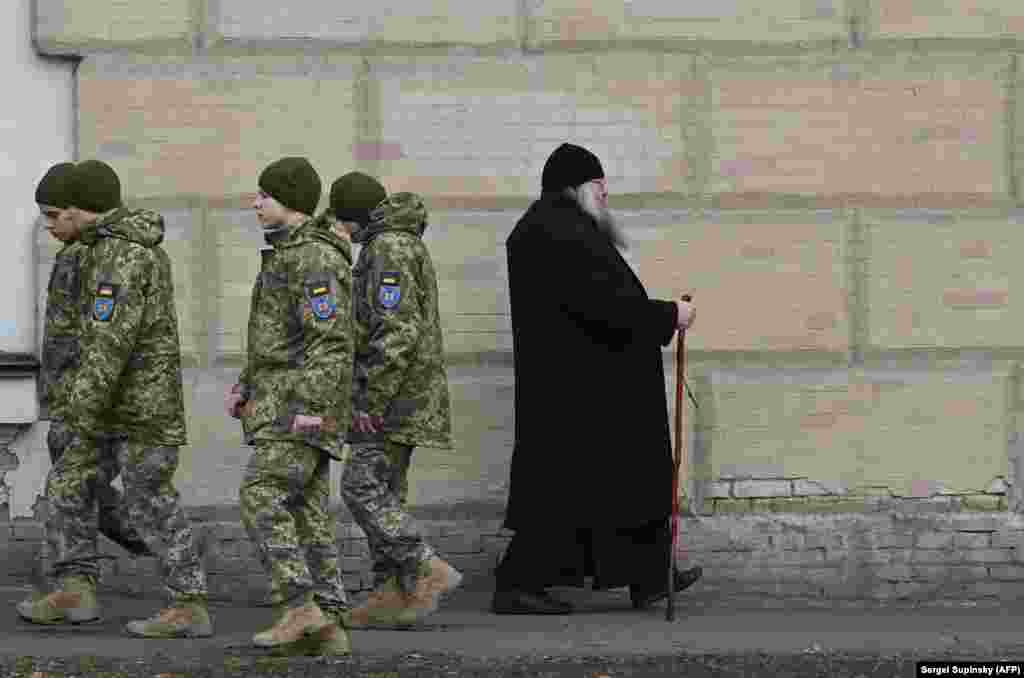
1/11This March 14 photo shows Ukrainian soldiers passing a monk in the Kyiv Pechersk Lavra as tensions mount over a March 29 deadline for clerics to leave the property.
The clergy have declared they will stay on in their historic home, as their supporters vow to back them “whatever the cost.”
Ukraine has ordered Moscow-affiliated clerics to leave Kyiv Pechersk Lavra, the country’s most important Orthodox monastery, by the end of March. Here is background on the site and the developments that have led to the current crisis.
Show moreShow less
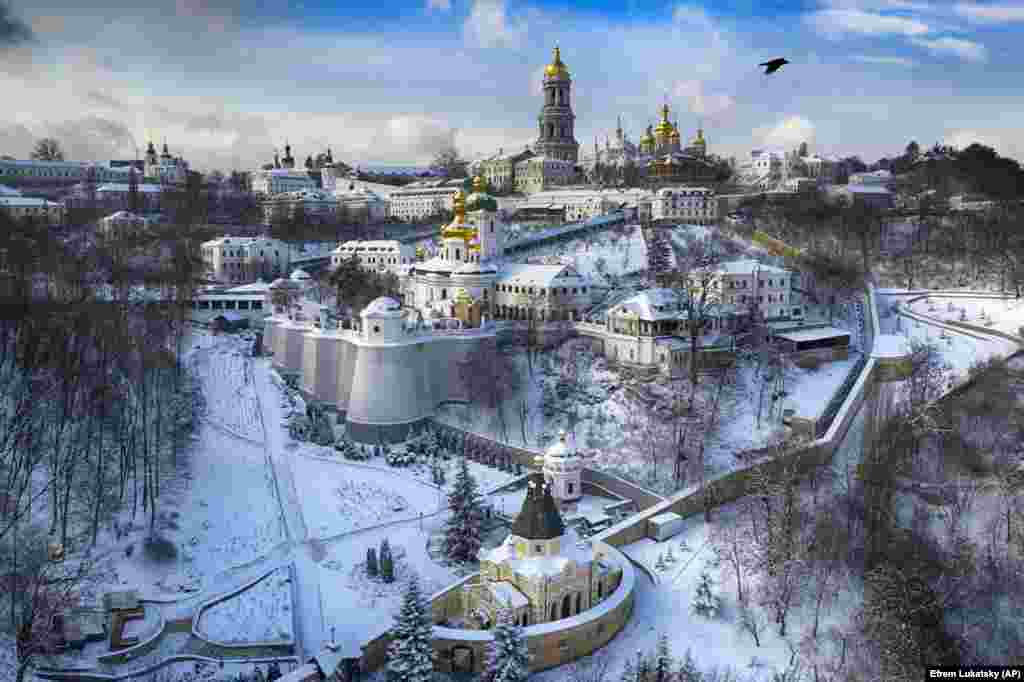
2/11The Kyiv Pechersk Lavra is a nearly 1,000-year-old monastery complex in the center of the Ukrainian capital.
A lavra is a monastery that includes cells for hermits, while pechersk means “of the caves.”
Ukraine has ordered Moscow-affiliated clerics to leave Kyiv Pechersk Lavra, the country’s most important Orthodox monastery, by the end of March. Here is background on the site and the developments that have led to the current crisis.
Show moreShow less
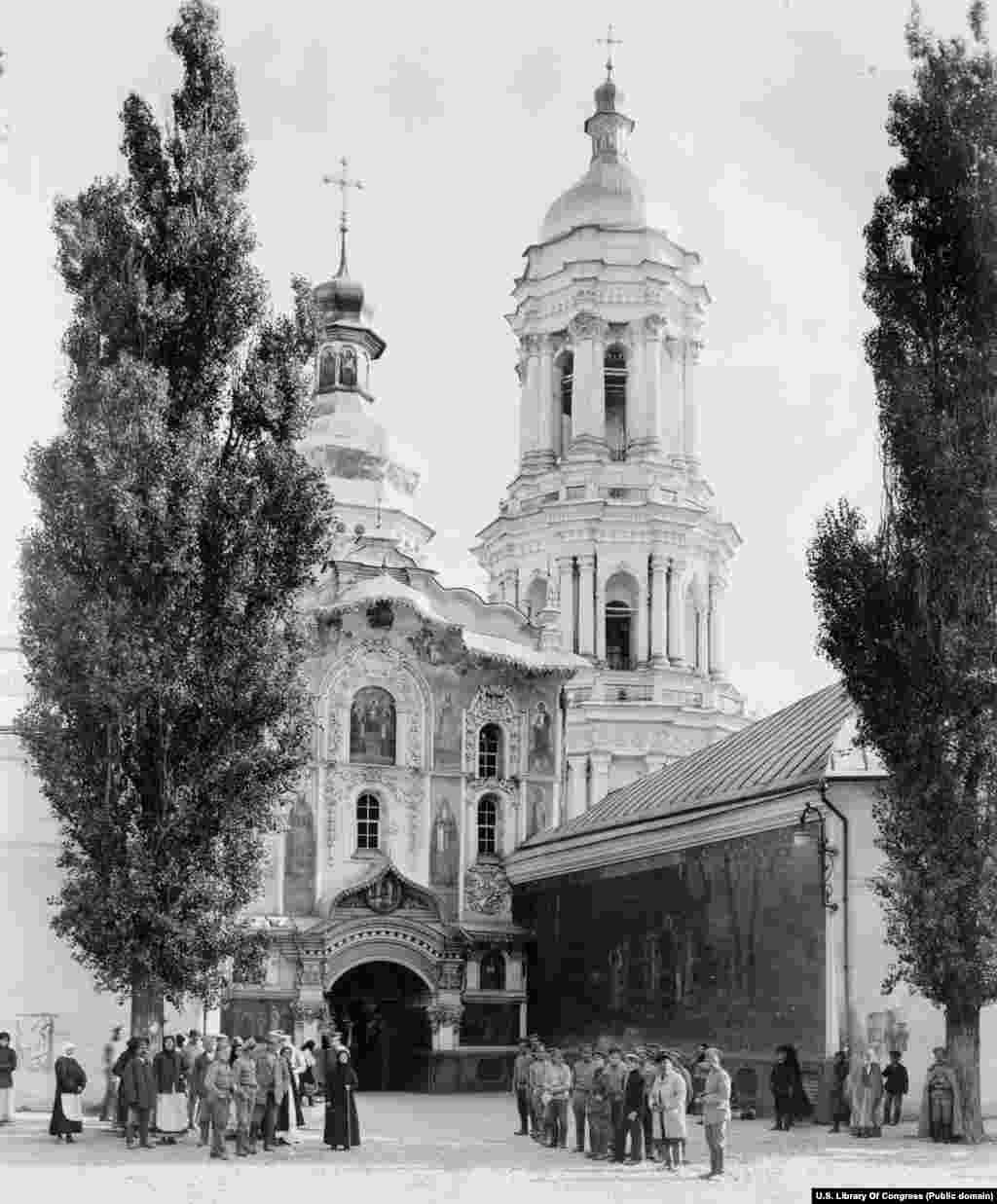
3/11The main entrance to the lavra complex photographed in 1918.
According to Orthodox Christian lore, soon after the death of Jesus, traveling apostle Andrew pointed to the elevated western bank of today’s Dnieper River where the lavra now stands and vowed that "God's grace will shine on these hills. There will be a great city here and God will build many churches."
Ukraine has ordered Moscow-affiliated clerics to leave Kyiv Pechersk Lavra, the country’s most important Orthodox monastery, by the end of March. Here is background on the site and the developments that have led to the current crisis.
Show moreShow less
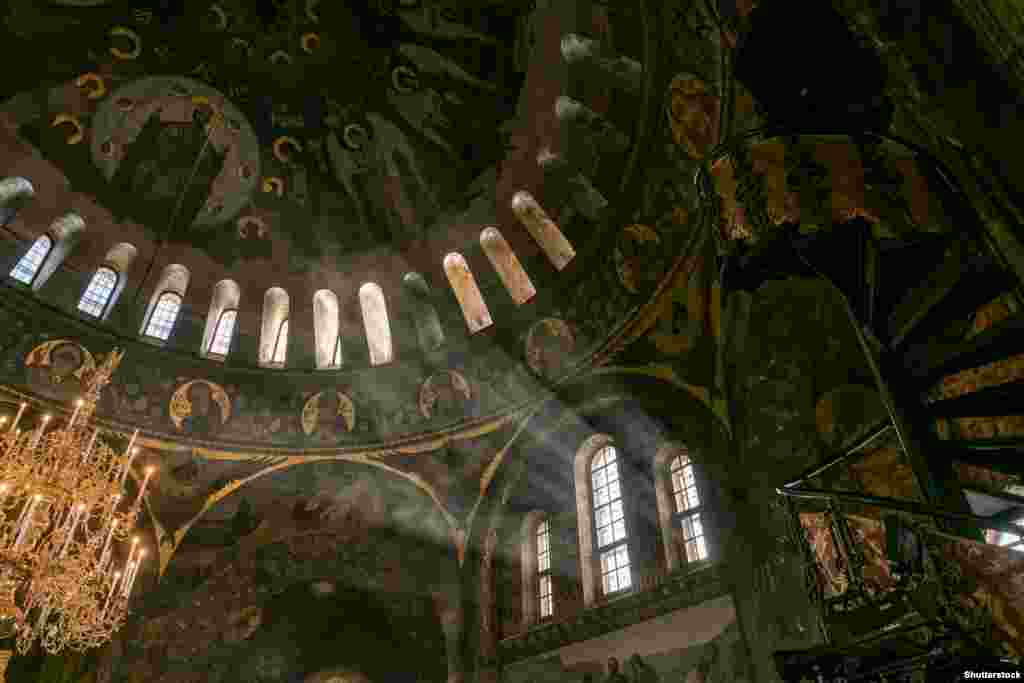
4/11Sunlight streams through the interior of the Refectory Church of the Kyiv lavra.
The monastery complex was founded in 1051 and is described by UNESCO as “one of the most important Christian pilgrimage centers in the world.”
Ukraine has ordered Moscow-affiliated clerics to leave Kyiv Pechersk Lavra, the country’s most important Orthodox monastery, by the end of March. Here is background on the site and the developments that have led to the current crisis.
Show moreShow less
5/11A 1977 photo of the Refectory Church of the monastery.
Under the Soviets, the clergy suffered repeated repression from the authorities up until the 1960s. During the Ukrainian-Soviet war, pro-Bolshevik militants executed the Metropolitan of the Russian Orthodox Church outside the walls of the lavra in 1918.
Ukraine has ordered Moscow-affiliated clerics to leave Kyiv Pechersk Lavra, the country’s most important Orthodox monastery, by the end of March. Here is background on the site and the developments that have led to the current crisis.
Show moreShow less
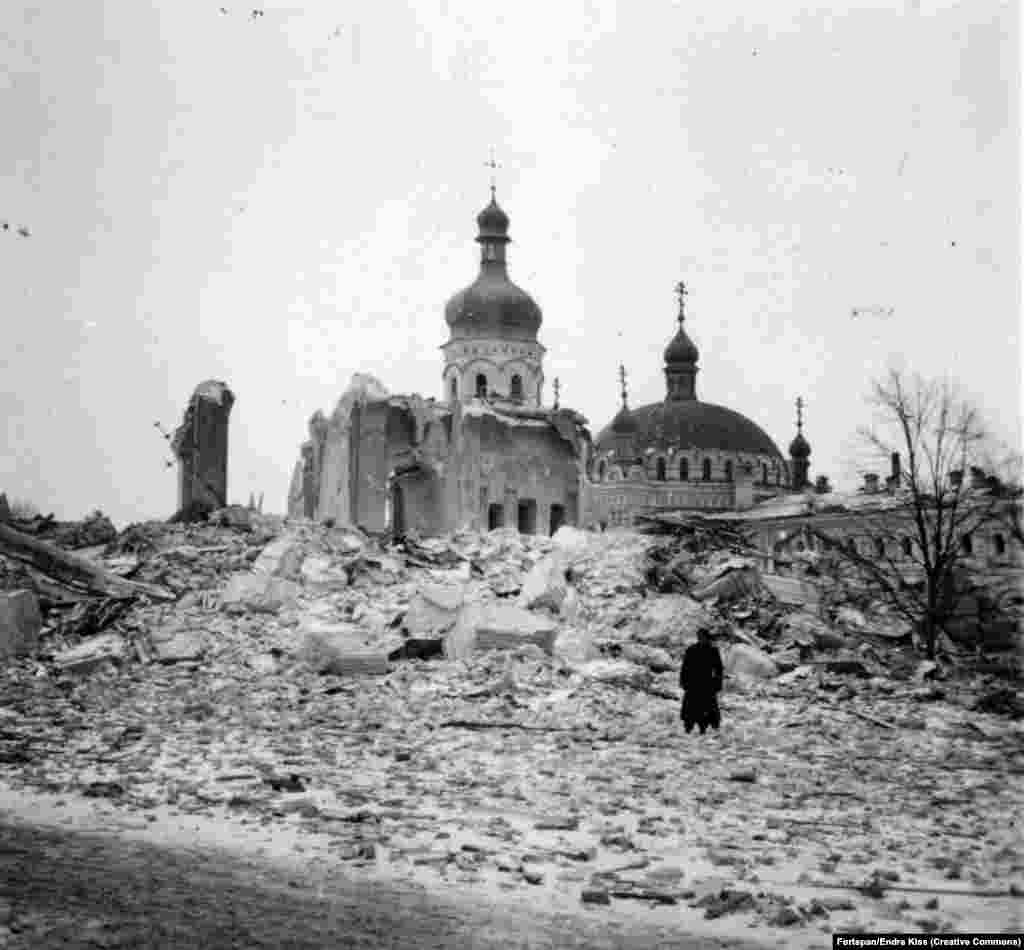
6/11In November 1941, the Dormition Cathedral of the lavra was destroyed in an explosion. Most Ukrainian reports concludethat the retreating Soviet Red Army destroyed the building, while Russian sources say invading German troops were behind the crime.
Ukraine has ordered Moscow-affiliated clerics to leave Kyiv Pechersk Lavra, the country’s most important Orthodox monastery, by the end of March. Here is background on the site and the developments that have led to the current crisis.
Show moreShow less
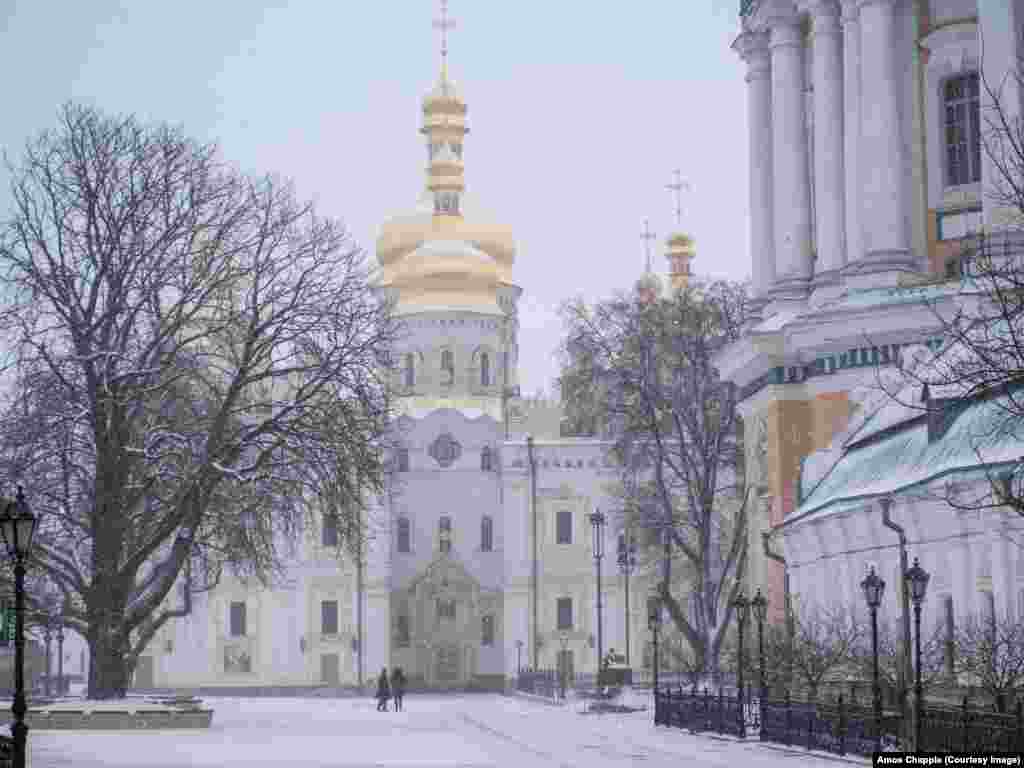
7/11After Ukraine gained its independence in 1991, the Dormition Cathedral (pictured here in 2008) was rebuilt in time for Ukraine’s independence day celebrations in 2000.
The lavra operated under the authority of the Moscow-affiliated branch of the Ukrainian Orthodox Church. That branch announced it would break all ties with the Russian religious authorities in May last year after Patriarch Kirill of Moscow repeatedly voiced support for the 2022 Russian invasion of Ukraine. Critics, however, say these changes have not altered the canonical status of the church and are thus insignificant.
Ukraine has ordered Moscow-affiliated clerics to leave Kyiv Pechersk Lavra, the country’s most important Orthodox monastery, by the end of March. Here is background on the site and the developments that have led to the current crisis.
Show moreShow less
8/11Ukrainian security officers search the bags of a woman at the lavra on November 22, 2022.
The monastery complex was raided by the authorities soon after a video surfaced on November 12, 2022 showing worshipers inside the church singing a patriotic Russian song that ended with a line: “The ringing [of church bells] are floating, floating over Russia, Mother Russia is awakening.”
Ukraine has ordered Moscow-affiliated clerics to leave Kyiv Pechersk Lavra, the country’s most important Orthodox monastery, by the end of March. Here is background on the site and the developments that have led to the current crisis.
Show moreShow less
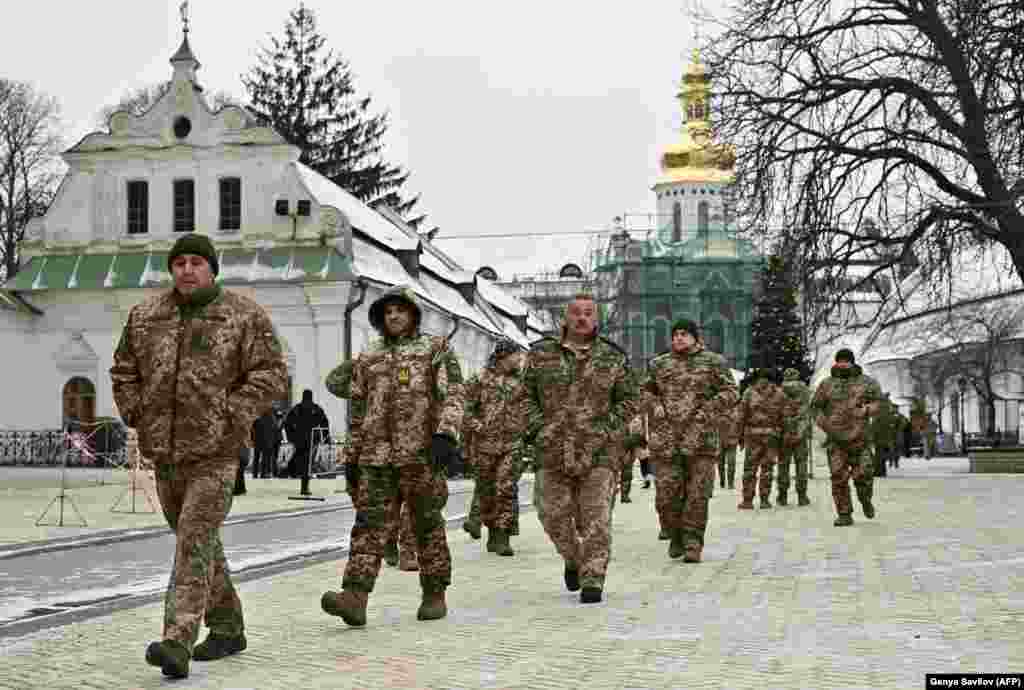
9/11Ukrainian soldiersleave the lavra in January 2023.
On March 10, Ukraine’s Culture Ministry confirmed that a lease that had allowed the church to use part of the monastery would be terminated.
Ukraine has ordered Moscow-affiliated clerics to leave Kyiv Pechersk Lavra, the country’s most important Orthodox monastery, by the end of March. Here is background on the site and the developments that have led to the current crisis.
Show moreShow less
10/11A woman viewing mummified monks in the catacombs of the monastery on February 5, 2023.
Passersby who spoke to AFP on March 14 were largely supportive of the ordered eviction, with one saying, “If they are pro-Moscow, they’re not welcome here."
A monk told the French news agency: “Many of the fathers, the monks, simply don't have anywhere except the lavra. It's our home. And for us, this [eviction notice] was a bolt from the blue."
Ukraine has ordered Moscow-affiliated clerics to leave Kyiv Pechersk Lavra, the country’s most important Orthodox monastery, by the end of March. Here is background on the site and the developments that have led to the current crisis.
Show moreShow less
11/11
On March 15, Pope Francis mentioned the standoff at the Kyiv monastery during his weekly address. The pontiff called on "the warring parties [in Ukraine] to respect religious sites" and praised those who devote themselves to prayer, "whatever denomination they may be."
Ukraine has ordered Moscow-affiliated clerics to leave Kyiv Pechersk Lavra, the country’s most important Orthodox monastery, by the end of March. Here is background on the site and the developments that have led to the current crisis.
Show moreShow less
Previous slide
Next slide
The UOC is a branch of Ukraine's Orthodox Church that was previously under the jurisdiction of the Russian Orthodox patriarch in Moscow. It cut ties with Moscow in May 2022 over Russia's unprovoked invasion of Ukraine, but it has been accused of maintaining links to Russia.
Metropolitan Pavlo and other UOC officials also did not allow a commission of the Culture and Information Policy Ministry to enter the monastery, where it was scheduled to inspect buildings as the handover of the property was planned to start on March 30.
A day earlier, the secretary of the National Security and Defense Council, Oleksiy Danilov, said no force would be used to evict the monks from the monastery.
Culture Minister Oleksandr Tkachenko condemned the "brutal" treatment of the commission members. The government filed a complaint with the police, Tkachenko said in a statement, adding that efforts to inspect the buildings would continue on March 31.
In November, Ukrainian security agents conducted a "counterintelligence" operation at the monastery and other UOC facilities as part of a probe into suspected pro-Russian activity.
The Orthodox Church of Ukraine (OCU) is the country's main Orthodox Church. A 2020 survey found that 34 percent of Ukrainians identified as members of the OCU, while 14 percent said they were members of the UOC.
RFE/RL's Ukrainian Service has seen its audience grow significantly since Russia's full-scale invasion in February 2022 and is among the most cited media outlets in the country. Its bold, in-depth reporting from the front lines has won many accolades and awards. Its comprehensive coverage also includes award-winning reporting by the Donbas.Realities and Crimea.Realities projects and the Schemes investigative unit.






![Ukrainian security officers search the bags of a woman at the lavra on November 22, 2022.<br />
<br />
The monastery complex was raided by the authorities soon after a video <strong><a href="https://www.facebook.com/100001770707587/videos/1148888719064399/">surfaced on November 12, 2022</a></strong> showing worshipers inside the church singing a patriotic Russian song that ended with a line: “The ringing [of church bells] are floating, floating over Russia, Mother Russia is awakening.”](https://gdb.rferl.org/01000000-0aff-0242-7b42-08db2568a755_w1024_q10_s.jpg)
![A woman viewing mummified monks in the catacombs of the monastery on February 5, 2023.<br />
<br />
Passersby who <strong><a href="https://www.france24.com/en/live-news/20230314-eviction-looms-in-kyiv-for-orthodox-monks-from-russian-linked-church">spoke to AFP</a></strong> on March 14 were largely supportive of the ordered eviction, with one saying, “If they are pro-Moscow, they’re not welcome here."<br />
<br />
A monk told the French news agency: “Many of the fathers, the monks, simply don't have anywhere except the lavra. It's our home. And for us, this [eviction notice] was a bolt from the blue."](https://gdb.rferl.org/01000000-0aff-0242-ce29-08db2568aff9_w1024_q10_s.jpg)
![<div>On March 15, Pope Francis mentioned the standoff at the Kyiv monastery during his weekly address. The pontiff called on "the warring parties [in Ukraine] to respect religious sites" and praised those who devote themselves to prayer, "whatever denomination they may be."</div>](https://gdb.rferl.org/01000000-c0a8-0242-9106-08db2592559e_w1024_q10_s.jpg)

