



We are now closing the live blog for today. Until we resume again tomorrow morning, you can keep up with all our other Ukraine coverage here.
The separatist entity in Donetsk has opened a "consulate" in the Czech Republic. RFE/RL's Tony Wesolowsky was there to see it. (Video courtesy of Ray Furlong):
Donetsk Separatists Fly Flag At Czech Center That Prague Vows To Close
OSTRAVA, Czech Republic -- The flag of Russia-backed separatists from Ukraine's eastern Donetsk region fluttered from an ornate, two-story building in this otherwise gritty city on the Czech Republic's eastern fringes on September 1, as the separatists opened what they call their first official office on EU soil.
Amid protests and vows by authorities to shut down the center, a Czech far-right activist said the office is aimed at rebuilding ties between Ostrava and Donetsk, both crumbling industrial centers that were once sister cities.
"We want to aid and coordinate communication between the people of the Donetsk People's Republic and the Czech Republic," said Nela Liskova, a member of the xenophobic National Militia movement, referring to the separatist group in eastern Ukraine.
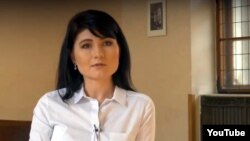
Liskova addressed a cramped conference room packed with a few dozen reporters and a handful of supporters -- including a few allegedly from Donetsk. A self-described "honorary consul," she said she is disgusted with her government's support for what she calls the "junta" in Kyiv -- standard Kremlin shorthand for the pro-Western government of Ukrainian President Petro Poroshenko.
Putting down stakes in the EU would be a feat for the separatists, who have fought Kyiv's forces in a bloody war that has killed more than 9,500 people since April 2014 following Russia's annexation of Ukraine's Crimea Peninsula the previous month.
Until now they have been recognized as an independent state only by South Ossetia, a breakaway region of Georgia that itself is recognized only by Moscow and a handful of other countries.
But any kind of recognition by the EU is wishful thinking at best. Brussels has sanctioned several separatists in eastern Ukraine, including Oleksandr Zakharchenko, the self-styled leader in Donetsk, as well as officials in Moscow over Russian backing for the separatists.
In the Czech Republic, President Milos Zeman has departed from the common EU line on Ukraine and criticized sanctions against Moscow. But he has not offered the separatists in eastern Ukraine any public support.
Meanwhile, Prague has repeatedly said that the separatists lack any legitimacy to open a diplomatic post in the country, while the Czech Foreign Ministry vowed on September 1 that their self-declared representative office would be shut down.
The Czech Embassy in Kyiv said in an August 29 statement that "the self-styled Donetsk People's Republic cannot have an accredited representative office in the Czech Republic because the Czech Republic does not recognize its existence."
According to official documents, the organization behind the center was officially registered on June 16, 2016.
The opening of its office was met with a small public protest outside Ostrava's Mercure Hotel, where the press conference for the event was being held. Some 15 demonstrators held up placards reading "Stop Russian Aggression," and "Kremlin Theater."
"I'm upset that they are opening up an office for a group that the Czech Republic, including the Foreign Ministry, does not recognize as legitimate, and is a terrorist state," said Radovan Blaha, who traveled from Prague to attend the protest.
Mikhail Topolov, a Czech-based Ukrainian activist, said that "the pro-Russian terrorists should not have any representation in the Czech Republic."
You can read the rest of Tony's report here.
More on the U.S. expanding sanctions:
A couple of tweets from the U.S. Deputy Secretary of State:
Here is item by Anna Shamanska from RFE/RL's Current Time TV on allegations of abductions and torture that have been dogging the SBU in recent days:
SBU Answers Illegal Detention, Torture Accusations With Meme
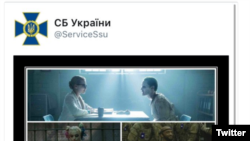
The Ukrainian Security Service (SBU) has posted images from a Hollywood blockbuster film on Twitter in an apparent effort to mock serious allegations led by two respected international rights watchdogs of secret detentions and torture.
Three stills from the 2016 movie Suicide Squad -- in which jailed villains are coerced by a secret government agency into becoming covert antiheroes to save the world -- appeared in the September 1 tweet by the Security Service (@ServiceSsu) with a caption that read "Prisoners of SBU secret jail."
The post was subsequently deleted.
The message appeared to be aimed at bolstering the Ukrainian Security Service's denial of accusations by Amnesty International and Human Rights Watch (HRW) in a report in July titled "You Don't Exist" Arbitrary Detentions, Enforced Disappearances, And Torture In Eastern Ukraine.
Those groups also sent a letter to Ukrainian officials dated August 23 citing the cases of 12 men and one woman who they said were released in July and August from "abduction-style" custody in Kharkiv. More such individuals are believed to remain incommunicado in custody.
The report claims that, in addition to Kharkiv, there are at least three more such "informal detention sites" in the eastern Ukrainian cities of Kramatorsk, Izyum, and Mariupol.
'Pretrial Investigation Center'
Amnesty International and HRW interviewed two men allegedly kept in SBU captivity since December 2014. Both men said they were abducted from their homes, tortured, and forced to confess to being informants for pro-Russia separatists in eastern Ukraine.
The Ukrainian military has been fighting Russia-backed fighters since early 2014, when Russian troops occupied Crimea ahead of the peninsula's annexation and armed fighters led efforts to reject Kyiv's authority. Swaths of the Donetsk and Luhansk regions remain outside central government control.
Ukrainian authorities deny the existence of any secret jails.
The Kharkiv location said to house a secret site instead houses a "pretrial investigation center," SBU chief of staff Oleksandr Tkachuk said, according to the BBC's Ukrainian Service.
"The fact that many interrogations take place in this building means that many detainees have been in this building, and it is often accused of being a secret jail of the SBU," Tkachuk said.
When asked directly if such secret jails may exist in Ukraine, Tkachuk said: "Nothing is impossible in life, unfortunately. For now, we say that we will carefully check this information."
The joint report by the rights groups also accuses Russia-backed separatists in eastern Ukraine of illegally imprisoning, abusing, and torturing people who live on the territory they control.
More than 9,500 civilians have died so far in the conflict, and international efforts to broker a peace have so far failed.