

European Parliament Calls On Russia To Free Ukrainians
By Rikard Jozwiak
The European Parliament is calling on Moscow to free more than 30 Ukrainian citizens who are in prison or other conditions of restricted freedom in Russia, Crimea, and parts of eastern Ukraine that are controlled by Russia-backed separatists.
In a resolution adopted on March 16, the parliament urged Russia to "release without further delay all illegally and arbitrarily detained Ukrainian citizens, both in Russia and in the temporarily occupied territories of Ukraine, and to provide for their safe return."
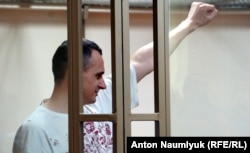
It listed 30 people, including filmmaker Oleh Sentsov, who is serving a 20-year sentence in a Russian prison after being convicted of plotting terrorist attacks in a trial supporters called absurd, and reporter Roman Sushchenko, held on suspicion of espionage.
The list, which the parliamentary statement said was not complete, also included several leaders of the Crimean Tatar minority, which rights groups say has faced abuse and discrimination since Russia seized the peninsula from Ukraine in April 2014.
The nonbinding resolution called on Russia "to allow all the above-mentioned people to travel freely, including Mykola Semena, who is being prosecuted for his journalistic work for Radio Free Europe/Radio Liberty."
READ MORE: Crimean Journalist Risks Jail By Refusing To Follow Kremlin Line
Semena, an RFE/RL contributor in Crimea, is scheduled to go on trial in a Russian-controlled court there on March 20 on separatism charges based on an article he wrote on his blog that was critical of Moscow’s seizure of the peninsula.
He is barred from leaving Crimea and must request permission to travel outside its capital, Simferopol.
The European Parliament resolution was adopted on the third anniversary of the referendum that Russia staged in Crimea as part of its operation to seize control of the Black Sea peninsula.
The referendum, which came after Moscow sent in troops without insignia to establish control over key facilities, has been dismissed as illegal by Ukraine, the United States, and a total of 100 countries in the UN.
EU lawmakers also called for more sanctions against Russian nationals "responsible for gross human rights violations, including the freezing of assets in EU banks."
Estonian lawmaker Tunne Kelam, speaking before the vote in Strasbourg, said the bloc needed to "strike with all force on secret bank accounts of those responsible and deny them entry into the EU."
The resolution also calls for "EU support for Ukrainian and Crimean Tatar media projects" and initiatives to protect Crimean Tatars’ cultural heritage.
Russia has been sharply criticized by international rights groups and Western governments for its treatment of Crimea's indigenous Turkic-speaking, mainly Muslim Crimean Tatar population.
From our news desk:
Ukraine Imposes Sanctions On Five Russian Banks
Ukrainian President Petro Poroshenko has imposed sanctions on five banks with Russian capital functioning in Ukraine.
A statement on the presidential website on March 16 said that Poroshenko signed a decree introducing sanctions on Sberbank, VS Bank, Prominvestbank, VTB Bank, and BM Bank for a one-year period.
The proposal to introduce sanctions was made by the National Security and Defense Council on March 15.
Poroshenko's decree ordered the Foreign Ministry to inform European Union and the United States about the sanctions and ask them to introduce similar measures against the banks.
The sanctions come after several days of protests across Ukraine against Sberbank and other Russia banks, which began after Sberbank said it would comply with Russian President Vladimir Putin's February 18 decree ordering Russian authorities to recognize identity documents issued by separatists who hold parts of Ukraine's Donetsk and Luhansk regions.
Sberbank on March 9 retracted its earlier statement and said it would not recognize separatist-issued documents.
New York Times on the suspension of trade:
From the Russian embassy in South Africa: