




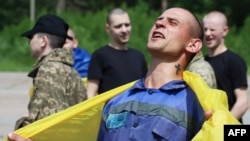
KYIV -- Red Cross chief Pierre Krahenbuhl has told RFE/RL that Russia is not granting the organization "the level of access we would wish" to the Ukrainian prisoners of war (POWs) it holds captive.
Speaking to RFE/RL's Ukrainian Service in Kyiv on February 20, Krahenbuhl, who is director general of the International Committee of the Red Cross (ICRC), said he had raised "repeated" requests for access.
The issue is particularly concerning that given many Ukrainian soldiers released in prisoner exchanges have provided detailed accounts of abuse and torture in Russian captivity.
The ICRC is mandated to monitor compliance with the rights of POWs.
As of this month, Ukrainian authorities say approximately 7,000 Ukrainian military personnel are being held in Russian captivity while nearly 4,000 Russian service members are in Ukrainian custody.
RFE/RL: How many Ukrainian POWs has the ICRC visited since 2022?
Krahenbuhl: Since 2022, we have visited 8,400 prisoners of war, the large majority in Ukraine. I want to take this opportunity to express recognition for the way the Ukrainian authorities work with us.
Currently, in the Russian Federation, we do not have the level of access we would wish, and we are very focused on establishing regular and sustained access to prisoners of war, as it is our absolute top priority.

RFE/RL: How often has Russia denied access?
Krahenbuhl: We make very regular requests, and we will not go into the details of how many requests we have made. The simple thing I can tell you is that this is a very regular and repeated request on our side to have access. The ICRC will insist on this because it is an obligation under international humanitarian law for parties to an international armed conflict to authorize ICRC visits.
RFE/RL: If Russia refuses access, what leverage does the ICRC have?
Krahenbuhl: That's a very good question, because in armed conflicts, we face times when it is easy for us to conduct visits and times when it's difficult.
Our only way of working is through dialogue. We have no other means to impose it. In an international armed conflict, states have accepted the responsibility to let the ICRC visit. We come with reminders, regular insistence on having this access, and this is very important in our dialogue with the Russian Federation.
Sometimes I am asked why we are not public about it. Why do we not denounce one side for not cooperating in the way we would expect? But the reality is, our belief based on our long history of working in these types of situations, is that the bilateral dialogue -- you could say the quiet diplomacy -- works best.



RFE/RL: Ukrainian prisoners have reported torture. What has the ICRC documented?
Krahenbuhl: We are, of course, aware of the reports you have mentioned. We collect information from all sources. We may receive indications about a problem that may occur from a family, or we meet with prisoners who have been released. They share their experience with us.
But in public, we do not discuss these matters, because our way of working is we take this information and we'll speak to the parties directly when we find there are problems in a place of detention or if we find there are problems in the way the armed conflict is being fought.
For example, if civilians are targeted or if there are problems of this type, this is information we take directly to the Russian Federation, and we will have discussions about these matters with them. But I cannot confirm any of these, because it's information that we debate with the parties themselves.
RFE/RL: How many Ukrainian soldiers considered missing are currently registered in your database?
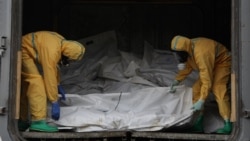
Krahenbuhl: We have several tens of thousands of Ukrainians registered in our database. The figure I can give you is that we have received 200,000 requests from families. These include both Ukrainians and Russians who are currently either presumed prisoners of war or presumed missing and possibly killed in action.
RFE/RL: Does the Red Cross have information about the Ukrainian children Russia has transferred from occupied territories?
Krahenbuhl: We have received requests from families about children, and we have also played a role in the return of about 100 children since 2022. Any individual requests that we receive, we follow up on, and as I said, in 100 cases we have also contributed to their return.
For example, in the case of Qatar, which has been involved in trying to facilitate and identify where the children are, we have been approached and have facilitated their return. And in 100 cases, it has been successful.
RFE/RL: Are you planning to visit Russia?
Krahenbuhl: I am always ready to go to Russia. I do not have dates at the moment, but it's important. I have now had a very important visit to Ukraine. It would be natural, of course, that at one point I also traveled to Moscow.

RFE/RL: What are you taking away with you when you leave Ukraine?
Krahenbuhl: During my visit, I saw the burns unit at one of the hospitals in Kyiv, where the patients arrived with really terrible burns and injuries. I saw the identification center. I went to the regional Clinical Hospital in Kyiv, where the people arrive with amputations.
We have invested there to create a physical rehabilitation center to make sure we can accompany these patients. Why am I describing this? Because this is the reality of what armed conflicts do to people, and it is not abstract. The ICRC is deeply connected to this reality.