




A quick drive southeast of the embattled Ukrainian city of Kupyansk, on the opposite banks of the Oskil River, is the smaller, similarly named town of Kupyansk-Vuzloviy.
In November 2025, Russia’s top military commander claimed the bigger Kupyansk had been recaptured from Ukrainian troops.
That was not true.
Ukrainian troops in fact mounted a counteroffensive and currently appear to be stamping out pockets of remaining Russian fighters in the city.
This past week, the same commander, General Valery Gerasimov, said Russian forces had taken control of Kupyansk-Vuzloviy.
The problem, as both Russian and Ukrainian battlefield observers noted: Russian forces were far away from the village -- about 10 kilometers -- never mind in control of it.
Weeks before the start of the fifth year of its all-out war, Russia is having more success obliterating Ukraine’s electricity grid and municipal heating plants, leaving civilians shivering in subzero cold, than it is securing any decisive victory on the battlefield.
Moscow’s forces are grinding down Ukrainian defenses in several places along the 1,100-kilometer front line. But they’re moving at a glacial pace; the slowest in any modern war since World War II, according to a new study -- and at an astronomical cost.
“The overall front is best described as ‘dynamic stagnation,’ meaning intense combat with marginal geographic change,” said Ivan Torres, a retired US Army major who is now senior Russian armed forces analyst for Rochan Consulting, a Polish research group.
Ukraine’s exhaustion hangs over the US-backed peace talks, which have progressed further than any other negotiations since the start of the invasion but remain clouded by disagreements on issues such as territory. A new round has tentatively been set for February 1 in Abu Dhabi.
“Ukraine is not losing, and Russia is not winning,” said the Royal United Services Institute, a London-based think tank.
Here’s where you want to pay attention on the battlefield.
Kupyansk
Home to an important rail junction, the city has changed hands twice: Russia captured it shortly after launching the invasion in February 2022. Ukrainian forces then overran poorly prepared Russian positions that September, taking back the city and reaching all the way to the Oskil.
As they have for more than a year now, Russian forces -- more numerous, with more weaponry, more willing to endure high loss rates -- have steadily moved toward Kupyansk, from the eastern banks of the Oskil and from the north.

In September, Russian units moved through unused gas pipelines running underground, and under the Oskil, to slip past Ukraine’s defenses on Kupyansk’s northern outskirts. The maneuver gave them a foothold in the city -- small groups of soldiers infiltrating and holing up in basements and ruins.
Local officers raised alarms, Ukrainian commanders shifted specialized drone companies and more capable units, including the 2nd Khartia Corps of the National Guard. Before New Year’s, the units had pushed back Russian lines on the outskirts, squeezing supply lines, and then started targeting individual positions.
Cold weather over the past eight weeks has slowed down Ukrainian efforts to wipe out the last pockets of Russian soldiers remaining, Ukrainian troops said, though snow cover makes it easier to spot tracks.
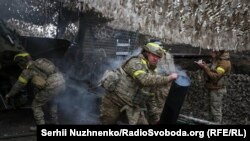
"Sometimes we don't see the enemy himself, but we see his trail. We walk along it and find out where he is. But now the weather conditions are greatly affecting the infantrymen: it's difficult in buildings, very cold,” a company commander with 13th Khartia Brigade told RFE/RL’s Ukrainian Service. He gave his alias, “Bore,” in line with military guidelines.
Ukrainian officers said around 60 Russian infantrymen were holed up in Kupyansk’s center as of January 26.
Russian forces have not given up, local officers said: platoon-sized units are sent daily to try to break the Ukrainians’ blockade, and commanders may try to retake the city in the coming weeks.
“The complete clearing of [Kupyansk] seems difficult, but the Russians have lost momentum in the area,” said Emil Kastehelmi, a military analyst with Black Bird Group, a Finnish research organization.
“I wouldn't expect very significant changes in the area in the near future,” he told RFE/RL. “It's possible Ukraine may lose positions east of Oskil River at some point, but that wouldn't enable the Russians to advance very much further instantly because of the natural obstacle.”
Kostyantynivka
Another junction for rail and road supplies, Kostyantynivka has been under growing threat since Russian troops managed to push out Ukrainian forces from Chasiv Yar, to the northeast, last year. That gave Russia a height advantage: Chasiv Yar sits at a higher elevation, giving Russian forces the ability to shell and bombard defenses from above.
Pressing from the south and southwest, Russian troops now threaten the T0504 highway -- running southwest-northeast -- as well as the H20 road, which stretches northwest toward Kramatorsk. That city, along with Slovyansk, are Ukraine’s two strongholds -- part of what’s known as the “forest belt” -- that serve as the keystone for defending the dwindling parts of the Donetsk region it still holds.
“Kostyantynivka…is now likely the main effort for the Russian operations,” Torres said. “These areas remain the most problematic for Ukraine. Russian forces have spent months attempting to envelop these logistics hubs. The fighting here is characterized by creeping infantry assaults intended to exhaust Ukrainian defenders rather than achieve deep penetration.”
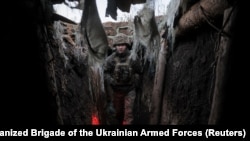
The “creeping” infantry assaults are sometimes dubbed “mole” tactics, he said: “Owing to the widespread presence of drones, both parties -- particularly Russian infantry -- have adopted the strategy of constructing extensive tunnel networks and employing ‘foxhole-to-foxhole’ logistics. Movement above ground is highly challenging during daylight hours.”
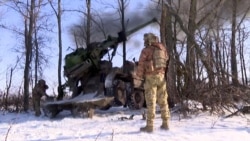

"Our defenders are in position, our defenses are working, the city is still living,” a spokesman for the 19th Army Corps said in a statement. “There's been a lot of information noise, especially when it's advantageous for someone to show off ‘successes’ that don't actually exist."
Pokrovsk And Myrnohrad
Once a major logistics hub for Ukrainian defenses for the southern Donetsk region, Pokrovsk has been squeezed steadily for months now, with Russian troops -- one or two-man units -- infiltrating the city gradually. It’s worked, and Russian forces now control around 80-90 percent of the city. Ukrainian commanders are now struggling to reset defensive lines to the northwest.
“The opponent continues to advance by small infantry groups,” General Oleksandr Syrskiy, who traveled to frontline positions outside the city last week, said in a Facebook post. “Our key task is to inflict maximum losses to the enemy, destroy his reserves and consistently lower his offensive potential.”
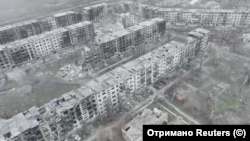
Pokrovsk’s fall to Russian troops, which experts say is imminent, will endanger other Ukrainian positions to the northeast, around the town of Myrnohrad, which is also largely under Russian control. Soldiers from the 7th Rapid Response Corps of Ukraine’s Air Assault Forces said that Russian units have brought heavy equipment into the town, and set up a forward command post, indicating confidence in their ability to hold it.
“Russian forces control most of the [two] cities, and even though Ukrainian resistance may still be present in some places, the cities can be considered lost,” said Kastehelmi, who just returned from a trip to Ukraine.
Hulaypole And Orikhiv
In Hulyaypole, southwest of Pokrovsk, Ukrainian defenses relied in part on the Haychur River, which snakes its way through the town’s northeastern districts. As of January 28, experts warned the Russian forces had crossed the waterway, and consolidated their positions, and Ukrainians were struggling to thwart further advances.
Some experts said Ukrainian defenses may have been weakened by exhausted units and the commanders’ decision to shift resources to capture Kupyansk to the north.

“The fall of Hulyaypole was an unfortunate event, but the Russians haven't advanced much beyond that,” Kastehelmi said.
“Given the challenging weather conditions and the ongoing nature of the fighting, it is difficult to control every meter of the forest belts -- a situation similar to the enemy's, incidentally,” according to Rybar, a Russian war blogger on Telegram with ties to the Russian Defense Ministry.
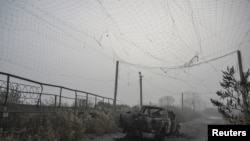
With the Russian crossing, Ukrainian commanders scrambled, rushing the battle-hardened 225th Separate Assault Brigade to shore up the defenses and keep Russian troops from advancing further.
In comments to Ukrainian media just before the New Year, Syrskiy blamed a specific unit -- the 102nd Territorial Defense Brigade -- for withdrawing from a command and observation post in the town. He suggested unit commanders could face disciplinary action.

Ukraine's Territorial Defense Forces are typically manned by reservists or combat veterans, that often have less experience or poorer quality equipment.
Losing Hulyaypole is problematic because to the west is relatively open steppe that lacks defensive lines and can be crossed easily by armored vehicles. That would open the door for Russian units to push west toward Orikhiv, a larger town about 70 kilometers away.
“The capture of this town and the breach of Ukrainian defenses along the Haychur River threaten the viability of Ukraine's defense of Orikhiv,” Torres said.

Kamyanske And Zaporizhzhya
Far less attention -- Ukrainian or Russian -- has been focused on the gradual advances that Russian troops have made along the E1015 highway, which runs north along the shores of what used to be the Kakhovka Reservoir on the Dnieper River. The Kakhovka Dam was destroyed while under Russian control in June 2023, draining much of the massive reservoir.
In late December 2025, Russian troops managed to push north from the town of Kamyanske, along the highway that leads to the regional capital, Zaporizhzhya.
“They can theoretically cause more problems in the coming months, if they are able to get the city in the range of smaller drones,” Kastehelmi said. “In the medium to long term, the situation in Zaporizhzhya can develop in a worrying direction, but now some local, tactical setbacks still don't mean the general situation is heading to a larger crisis.”