





Thousands of protesters have left Cairo's Tahrir square after the country's new military rulers suspended the constitution and dissolved parliament.
In a statement on state TV on February 13, the Supreme Council of the Armed Forces said it would stay in power for six months, or until elections.
Egypt's current parliament is dominated by supporters of President Hosni Mubarak, who was ousted on February 11 after 18 days of mass protests.
Opposition figure Ayman Nour, who challenged Mubarak for the presidency in 2005, said the steps taken by the country's new military leadership should satisfy protesters.
Nour told Reuters after the military leadership announced the new moves that "it is a victory for the revolution."
Earlier in the day, Prime Minister Ahmed Shafiq told reporters that the caretaker government's No. 1 priority was "to restore security and to facilitate daily life for its citizens."
His comments came after convening with his cabinet in their first meeting since Mubarak resigned after 18 straight days of massive antigovernment protests.
Soldiers Scuffle With Protesters
Soldiers wearing red berets formed lines around the protesters on February 13 to push them into a corner. They were using minimal force, trying to persuade the demonstrators to leave.
But it appears the soldiers acted too fast. Some of the protesters began scuffling with them after the sight of members of the hated police appeared to infuriate some of the crowd.
Several thousand new protesters arrived on the square to reinforce the demonstrators and managed to push the soldiers back.
Some protesters have organized a so-called Council of Trustees to defend the revolution and maintain pressure on the military. But many people in Cairo say they want normal life to resume.
Army Takes Control
One man who protested against Mubarak's regime said Egyptians should now give the military a chance by trusting it to help rebuild the country.
"Our demand was the fall of the regime, and that's been met. We all had one goal, to live in freedom and thank God we were able to do so," he said.
"The people here have other demands, demands that are impossible. God created the world in seven days, but they want everything in one day and that's wrong."
 Soldiers help dismantle tents erected by protesters in Cairos Tahrir Square, as people camping out in the square pack and leave.
The military has confirmed it will honor all Egypt's international obligations. U.S. President Barack Obama welcomed the announcement.
The new administration said it's investigating accusations against some of Mubarak's former top ministers. Attempts are also under way to reclaim some of the money controlled by members of his regime.
Back To Normal
On Cairo's streets, crowds were still celebrating Mubarak's removal early on February 13. But many shops reopened on February 13 and business owners and traders said they hope for a quick resumption of normal life after weeks of unrest brought many businesses to a standstill.
With police -- despised under Mubarak for enforcing his dictatorial rule -- still absent from the streets, troops still guard strategic buildings.
One factory owner said he was concerned about the security situation. "We tried [living without police] by assuming the role of police officers ourselves and wore ourselves out," he said.
"We can't go to work, take care of our homes and enforce general security at the same time. It is a very difficult thing to do, it's not possible."
But another man who owned a kiosk said he'd seen signs of a turnaround. "There has been some buying and selling, much better than before, when we had to close at a certain hour because of the curfew," he said.
Mubarak, who left Cairo on February 13, is believed to be at his residence in the resort of Sharm el-Sheikh. His future plans aren't clear.
As Egyptians wind down their celebrations amid their uncertain future, Mubarak's downfall continued to have ripple effects across the Arab world, with police breaking up antigovernment protests in Yemen and Algeria on February 12.
PHOTO GALLERY -- A look at the political life of Hosni Mubarak:

![An undated photo of Mubarak as a young Royal Egyptian Air Force lieutenant.]()
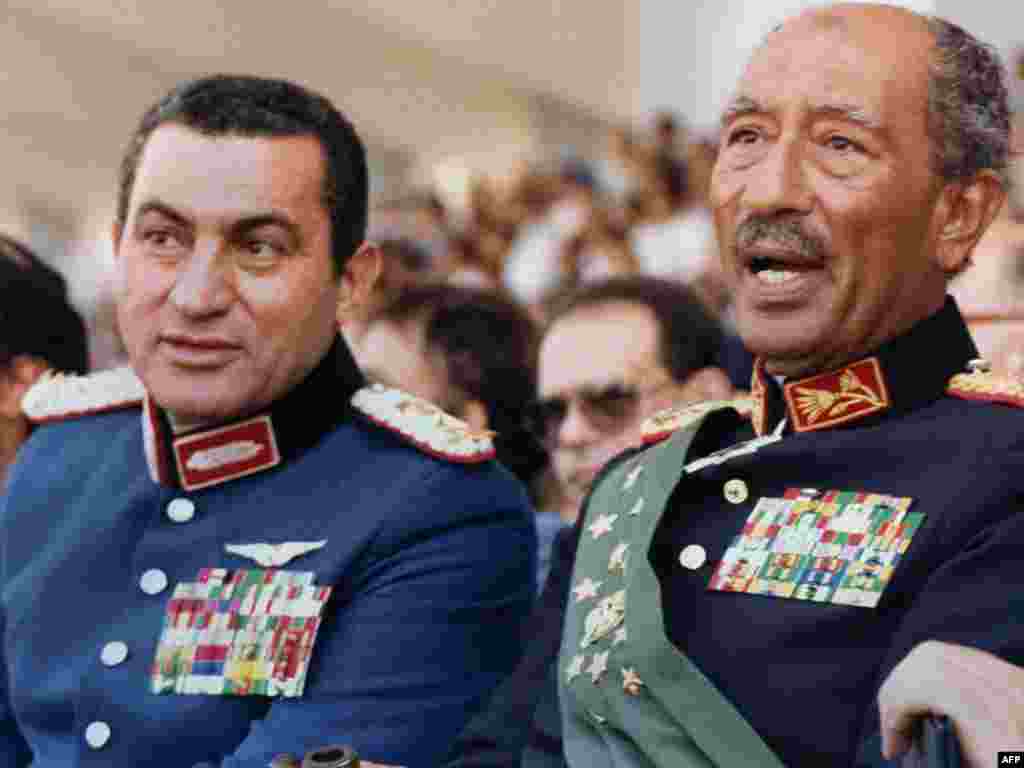
![Egyptian vice president at the time, Mubarak with the late President Anwar Sadat. - Both dressed in military honor uniforms, Mubarak and Sadat attend a military parade on October 6, 1981, in Cairo during which Sadat was assassinated by a group of Islamist fundamentalists.]()
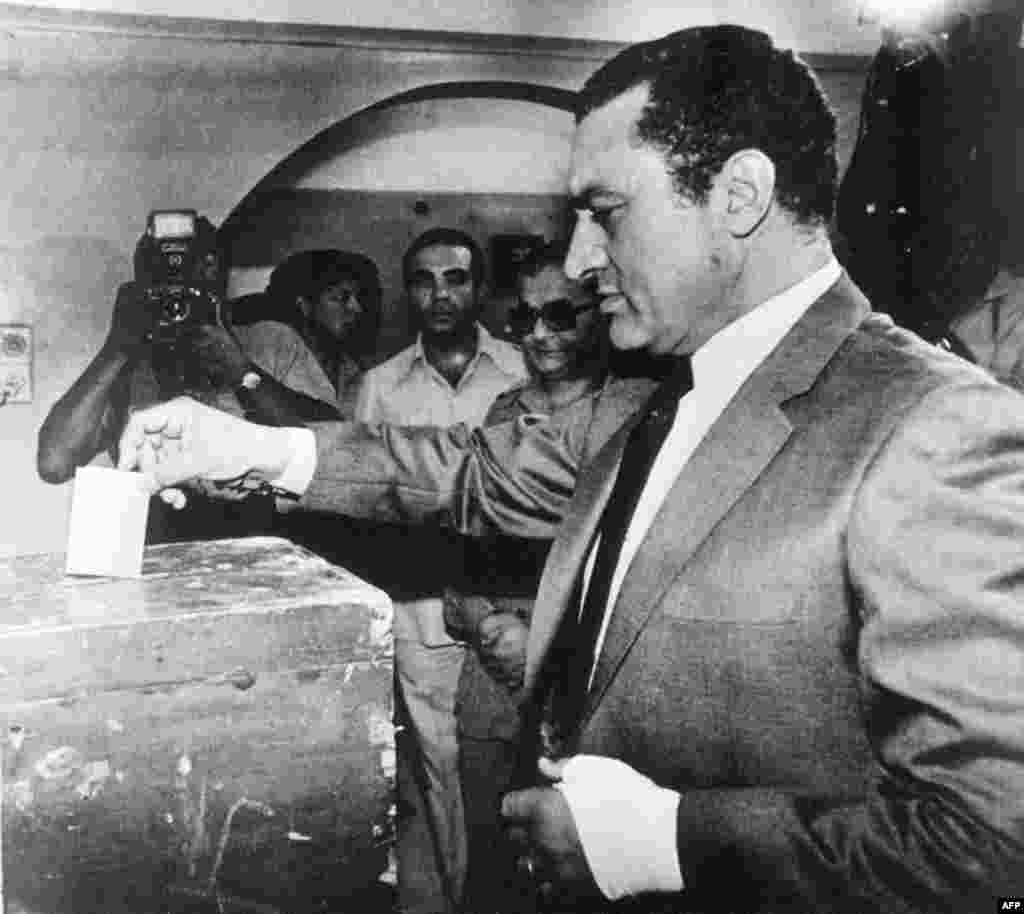
![Mubarak votes in an October 13, 1981, referendum on whether he will succeed the slain President Anwar Sadat.]()
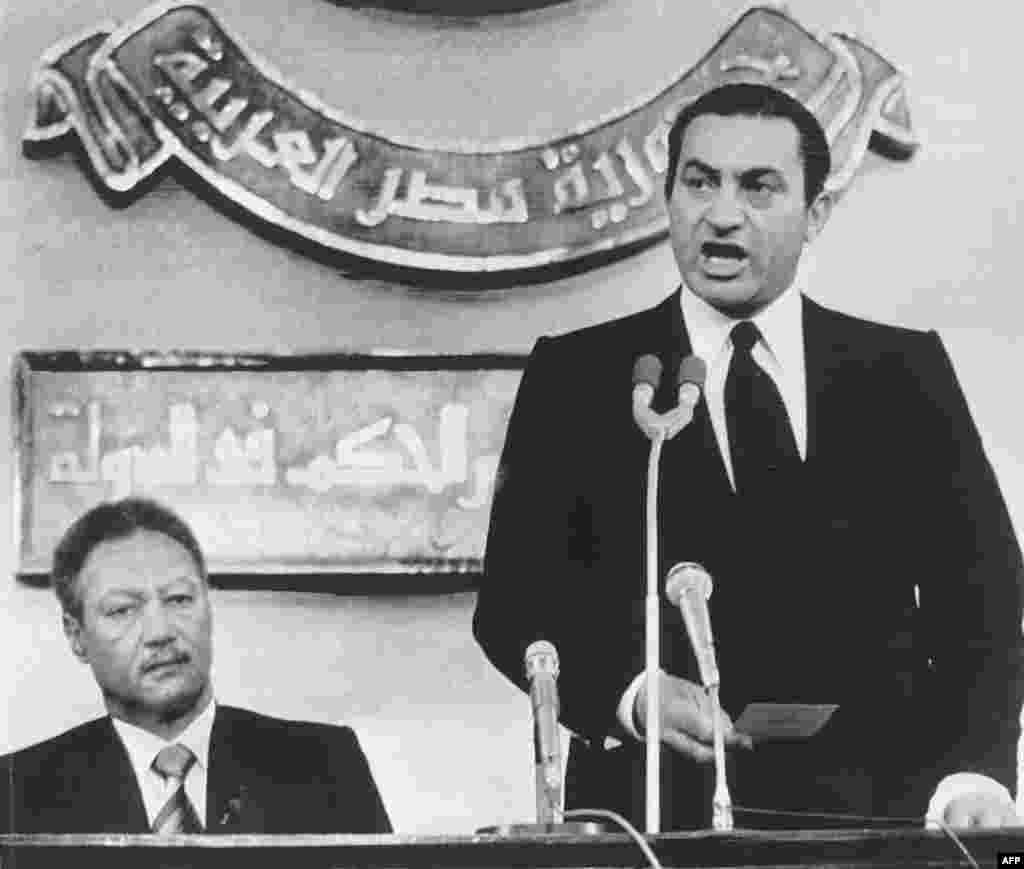
![Mubarak takes the oath of office as Egypt's new leader on October 14, 1981.]()
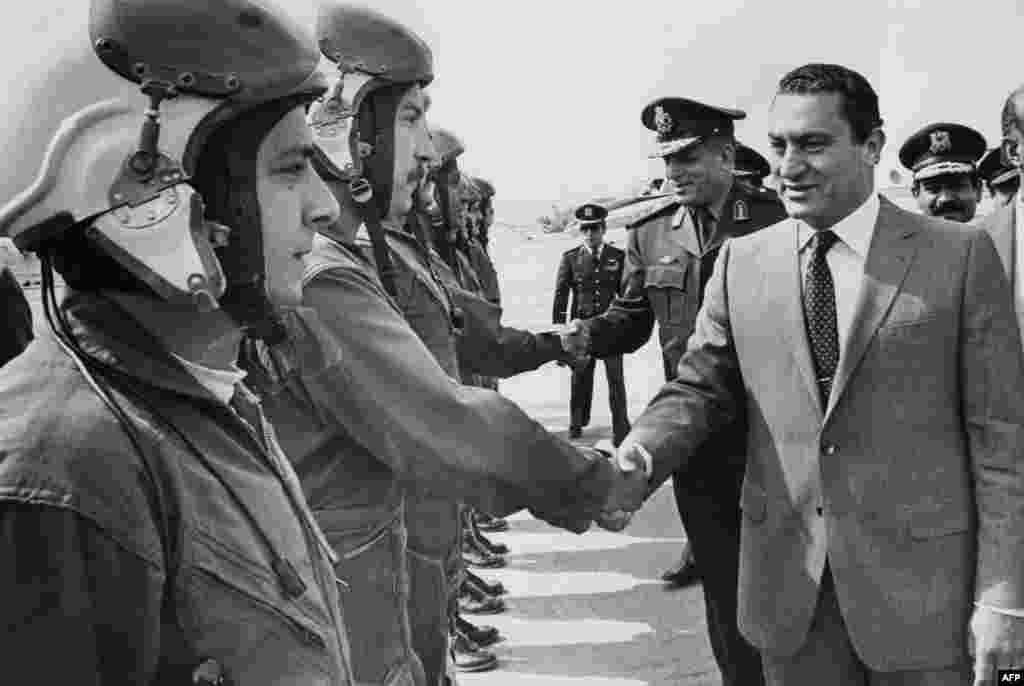
![Mubarak shakes hands with jet pilots in April 1991. - Mubarak joined the Air Force Academy in 1950 and received instruction in the Soviet Union, moving up the chain of command from pilot to instructor to squadron leader to base commander. He was appointed director of the Air Force Academy and chief of staff of the Egyptian Air Force during the War of Attrition between Egypt and Israel (1967-72) and by 1973 had been promoted to the rank of air chief marshal.]()
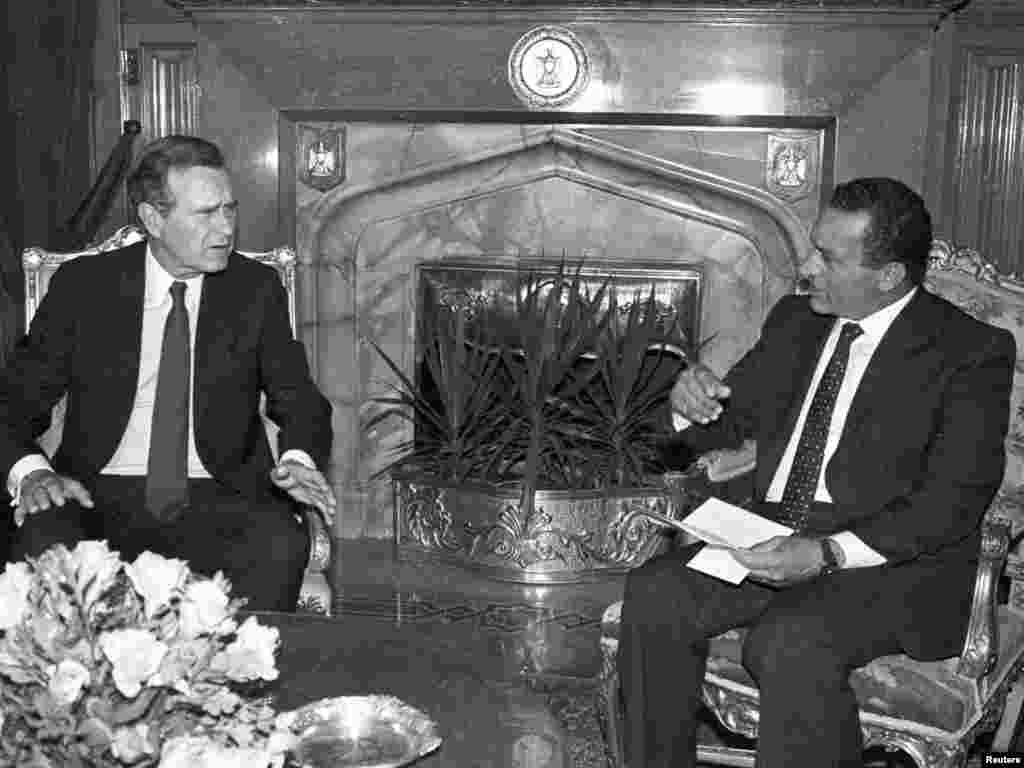
![Mubarak meets with U.S. Vice President George Bush at the Presidential Palace in Cairo in August 1986.]()
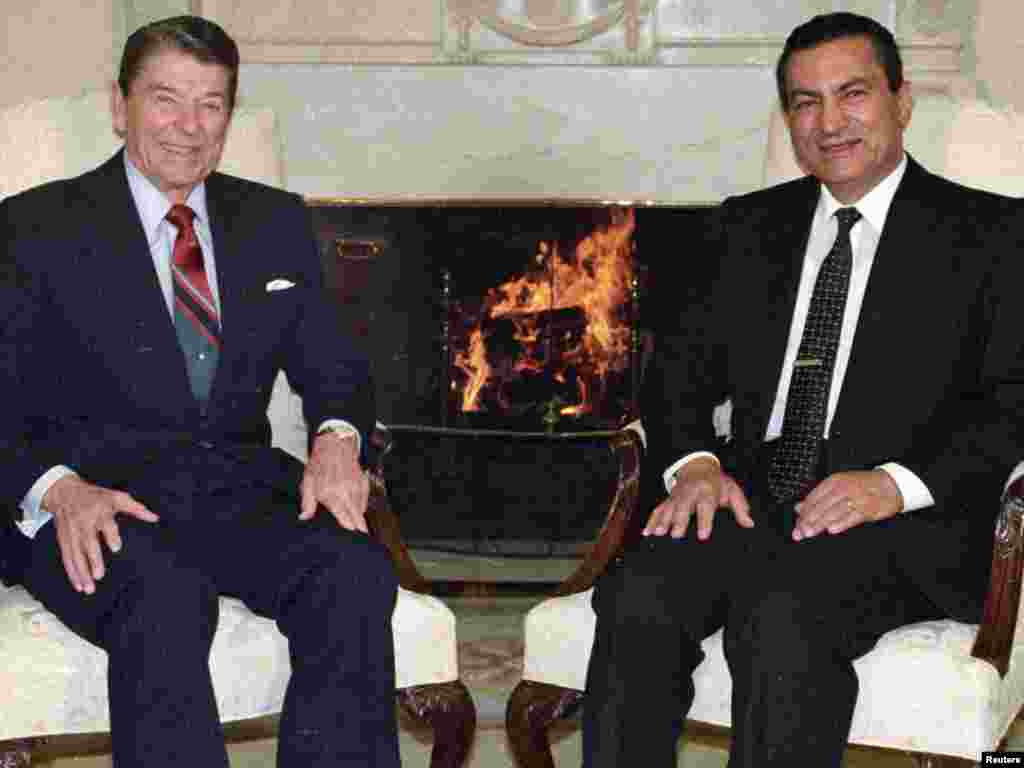
![Mubarak meets with U.S. President Ronald Reagan at the White House in January 1988.]()
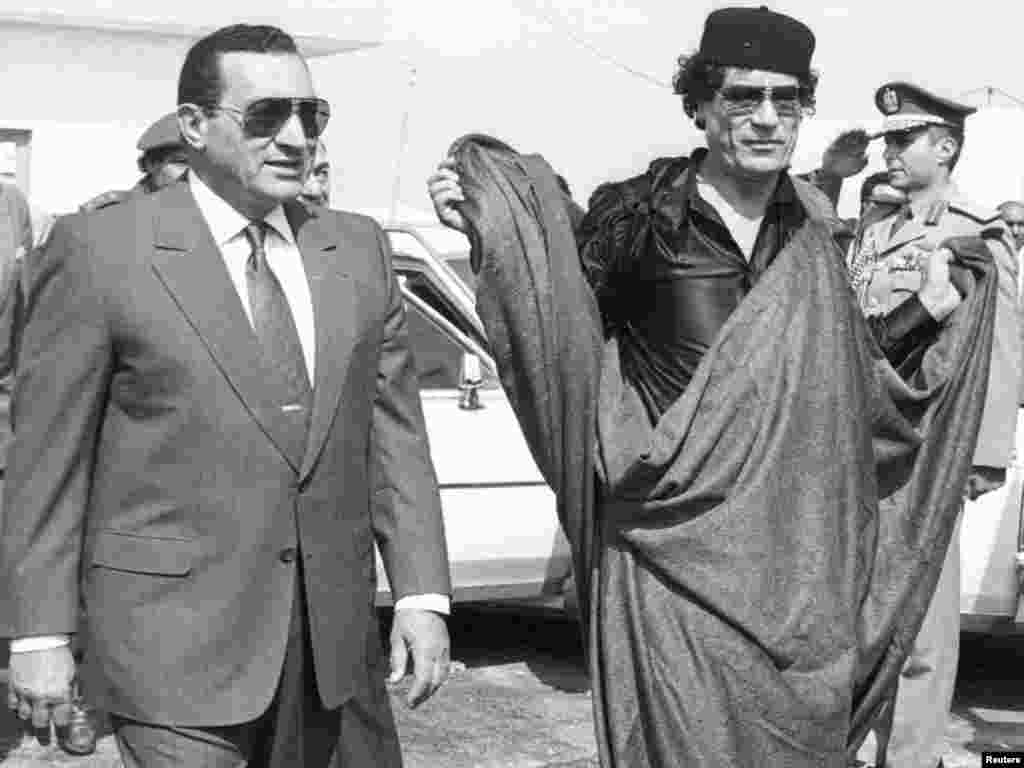
![Mubarak meets Libyan Leader Muammar Qaddafi at the Egyptian border city of Mersa in October 1989.]()
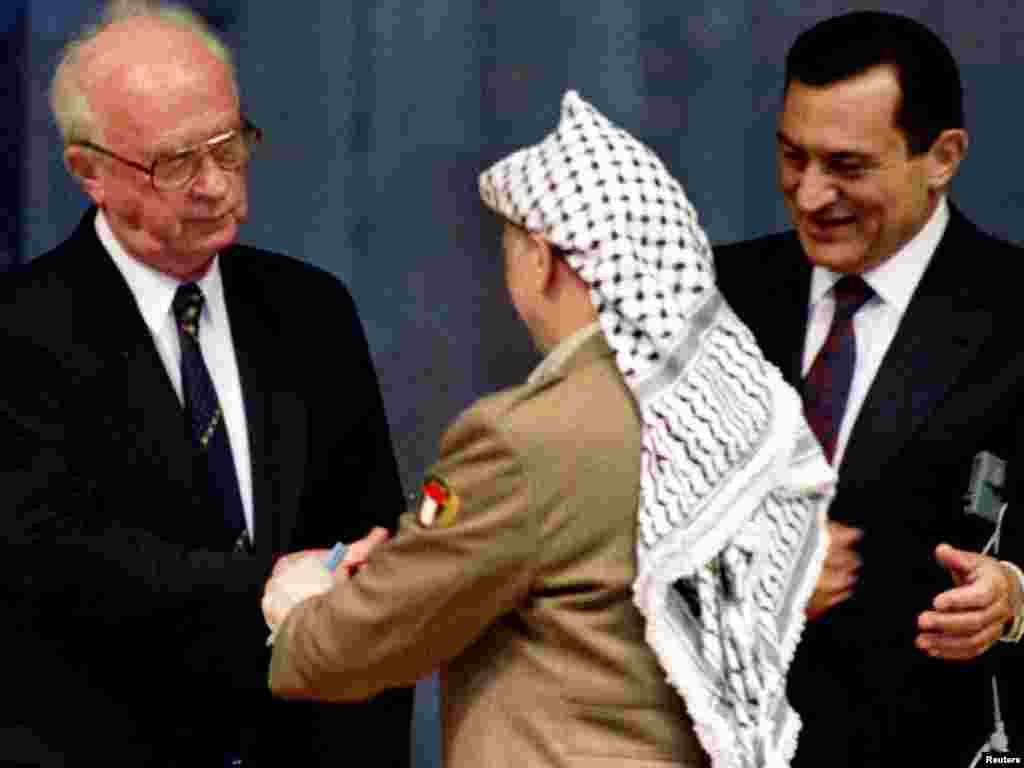
![Mubarak looks on as Israel's Prime Minister Yitzhak Rabin (left) shakes hands with PLO Chairman Yasser Arafat. - Mubarak hosted the historic signing ceremony as Arafat signed the PLO-Israeli peace accords on limited Palestinian self-rule for the Gaza Strip and Jericho in Egypt on May 4, 1994.]()
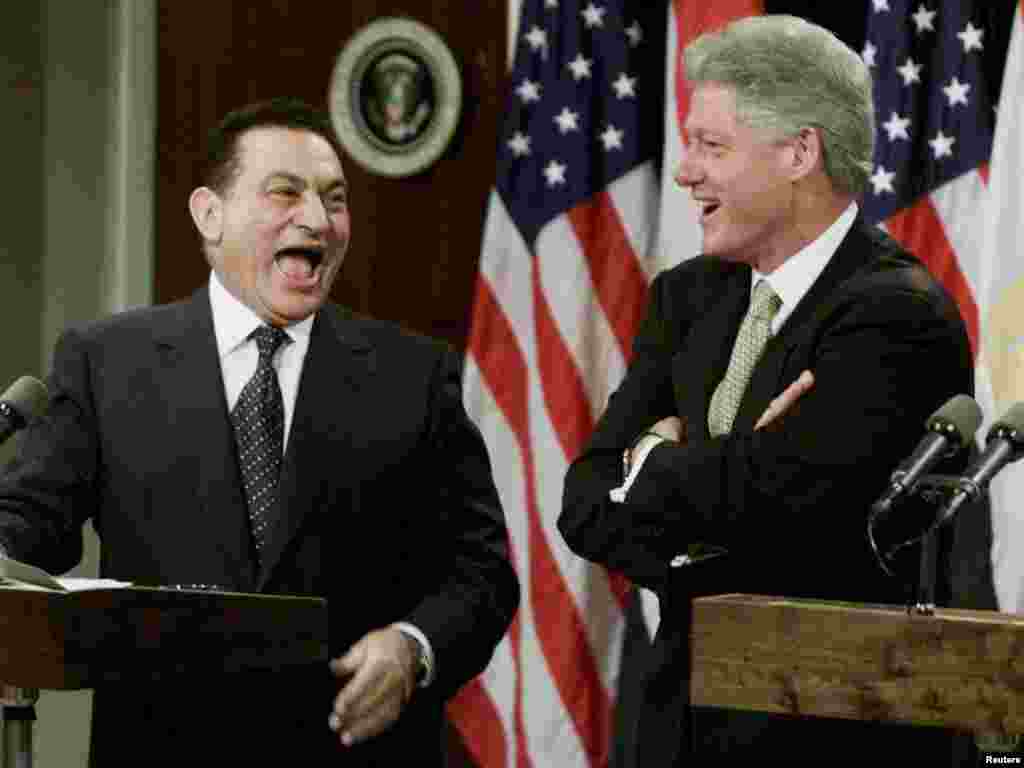
![Mubarak and U.S. President Bill Clinton during a joint press conference at the White House in July 1999.]()
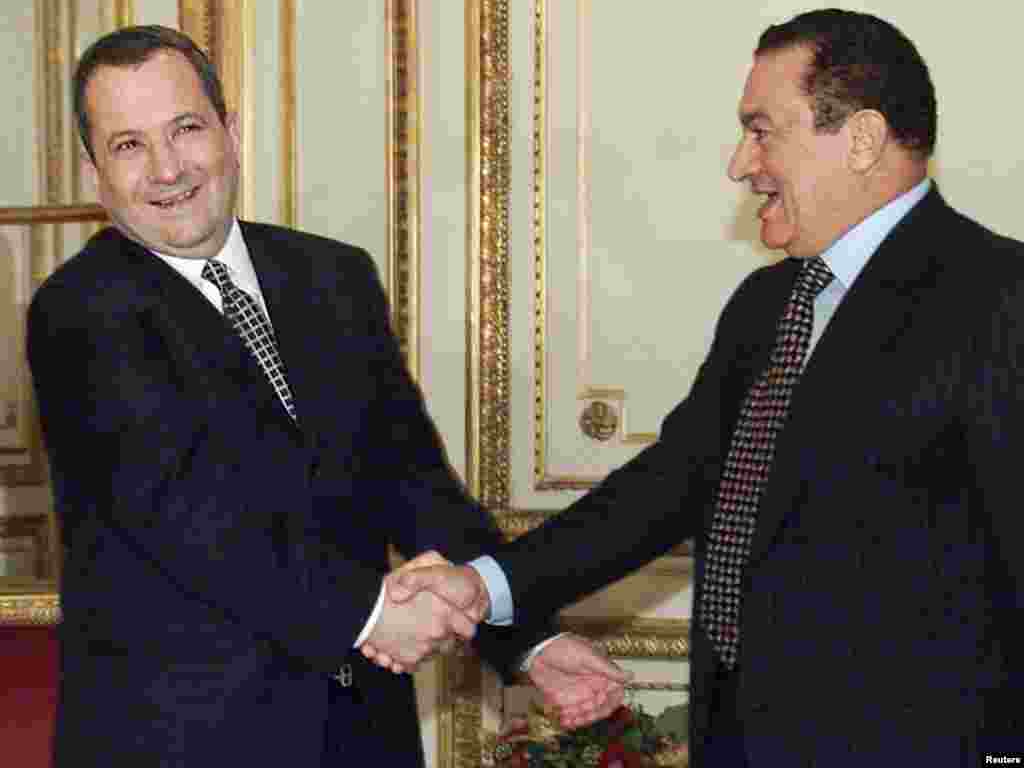
![Mubarak and Israeli Prime Minister Ehud Barak shake hands before a meeting in Paris in November 1999.]()
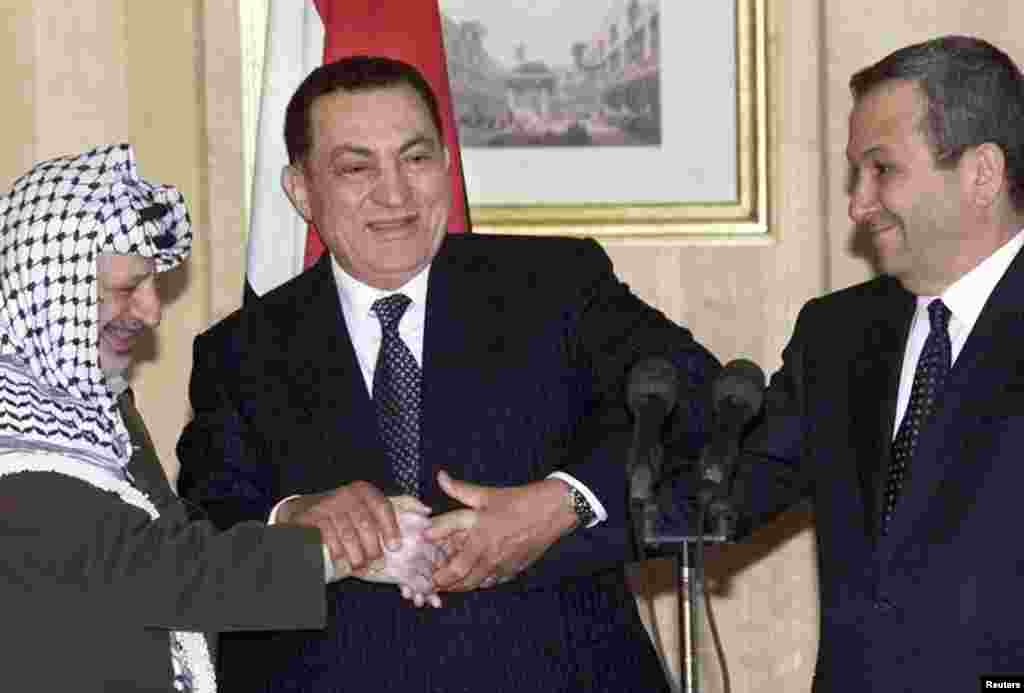
![Mubarak shakes hands with Israeli Prime Minister Ehud Barak and Palestinian leader Yasser Arafat on March 9, 2000.]()
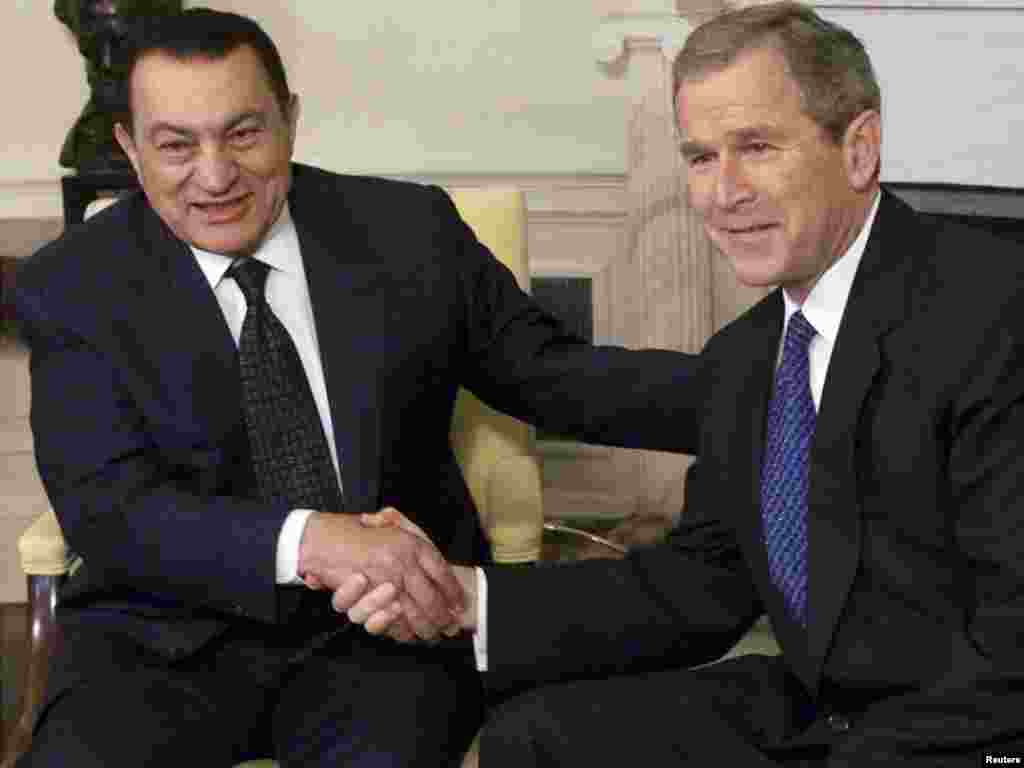
![Mubarak meets with U.S. President George W. Bush in Washington in April 2001.]()
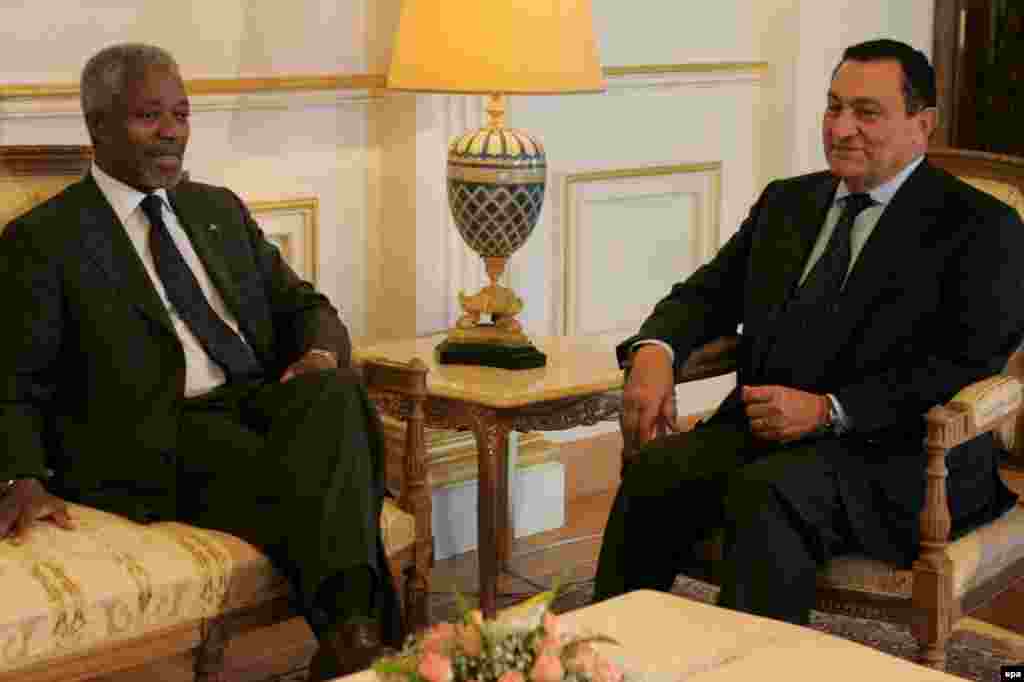
![Mubarak meets with UN Secretary-General Kofi Annan in Alexandria in September 2006.]()
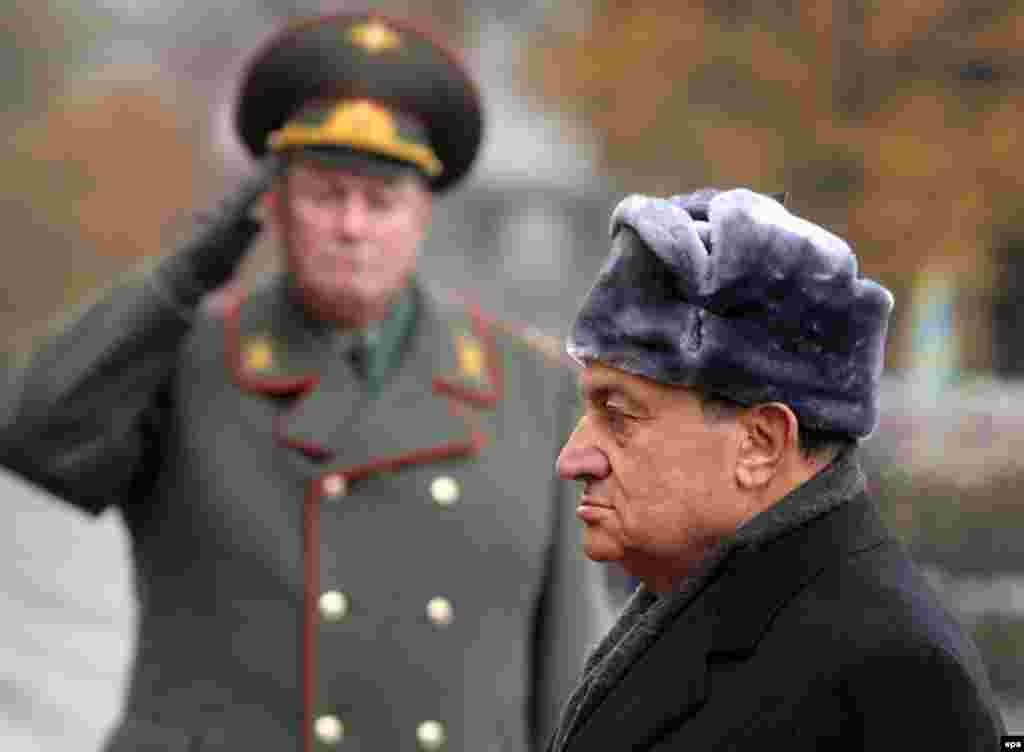
![Mubarak attends a wreath-laying ceremony at the Tomb of the Unknown Soldier in Moscow in November 2006.]()
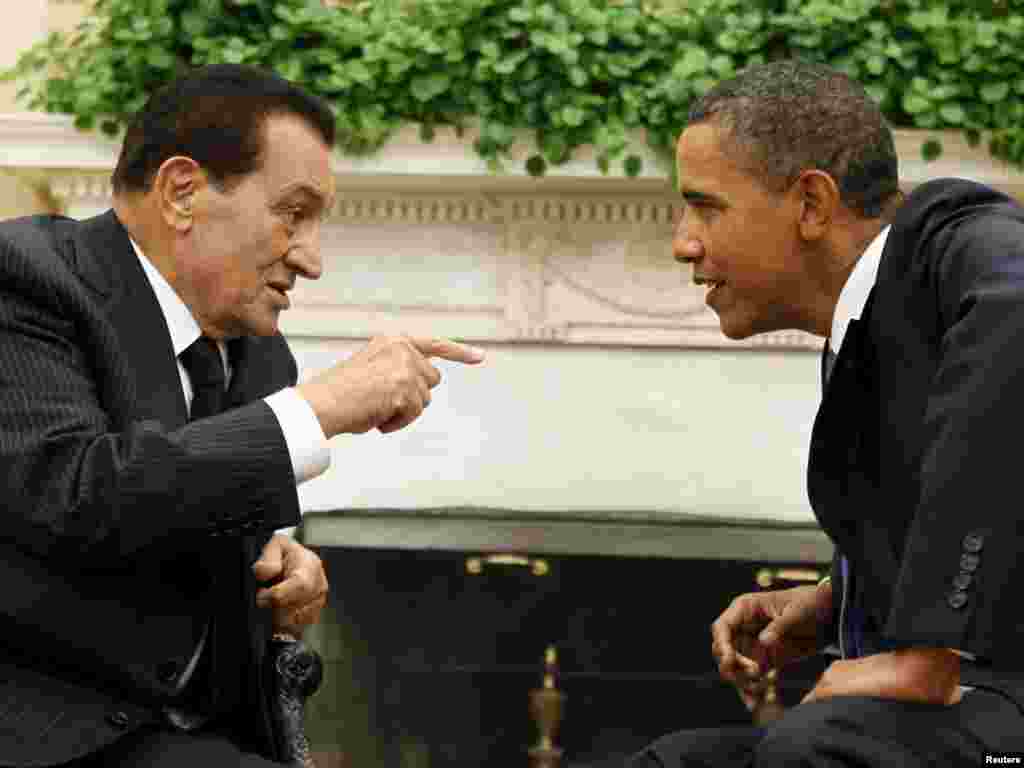
![Mubarak holds talks with U.S. President Barack Obama at the White House in September 2010.]()
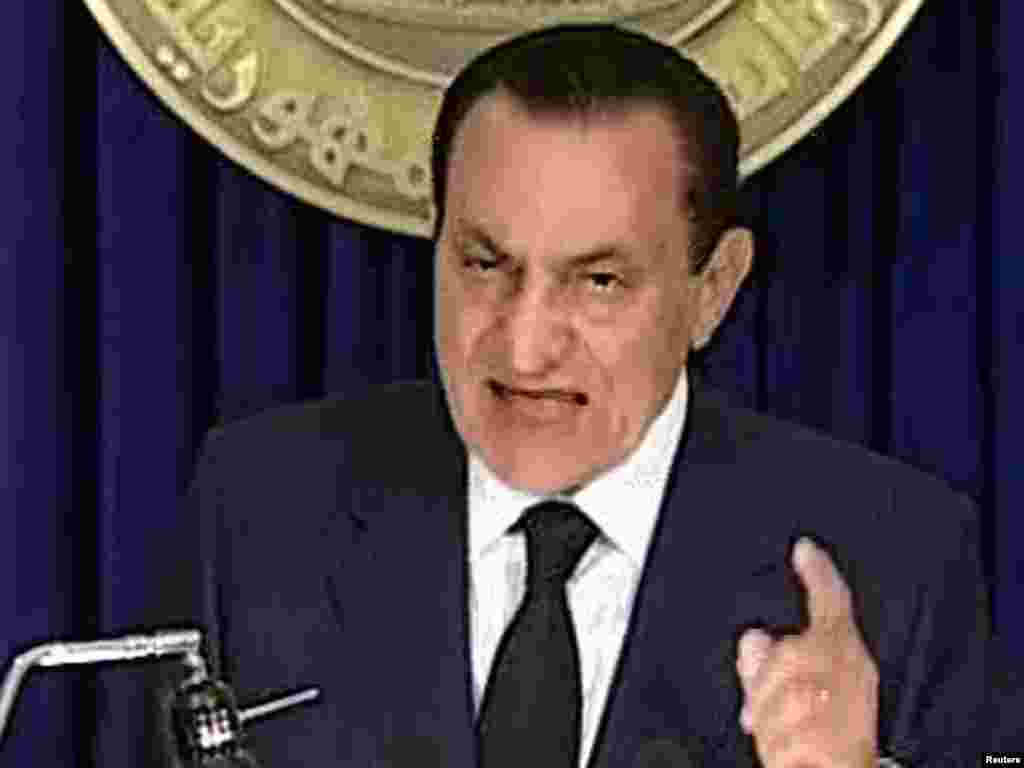
![Mubarak addresses the nation on state TV on February 1, announcing he would not seek reelection.]()
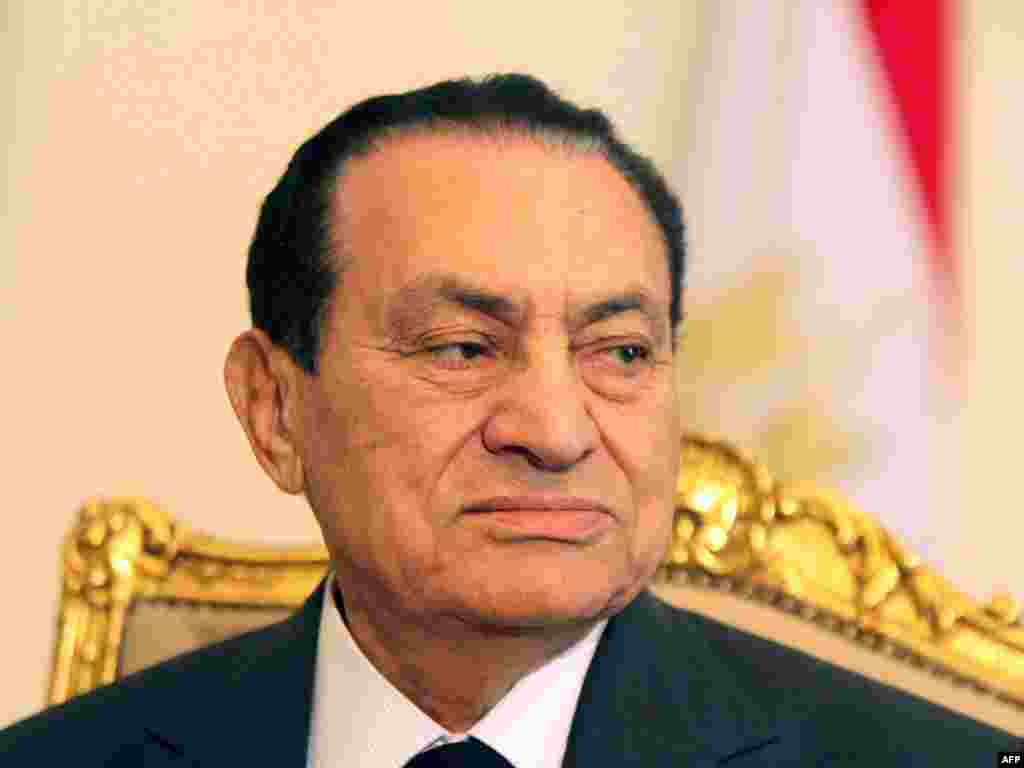
![Mubarak in Cairo on February 8, amid massive protests calling for his resignation.]()
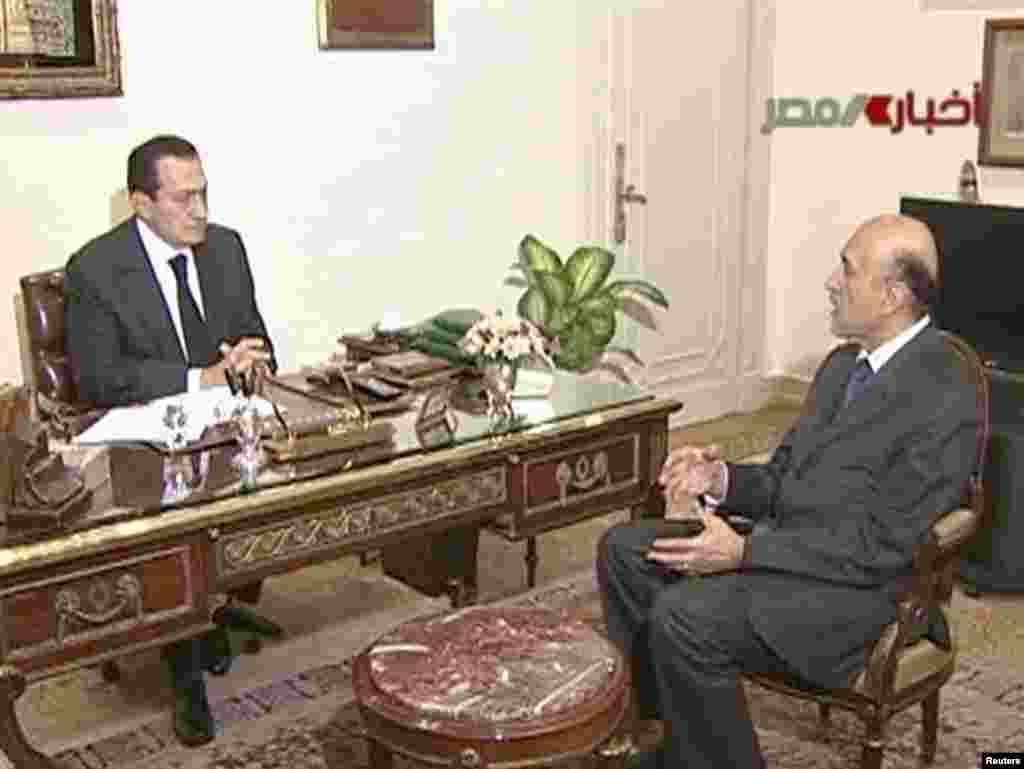
![Mubarak speaks with Vice President Omar Suleiman in Cairo on February 10 during the crisis.]()
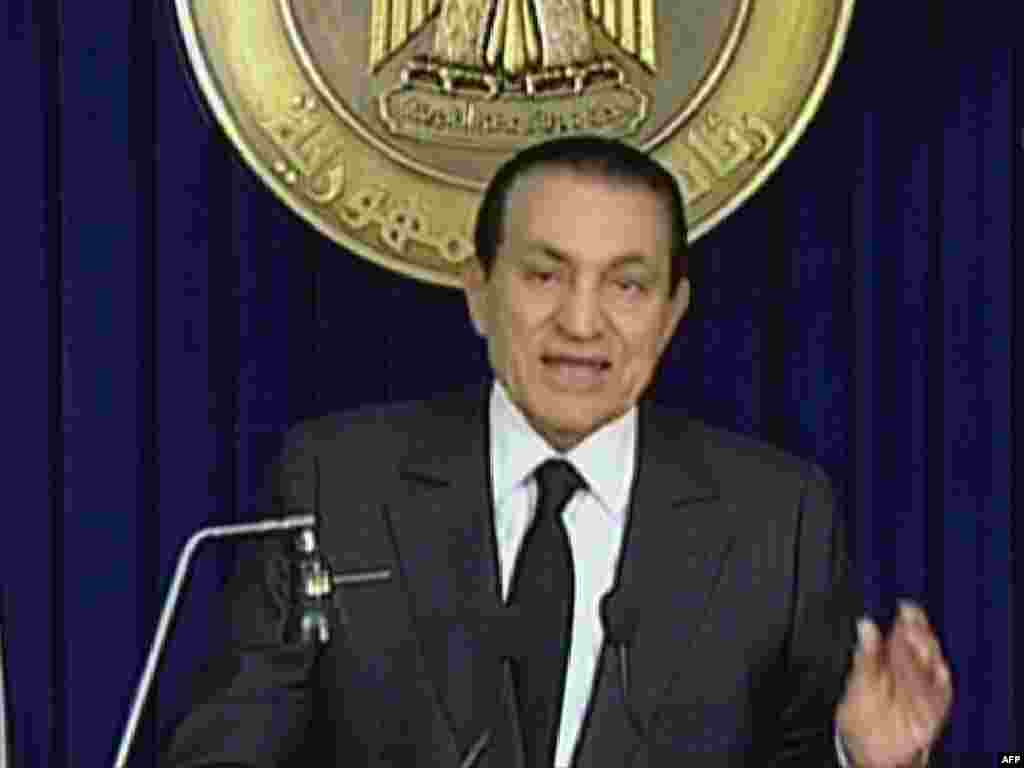
![Mubarak addresses the nation again on February 10 but doesn't announce his resignation, as had been expected.]()
compiled from agency reports
Eyewitness
'An Island In An Orgy Of Violence': Being Detained In Cairo
Egyptian Blogger: 'Five Years Ago I Was A Minority Opposition. Today, I Am The People'
Background And Analysis
For Egypt, Do All Roads Lead To Turkey?
Whose Side Is History On After Egypt's 'Berlin Moment'?
Muslim Brotherhood: Radical Islamists Or Reluctant Democrats?
Washington Faces Delicate Balancing Act
Local Movement Or Voice Of The 'Arab Street'?
Women Play Vital Role In Protests
Around The Region
Many Israelis Worry About The 'New Egypt'
Could The New 'Age Of Rage' Sweep Syria?
Oil And Other Markets Get Increasingly Nervous Over Egyptian Crisis
How Is Unrest Seen In Iran?
In a statement on state TV on February 13, the Supreme Council of the Armed Forces said it would stay in power for six months, or until elections.
Egypt's current parliament is dominated by supporters of President Hosni Mubarak, who was ousted on February 11 after 18 days of mass protests.
Opposition figure Ayman Nour, who challenged Mubarak for the presidency in 2005, said the steps taken by the country's new military leadership should satisfy protesters.
Nour told Reuters after the military leadership announced the new moves that "it is a victory for the revolution."
Earlier in the day, Prime Minister Ahmed Shafiq told reporters that the caretaker government's No. 1 priority was "to restore security and to facilitate daily life for its citizens."
His comments came after convening with his cabinet in their first meeting since Mubarak resigned after 18 straight days of massive antigovernment protests.
Soldiers Scuffle With Protesters
Soldiers wearing red berets formed lines around the protesters on February 13 to push them into a corner. They were using minimal force, trying to persuade the demonstrators to leave.
But it appears the soldiers acted too fast. Some of the protesters began scuffling with them after the sight of members of the hated police appeared to infuriate some of the crowd.
Several thousand new protesters arrived on the square to reinforce the demonstrators and managed to push the soldiers back.
Some protesters have organized a so-called Council of Trustees to defend the revolution and maintain pressure on the military. But many people in Cairo say they want normal life to resume.
Army Takes Control
One man who protested against Mubarak's regime said Egyptians should now give the military a chance by trusting it to help rebuild the country.
"Our demand was the fall of the regime, and that's been met. We all had one goal, to live in freedom and thank God we were able to do so," he said.
"The people here have other demands, demands that are impossible. God created the world in seven days, but they want everything in one day and that's wrong."

The military has confirmed it will honor all Egypt's international obligations. U.S. President Barack Obama welcomed the announcement.
The new administration said it's investigating accusations against some of Mubarak's former top ministers. Attempts are also under way to reclaim some of the money controlled by members of his regime.
Back To Normal
On Cairo's streets, crowds were still celebrating Mubarak's removal early on February 13. But many shops reopened on February 13 and business owners and traders said they hope for a quick resumption of normal life after weeks of unrest brought many businesses to a standstill.
With police -- despised under Mubarak for enforcing his dictatorial rule -- still absent from the streets, troops still guard strategic buildings.
One factory owner said he was concerned about the security situation. "We tried [living without police] by assuming the role of police officers ourselves and wore ourselves out," he said.
"We can't go to work, take care of our homes and enforce general security at the same time. It is a very difficult thing to do, it's not possible."
But another man who owned a kiosk said he'd seen signs of a turnaround. "There has been some buying and selling, much better than before, when we had to close at a certain hour because of the curfew," he said.
Mubarak, who left Cairo on February 13, is believed to be at his residence in the resort of Sharm el-Sheikh. His future plans aren't clear.
As Egyptians wind down their celebrations amid their uncertain future, Mubarak's downfall continued to have ripple effects across the Arab world, with police breaking up antigovernment protests in Yemen and Algeria on February 12.
PHOTO GALLERY -- A look at the political life of Hosni Mubarak:
A Look Back At The Political Life Of Hosni Mubarak
Show more
Show less
Show more
Show less
Show more
Show less
Show more
Show less
Show more
Show less
Show more
Show less
Show more
Show less
Show more
Show less
Show more
Show less
Show more
Show less
Show more
Show less
Show more
Show less
Show more
Show less
Show more
Show less
Show more
Show less
Show more
Show less
Show more
Show less
Show more
Show less
Show more
Show less
Show more
Show less
compiled from agency reports
Egypt's Unrest
Egypt's Protests
Eyewitness
'An Island In An Orgy Of Violence': Being Detained In Cairo
Egyptian Blogger: 'Five Years Ago I Was A Minority Opposition. Today, I Am The People'
Background And Analysis
For Egypt, Do All Roads Lead To Turkey?
Whose Side Is History On After Egypt's 'Berlin Moment'?
Muslim Brotherhood: Radical Islamists Or Reluctant Democrats?
Washington Faces Delicate Balancing Act
Local Movement Or Voice Of The 'Arab Street'?
Women Play Vital Role In Protests
Around The Region
Many Israelis Worry About The 'New Egypt'
Could The New 'Age Of Rage' Sweep Syria?
Oil And Other Markets Get Increasingly Nervous Over Egyptian Crisis
How Is Unrest Seen In Iran?