Accessibility links

Breaking News

Egyptians Celebrate Mubarak's Exit From Power

Updated

Revolution In Egypt -- Mubarak Steps Down
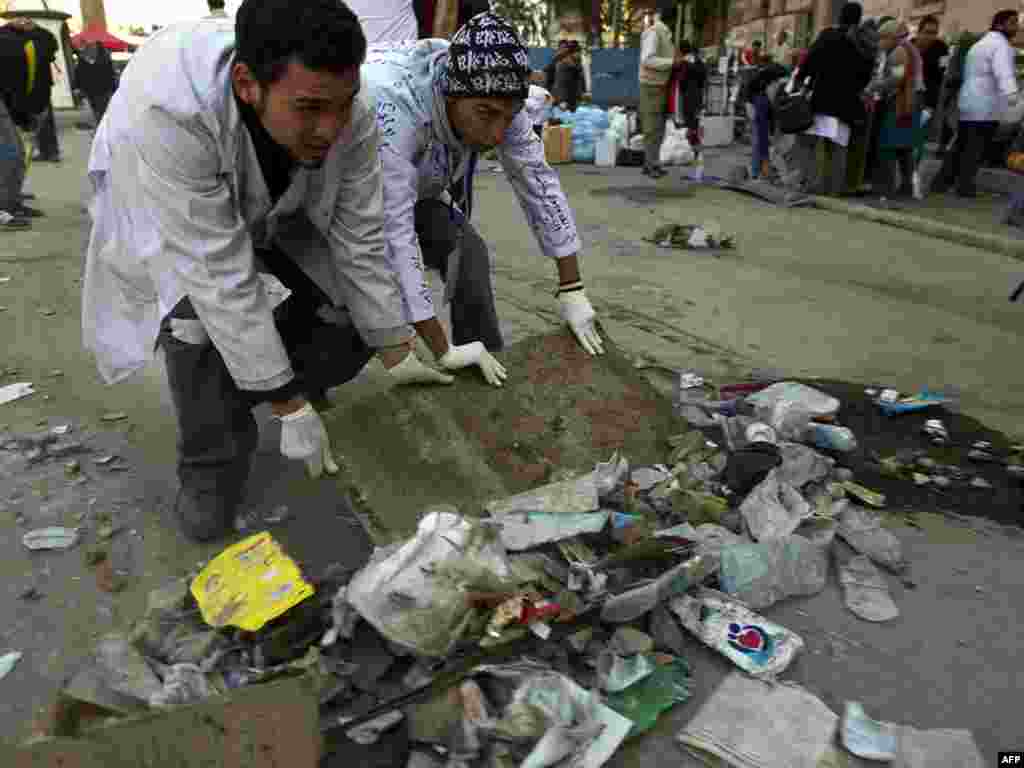
Medical students who treated the wounded during the uprising clean a section of Cairo's Tahrir Square on February 12.
1/16 Medical students who treated the wounded during the uprising clean a section of Cairo's Tahrir Square on February 12.
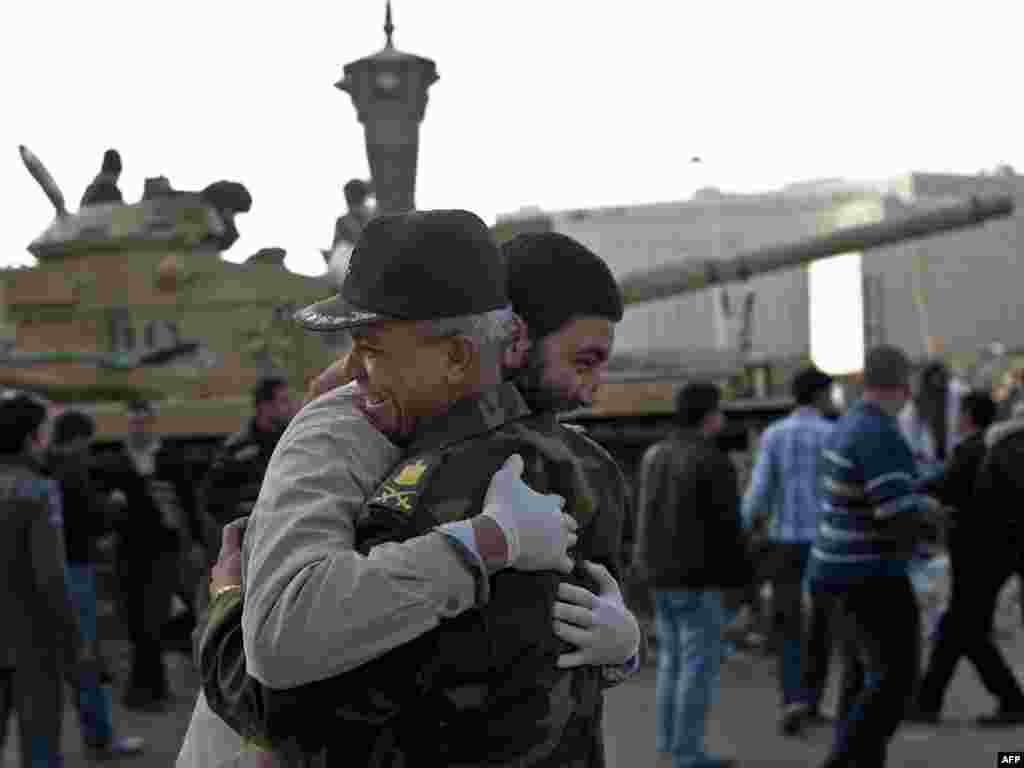
A man hugs an army commander in Cairo's Tahrir Square on February 12, the morning after Mubarak's resignation.
2/16 A man hugs an army commander in Cairo's Tahrir Square on February 12, the morning after Mubarak's resignation.
Antigovernment protesters celebrate in Cairo's Tahrir Square after Mubarak stepped down.
3/16 Antigovernment protesters celebrate in Cairo's Tahrir Square after Mubarak stepped down.
Vice President Omar Suleiman tells the nation that President Hosni Mubarak has resigned, handing power to the army.
4/16 Vice President Omar Suleiman tells the nation that President Hosni Mubarak has resigned, handing power to the army.
An Egyptian flag with January 25, the date the uprising started, written on it, is seen near tanks in Tahrir Square.
5/16 An Egyptian flag with January 25, the date the uprising started, written on it, is seen near tanks in Tahrir Square.
A soldier stands atop a tank guarding the state TV building on the Corniche in Cairo on February 11.
6/16 A soldier stands atop a tank guarding the state TV building on the Corniche in Cairo on February 11.
Antigovernment protesters gather outside the presidential palace in Cairo on February 11.
7/16 Antigovernment protesters gather outside the presidential palace in Cairo on February 11.
Antigovernment protestors demonstrate by raising their shoes in front of state TV in Cairo on February 11.
8/16 Antigovernment protestors demonstrate by raising their shoes in front of state TV in Cairo on February 11.
Antigovernment protesters celebrate outside the presidential palace in Cairo after Mubarak resigns on February 11.
9/16 Antigovernment protesters celebrate outside the presidential palace in Cairo after Mubarak resigns on February 11.
Antigovernment protesters carry a huge banner with the names and pictures of victims killed during the protests.
10/16 Antigovernment protesters carry a huge banner with the names and pictures of victims killed during the protests.
Protesters celebrate on a wrecked bus used as a barricade with "Let Mubarak Fall" scrawled on it in Tahrir Square.
11/16 Protesters celebrate on a wrecked bus used as a barricade with "Let Mubarak Fall" scrawled on it in Tahrir Square.
An antigovernment protester dances with a soldier during celebrations in Cairo's Tahrir Square on February 11.
12/16 An antigovernment protester dances with a soldier during celebrations in Cairo's Tahrir Square on February 11.
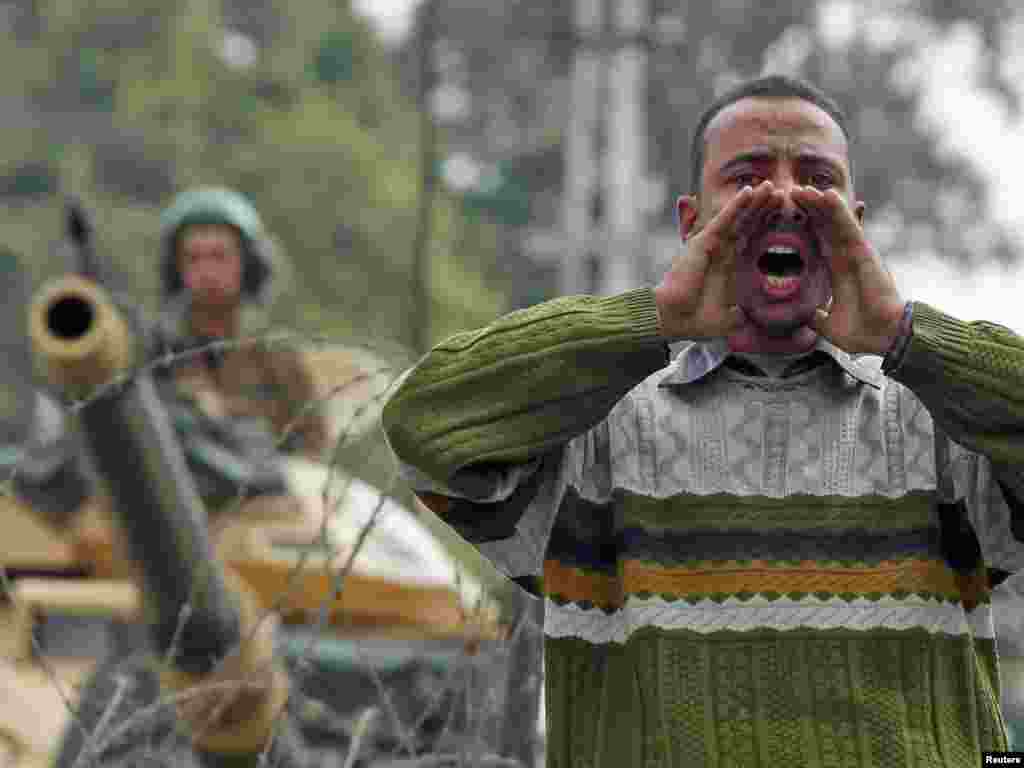
An opposition supporter makes a call for prayer near a tank in front of the presidential palace in Cairo on February 11.
13/16 An opposition supporter makes a call for prayer near a tank in front of the presidential palace in Cairo on February 11.
Antigovernment protesters march in the coastal city of Alexandria on February 11.
14/16 Antigovernment protesters march in the coastal city of Alexandria on February 11.
Opposition protesters celebrate Mubarak's resignation on Tahrir Square in Cairo on February 11.
15/16 Opposition protesters celebrate Mubarak's resignation on Tahrir Square in Cairo on February 11.
Protesters celebrate in Tahrir Square after the announcement of Mubarak's resignation is announced.
16/16 Protesters celebrate in Tahrir Square after the announcement of Mubarak's resignation is announced.
Previous slide
Next slide


Cleanup has begun in Cairo's Tahrir Square, the epicenter of the popular uprising that led to the ouster of longtime President Hosni Mubarak.

Local residents swept the streets and collected rubbish as army soldiers removed metal barriers and barbed wire that had surrounded the square during the 18 days of protests.

Thousands of demonstrators remained on the square after celebrations carried on through the night. One man said the crowds were ready to resume demonstrations if the country's new military leaders don't move quickly to install democratic civilian rule.

"The removal of the regime is one demand. There are [other] demands which have not yet been met -- a civil government and the complete change of the system," he said. "Mubarak's leaving is not the end of the story. His system has roots everywhere in this country. We have had a cancer for the past 30 years."

Mubarak stepped down on February 11 amid mounting calls for an end to his 30-year regime. He is believed to have retreated to the resort town of Sharm el-Sheik, where he has a family home.

The Associated Press quoted anonymous airport officials as saying current and former government officials have been banned from traveling without permission from either the state prosecutor or the armed forces.

Curfew Eased

In signs of growing normalization, military leaders have eased the country's nighttime curfews to begin at midnight rather than 8 p.m. And state media reported that Egypt's stock exchange will reopen on February 16 after being closed for nearly three weeks due to the widespread unrest.

Vice President Omar Suleiman said a military council would run the most populous Arab country for now.

Praise for the Egyptian people has streamed in from around the globe.

"There are very few moments in our lives where we have the privilege to witness history taking place. This is one of those moments. This is one of those times," U.S. President Barack Obama said. "The people of Egypt have spoken, their voices have been heard, and Egypt will never be the same."

UN Secretary-General Ban Ki-moon praised the courage of the Egyptian people.

"I commend the people of Egypt for the peaceful and courageous and orderly manner in which they have exercised their legitimate rights," Ban said. "I call on all parties to continue in the same spirit. The United Nations stands ready to assist in the process."

Ready For Democracy?

The crisis that brought down Mubarak was the worst since British-backed King Farouk was toppled in a military coup in 1952.

Generals have ruled ever since, although Mubarak and his predecessor, Anwar Sadat, rarely appeared in uniform and kept active-service officers in the background.

Behind the celebrations, some analysts question how far the armed forces under Field Marshal Muhammad Hussein Tantawi -- Mubarak's veteran defense minister -- are ready to permit democracy.

Al-Arabiyah television said the army would soon dismiss the cabinet and suspend parliament.

The head of the Constitutional Court would join the leadership with the military council.

with agency reports

PHOTO GALLERY -- A look at the political life of Hosni Mubarak:

A Look Back At The Political Life Of Hosni Mubarak

An undated photo of Mubarak as a young Royal Egyptian Air Force lieutenant.
1/20 An undated photo of Mubarak as a young Royal Egyptian Air Force lieutenant.
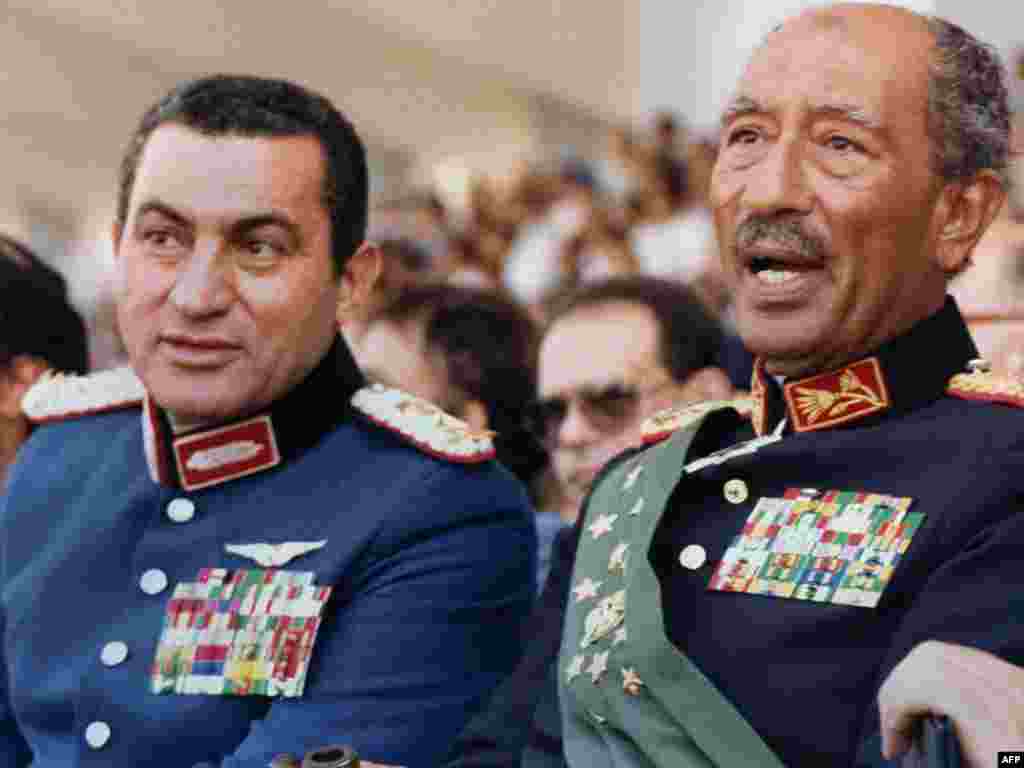
Egyptian vice president at the time, Mubarak with the late President Anwar Sadat. - Both dressed in military honor uniforms, Mubarak and Sadat attend a military parade on October 6, 1981, in Cairo during which Sadat was assassinated by a group of Islamist fundamentalists.
2/20 Egyptian vice president at the time, Mubarak with the late President Anwar Sadat. - Both dressed in military honor uniforms, Mubarak and Sadat attend a military parade on October 6, 1981, in Cairo during which Sadat was assassinated by a group of Islamist fundamentalists.
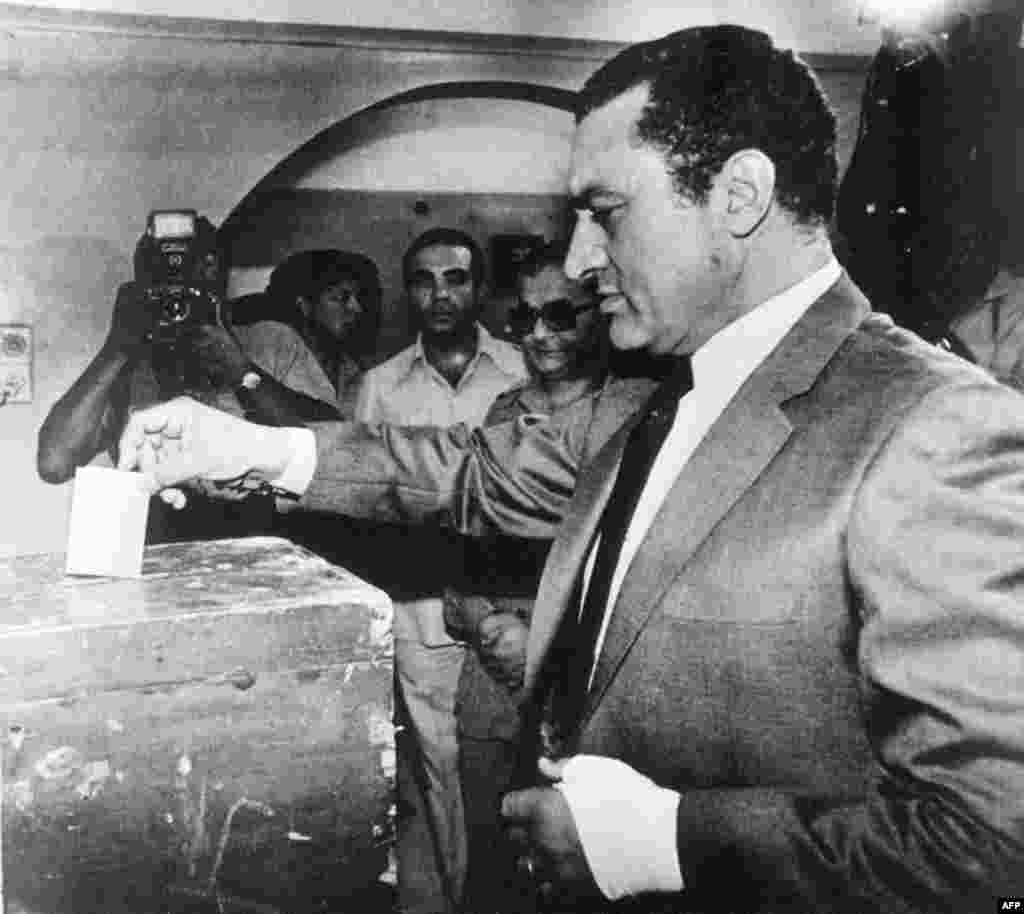
Mubarak votes in an October 13, 1981, referendum on whether he will succeed the slain President Anwar Sadat.
3/20 Mubarak votes in an October 13, 1981, referendum on whether he will succeed the slain President Anwar Sadat.
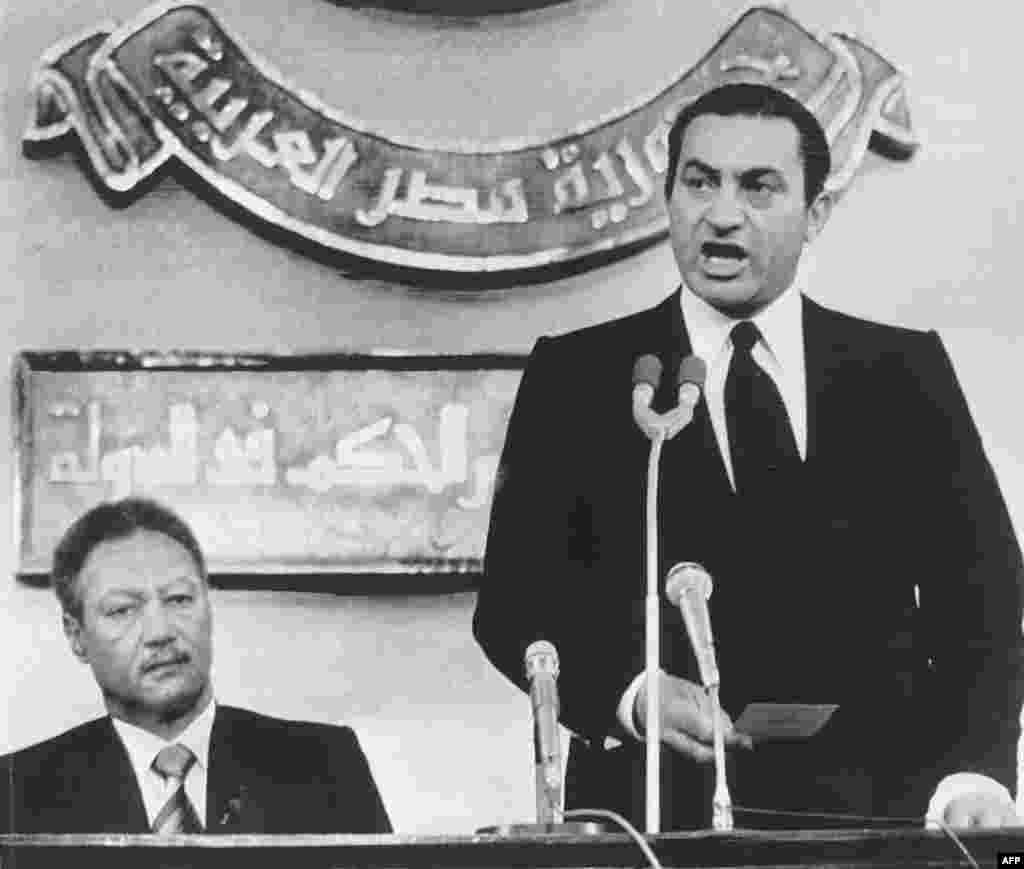
Mubarak takes the oath of office as Egypt's new leader on October 14, 1981.
4/20 Mubarak takes the oath of office as Egypt's new leader on October 14, 1981.
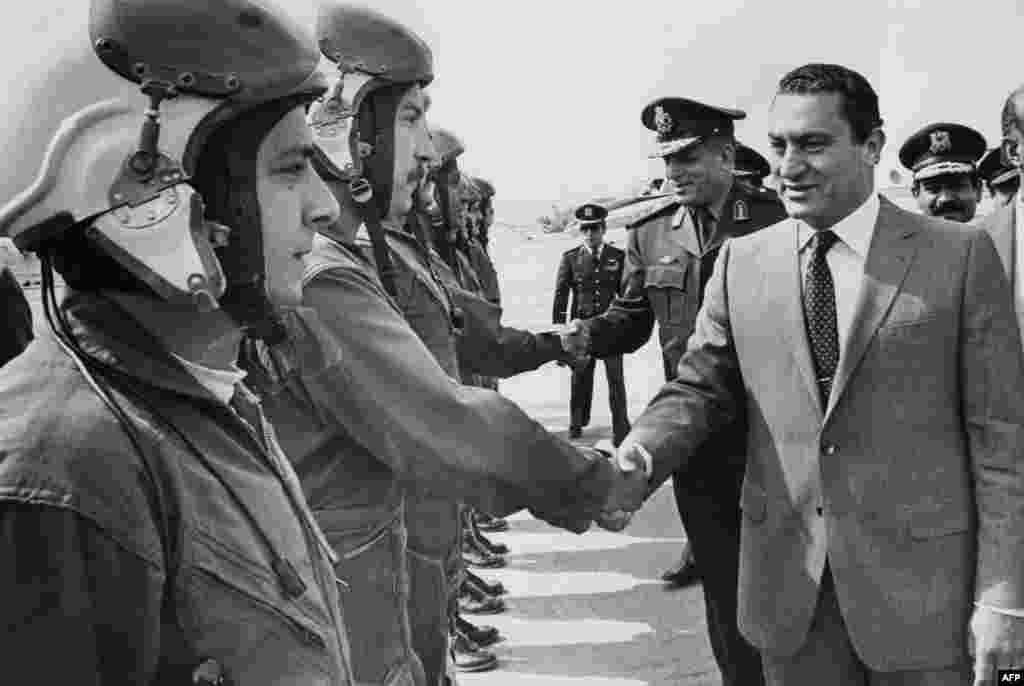
Mubarak shakes hands with jet pilots in April 1991. - Mubarak joined the Air Force Academy in 1950 and received instruction in the Soviet Union, moving up the chain of command from pilot to instructor to squadron leader to base commander. He was appointed director of the Air Force Academy and chief of staff of the Egyptian Air Force during the War of Attrition between Egypt and Israel (1967-72) and by 1973 had been promoted to the rank of air chief marshal.
5/20 Mubarak shakes hands with jet pilots in April 1991. - Mubarak joined the Air Force Academy in 1950 and received instruction in the Soviet Union, moving up the chain of command from pilot to instructor to squadron leader to base commander. He was appointed director of the Air Force Academy and chief of staff of the Egyptian Air Force during the War of Attrition between Egypt and Israel (1967-72) and by 1973 had been promoted to the rank of air chief marshal.
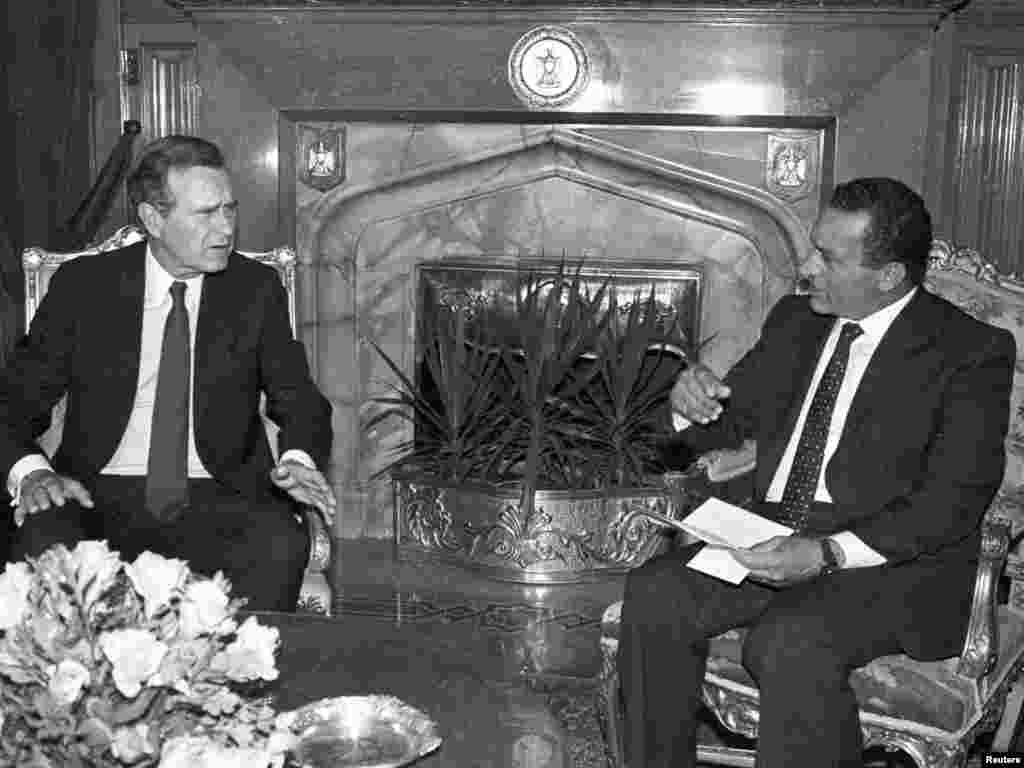
Mubarak meets with U.S. Vice President George Bush at the Presidential Palace in Cairo in August 1986.
6/20 Mubarak meets with U.S. Vice President George Bush at the Presidential Palace in Cairo in August 1986.
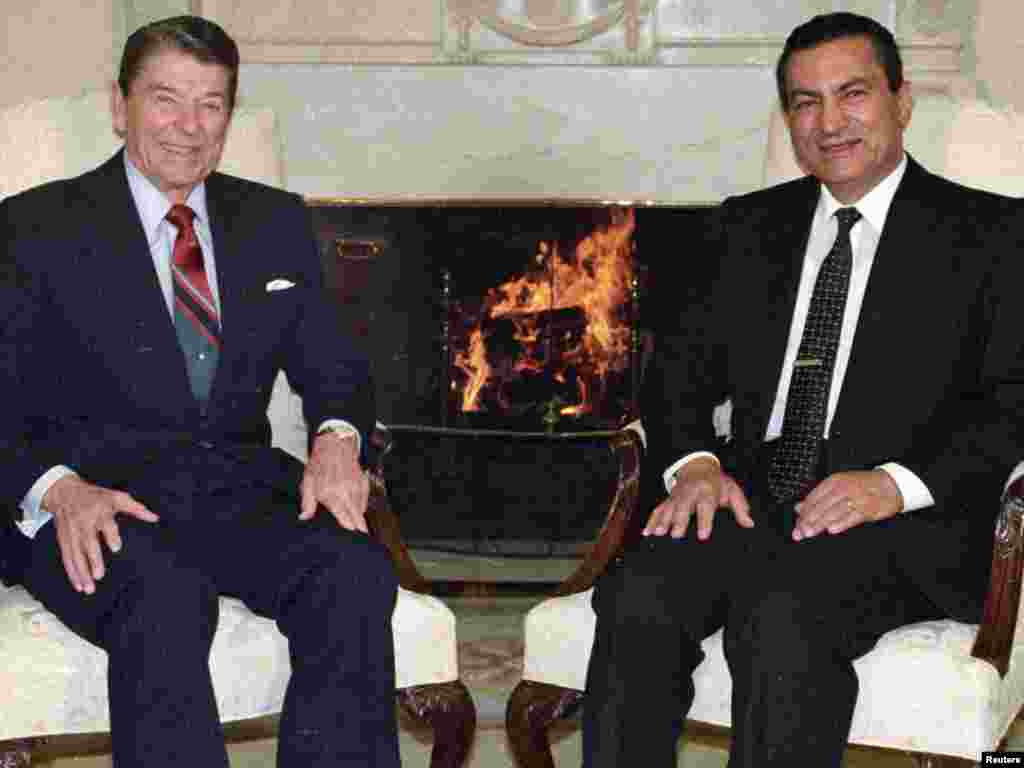
Mubarak meets with U.S. President Ronald Reagan at the White House in January 1988.
7/20 Mubarak meets with U.S. President Ronald Reagan at the White House in January 1988.
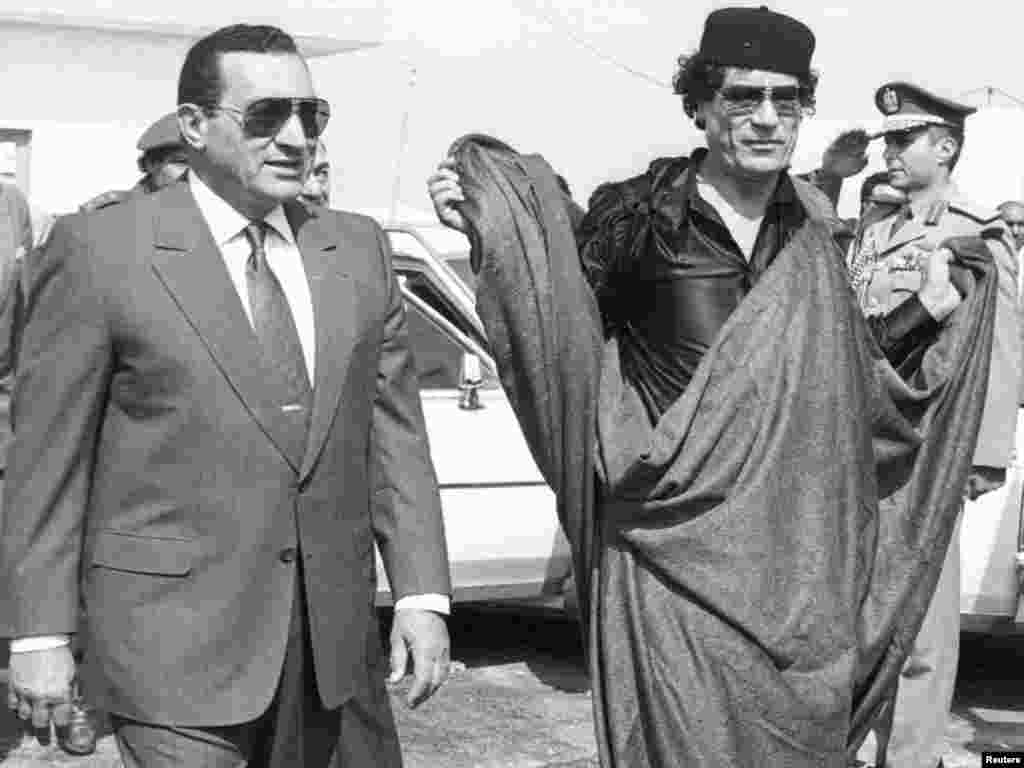
 Mubarak meets Libyan Leader Muammar Qaddafi at the Egyptian border city of Mersa in October 1989.
8/20 Mubarak meets Libyan Leader Muammar Qaddafi at the Egyptian border city of Mersa in October 1989.
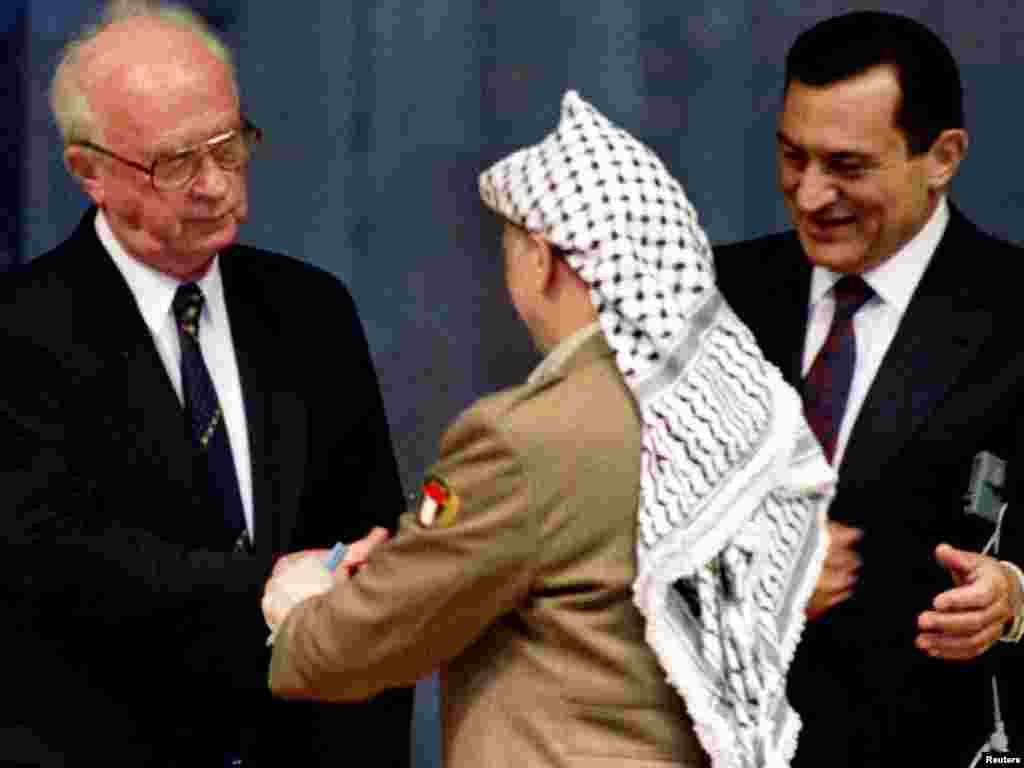
Mubarak looks on as Israel's Prime Minister Yitzhak Rabin (left) shakes hands with PLO Chairman Yasser Arafat. - Mubarak hosted the historic signing ceremony as Arafat signed the PLO-Israeli peace accords on limited Palestinian self-rule for the Gaza Strip and Jericho in Egypt on May 4, 1994.
9/20 Mubarak looks on as Israel's Prime Minister Yitzhak Rabin (left) shakes hands with PLO Chairman Yasser Arafat. - Mubarak hosted the historic signing ceremony as Arafat signed the PLO-Israeli peace accords on limited Palestinian self-rule for the Gaza Strip and Jericho in Egypt on May 4, 1994.
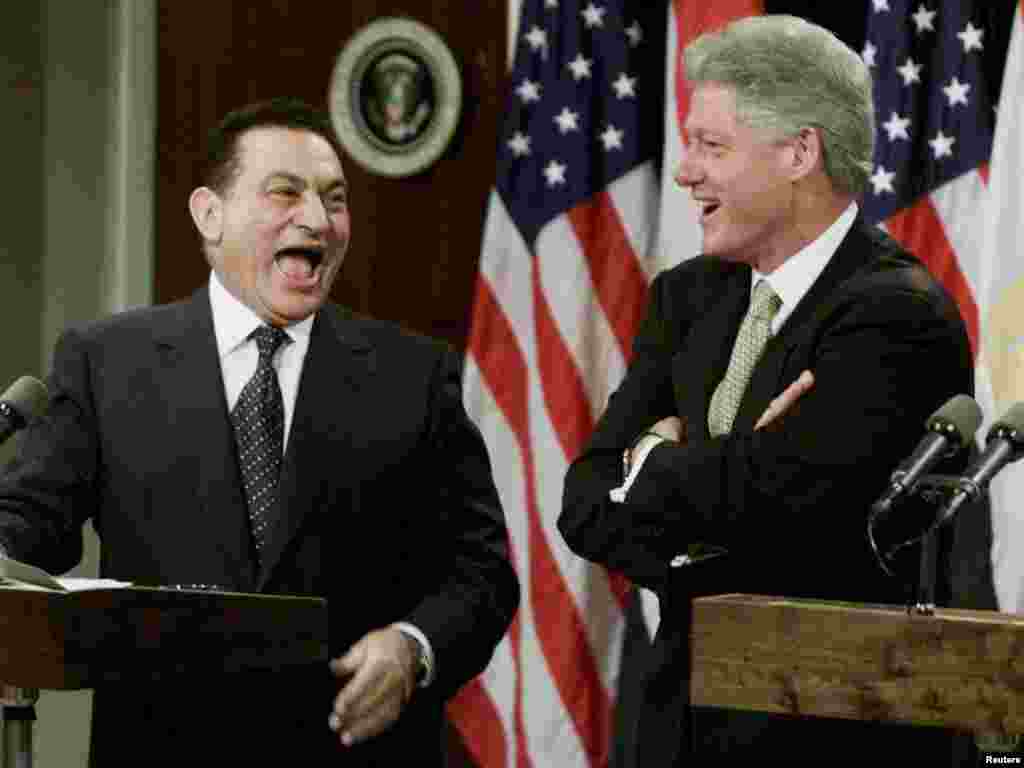
Mubarak and U.S. President Bill Clinton during a joint press conference at the White House in July 1999.
10/20 Mubarak and U.S. President Bill Clinton during a joint press conference at the White House in July 1999.
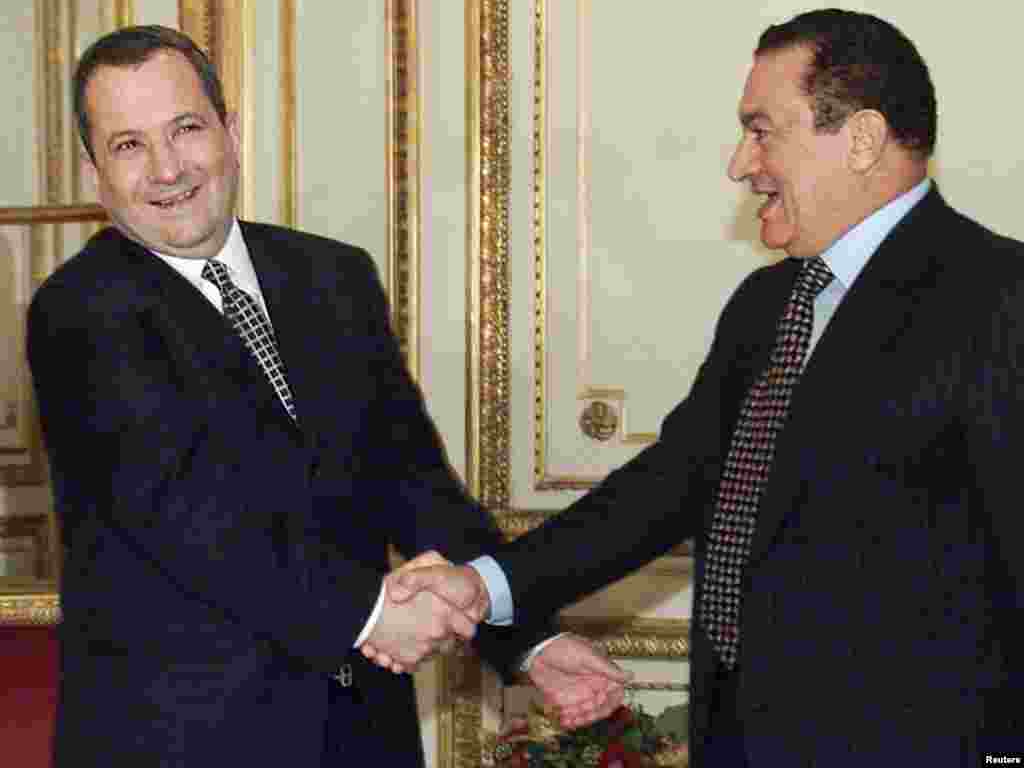
Mubarak and Israeli Prime Minister Ehud Barak shake hands before a meeting in Paris in November 1999.
11/20 Mubarak and Israeli Prime Minister Ehud Barak shake hands before a meeting in Paris in November 1999.
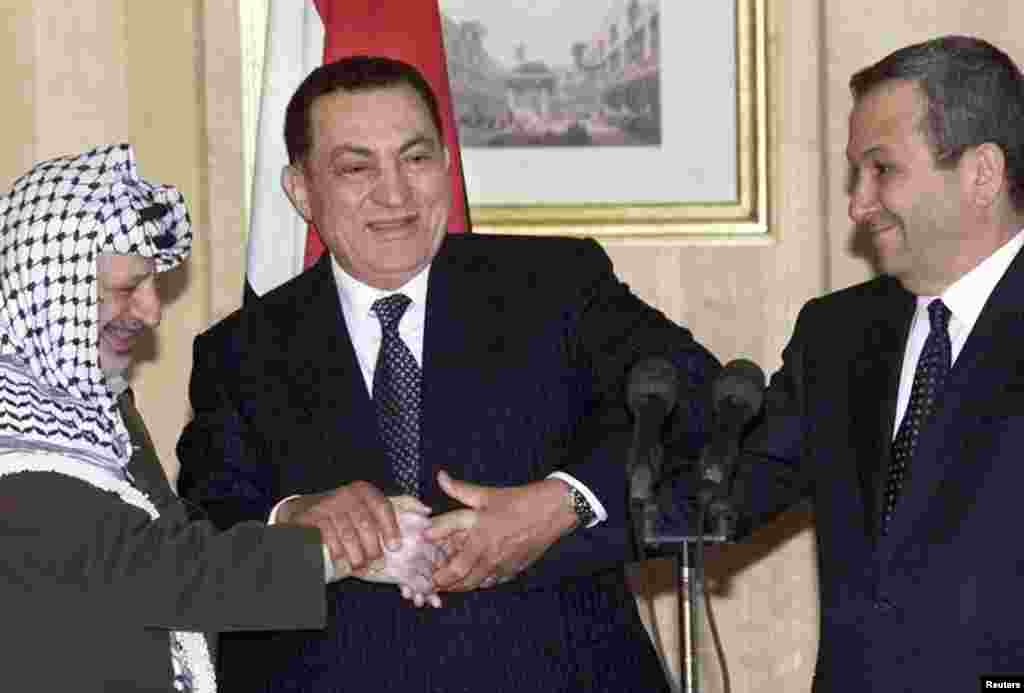
Mubarak shakes hands with Israeli Prime Minister Ehud Barak and Palestinian leader Yasser Arafat on March 9, 2000.
12/20 Mubarak shakes hands with Israeli Prime Minister Ehud Barak and Palestinian leader Yasser Arafat on March 9, 2000.
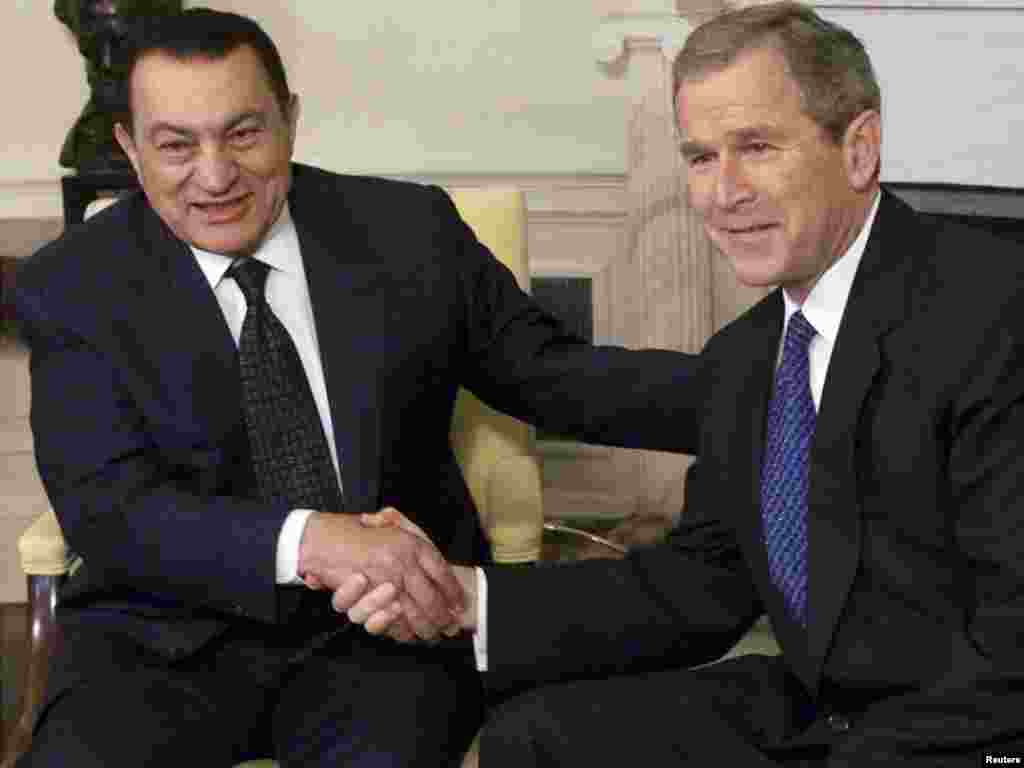
Mubarak meets with U.S. President George W. Bush in Washington in April 2001.
13/20 Mubarak meets with U.S. President George W. Bush in Washington in April 2001.
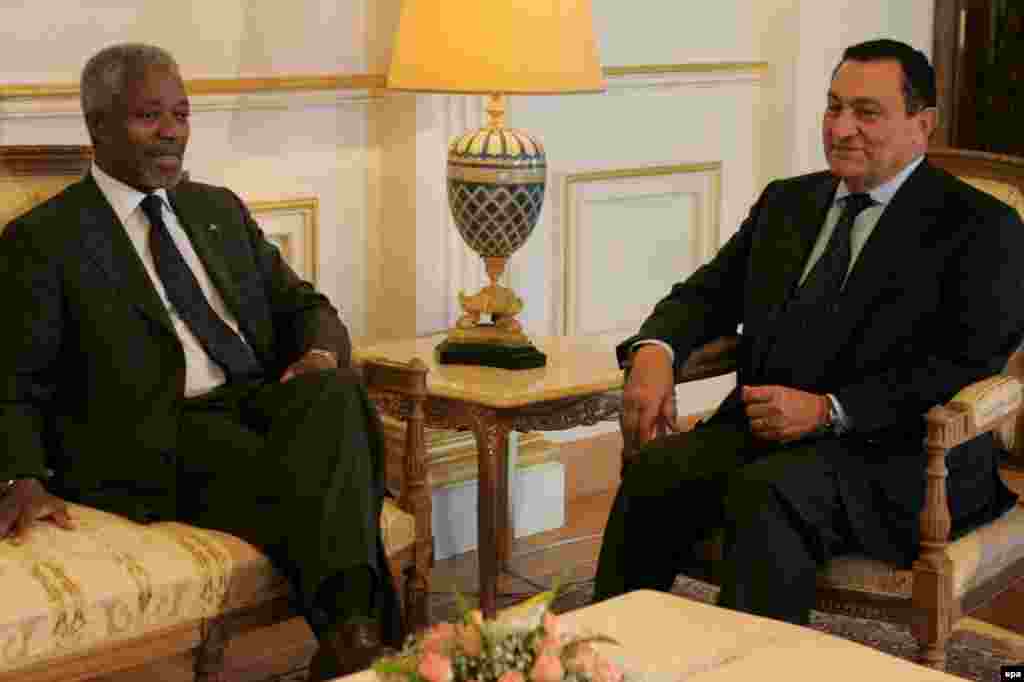
Mubarak meets with UN Secretary-General Kofi Annan in Alexandria in September 2006.
14/20 Mubarak meets with UN Secretary-General Kofi Annan in Alexandria in September 2006.
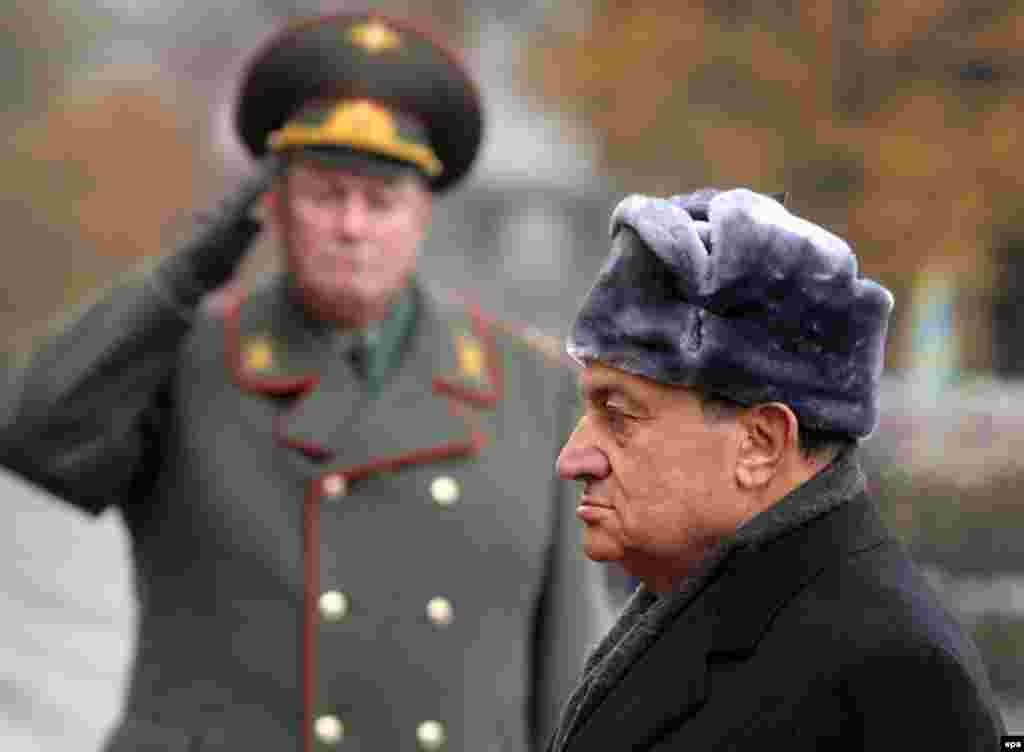
Mubarak attends a wreath-laying ceremony at the Tomb of the Unknown Soldier in Moscow in November 2006.
15/20 Mubarak attends a wreath-laying ceremony at the Tomb of the Unknown Soldier in Moscow in November 2006.
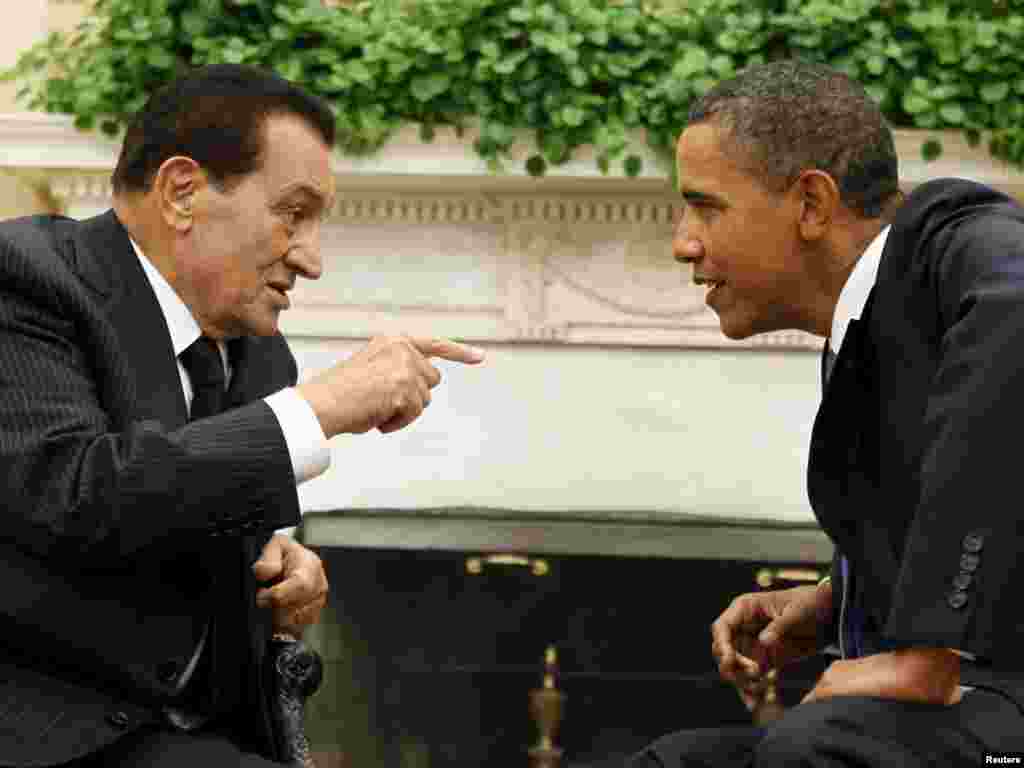
Mubarak holds talks with U.S. President Barack Obama at the White House in September 2010.
16/20 Mubarak holds talks with U.S. President Barack Obama at the White House in September 2010.
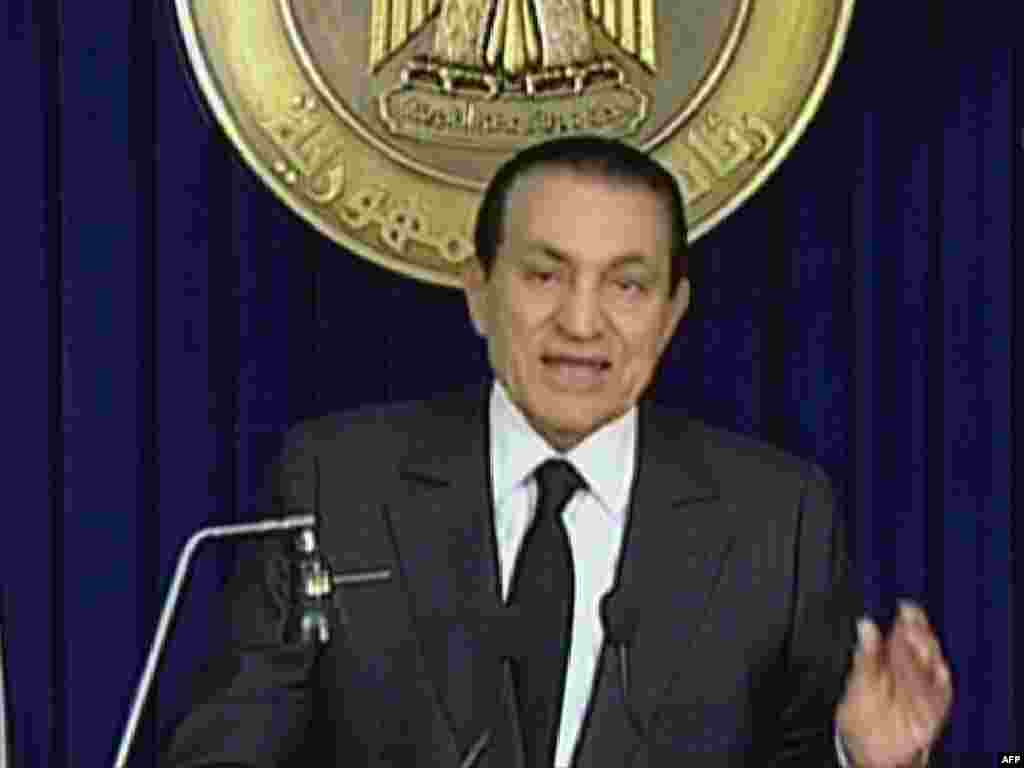
Mubarak addresses the nation on state TV on February 1, announcing he would not seek reelection.
17/20 Mubarak addresses the nation on state TV on February 1, announcing he would not seek reelection.
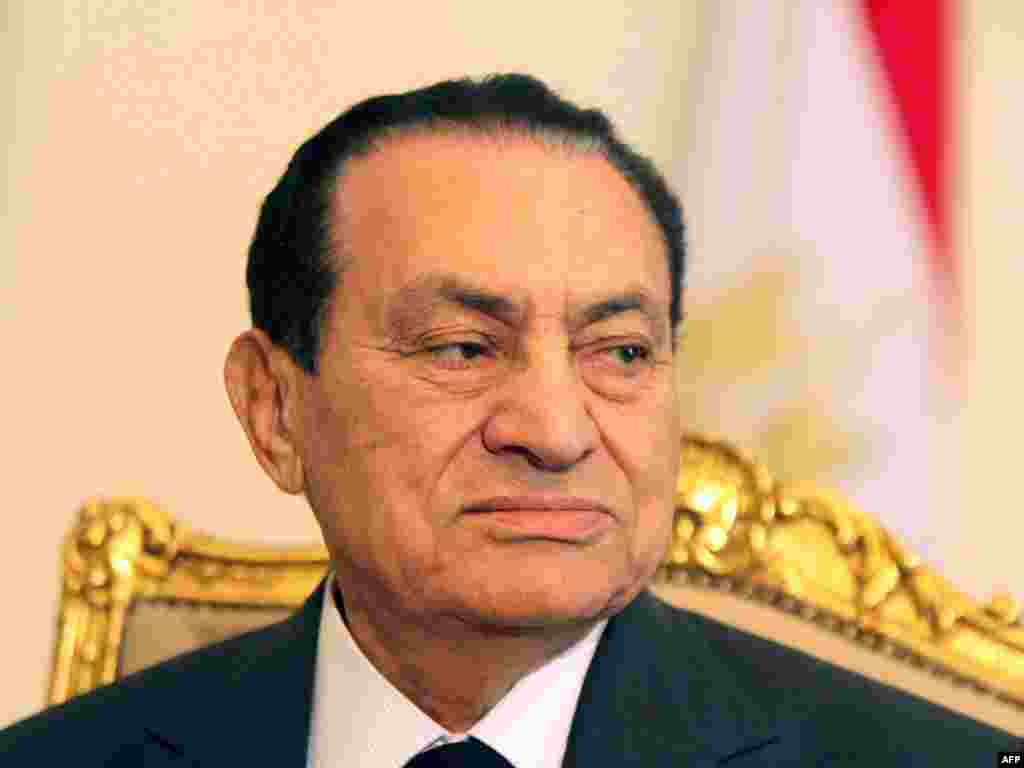
Mubarak in Cairo on February 8, amid massive protests calling for his resignation.
18/20 Mubarak in Cairo on February 8, amid massive protests calling for his resignation.
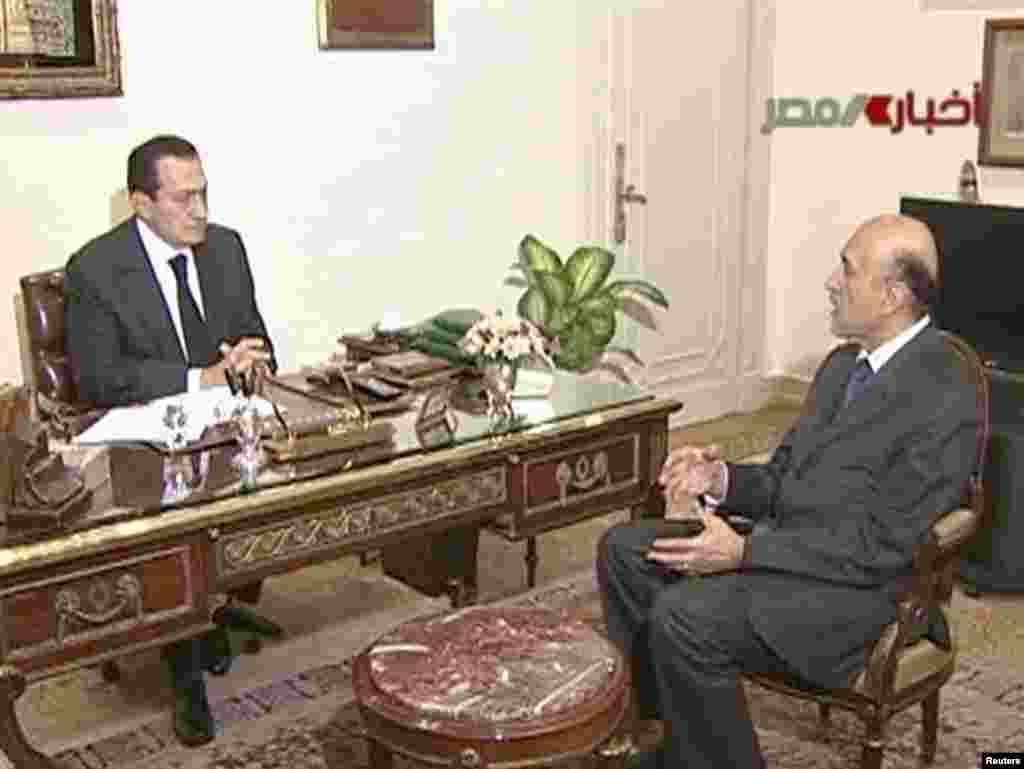
Mubarak speaks with Vice President Omar Suleiman in Cairo on February 10 during the crisis.
19/20 Mubarak speaks with Vice President Omar Suleiman in Cairo on February 10 during the crisis.
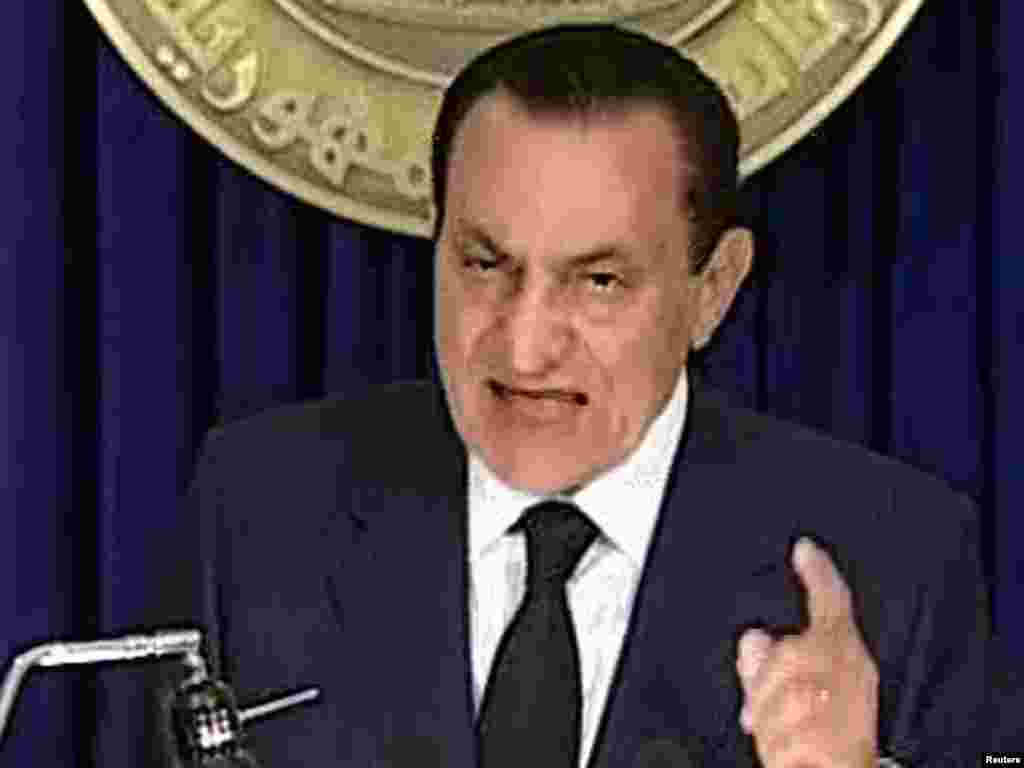
Mubarak addresses the nation again on February 10 but doesn't announce his resignation, as had been expected.
20/20 Mubarak addresses the nation again on February 10 but doesn't announce his resignation, as had been expected.
Previous slide
Next slide

  • 16x9 Image

    RFE/RL

    RFE/RL journalists report the news in 24 languages in 18 countries where a free press is banned by the government or not fully established. We provide what many people cannot get locally: uncensored news, responsible discussion, and open debate.

This item is part of
XS
SM
MD
LG