The vehicle that ethnic Armenian authorities in Nagorno-Karabakh say was shot at on March 5.
Five security personnel were killed in an apparent shootout between ethnic Armenian police in Nagorno-Karabakh and Azerbaijani soldiers in the breakaway region, authorities on both sides said.
A state minister in Nagorno-Karabakh’s de facto government on March 5 said three police officers were shot dead in an ambush by an Azerbaijani "sabotage group," while authorities in Baku said two Azerbaijani soldiers were killed while attempting to stop Armenian vehicles from smuggling weapons into the breakaway region.
Both sides rejected the other side's allegations. It was not immediately possible to verify claims.
Armenia and Azerbaijan have been sparring over Nagorno-Karabakh for decades. The mainly ethnic Armenian enclave is part of Azerbaijan but has been under the control of ethnic Armenian forces backed by Armenia since a separatist war there ended in 1994 with some 30,000 dead.
During a six-week war in 2020, Azerbaijan regained control of much of Karabakh and adjacent territories held by Armenian forces. More than 6,500 people died in the fighting, which was ended by a Russia-brokered peace agreement.
Tensions have flared recently as the only road linking Karabakh to Armenia has been blocked by government-backed Azerbaijani protesters since December 12.
The main issue has been the inspection of trucks traveling the road. Karabakh representatives told RFE/RL’s Armenian Service that they are ready to discuss the installation of X-ray machines in the corridor, but they must be controlled by Russian peacekeepers.
Azerbaijan denies it keeps Karabakh in a blockade, referring to the fact that vehicles of Russian peacekeepers deployed in the region following the deadly 2020 war, as well as vehicles of the International Committee of the Red Cross, have been able to drive in and out of the region, providing it with vital supplies.
Tensions Remain High Over Breakaway Nagorno-Karabakh Region
1/15A couple walks in the fog in Stepanakert, the biggest city of Nagorno-Karabakh, a largely ethnic Armenian breakaway region of Azerbaijan, on December 15, 2022. This was at the beginning of the blockade in the Lachin Corridor, the only land connection between this area and Armenia.
Two years after Azerbaijan and Armenia ended a war that killed an estimated 7,000 people, tensions between the countries are again in a dispute over a 6-kilometer road known as the Lachin Corridor. An Azerbaijani blockade of the road has led to shortages in areas of Nagorno-Karabakh that are mostly inhabited by ethnic Armenians.
Show moreShow less
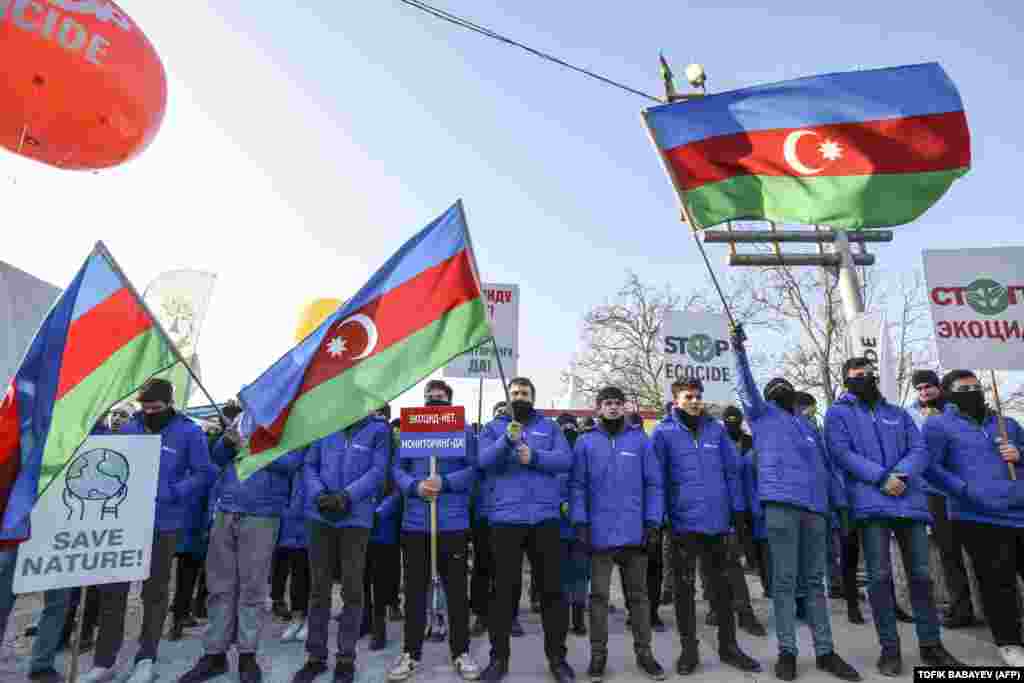
2/15The blockade has been staged by people claiming to be environmental activists from Azerbaijan, who say Armenia has been illegally mining in Nagorno-Karabakh. The activists have been backed by the Azerbaijani authorities.
Two years after Azerbaijan and Armenia ended a war that killed an estimated 7,000 people, tensions between the countries are again in a dispute over a 6-kilometer road known as the Lachin Corridor. An Azerbaijani blockade of the road has led to shortages in areas of Nagorno-Karabakh that are mostly inhabited by ethnic Armenians.
Show moreShow less
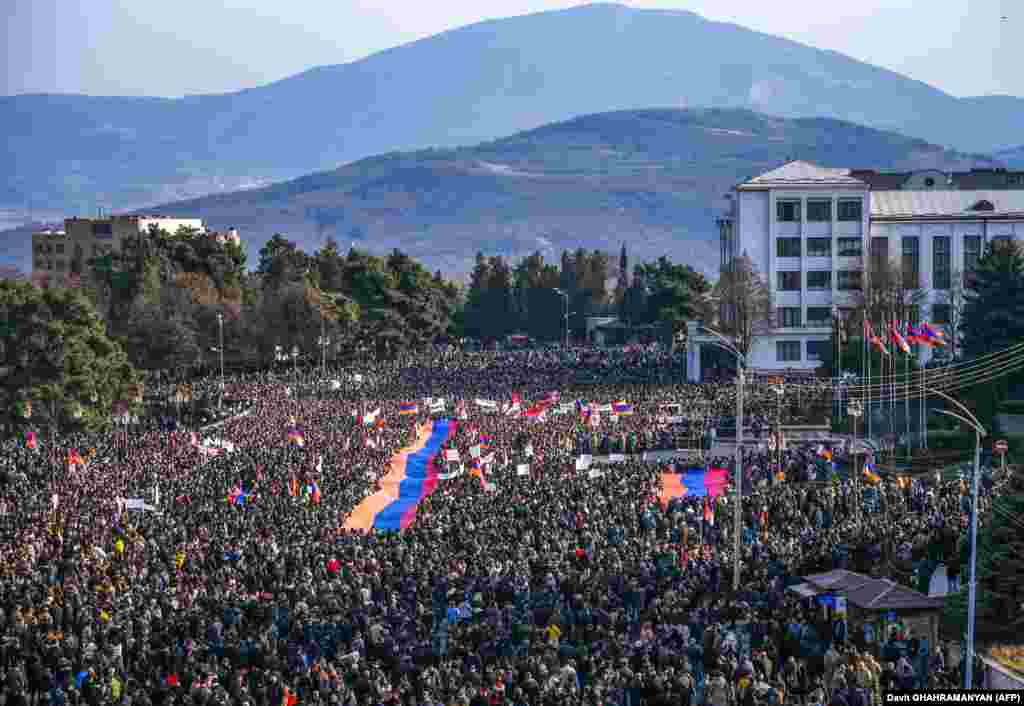
3/15With the blockade threatening food, medicine, and fuel supplies to Nagorno-Karabakh's 120,000 people, thousands of Armenians took to the streets in Stepanakert on December 25 to protest against Azerbaijan.
Two years after Azerbaijan and Armenia ended a war that killed an estimated 7,000 people, tensions between the countries are again in a dispute over a 6-kilometer road known as the Lachin Corridor. An Azerbaijani blockade of the road has led to shortages in areas of Nagorno-Karabakh that are mostly inhabited by ethnic Armenians.
Show moreShow less
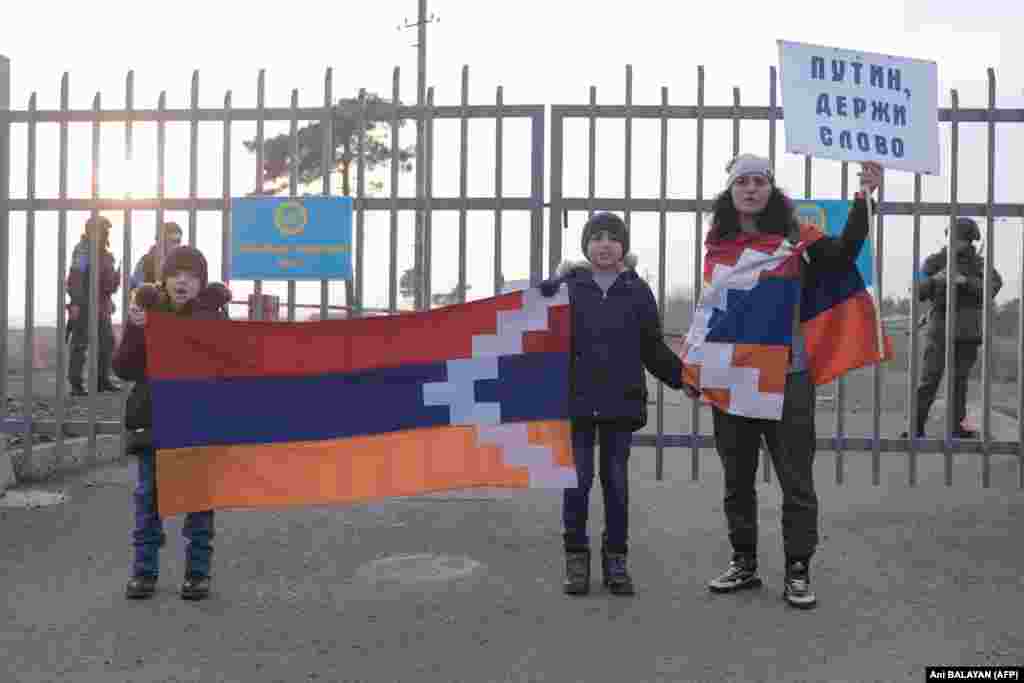
4/15Armenians with a poster reading "Putin! Keep Your Word" stand in front of Russian peacekeepers at a checkpoint outside of Stepanakert on December 27.
Two years after Azerbaijan and Armenia ended a war that killed an estimated 7,000 people, tensions between the countries are again in a dispute over a 6-kilometer road known as the Lachin Corridor. An Azerbaijani blockade of the road has led to shortages in areas of Nagorno-Karabakh that are mostly inhabited by ethnic Armenians.
Show moreShow less
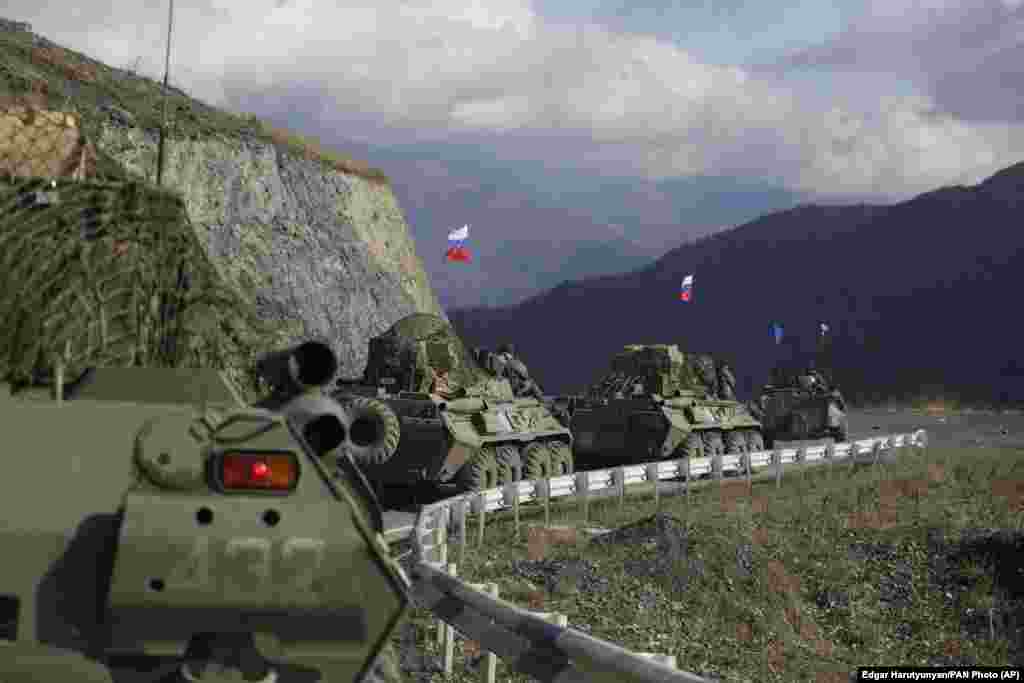
5/15A 2,000-strong peacekeeping force from Russia was sent in to keep the peace and ensure that the Lachin Corridor remains open under a Moscow-brokered deal to end the 2020 conflict.
Two years after Azerbaijan and Armenia ended a war that killed an estimated 7,000 people, tensions between the countries are again in a dispute over a 6-kilometer road known as the Lachin Corridor. An Azerbaijani blockade of the road has led to shortages in areas of Nagorno-Karabakh that are mostly inhabited by ethnic Armenians.
Show moreShow less
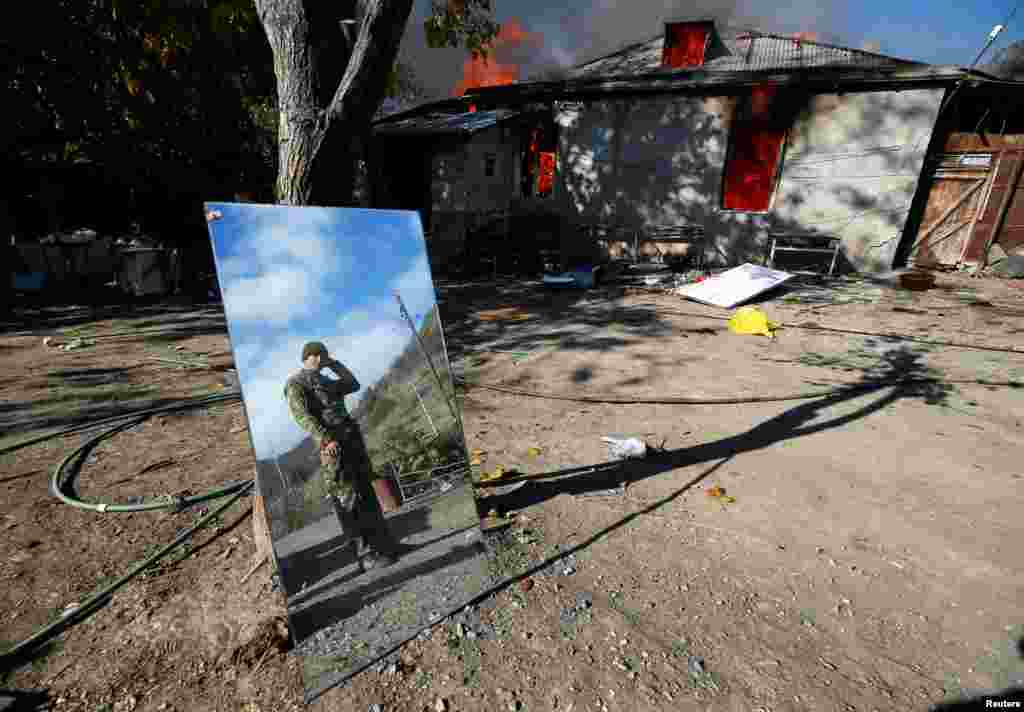
6/15A man is reflected in a mirror near a house set on fire by departing ethnic Armenians in the village of Cherektar in Nagorno-Karabakh on November 14, 2020. Under the terms of the agreement, Armenians had to vacate certain parts of Nagorno-Karabakh.
Two years after Azerbaijan and Armenia ended a war that killed an estimated 7,000 people, tensions between the countries are again in a dispute over a 6-kilometer road known as the Lachin Corridor. An Azerbaijani blockade of the road has led to shortages in areas of Nagorno-Karabakh that are mostly inhabited by ethnic Armenians.
Show moreShow less
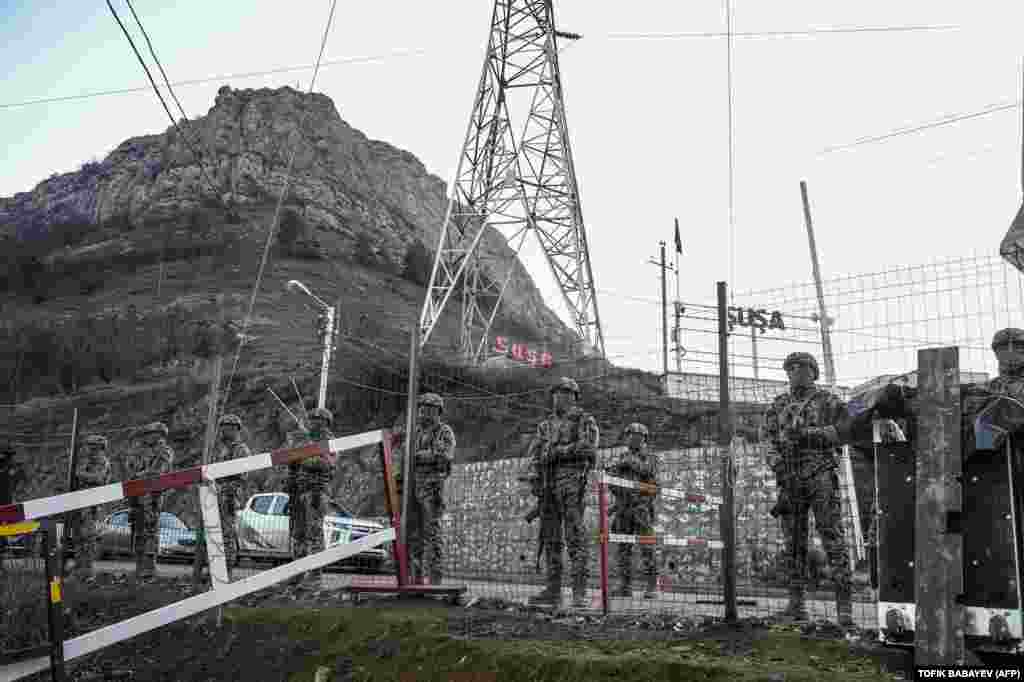
7/15Azerbaijani servicemen guard a checkpoint at the Lachin Corridor. Armenia contends the protests are orchestrated by Azerbaijan, and the United States has called on Baku to lift the blockade.
Two years after Azerbaijan and Armenia ended a war that killed an estimated 7,000 people, tensions between the countries are again in a dispute over a 6-kilometer road known as the Lachin Corridor. An Azerbaijani blockade of the road has led to shortages in areas of Nagorno-Karabakh that are mostly inhabited by ethnic Armenians.
Show moreShow less
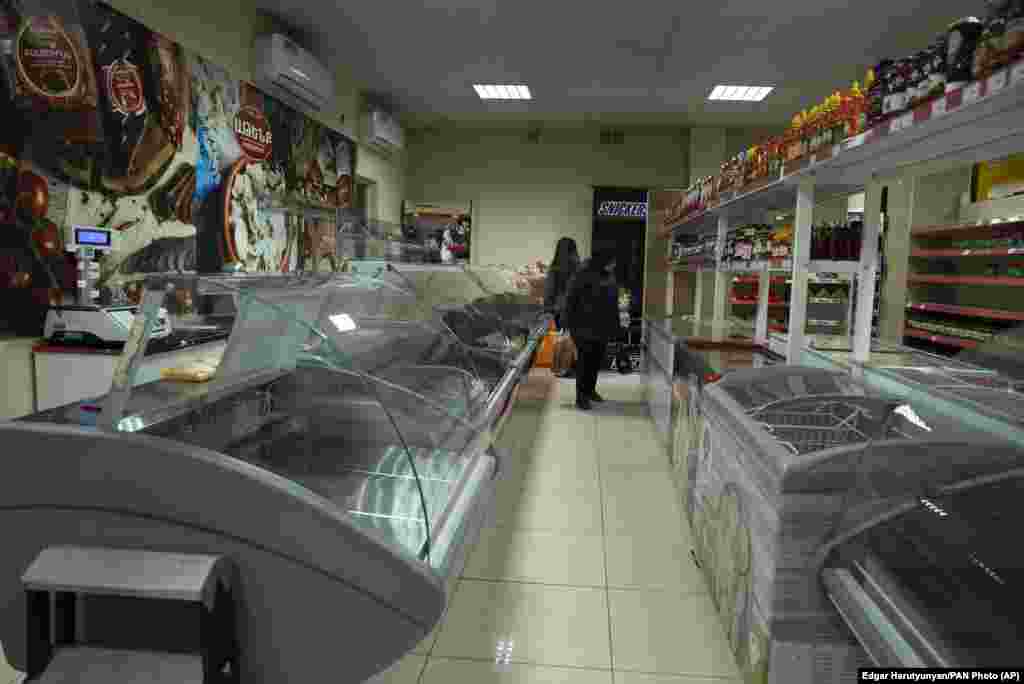
8/15Customers visit a nearly empty food store in Stepanakert on January 7. After more than a month of blockages, residents of Nagorno-Karabakh have told RFE/RL that there are food, medicine, and fuel shortages.
Two years after Azerbaijan and Armenia ended a war that killed an estimated 7,000 people, tensions between the countries are again in a dispute over a 6-kilometer road known as the Lachin Corridor. An Azerbaijani blockade of the road has led to shortages in areas of Nagorno-Karabakh that are mostly inhabited by ethnic Armenians.
Show moreShow less
9/15Schoolchildren warm themselves around a stove in their classroom in Stepanakert.
Two years after Azerbaijan and Armenia ended a war that killed an estimated 7,000 people, tensions between the countries are again in a dispute over a 6-kilometer road known as the Lachin Corridor. An Azerbaijani blockade of the road has led to shortages in areas of Nagorno-Karabakh that are mostly inhabited by ethnic Armenians.
Show moreShow less
10/15Food coupons at a family home in Stepanakert. The local Armenian authorities implemented a rationing system on January 20, covering rice, pasta, buckwheat, sugar, and sunflower oil.
Two years after Azerbaijan and Armenia ended a war that killed an estimated 7,000 people, tensions between the countries are again in a dispute over a 6-kilometer road known as the Lachin Corridor. An Azerbaijani blockade of the road has led to shortages in areas of Nagorno-Karabakh that are mostly inhabited by ethnic Armenians.
Show moreShow less
11/15Two boys warm themselves next to a stove on January 18. Authorities also ordered schools to be closed due to the gas and electricity shortage.
Two years after Azerbaijan and Armenia ended a war that killed an estimated 7,000 people, tensions between the countries are again in a dispute over a 6-kilometer road known as the Lachin Corridor. An Azerbaijani blockade of the road has led to shortages in areas of Nagorno-Karabakh that are mostly inhabited by ethnic Armenians.
Show moreShow less
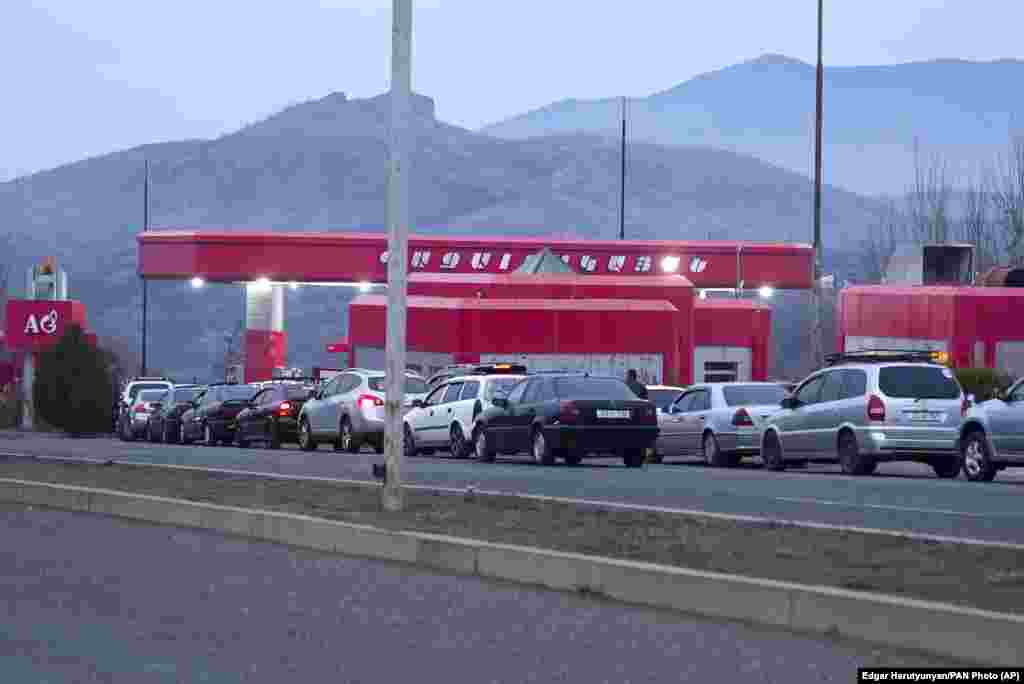
12/15Drivers wait to fill their cars in Stepanakert. Azerbaijan also has sporadically cut gas supplies to Nagorno-Karabakh -- most recently on January 21.
Two years after Azerbaijan and Armenia ended a war that killed an estimated 7,000 people, tensions between the countries are again in a dispute over a 6-kilometer road known as the Lachin Corridor. An Azerbaijani blockade of the road has led to shortages in areas of Nagorno-Karabakh that are mostly inhabited by ethnic Armenians.
Show moreShow less
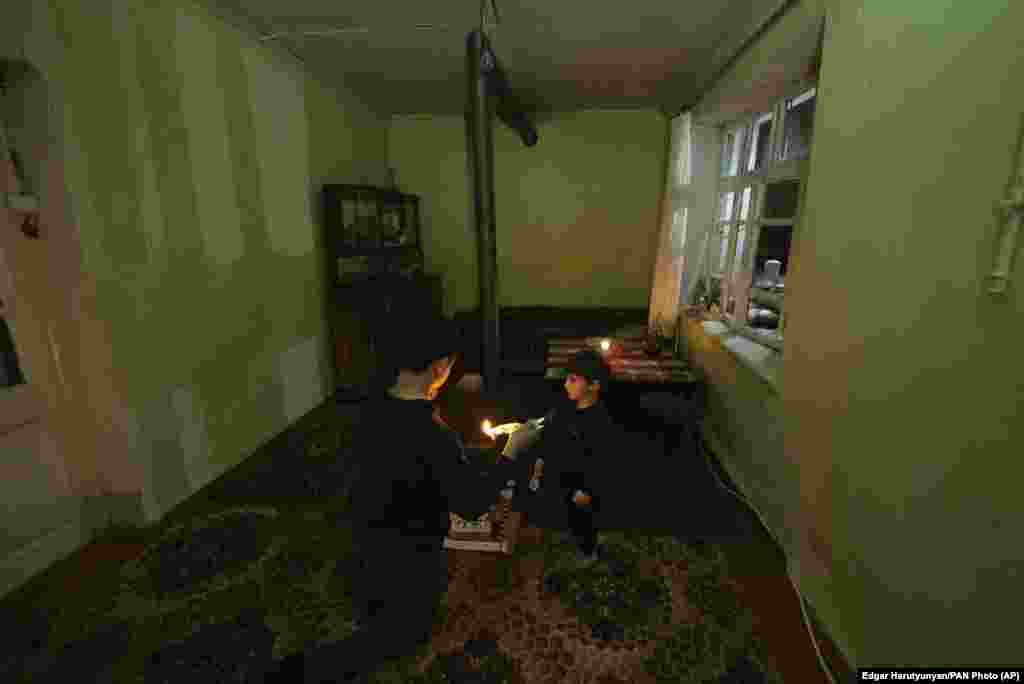
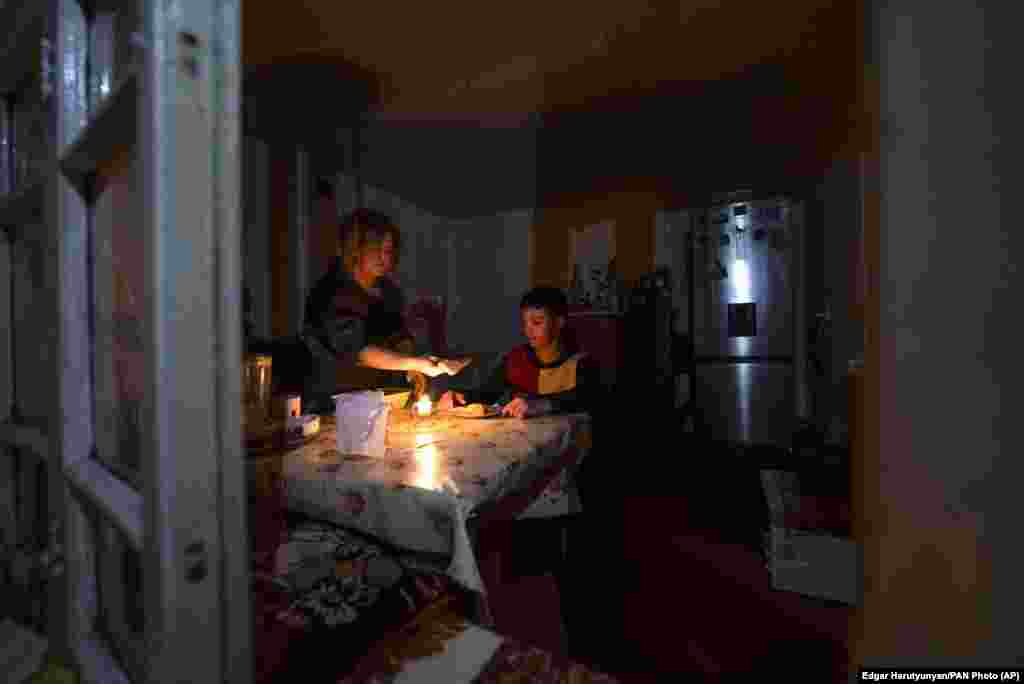
13/15A woman and her son have dinner by candlelight at their home in Stepanakert.
Two years after Azerbaijan and Armenia ended a war that killed an estimated 7,000 people, tensions between the countries are again in a dispute over a 6-kilometer road known as the Lachin Corridor. An Azerbaijani blockade of the road has led to shortages in areas of Nagorno-Karabakh that are mostly inhabited by ethnic Armenians.
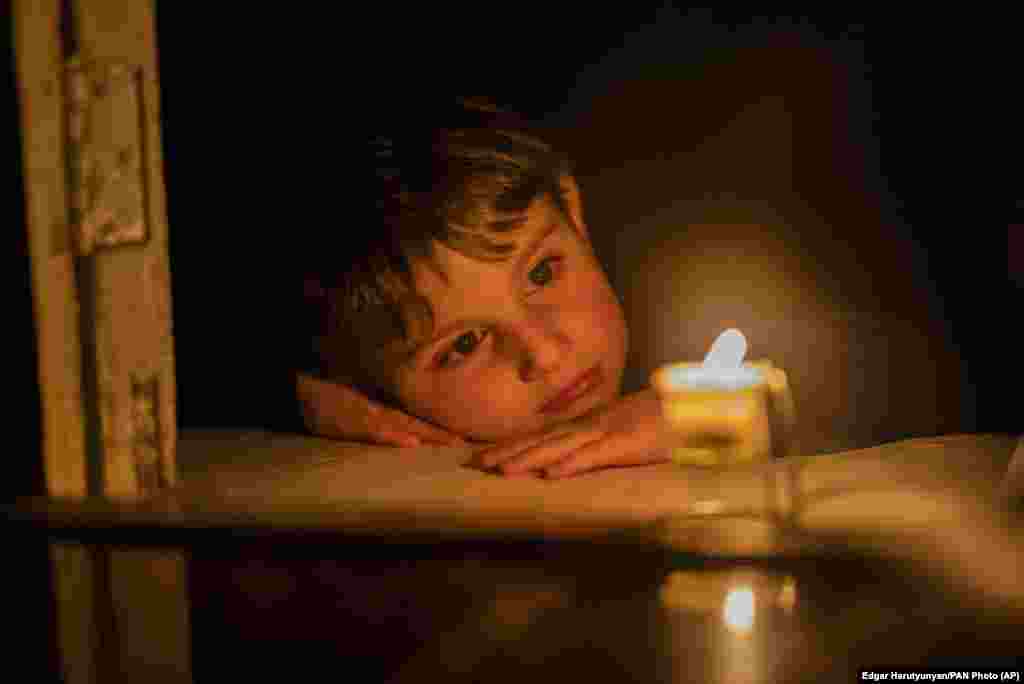
Two years after Azerbaijan and Armenia ended a war that killed an estimated 7,000 people, tensions between the countries are again in a dispute over a 6-kilometer road known as the Lachin Corridor. An Azerbaijani blockade of the road has led to shortages in areas of Nagorno-Karabakh that are mostly inhabited by ethnic Armenians.
Show moreShow less
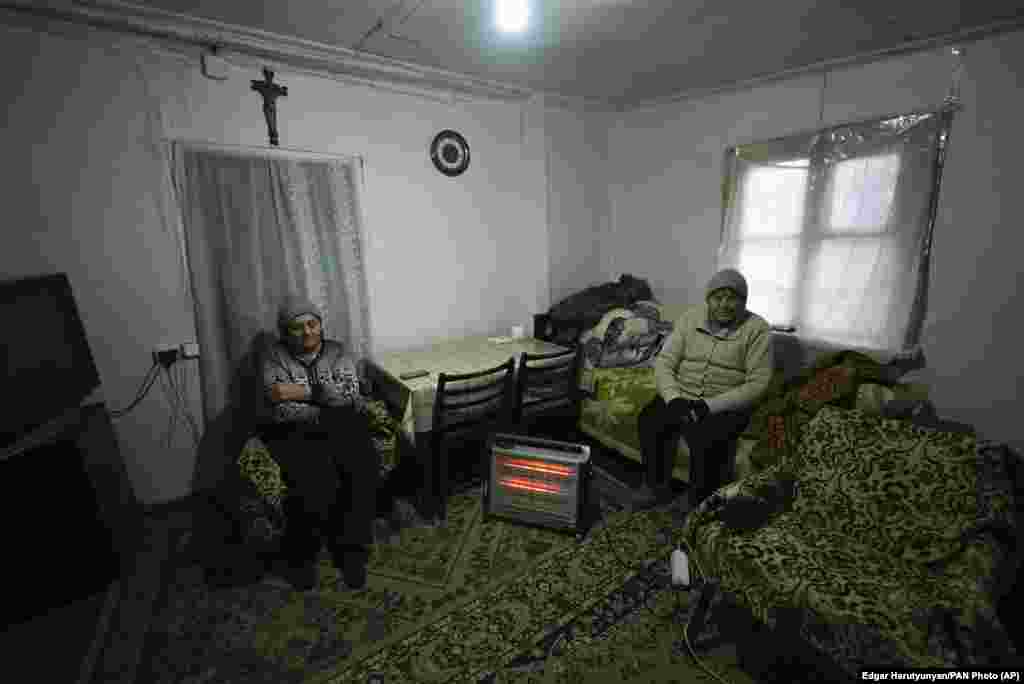
15/15Two elderly women warm themselves near a heater in Stepanakert.
Two years after Azerbaijan and Armenia ended a war that killed an estimated 7,000 people, tensions between the countries are again in a dispute over a 6-kilometer road known as the Lachin Corridor. An Azerbaijani blockade of the road has led to shortages in areas of Nagorno-Karabakh that are mostly inhabited by ethnic Armenians.
Show moreShow less
Previous slide
Next slide
On March 5, Gurgen Nersisian, a state minister in Karabakh’s de facto government, said ethnic Armenian “police officers were driving in a vehicle from the Karabakh side to our police station. There were no weapons or ammunition in the vehicle at all.”
Nersisian said that along with the three killed personnel, one other police officer was injured in the incident, which he blamed on "a sabotage group of the Azerbaijani armed forces."
Authorities in Azerbaijan, meanwhile, rejected the claims of the ethnic Armenians, saying that two soldiers were killed when Azerbaijan’s military tried to stop Armenian vehicles from smuggling weapons and ammunition into Karabakh from Armenia.
“Today’s incident once again shows that Azerbaijan needs to set up a checkpoint” on the key road linking Armenian and Karabakh, known as the Lachin Corridor, the Azerbaijani authorities said.
RFE/RL’s Armenian Service, operating out of a bureau in Yerevan, is a leading source of trusted reporting and technical innovation, reaching outsized audiences when developments demand authoritative, up-to-the-minute news most.
Despite near-total government control over the media, RFE/RL's Azerbaijani Service has built a high-impact social-media presence in Azerbaijan and a reputation as a leading source of independent news.