




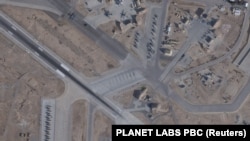
The US military suffered its first combat fatalities since March in the Iran war, with the Pentagon saying two service members were killed and another was missing during defensive operations in Jordan, as hostilities ramped up in the region and further endangered a fragile cease-fire.
"On July 17, two US service members in Jordan were killed in action as US Central Command...and partner forces defended against Iranian ballistic missile and drone attacks. Additionally, one service member is currently missing in action," CENTCOM said on X on July 18.
Four others service members were injured and evacuated to Jordanian hospitals, CENTCOM added. Two of them have been discharged from the hospital, while several others were evaluated for minor injuries and returned to duty, it added.
The statement did not specify where in Jordan the attack occurred. Identification of the victims was not provided pending notification of family members.
The main site of US operations on the territory of the Middle East ally is the Muwaffaq Salti Air Base, about 80 kilometers outside Amman. US forces also have operations at the Prince Hassan Air Base and at other military facilities in Jordan.
The Wall Street Journal, citing sources, reported that the strike occurred at the Muwaffaq Salti base, which US forces have used to launch air strikes against Iran.
US President Donald Trump told the NewsNation network that the deaths were "very sad. It's a very sad thing."
"We hate to see it happen. It’s in service to our country," he said in a brief interview.
US defense chief Pete Hegseth wrote on X: "Godspeed, heroes. Their sacrifice only stiffens our resolve."
First Combat Fatalities Since Renewed Hostilities
The deaths would bring the total of known fatalities among US service members since the start of the US-Israeli strikes on Iran on February 28 to 16, with all but one listed as combat deaths.
Six service members were killed on March 1 when a drone hit a command center in Kuwait.
On March 8, a US soldier was killed during an attack on the Prince Sultan Air Base in Saudi Arabia.
On March 12, six members of a refueling aircraft were killed when their plane crashed in western Iraq.
A Navy pilot was also killed in what was described as a noncombat incident when a helicopter crashed in the Arabian Sea in early July.
Iran Says MOU 'Suspended'
The latest deaths come as Iranian officials said an interim agreement -- the memorandum of understanding (MOU) between Washington and Tehran -- had been "suspended" following the recent wave of US strikes on Iran.
"Unfortunately, the Americans have violated their obligations under the Islamabad declaration of intent through their aggressive measures," Deputy Foreign Minister Kazem Gharibabadi said in a televised interview, adding Tehran was suspending implementation of its commitments.
Foreign Ministry spokesman Esmail Baqaei made similar remarks, saying the MOU had "effectively been suspended."
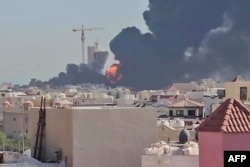
Iran has responded to the US strikes by launching missiles and drones at US Gulf Arab allies, including Kuwait, Bahrain, and Saudi Arabia, along with its attacks on Jordan.
Iranian Major General Mohsen Rezaei threatened that Tehran was ready to resume "full-scale offensive operations" if US strikes against were to continue for another two or three days.
The MOU was intended to give the sides 60 days to sign a permanent end to the war, but hostilities -- although not full-out war -- have been reignited over Iran's military actions in the Strait of Hormuz.
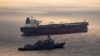
A key clause of the MOU was a US demand to open the strait, through which much of the world's oil and gas supplies transited prewar but which Iran had effectively blocked.
Traffic has moved erratically through the waterway, although it is virtually shut again after recent strikes by Iran on vessels it said had not received permission to transit, prompting the latest wave of US strikes on Iranian coastal sites and bridges, tunnels, and railway stations in the south of the country.
Washington has said Tehran's attempt to control the strait is a violation of the MOU. CENTCOM and the White House have said the purpose of the attacks was to degrade Tehran's ability to strike ships in the strait.
Written Supreme Leader Statement
Meanwhile, a statement attributed to Iranian Supreme Leader Mojtaba Khamenei on July 18 blasted the United States for what it said were repeated violations of the MOU.
"Now that the American enemy seeks to incite war and bear its most serious consequences, it should know that the dear Iranian nation and the axis of resistance have unforgettable lessons to offer it," said the statement, read by state TV late on July 18.
Khamenei has not been seen in public since February 28, when his father -- the previous supreme leader -- was killed in US-Israeli air strikes.
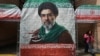
The 56-year-old Khamenei was reportedly severely injured in the attack, raising questions about his health and his ability to carry out his duties as supreme leader.
There have been no known audio or video recordings of Khamenei since February 28. He was not seen throughout six days of ceremonies and rallies during funeral services for his father in early July.
Experts said his absence from the funeral services inflicted a further blow to Khamenei's legitimacy and intensified questions about who runs the Middle Eastern country of some 90 million people.
According to the authorities, he did not attend his father's funeral because of security concerns.

