



SMEDEREVO, Serbia -- Residents of Smederevo, a Serbian industrial city already blanketed by pollution from a Chinese-owned steel mill, are pushing back against plans for a $2.8 billion oil refinery backed by Chinese state-owned companies -- a project negotiated largely out of public view.
Nearly two years after the refinery was announced, Serbia's government has refused to release the framework agreement signed with China Energy International Group.
Serbia's Energy Ministry told RFE/RL the deal was a "business secret" and disclosing the agreement would interrupt negotiations with potential investors. Key details, including ownership structure, financing, and environmental safeguards, have been kept from the public for almost two years since the project, located about 60 kilometers from Belgrade, was announced.

The opacity has fueled concern in Smederevo and elsewhere in Serbia, whose government has forged close political and economic bonds with Beijing and Chinese state-owned firms under Serbian President Aleksandar Vucic.
"We are not automatically against industry or even an oil refinery, but we believe Smederevo is the wrong place for it because we already have a major air pollution problem," Nikola Krstic, director of the local environmental NGO Fortress Movement, told RFE/RL.
The refinery project follows a broader pattern in Serbia's dealings with Beijing: major projects negotiated through bilateral channels, shielded from public scrutiny, and often exempt from open tender because of a 2009 agreement between China and Serbia that allows for direct public contracting with Chinese firms.

Analysts say the Serbian project aligns with a broader shift in China's oil sector.
"It is expected that China will soon reach peak oil demand, possibly as early as next year," Plamen Tonchev, head of the Institute of International Economic Relations in Athens, told RFE/RL. "This means many Chinese refineries will shut down and look for opportunities abroad."
Pollution Fears In An Industrial City
According to Serbian officials, the refinery would employ some 700 people, with Serbian Energy Minister Dubravka Djedovic Handanovic saying the owner and operator would be "one of the Chinese oil companies," without naming which one.
China Energy International Group, the company that signed the framework agreement with Belgrade, is the overseas arm of China Energy Engineering Corporation, a major state-owned enterprise focused on infrastructure and energy projects. The company regularly outsources and subcontracts work to other Chinese firms.
"Only once we know the details will we know whether this is the surrender of a strategically important sector to a Chinese owner or simply nontransparent spending of state funds through commercial contracts," Stefan Vladisavljev, an expert on Beijing's role in the Balkans at Foundation BFPE, a Belgrade-based think tank, told RFE/RL.
Dedovic Handanovic said the refinery would process up to 100,000 barrels per day, roughly matching the capacity of Serbia's main refinery in Pancevo, near Belgrade. Serbia also has a smaller-scale refinery in the city of Novi Sad that is no longer operational.
Officials have presented the project as a way to reduce energy insecurity, especially as Oil Industry of Serbia (NIS), Serbia's sole crude oil refiner, was hit with US sanctions at the end of 2025 because of its majority-Russian ownership.
In Smederevo, the main concern is further deterioration of air quality, which has already reached dangerous levels since the Chinese company HBIS acquired the largely defunct plant in 2016, according to Serbia's Environmental Protection Agency.
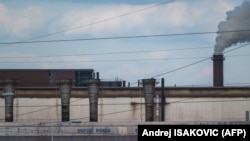
While the renovated plant is a source of employment for the city, it has come with environmental costs, with the company being fined over high air pollution in 2024.
"If we look at our experience with the steel plant, we have reasons to believe standards will not be respected," Krstic said.
Other Smederevo residents also fear an oil refinery would worsen the already poor air quality.

"I go out for an evening walk and I can't breathe," Bogosav Filipovic, a local pensioner, told RFE/RL. "The city already rejected this once," he said, referring to the 2010 referendum on refinery construction, which failed due to low turnout.
At that time, the project was put forward by an US-Netherlands consortium, Comico Oil, but the project never advanced.
The Energy Ministry told RFE/RL it will ensure that the "highest environmental standards" will be followed with the refinery project, although it did not explain how they would be enforced.
China's 'Peak Oil' Sends Refiners Looking Abroad
The International Energy Agency projected in March 2025 that China's oil product consumption would decline as electric vehicle adoption rises and the economy shifts toward services.
"These trends have major implications for premium fuels, which are crucial for refinery profitability," the report said.

But how that will play out in Serbia remains unclear.
The Balkan country has signed more than 10 loan agreements with Chinese banks for infrastructure projects since 2014. In those arrangements, Serbia borrows the money while Chinese companies execute the work. It's not known whether the refinery would follow that model or involve direct Chinese ownership.
Secrecy around the agreement with China Energy International Group also raises questions about the company's role.

China Energy International Group, Sinopec -- a massive state-owned Chinese energy company and the world's largest oil refiner -- and the private Serbian company Ors Oil Gaz all signed a memorandum of understanding to work on the refinery in November.
Sinopec and Ors Oil Gaz did not reply to RFE/RL's request for comment.
Erica Downs, a senior researcher at Columbia University's Center on Global Energy Policy, said China Energy International Group's role is likely centered around finding investors for the project, as well as designing and building the refinery.
"Sinopec's interest in the refinery project aligns with its strategy of building and investing in overseas refineries as China approaches peak oil demand," she told RFE/RL.

