


Accessibility links

Breaking News

Civilians Reportedly Killed In Shelling As Fighting Over Nagorno-Karabakh Continues

Explosions are seen during fighting between Armenian and Azerbaijani forces near Shushi (Susa) outside Stepanakert on November 5.

YEREVAN/BAKU -- Fighting over Nagorno-Karabakh continued overnight, with the separatist region's de facto authorities reporting the deaths of at least three civilians following shelling by Azerbaijani forces.

The shelling was concentrated on Stepanakert, the region's largest city, and Shushi (known in Azeri as Susa), a strategic mountain town located some 10 kilometers south of Stepanakert.

Nagorno-Karabakh is recognized as part of Azerbaijan, but the ethnic Armenians who make up most of the population reject Azerbaijani rule. They have been governing their own affairs, with support from Armenia, since Azerbaijan's troops were pushed out of the region in a war that ended in a cease-fire in 1994.

“As a result of rocket fire, several residential houses were burned in Shushi. There is also destruction in the capital (Stepanakert). Rescue services are working on the spots,” Nagorno-Karabakh’s de facto Emergency Service reported early on November 6.
An RFE/RL Armenian Service correspondent in Stepanakert has confirmed the deaths of three civilians in the city, reporting at least a dozen explosions heard in the area last night.

Meanwhile, Azerbaijan also reported shelling of its populated areas by ethnic Armenian forces. The country’s Defense Ministry said that the town of Tartar and nearby villages came under fire on November 6 in the morning.

Both sides deny they target civilian populations in the ongoing conflict.

The two sides again gave different accounts of the developments along the front lines in the morning.

Armenia-backed ethnic Armenian forces in Nagorno-Karabakh claimed to have conducted “effective defensive battles,” stopping attacks by Azerbaijani armed forces at several major sectors of the front line.

Capitals During War: The View From Baku And Yerevan

A restaurant displays Azerbaijani and Turkish flags in Baku's old town on October 14. 
1/14 A restaurant displays Azerbaijani and Turkish flags in Baku's old town on October 14. 
There is an intense display of patriotism in the capital cities of Azerbaijan and Armenia as the two countries enter the fifth week of war over Nagorno-Karabakh.
A television plays a loop of soldiers and military exercises in downtown Yerevan on October 28. 
2/14 A television plays a loop of soldiers and military exercises in downtown Yerevan on October 28. 
There is an intense display of patriotism in the capital cities of Azerbaijan and Armenia as the two countries enter the fifth week of war over Nagorno-Karabakh.
A street kiosk in Baku sports an Azerbaijani flag on November 4. 
3/14 A street kiosk in Baku sports an Azerbaijani flag on November 4. 
There is an intense display of patriotism in the capital cities of Azerbaijan and Armenia as the two countries enter the fifth week of war over Nagorno-Karabakh.
Refugees who fled the Nagorno-Karabakh region make<a href="https://cooking.nytimes.com/recipes/1020760-jingalov-hats" target="_blank"> <strong>jingalov hats</strong></a>&nbsp;-- traditional flatbreads stuffed with herbs, in central Yerevan on October 26.&nbsp;
4/14 Refugees who fled the Nagorno-Karabakh region make jingalov hats -- traditional flatbreads stuffed with herbs, in central Yerevan on October 26. 
There is an intense display of patriotism in the capital cities of Azerbaijan and Armenia as the two countries enter the fifth week of war over Nagorno-Karabakh.
Turkish and Azerbaijani flags hang over the street in central Baku on October 23. Turkey and Azerbaijan share strong cultural and historical ties.&nbsp;
5/14 Turkish and Azerbaijani flags hang over the street in central Baku on October 23. Turkey and Azerbaijan share strong cultural and historical ties. 
There is an intense display of patriotism in the capital cities of Azerbaijan and Armenia as the two countries enter the fifth week of war over Nagorno-Karabakh.
A photo of a now-deceased Armenian soldier is displayed on a building in central Yerevan on October 28.&nbsp;
6/14 A photo of a now-deceased Armenian soldier is displayed on a building in central Yerevan on October 28. 
There is an intense display of patriotism in the capital cities of Azerbaijan and Armenia as the two countries enter the fifth week of war over Nagorno-Karabakh.
A man selling carpets with the image of former Azerbaijani President Heidar Aliyev (left) and Mustafa Kemal Ataturk, the founder of modern Turkey. Aliyev famously described Turkey and Azerbaijan as&nbsp;&quot;one nation, two states.&quot;&nbsp;
7/14 A man selling carpets with the image of former Azerbaijani President Heidar Aliyev (left) and Mustafa Kemal Ataturk, the founder of modern Turkey. Aliyev famously described Turkey and Azerbaijan as "one nation, two states." 
There is an intense display of patriotism in the capital cities of Azerbaijan and Armenia as the two countries enter the fifth week of war over Nagorno-Karabakh.
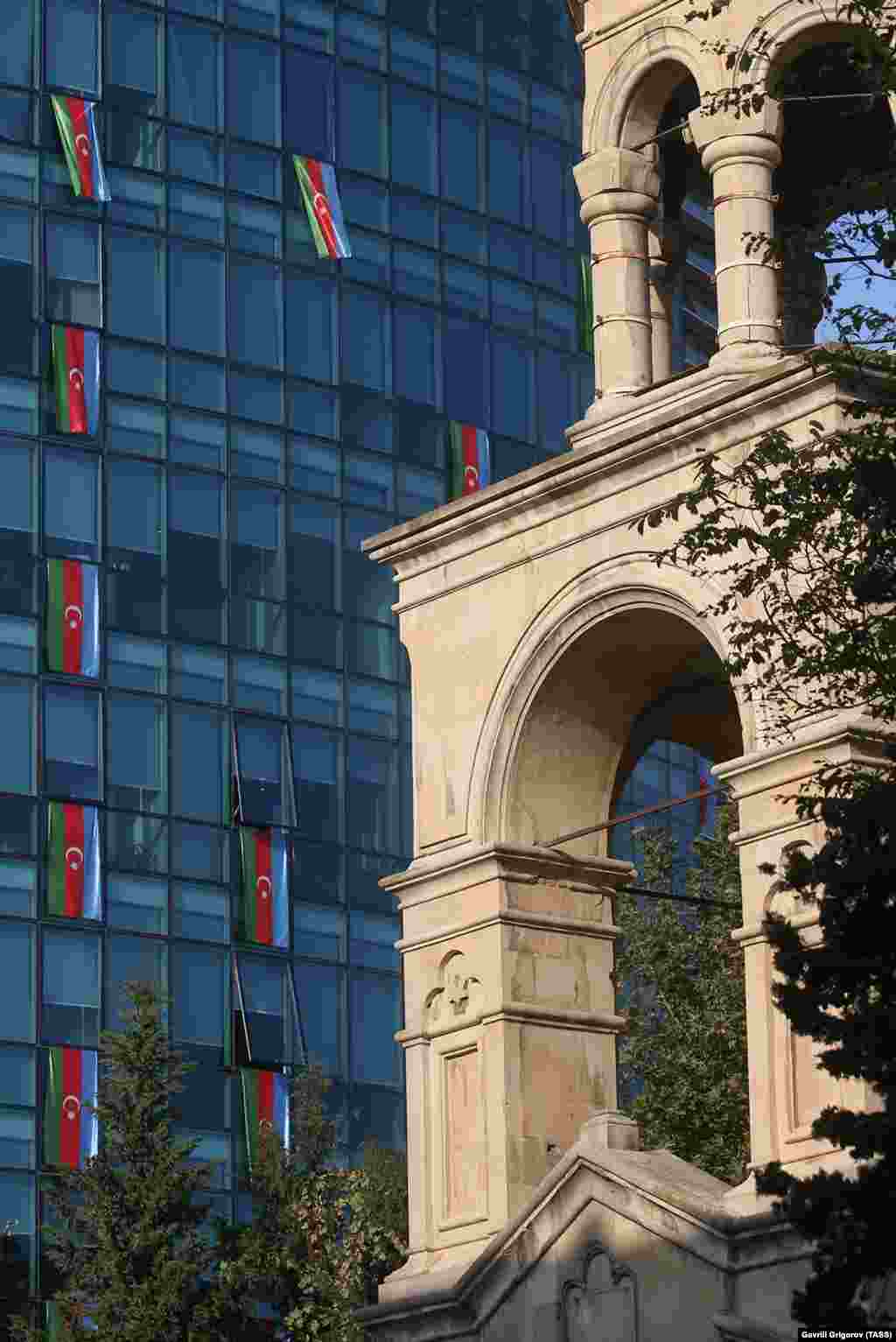
St. Gregory the Illuminator Church (right) and the offices of the International Bank of Azerbaijan are adorned with national flags on November 4.&nbsp;
8/14 St. Gregory the Illuminator Church (right) and the offices of the International Bank of Azerbaijan are adorned with national flags on November 4. 
There is an intense display of patriotism in the capital cities of Azerbaijan and Armenia as the two countries enter the fifth week of war over Nagorno-Karabakh.
A candy bar with a note says, &quot;The meeting place is free and independent [Nagorno-Karabakh], I&#39;m waiting for the date.&quot; In Yerevan, some girls are writing flirty notes on candy bars that are sent to soldiers fighting in Nagorno-Karabakh.&nbsp;
9/14 A candy bar with a note says, "The meeting place is free and independent [Nagorno-Karabakh], I'm waiting for the date." In Yerevan, some girls are writing flirty notes on candy bars that are sent to soldiers fighting in Nagorno-Karabakh. 
There is an intense display of patriotism in the capital cities of Azerbaijan and Armenia as the two countries enter the fifth week of war over Nagorno-Karabakh.
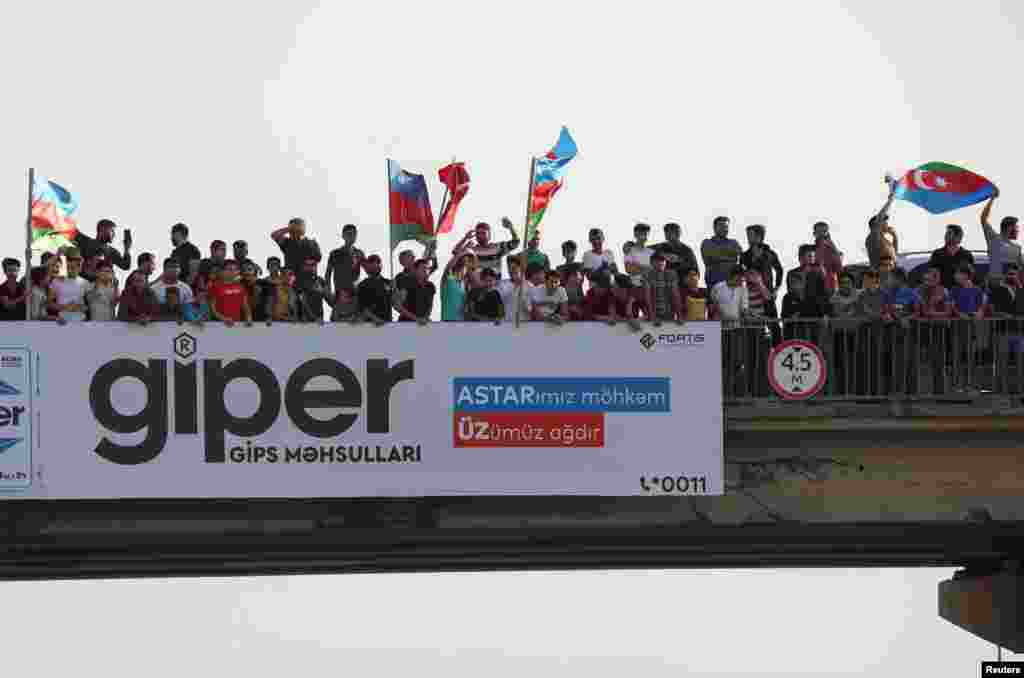
People gather on an overpass to cheer Azerbaijani soldiers in Baku shortly after the breakout of the current conflict in Nagorno-Karabakh on September 27.&nbsp;
10/14 People gather on an overpass to cheer Azerbaijani soldiers in Baku shortly after the breakout of the current conflict in Nagorno-Karabakh on September 27. 
There is an intense display of patriotism in the capital cities of Azerbaijan and Armenia as the two countries enter the fifth week of war over Nagorno-Karabakh.
A woman walks past a large Armenian flag with the hashtag &quot;we will win&quot; on October 28.&nbsp;
11/14 A woman walks past a large Armenian flag with the hashtag "we will win" on October 28. 
There is an intense display of patriotism in the capital cities of Azerbaijan and Armenia as the two countries enter the fifth week of war over Nagorno-Karabakh.
A Baku building is seen painted with the Azerbaijan flag on October 13.&nbsp;
12/14 A Baku building is seen painted with the Azerbaijan flag on October 13. 
There is an intense display of patriotism in the capital cities of Azerbaijan and Armenia as the two countries enter the fifth week of war over Nagorno-Karabakh.
A woman prays in a church in Yerevan on October 17.
13/14 A woman prays in a church in Yerevan on October 17.
There is an intense display of patriotism in the capital cities of Azerbaijan and Armenia as the two countries enter the fifth week of war over Nagorno-Karabakh.
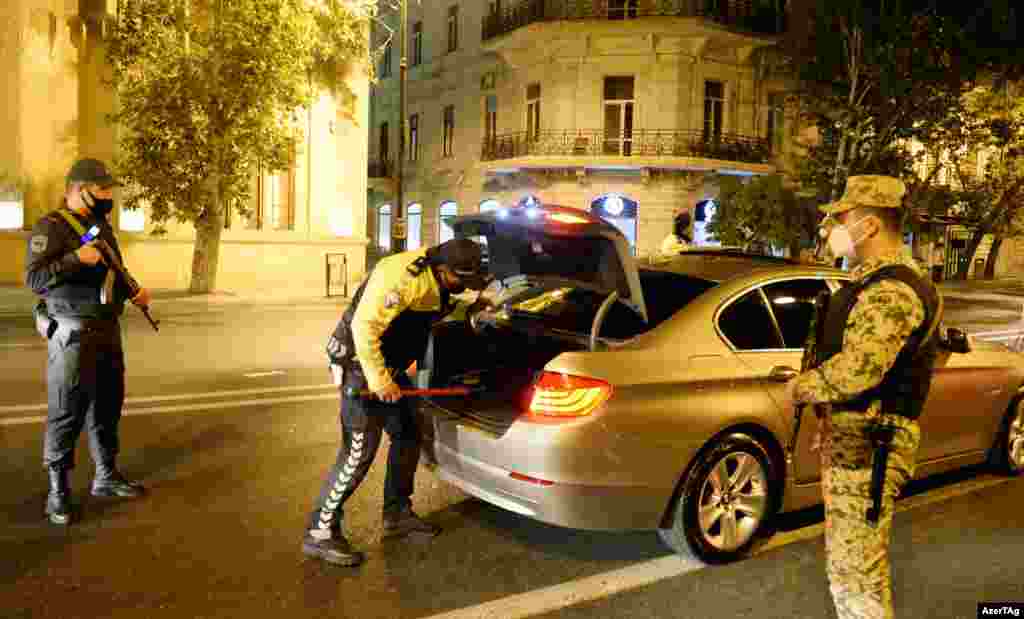
Police check a car in Baku shortly after the conflict broke out. Both Armenia and Azerbaijan announced martial law when the war in Nagorno-Karabakh began.&nbsp;
14/14 Police check a car in Baku shortly after the conflict broke out. Both Armenia and Azerbaijan announced martial law when the war in Nagorno-Karabakh began. 
There is an intense display of patriotism in the capital cities of Azerbaijan and Armenia as the two countries enter the fifth week of war over Nagorno-Karabakh.
Previous slide
Next slide

Meanwhile, Azerbaijan claimed its armed forces have been on the offensive in several directions, causing Armenian forces to retreat.

On November 5, Nagorno-Karabakh’s de facto ethnic Armenian leader, Arayik Harutiunian, said he had visited Shushi to meet with defenders of the town and discuss “the strategy of the struggle against the numerous forces of the enemy.”

As Azerbaijani forces were reportedly closing in on Shushi, Harutiunian said that “all possible efforts are being exerted to keep the fortress town impenetrable.”

At least some 1,000 people have been reported killed since fighting erupted on September 27, raising fears of a wider conflict in the South Caucasus drawing in NATO member Turkey, which is an ally of Azerbaijan, and Russia, which has a military pact with Armenia.

Three cease-fires brokered by Russia, France, and the United States all collapsed within ours of entering into force.

Armenian forces and Azerbaijani's military claim to have inflicted devastating losses on each other. But reports from the opposing sides are often contradictory and hard to verify.

Russian President Vladimir Putin said on October 22 that Moscow believes nearly 5,000 people had been killed in the fighting.

With reporting by Interfax and TASS
  • 16x9 Image

    RFE/RL's Armenian Service

    RFE/RL’s Armenian Service, operating out of a bureau in Yerevan, is a leading source of trusted reporting and technical innovation, reaching outsized audiences when developments demand authoritative, up-to-the-minute news most.

  • 16x9 Image

    RFE/RL's Azerbaijani Service

    Despite near-total government control over the media, RFE/RL's Azerbaijani Service has built a high-impact social-media presence in Azerbaijan and a reputation as a leading source of independent news.

This item is part of
XS
SM
MD
LG