



Accessibility links

Breaking News

Egyptian Military Delivers Ultimatum

Updated
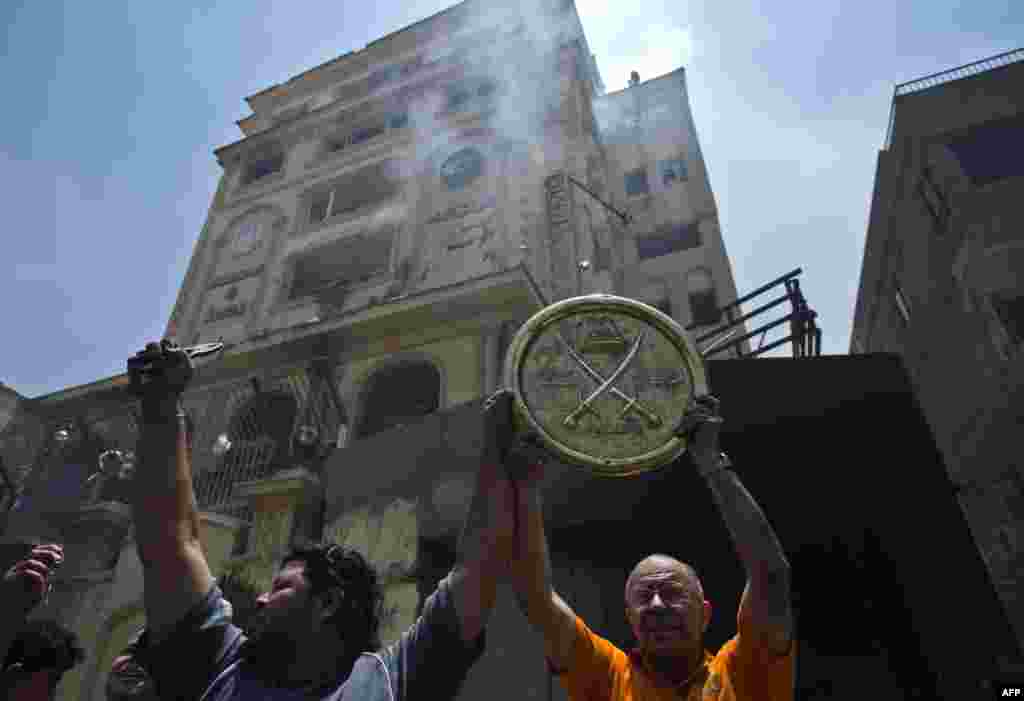
Protesters hold up an emblem of the Muslim Brotherhood removed from the party's headquarters, which was looted and set on fire by angry crowds.
1/11 Protesters hold up an emblem of the Muslim Brotherhood removed from the party's headquarters, which was looted and set on fire by angry crowds.
Opposition protesters in Egypt stormed and set fire to the Cairo headquarters of the Muslim Brotherhood on July 1, the second day of mass protests against the government of President Muhammad Morsi. A day earlier, millions of opposition protesters took to the streets of Cairo and cities around the country in a massive display of anger and frustration, leading to clashes that left 16 people dead.
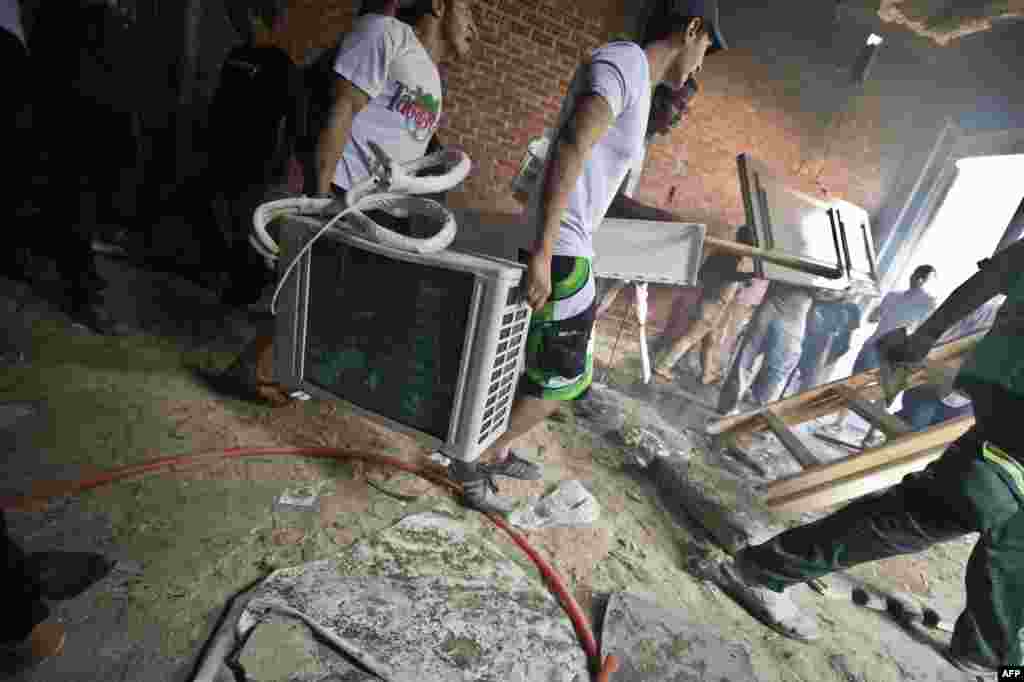
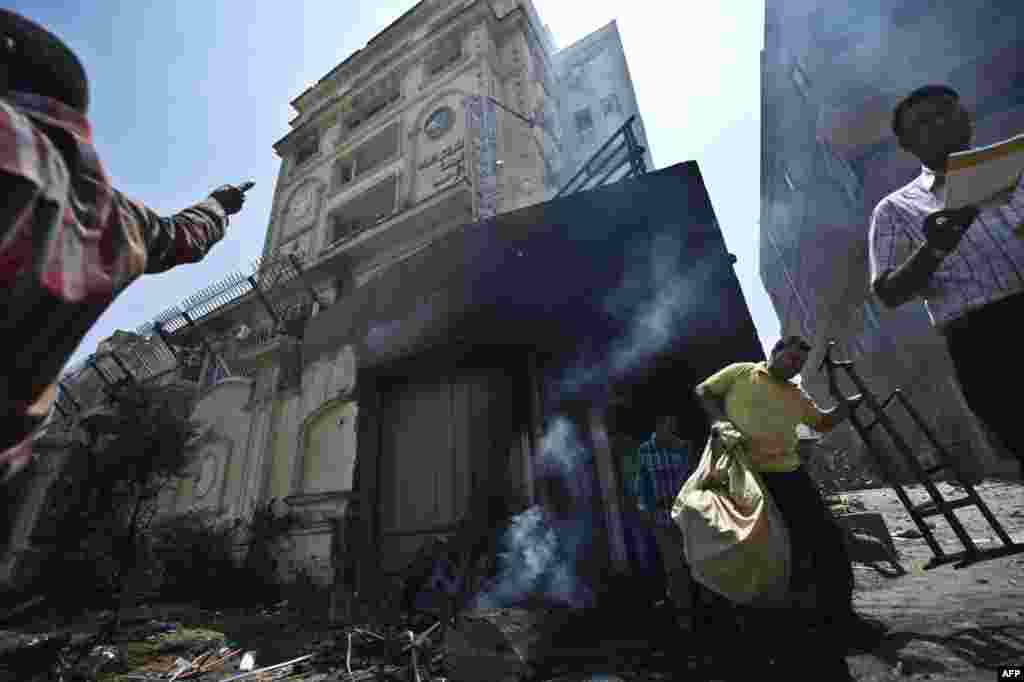
Men take equipment from the headquarters of the Muslim Brotherhood in the Moqattam district of Cairo.
2/11 Men take equipment from the headquarters of the Muslim Brotherhood in the Moqattam district of Cairo.
Opposition protesters in Egypt stormed and set fire to the Cairo headquarters of the Muslim Brotherhood on July 1, the second day of mass protests against the government of President Muhammad Morsi. A day earlier, millions of opposition protesters took to the streets of Cairo and cities around the country in a massive display of anger and frustration, leading to clashes that left 16 people dead.
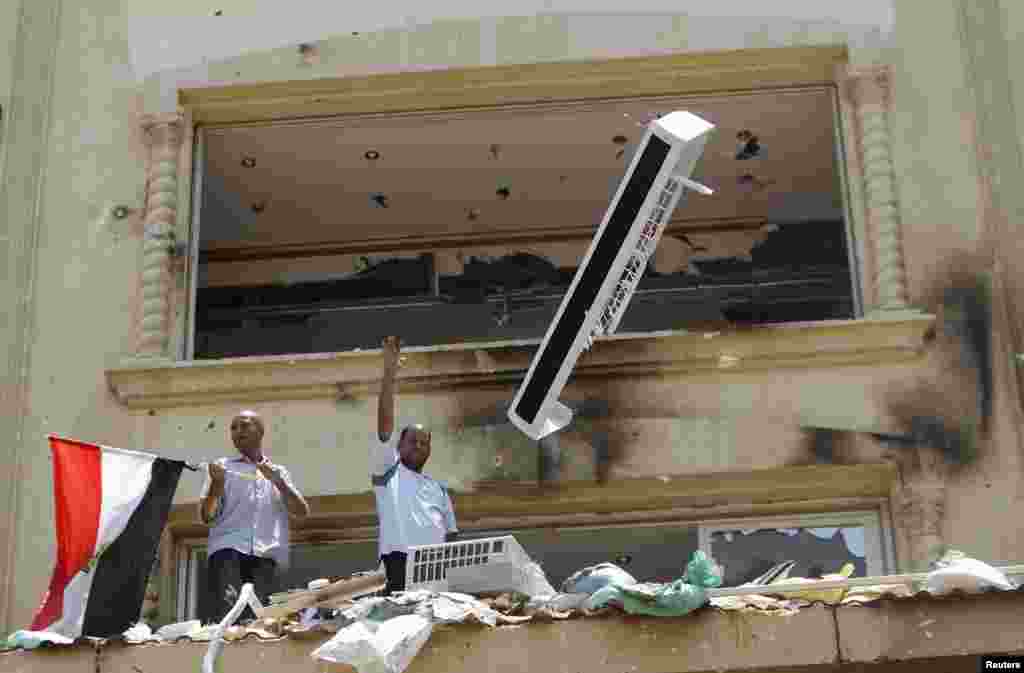
A looter gestures as part of an air-conditioner is thrown down from the Muslim Brotherhood offices.
3/11 A looter gestures as part of an air-conditioner is thrown down from the Muslim Brotherhood offices.
Opposition protesters in Egypt stormed and set fire to the Cairo headquarters of the Muslim Brotherhood on July 1, the second day of mass protests against the government of President Muhammad Morsi. A day earlier, millions of opposition protesters took to the streets of Cairo and cities around the country in a massive display of anger and frustration, leading to clashes that left 16 people dead.
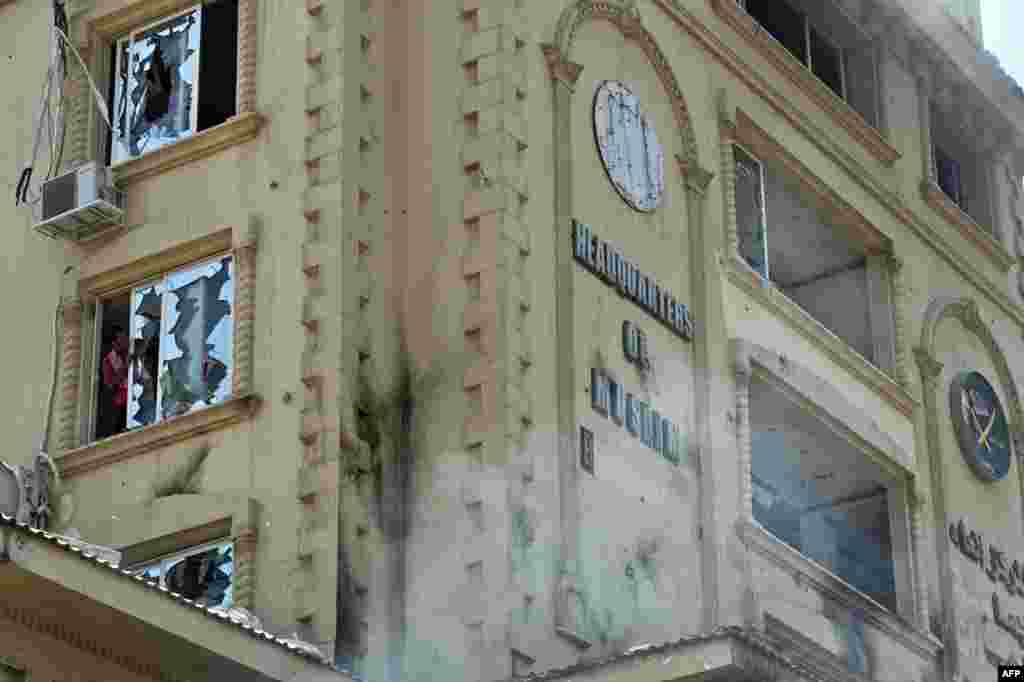
Smoke rises from the building, which was set on fire overnight.
4/11 Smoke rises from the building, which was set on fire overnight.
Opposition protesters in Egypt stormed and set fire to the Cairo headquarters of the Muslim Brotherhood on July 1, the second day of mass protests against the government of President Muhammad Morsi. A day earlier, millions of opposition protesters took to the streets of Cairo and cities around the country in a massive display of anger and frustration, leading to clashes that left 16 people dead.
5/11
Opposition protesters in Egypt stormed and set fire to the Cairo headquarters of the Muslim Brotherhood on July 1, the second day of mass protests against the government of President Muhammad Morsi. A day earlier, millions of opposition protesters took to the streets of Cairo and cities around the country in a massive display of anger and frustration, leading to clashes that left 16 people dead.
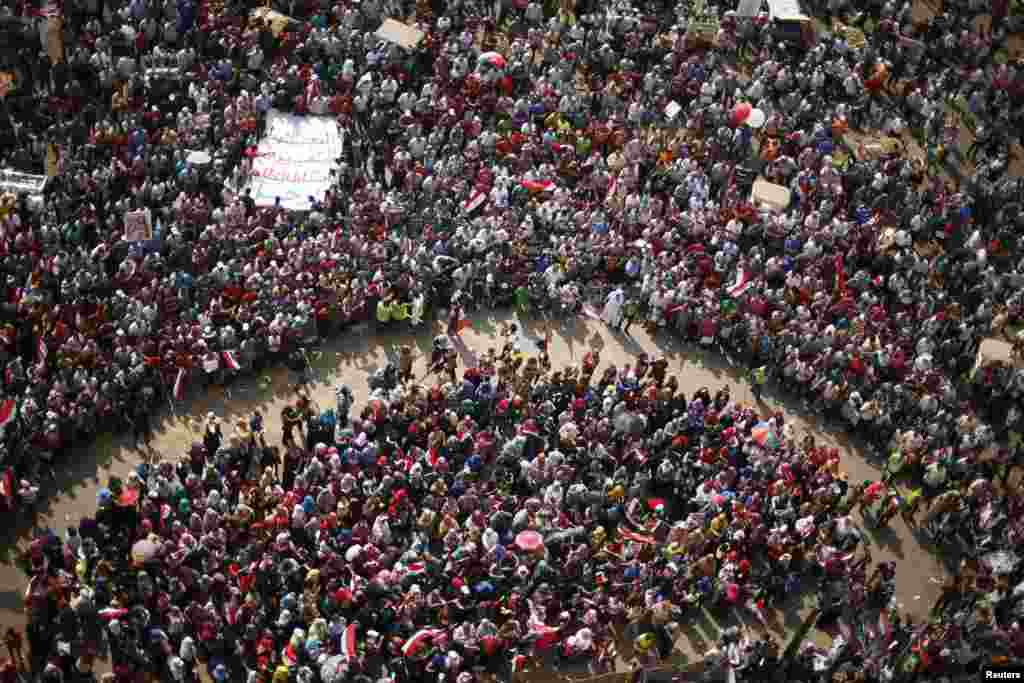
Protesters gather in Cairo's Tahrir Square for a second day of demonstrations against the government of President Muhammad Morsi.
6/11 Protesters gather in Cairo's Tahrir Square for a second day of demonstrations against the government of President Muhammad Morsi.
Opposition protesters in Egypt stormed and set fire to the Cairo headquarters of the Muslim Brotherhood on July 1, the second day of mass protests against the government of President Muhammad Morsi. A day earlier, millions of opposition protesters took to the streets of Cairo and cities around the country in a massive display of anger and frustration, leading to clashes that left 16 people dead.
A view of Tahrir Square, which was at the heart of the Arab Spring uprising in 2011 and is once again at the center of the protest movement
7/11 A view of Tahrir Square, which was at the heart of the Arab Spring uprising in 2011 and is once again at the center of the protest movement
Opposition protesters in Egypt stormed and set fire to the Cairo headquarters of the Muslim Brotherhood on July 1, the second day of mass protests against the government of President Muhammad Morsi. A day earlier, millions of opposition protesters took to the streets of Cairo and cities around the country in a massive display of anger and frustration, leading to clashes that left 16 people dead.
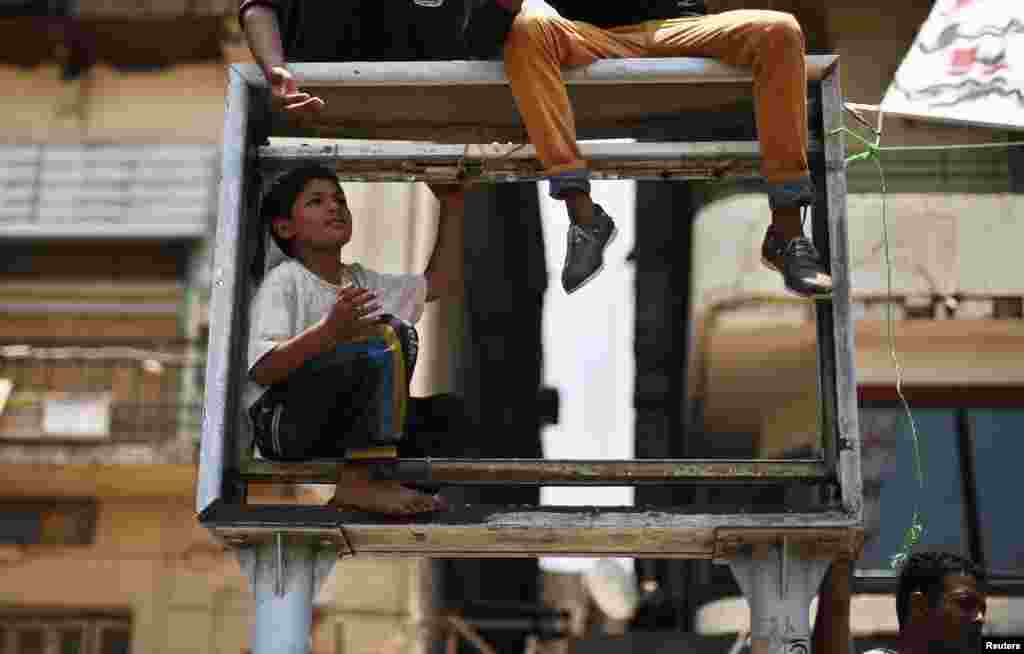
Boys get an overhead view of the protests from the frame of an advertising banner.
8/11 Boys get an overhead view of the protests from the frame of an advertising banner.
Opposition protesters in Egypt stormed and set fire to the Cairo headquarters of the Muslim Brotherhood on July 1, the second day of mass protests against the government of President Muhammad Morsi. A day earlier, millions of opposition protesters took to the streets of Cairo and cities around the country in a massive display of anger and frustration, leading to clashes that left 16 people dead.
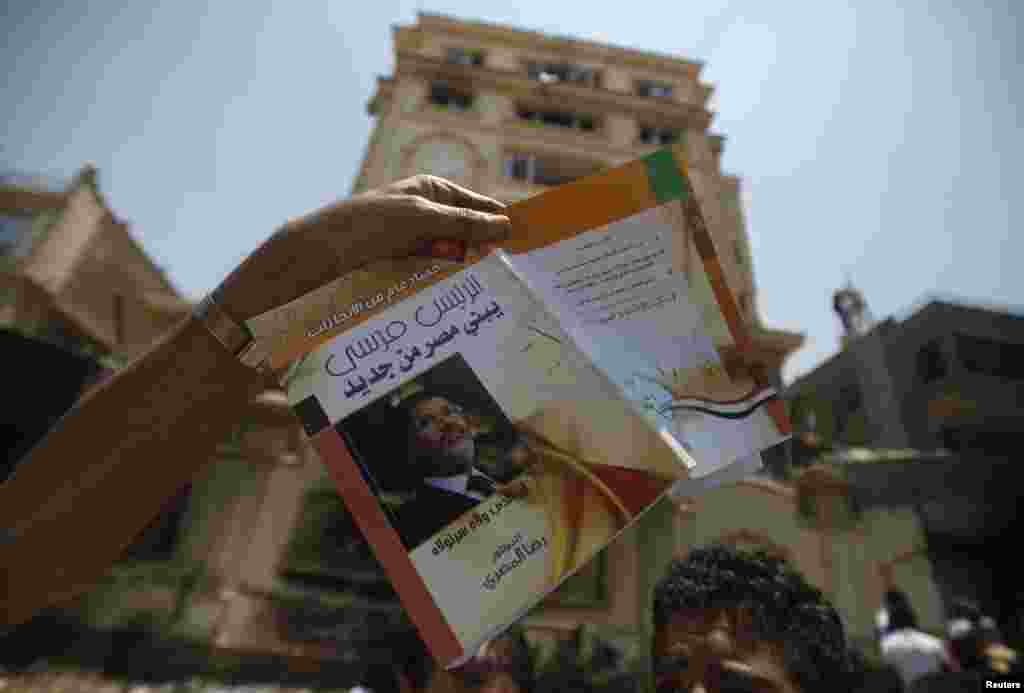
A protester holds up a book titled "President Morsi Is Building A New Egypt" in front of the Muslim Brotherhood headquarters.
9/11 A protester holds up a book titled "President Morsi Is Building A New Egypt" in front of the Muslim Brotherhood headquarters.
Opposition protesters in Egypt stormed and set fire to the Cairo headquarters of the Muslim Brotherhood on July 1, the second day of mass protests against the government of President Muhammad Morsi. A day earlier, millions of opposition protesters took to the streets of Cairo and cities around the country in a massive display of anger and frustration, leading to clashes that left 16 people dead.
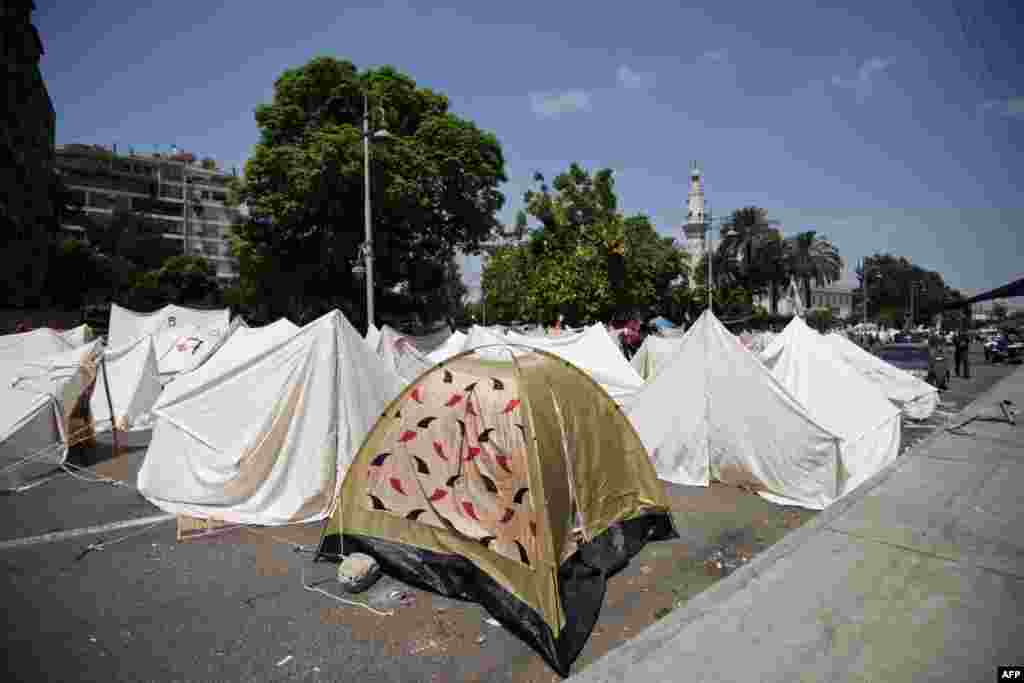
Protesters have set up tents to stake out their positions outside the presidential palace in Cairo.
10/11 Protesters have set up tents to stake out their positions outside the presidential palace in Cairo.
Opposition protesters in Egypt stormed and set fire to the Cairo headquarters of the Muslim Brotherhood on July 1, the second day of mass protests against the government of President Muhammad Morsi. A day earlier, millions of opposition protesters took to the streets of Cairo and cities around the country in a massive display of anger and frustration, leading to clashes that left 16 people dead.
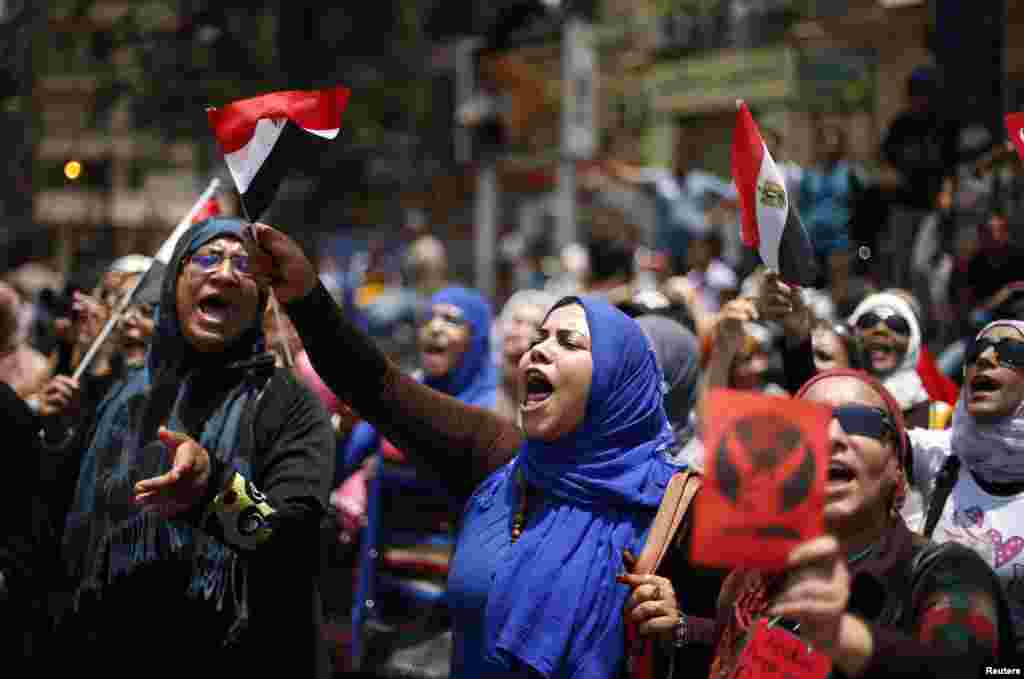
Protesters in Tahrir Square call for Morsi to resign.
11/11 Protesters in Tahrir Square call for Morsi to resign.
Opposition protesters in Egypt stormed and set fire to the Cairo headquarters of the Muslim Brotherhood on July 1, the second day of mass protests against the government of President Muhammad Morsi. A day earlier, millions of opposition protesters took to the streets of Cairo and cities around the country in a massive display of anger and frustration, leading to clashes that left 16 people dead.
Previous slide
Next slide
The commander of Egypt's military has issued an ultimatum to pro- and antigovernment protesters, giving them 48 hours to resolve their differences or face unspecified actions.

In a statement broadcast on television on July 1, General Abdel Fattah al-Sisi said the army will offer its own "road map" for peace if President Muhammad Morsi and his opponents fail to reach an agreement.

"The armed forces repeat the call [to political parties] to carry out the nation's demands," Sisi said, "and [the armed forces] issue a 48-hour ultimatum to everyone as a last chance to cope with this historic situation that the nation is going through. It will not forgive any power that will not shoulder its responsibilities."

The head of the armed forces described the protests against Morsi as an "unprecedented" expression of the popular will.

But he added that the military would not get involved in politics or government.

The main opposition National Salvation Front applauded Sisi's statement, while demonstrators on Cairo's Tahrir Square cheered at news of the military's move.

"The statement was good, but I feel like 48 hours is too long," one protester told Reuters. "[Morsi] cannot stay here longer than 48 hours. The past year that he's been president is more than enough."

The statement from the military came after opposition protesters in Egypt stormed and set fire to the Cairo headquarters of the Muslim Brotherhood.

The protesters threw files from the windows and looted furnishings on July 1, one day after 16 people were killed in nationwide protests against the government.

Four members of Morsi’s cabinet announced their resignations on July 1 amid mounting pressure. The ministers of tourism, environment, communication, and legal affairs handed in their resignations together to Prime Minister Hisham Qandil.

Protests on June 30 saw millions of opposition protesters take to the streets of Cairo and cities around the country in a massive display of anger and frustration with Morsi, who is a leading member of the Muslim Brotherhood political movement.

Critics accuse Morsi of giving too much power to Islamists and failing to tackle the country's economic problems.

The June 30 protests were the largest seen in Egypt in the two and a half years of turmoil since the ouster of autocratic President Hosni Mubarak in February 2011.

With reporting by AFP and AP
  • 16x9 Image

    RFE/RL

    RFE/RL journalists report the news in 24 languages in 18 countries where a free press is banned by the government or not fully established. We provide what many people cannot get locally: uncensored news, responsible discussion, and open debate.

XS
SM
MD
LG