


Accessibility links

Breaking News

Japanese Prime Minister Visits Kyiv As Intense Fighting Continues In Eastern Ukraine

Updated
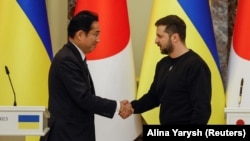
 Ukrainian President Volodymyr Zelenskiy (right) greets Japanese Prime Minister Fumio Kishida in Kyiv on March 21.
Ukrainian President Volodymyr Zelenskiy (right) greets Japanese Prime Minister Fumio Kishida in Kyiv on March 21.

Russia's sustained offensive in the eastern Donetsk region has intensified, the Ukrainian military said on March 21, as Japan's prime minister met Ukrainian President Volodymyr Zelenskiy in Kyiv in a show of support that coincided with Chinese President Xi Jinping's visit to Moscow.

The commander of Ukraine's ground forces, Oleksandr Syrskiy, said Russian assault groups have been attempting to advance toward the center of Bakhmut, the Donetsk region city that has been the focal point of a months-long raging battle that has prompted heavy losses to both sides.

"Attempts by enemy assault units are trying to advance from the outskirts to the center of [Bakhmut], but the Defense Forces are working to destroy them 24/7," Syrskiy wrote on Telegram.

Russian and Ukrainian forces have invested heavily in the battle for Bakhmut, even though analysts say the city -- which has been reduced to little more than rubble -- carried little strategic value.

Ukrainian defenders repelled 120 attacks focused primarily on Bakhmut, the General Staff of Ukraine's Armed Forces said earlier in its daily report, adding that Russians also attempted advances in the directions of Avdiyivka, Lyman, Maryinka, and Shakhtarsk.

The Japanese Foreign Ministry said earlier that Prime Minister Fumio Kishida would visit Kyiv for talks with Zelenskiy, with Japanese television showing the prime minister boarding a train at the Polish border town of Przemysl. His trip was kept secret until the last minute for security reasons.

Zelenskiy posted footage of him greeting Kishida, calling him "a truly powerful defender of the international order and a longtime friend of Ukraine."

Earlier, Kishida toured Bucha, a town outside Kyiv where the mayor has said 400 civilians were killed last year by Russian forces. Kishida laid a wreath outside a church before observing a moment of silence and bowing.

"The world was astonished to see innocent civilians in Bucha killed one year ago. I really feel great anger at the atrocity upon visiting that very place here," Kishida said, adding his condolences to all the victims. Japan will keep aiding Ukraine "with the greatest effort to regain peace," he said.

WATCH: A special RFE/RL investigation looks into allegations of Russian sabotage, cover-ups by Bulgarian authorities, and whether Bulgarian arms depots are still at risk as Russia's war in Ukraine enters a second year.
Bulgarian Blasts And Russia's War In Ukraine
please wait

No media source currently available

0:00 0:34:47 0:00

Kishida's meeting with Zelenskiy came as Japan prepares to host a Group of Seven (G7) summit in May that the Japanese leader has said should exude a strong signal that international order and the rule of law must be upheld in opposition to Russia's unprovoked full-scale invasion of Ukraine, which Moscow launched in February of 2022.

Zelenskiy said he would join the G7 summit online following an invitation from Kishida.

Kishida's visit to Ukraine coincided with Xi's visit to Moscow to hold talks with Russian President Vladimir Putin, who has become increasingly isolated on the international stage because of the invasion.

IN PHOTOS: Ukraine continues to hold on to eastern city of Bakhmut despite the Wagner mercenary group claiming to have seized up to 70 percent of the ruined city.

Battle For Bakhmut Rages On As Russia's Wagner Claims More Territory
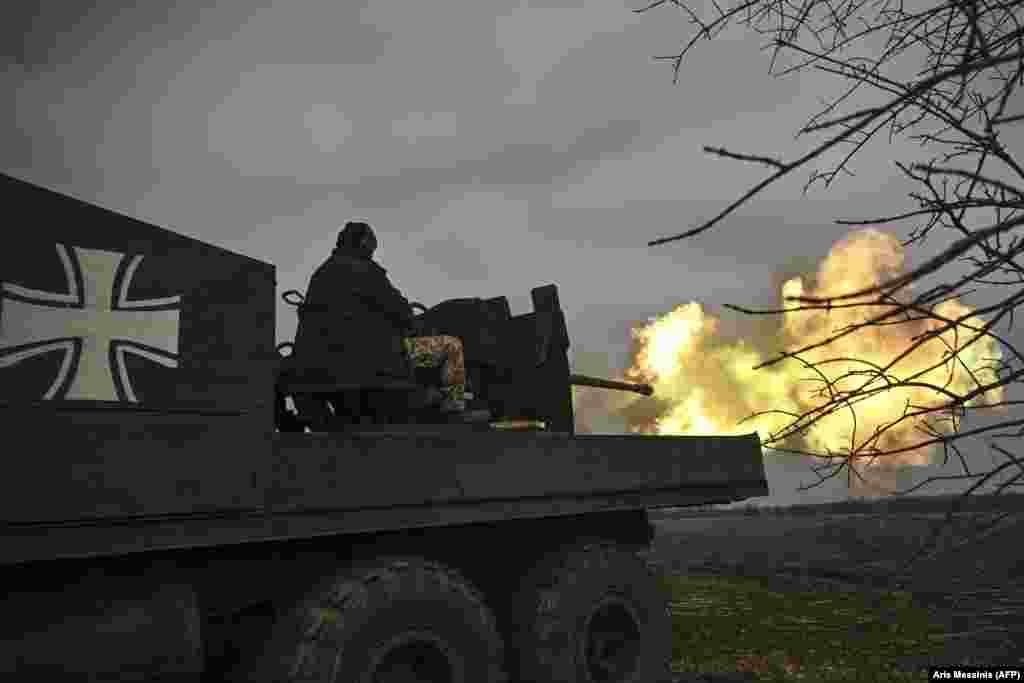
Ukrainian soldiers fire an S60 antiaircraft gun at Russian positions near Bakhmut on March 20.<br />
<br />
&quot;At the moment, Wagner units control around 70 percent of the city of Bakhmut,&quot; claimed Yevgeny Prigozhin, the head of the Russian mercenary group, on March 20.<br />
&nbsp;
1/8 Ukrainian soldiers fire an S60 antiaircraft gun at Russian positions near Bakhmut on March 20.

"At the moment, Wagner units control around 70 percent of the city of Bakhmut," claimed Yevgeny Prigozhin, the head of the Russian mercenary group, on March 20.
 
Ukraine continues to hold on to eastern city of Bakhmut despite the Wagner mercenary group claiming to have seized up to 70 percent of the ruined city.
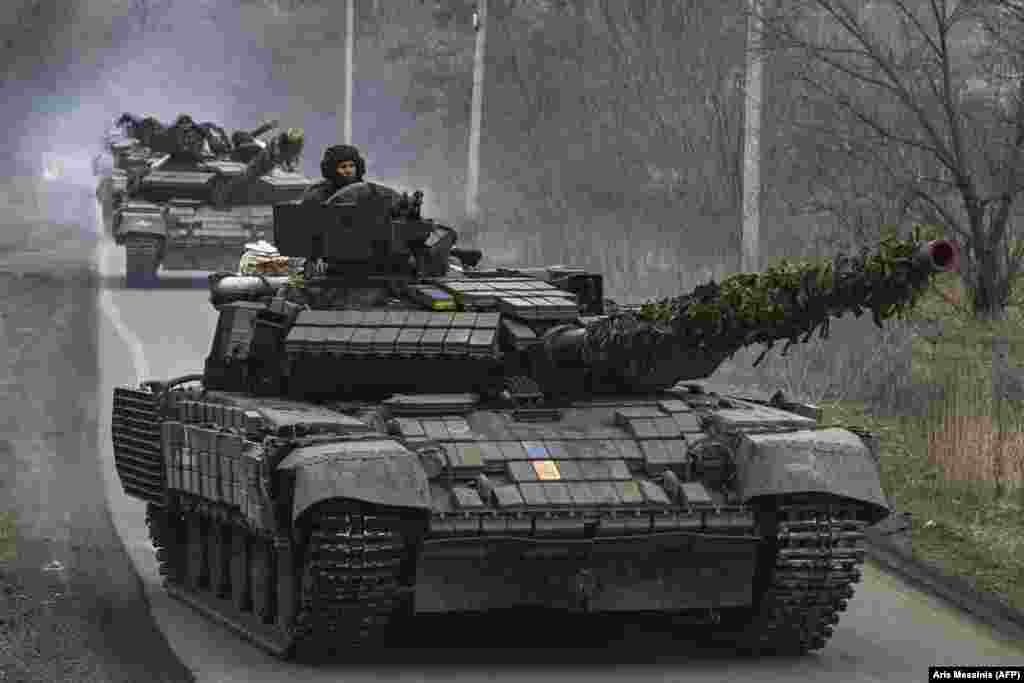
Ukrainian T-64 tanks move toward Bakhmut.<br />
<br />
Though outnumbered and outgunned, Ukrainian forces retain control of the western part of Bakhmut.<br />
&nbsp;
2/8 Ukrainian T-64 tanks move toward Bakhmut.

Though outnumbered and outgunned, Ukrainian forces retain control of the western part of Bakhmut.
 
Ukraine continues to hold on to eastern city of Bakhmut despite the Wagner mercenary group claiming to have seized up to 70 percent of the ruined city.
Smoke rises from the city of Bakhmut as Ukrainian forces travel through Chasiv Yar on an M113 armored personnel vehicle.<br />
<br />
Chasiv Yar, which is perched on a hill a few kilometers to the west, is most likely to become the next defense line against Moscow&#39;s forces.
3/8 Smoke rises from the city of Bakhmut as Ukrainian forces travel through Chasiv Yar on an M113 armored personnel vehicle.

Chasiv Yar, which is perched on a hill a few kilometers to the west, is most likely to become the next defense line against Moscow's forces.
Ukraine continues to hold on to eastern city of Bakhmut despite the Wagner mercenary group claiming to have seized up to 70 percent of the ruined city.
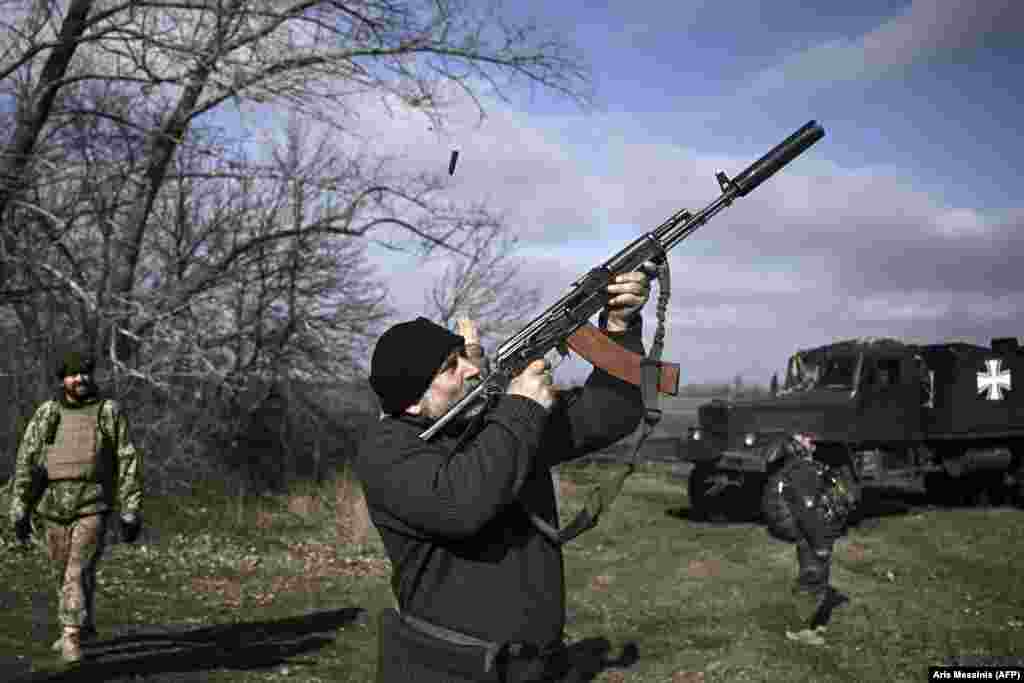
A Ukrainian soldier fires his rifle at a drone.&nbsp;<br />
&nbsp;
4/8 A Ukrainian soldier fires his rifle at a drone. 
 
Ukraine continues to hold on to eastern city of Bakhmut despite the Wagner mercenary group claiming to have seized up to 70 percent of the ruined city.
A Russian drone flies above Ukrainian forces.<br />
<br />
Russia, which refers to the city by its Soviet-era name of Artyomovsk, says capturing Bakhmut will allow it to launch more offensives deeper into Ukrainian territory.
5/8 A Russian drone flies above Ukrainian forces.

Russia, which refers to the city by its Soviet-era name of Artyomovsk, says capturing Bakhmut will allow it to launch more offensives deeper into Ukrainian territory.
Ukraine continues to hold on to eastern city of Bakhmut despite the Wagner mercenary group claiming to have seized up to 70 percent of the ruined city.
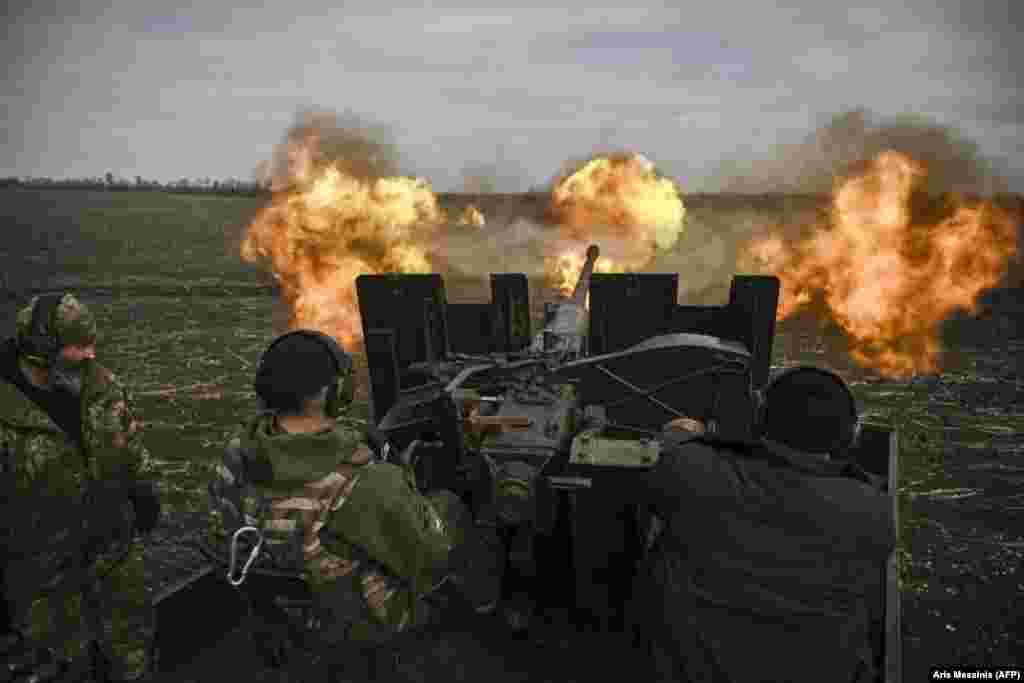
Ukrainian servicemen fire an S60 antiaircraft gun at Russian positions.
6/8 Ukrainian servicemen fire an S60 antiaircraft gun at Russian positions.
Ukraine continues to hold on to eastern city of Bakhmut despite the Wagner mercenary group claiming to have seized up to 70 percent of the ruined city.
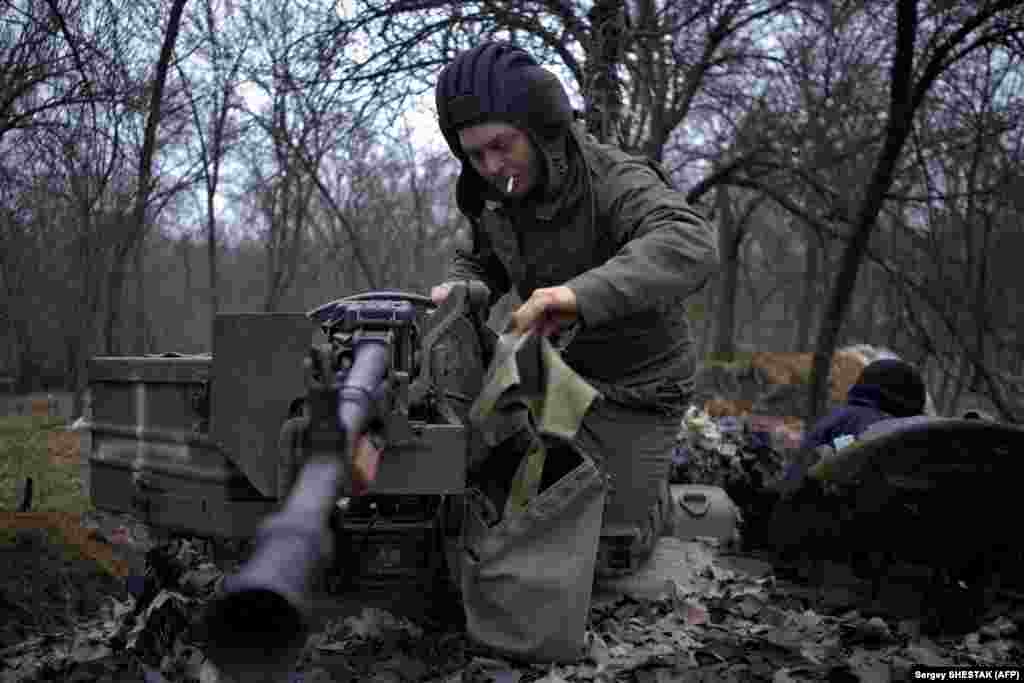
A Ukrainian soldier of the &quot;Adam&quot; tactical group prepares a T-64 tank before it&#39;s moved into position on March 19.
7/8 A Ukrainian soldier of the "Adam" tactical group prepares a T-64 tank before it's moved into position on March 19.
Ukraine continues to hold on to eastern city of Bakhmut despite the Wagner mercenary group claiming to have seized up to 70 percent of the ruined city.
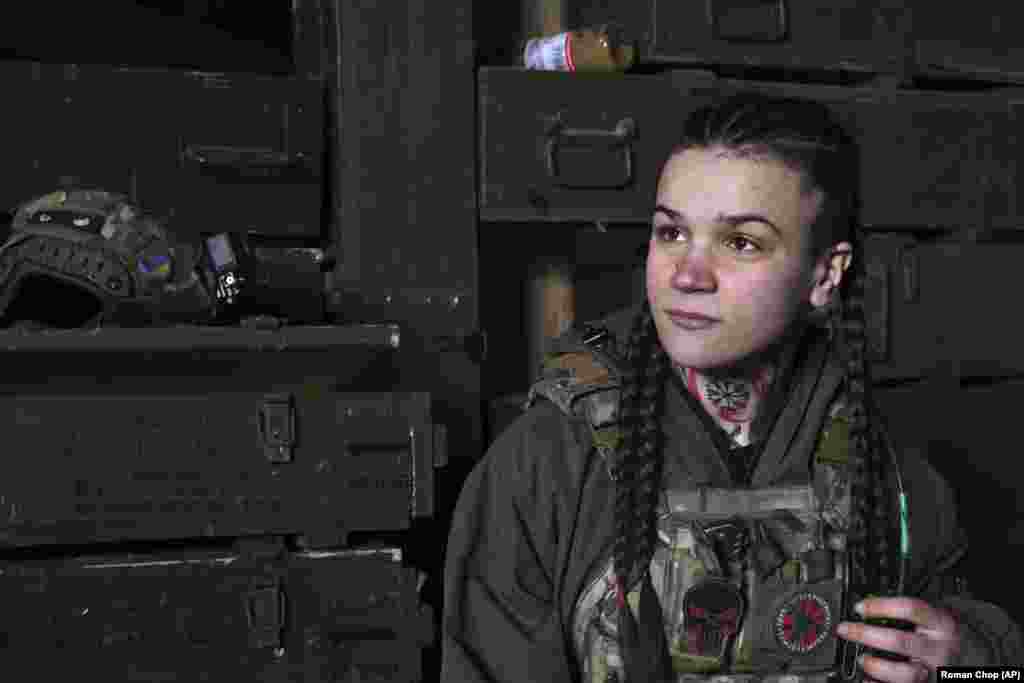
A Ukrainian soldier plays with her braids as she rests in a shelter on March 18.<br />
<br />
As the Russian assaults intensify, there have been high rates of casualties on both sides.
8/8 A Ukrainian soldier plays with her braids as she rests in a shelter on March 18.

As the Russian assaults intensify, there have been high rates of casualties on both sides.
Ukraine continues to hold on to eastern city of Bakhmut despite the Wagner mercenary group claiming to have seized up to 70 percent of the ruined city.
Previous slide
Next slide

As Kishida was beginning his visit, Russia's Defense Ministry said on March 21 that two of its strategic bombers flew over the Sea of Japan for more than seven hours.

The Tupolev Tu-95MS planes are capable of carrying nuclear weapons and Moscow regularly flies them over international waters in the Arctic, North Atlantic and Pacific as a show of strength.

With reporting by Reuters, AFP, and dpa
  • 16x9 Image

    RFE/RL's Ukrainian Service

    RFE/RL's Ukrainian Service has seen its audience grow significantly since Russia's full-scale invasion in February 2022 and is among the most cited media outlets in the country. Its bold, in-depth reporting from the front lines has won many accolades and awards. Its comprehensive coverage also includes award-winning reporting by the Donbas.Realities and Crimea.Realities projects and the Schemes investigative unit.

This item is part of
XS
SM
MD
LG