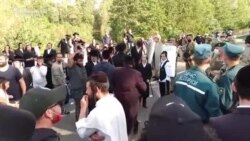
NOVAYA HUTA, Belarus -- More than 700 followers of the Breslov Hasidic movement who are trying to reach the central Ukrainian city of Uman to celebrate Rosh Hashanah, the Jewish New Year, remain stuck in neutral territory along the Belarusian-Ukrainian border, held up by measures banning foreigners from entering the country to slow the spread of the coronavirus.
Belarusian authorities said on September 15 that, of the 734 pilgrims who have been staying in a tent camp for days near the Novaya Huta - Novi Yarylovychi border checkpoint, more than 100 are children.
President Alyaksandr Lukashenka has ordered his government to talk to Ukrainian authorities to allow the pilgrims to enter the country.
However, Ukrainian Deputy Foreign Minister Yevhen Yenin said on September 16 that, at this point, there is no way for the pilgrims to enter Ukraine.
"At the moment, the situation does not permit us to allow more [pilgrims], namely those who are stuck on the border with Belarus, to enter the country," Yenin said, adding that the situation was under control.
COVID Curbs Leave Hasidic Jews Stranded At Belarus Border
1/13Hundreds of Hasidic Jews are currently stuck at the Novaya Huta border crossing between Belarus and Ukraine.
Hundreds of Hasidic Jews, who set off on a pilgrimage to Ukraine via Belarus despite coronavirus restrictions, were stuck in Homel and at the Novaya Huta border crossing on September 15 after Belarusian border guards let them through, but Ukrainian officials turned them back.
Show moreShow less
2/13Jewish pilgrims talk to Ukrainian border guards who refused them entry on September 15.
Hundreds of Hasidic Jews, who set off on a pilgrimage to Ukraine via Belarus despite coronavirus restrictions, were stuck in Homel and at the Novaya Huta border crossing on September 15 after Belarusian border guards let them through, but Ukrainian officials turned them back.
Show moreShow less
3/13Many of the travelers are now waiting at the roadside near the Novaya Huta crossing in Belarus's southeastern Homel region.
Hundreds of Hasidic Jews, who set off on a pilgrimage to Ukraine via Belarus despite coronavirus restrictions, were stuck in Homel and at the Novaya Huta border crossing on September 15 after Belarusian border guards let them through, but Ukrainian officials turned them back.
Show moreShow less
4/13Belarusian border guards had let the pilgrims pass but they were turned back by Ukrainian authorities who banned the entry of foreigners in August.
Hundreds of Hasidic Jews, who set off on a pilgrimage to Ukraine via Belarus despite coronavirus restrictions, were stuck in Homel and at the Novaya Huta border crossing on September 15 after Belarusian border guards let them through, but Ukrainian officials turned them back.
Show moreShow less
5/13A Jewish pilgrim playing guitar to pass the time.
Hundreds of Hasidic Jews, who set off on a pilgrimage to Ukraine via Belarus despite coronavirus restrictions, were stuck in Homel and at the Novaya Huta border crossing on September 15 after Belarusian border guards let them through, but Ukrainian officials turned them back.
Hundreds of Hasidic Jews, who set off on a pilgrimage to Ukraine via Belarus despite coronavirus restrictions, were stuck in Homel and at the Novaya Huta border crossing on September 15 after Belarusian border guards let them through, but Ukrainian officials turned them back.
Show moreShow less
7/13A pilgrim stands in front of Ukrainian border guards who have blocked the road at the Novaya Huta crossing.
Hundreds of Hasidic Jews, who set off on a pilgrimage to Ukraine via Belarus despite coronavirus restrictions, were stuck in Homel and at the Novaya Huta border crossing on September 15 after Belarusian border guards let them through, but Ukrainian officials turned them back.
Show moreShow less
8/13Ukrainian border guards keep an eye on Hasidic pilgrims.
Hundreds of Hasidic Jews, who set off on a pilgrimage to Ukraine via Belarus despite coronavirus restrictions, were stuck in Homel and at the Novaya Huta border crossing on September 15 after Belarusian border guards let them through, but Ukrainian officials turned them back.
Show moreShow less
9/13A child pilgrim sits on a road blocked by Ukrainian border police. Ukraine, which has recorded high numbers of new coronavirus cases in recent weeks, has kept the ban on foreigners in place until September 28.
Hundreds of Hasidic Jews, who set off on a pilgrimage to Ukraine via Belarus despite coronavirus restrictions, were stuck in Homel and at the Novaya Huta border crossing on September 15 after Belarusian border guards let them through, but Ukrainian officials turned them back.
Show moreShow less
10/13Many of the pilgrims who were prevented from entering Ukraine due to COVID-19 restrictions have now set up camp in Homel.
Hundreds of Hasidic Jews, who set off on a pilgrimage to Ukraine via Belarus despite coronavirus restrictions, were stuck in Homel and at the Novaya Huta border crossing on September 15 after Belarusian border guards let them through, but Ukrainian officials turned them back.
Show moreShow less
11/13One pilgrim sleeps on a bench in Homel on September 14.
Hundreds of Hasidic Jews, who set off on a pilgrimage to Ukraine via Belarus despite coronavirus restrictions, were stuck in Homel and at the Novaya Huta border crossing on September 15 after Belarusian border guards let them through, but Ukrainian officials turned them back.
Show moreShow less
12/13Residents of Homel are now getting used to the unusual sight of numerous Hasidic Jews in traditional garb on the streets of their city.
Hundreds of Hasidic Jews, who set off on a pilgrimage to Ukraine via Belarus despite coronavirus restrictions, were stuck in Homel and at the Novaya Huta border crossing on September 15 after Belarusian border guards let them through, but Ukrainian officials turned them back.
Show moreShow less
13/13The pilgrims in Homel have been spending their time mostly praying or studying the Torah. If the Hasidim do not arrive in Ukraine by September 18, they will stay in the Belarusian city to celebrate Rosh Hashanah. The holiday begins on the Sabbath, when many things are prohibited, including travel.
Hundreds of Hasidic Jews, who set off on a pilgrimage to Ukraine via Belarus despite coronavirus restrictions, were stuck in Homel and at the Novaya Huta border crossing on September 15 after Belarusian border guards let them through, but Ukrainian officials turned them back.
Show moreShow less
Previous slide
Next slide
Yenin added that those who arrived in Ukraine before the entrance ban was introduced on August 28 will be provided with the necessary security, while their contact with the local population will be minimized to help try to prevent any spread of the virus.
According to Yenin, Ukrainian, Belarusian, and Israeli authorities have organized supplies with Kosher food and drinks for the pilgrims stuck along the border.
Meanwhile, police in the Cherkasy region, where the city of Uman is located, said on September 16 that security had been beefed up.
Tens of thousands of followers of the Breslov Hasidic movement come to Uman every year to mark the Jewish New Year by praying at the grave of the movement's founder, Reb Nachman, who died there in 1810.
Ukrainian Interior Minister Arsen Avakov said last week that, due to coronavirus restrictions, only about 3,000 pilgrims will come to Uman this year.
By the Jewish calendar, Rosh Hashanah will be marked on September 18-20 this year.
The number of pilgrims traveling to Uman for Rosh Hashanah has increased dramatically since Ukraine gained independence after the 1991 collapse of the Soviet Union.
RFE/RL's Belarus Service is one of the leading providers of news and analysis to Belarusian audiences in their own language. It is a bulwark against pervasive Russian propaganda and defies the government’s virtual monopoly on domestic broadcast media.
RFE/RL's Ukrainian Service has seen its audience grow significantly since Russia's full-scale invasion in February 2022 and is among the most cited media outlets in the country. Its bold, in-depth reporting from the front lines has won many accolades and awards. Its comprehensive coverage also includes award-winning reporting by the Donbas.Realities and Crimea.Realities projects and the Schemes investigative unit.