




Omani Diplomatic Team Arrives In Tehran
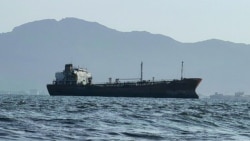
As tensions continue over freedom of navigation in the Strait of Hormuz, a diplomatic delegation from Oman arrived in Iran on July 24.
Iran's state news agency, IRNA, wrote that the delegation traveled to Iran "to arrange appropriate mechanisms for managing ship traffic in the Strait of Hormuz." Officials from the two countries have met and discussed the issue multiple times previously.
Meanwhile, Iranian media reported that Foreign Minister Abbas Araqchi and Badr Al-Busaidy, his Omani counterpart, spoke by phone on July 24.
Al-Busaidy, who traveled to Manila to attend the ASEAN Ministerial Meeting, wrote on X on July 24 that Oman emphasizes the vital importance of international law, freedom of navigation, and responsible cooperation of coastal states, as well as all countries benefiting from sea lanes.
Oman had previously proposed an alternative route for ships to pass through the Strait of Hormuz, but Iran's Islamic Revolutionary Guards Corps said that Oman and the International Maritime Organization had determined the new route for ships without consulting Tehran, and warned vessels not to use it.
Located along the southeastern coast of the Arabian Peninsula, Oman has a strategic location at the entrance to the Strait of Hormuz.
The country has historically played a mediating role in regional disputes while maintaining diplomatic relations with the Arab countries of the Persian Gulf and Iran.
Trump: 'It Would Be Very Bad' For Russia, China If They Gave Iran Weapons
US President Donald Trump said "it would be very bad" for Russia and China if they were supplying weapons to Iran, but added that the leaders of both countries had assured him this would not happen.
"Chinese President Xi told me, during our recent Meeting in Beijing, that he would not be giving or selling Weapons to the Islamic Republic of Iran, under any circumstances, and that includes Chinese Companies," Trump wrote on July 24 in a Truth Social post.
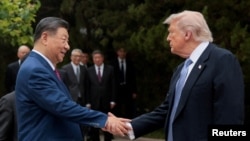
The US president said Russian President Vladimir Putin had made a similar commitment, writing that "Putin, despite the Horrible War going on with Ukraine...told me that he would not be selling Weapons to Iran either."
"[Putin] knows that I am not selling Weapons to Ukraine, but am selling them to NATO, and NATO is paying 100% of the cost. They can then do whatever they want with them," he said, concluding: "Therefore, in my opinion, the two Major Countries, often spoken about in conjunction with Iran, are not involved."
"If they were, it would be very bad for them, and certainly not in their best interests," Trump added.
The comments came as China, Russia, and Iran maintain close strategic ties and are often described as pragmatic strategic partners.
Recently, Reuters reported, citing four informed sources, that US intelligence analysts are investigating whether Russia played a role in recent Iranian drone attacks on CIA facilities in the region.
Houthis Say Group's Maritime Blockade 'Only Affects Saudi Side'
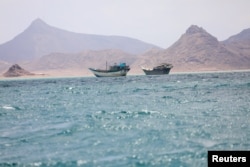
Iran-backed Houthi rebels in Yemen said they do not seek to block traffic through the Bab al-Mandeb Strait in the Red Sea, adding that their proclaimed blockade "only affects the Saudi side."
"There is no closure of Bab al-Mandab as some are suggesting," senior Houthi negotiator Mohammed Abdulsalam said. In recent days, the group have attacked Saudi oil tankers in the area after announcing a blockade on July 20.
The development sparked condemnation from US and European leaders, with US President Donald Trump threatening Iran and the Houthis with "military punishment" if the attacks continue.
While Iran continues to threaten shipping through the Strait of Hormuz, Houthi attacks in the Red Sea risked disrupting traffic through the Bab al-Mandab Strait.
According to AFP, at least nine ships have changed course since Houthis announced the blockade.
With reporting by AFP
EU Sanctions 5 Iranian Judges, Cyber Hacker
The Council of the European Union has placed five judges of Iran's Revolutionary Courts on its sanctions list for their "responsibility for serious human rights violations."
The council said these judges "have presided over trials targeting religious minorities and political dissidents, including the Nobel Peace Prize Winner Narges Mohammadi, on the basis of vaguely defined national security and religious charges. In those instances, they have imposed death sentences and long prison sentences, flogging, fines or supplementary punishments on political dissidents and human rights activists, including in connection with the 2022 ‘Woman, Life, Freedom’ protests following the death of Mahsa Amini."
The Council of the European Union also announced that it has sanctioned Nima Salehi, a key figure in a Ashiyane cyber group it says has helped the Iranian government suppress the free flow of information.
"Ashiyane Digital Security cooperates closely with the EU-listed Cyber Police (FATA) and the Islamic Revolutionary Guard Corps (IRGC) and is responsible for intensive cyber-attacks on both domestic opponents and reformists and foreign institutions, thereby assisting the regime’s crackdown against the opposition," the EU said.
In the official document of the Council of the European Union, five Iranian judges who have been sanctioned for "serious human rights violations" are introduced, stating their positions and the reasons for their inclusion on the sanctions list.
"As Tehran intensifies its domestic crackdown, the EU will continue to hold those responsible to account," Kallas said in a statement on X.
Britain Vows to Defend Itself After IRGC Threat
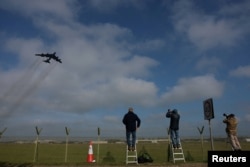
The British government said its armed forces are prepared to defend the country after Iran's Islamic Revolutionary Guards Corps (IRGC) warned that US bombers should not be allowed to operate from British bases.
In a statement on July 23, the IRGC said the United States had used RAF Fairford in southwest England to carry out bombing missions against Iran, warning that "any base used for aggression against Iranian territory is a legitimate target for us."
The warning came after Prime Minister Andy Burnham was informed last week that Britain would continue an existing agreement allowing the UnitedI LOA States to use British bases for what the government described as the "collective self-defense of the region."

The government said the arrangement covers US defensive operations against missile sites and capabilities used in attacks on ships in the Strait of Hormuz.
Responding to the Iranian threat, a British government spokesperson said: "Our armed forces are ready to keep the United Kingdom safe from any kind of attacks, whether it's on our soil or from abroad. The UK stands ready 24/7 to defend itself."
"This includes through operating a layered approach to air and missile defense, provided by Royal Navy, British Army and Royal Air Force assets equipped with a range of advanced capabilities, working closely with our NATO allies," the spokesperson added.
The government also said its policy had not changed despite the IRGC's warning, adding that Britain remained "committed to defending our people, our interests and our allies, acting in accordance with international law and not getting drawn into the wider conflict."
July 17, the British government formally designated the IRGC as one of the first organizations posing a threat to UK national security.
Amnesty International Calls On Iran To Halt Execution Of Athlete Benyamin Naqdi
Amnesty International on July 24 called on the Iranian authorities to immediately halt plans to execute athlete Benyamin Naqdi.
Naqdi was arrested in Shiraz in connection with the nationwide protests that took place in January and was forcibly disappeared for 53 days. Iranian state media broadcast his televised "confession" the day after his arrest, before he had stood trial.
On May 12, he was sentenced to death on the charge of "corruption on Earth" after authorities alleged that he had used a fire extinguisher against security forces.
Amnesty International said the death sentence was imposed following a "grossly unfair trial." The organization also expressed concern that Naqdi's televised "confession" was extracted under torture or other ill-treatment, citing a longstanding pattern of Iranian authorities relying on coerced confessions.
IRGC Claims Attack On US Base In Kuwait, Causing Casualties
The Islamic Revolutionary Guards Corps (IRGC) said on July 24 that it had struck the US-operated Ali Al Salem Air Base in Kuwait on July 24.
The IRGC claimed the attack destroyed a large ammunition depot and several buildings housing US personnel.
It also claimed that six large buildings were destroyed, three others were heavily damaged, and an unspecified number of US personnel were killed or wounded.
The claims could not be independently verified, and neither the US military nor Kuwaiti authorities immediately confirmed them.
Iran: IRGC Naval Base On Caspian Sea Attacked
The naval headquarters of Iran's Islamic Revolutionary Guards Corps (IRGC) in Zibakenar on the country's Caspian Sea coast on July 24, according to the governor of Gilan Province.
Iranian media have not announced further details about the attack on the Seyyed-ol-Shohada Headquarters and have only reported so far that "no reports of human casualties have been received."
If confirmed as a US attack, it would mark the first time in the latest round of US attacks that an IRGC base in northern Iran or on the Caspian Sea coast has been targeted.
Iranian Media Reports 4 People Killed In US Attack On Ahvaz
Iranian media reported that four people were killed and seven others were injured following a US attack on the morning of July 24.
Valiollah Hayati, deputy governor of Khuzestan for security and law enforcement, was quoted as saying four people were killed and five others were injured in a US missile attack on areas around the city of Ahvaz. He did not provide details about the locations attacked.
Hayati added that over the past 14 days, several locations in 12 cities in Khuzestan Province have been targeted by US attacks.
There are also reports from Bandar Abbas that two people were injured in a July 23 attack on the city's Tappeh Allah Akbar. Electricity in the area was cut off following the attack.
An official for Isfahan Province also announced that an area in the Nayin district was targeted by the United States, but the attack did not result in any casualties.
Oil Tanker Transit Through Strait of Hormuz At Virtual Standstill
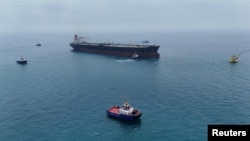
The number of oil tankers passing through the Strait of Hormuz on July 23 reached the lowest level in nearly seven weeks, according to data from oil tanker traffic monitoring companies.
Only one giant oil tanker, called the New Giant and carrying 2 million barrels of Iraqi crude oil, left the Strait of Hormuz and headed for China on July 23.
No oil tanker entered the vital waterway on this day.
On July 21 and 22, three and eight oil tankers passed through the Strait of Hormuz, respectively.
Before the US-Iran war began, up to 150 vessels passed through the strait per day.