



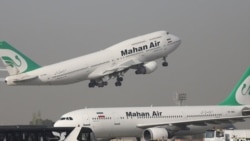

Beijing 'Deeply Concerned' By Escalation In Iran
- By Colin Hood
China’s Foreign Ministry said Beijing is “deeply concerned” by the escalation of fighting in the war in Iran.
Lin Jian, a ministry spokesperson, told reporters on July 23 that “the resumption of fighting does not serve the interests of either side,” adding that the relevant parties should “cease hostilities” and “resume contact” to de-escalate the conflict.
China has consistently called for a cease-fire and a negotiated settlement since the conflict began with US-Israeli strikes on Iran on February 28, while urging all parties to avoid further escalation and safeguard freedom of navigation through the Strait of Hormuz.
Beijing has maintained a consistent public stance on the war in the Middle East since it began with US-Israeli strikes on Iran on February 28, calling for all parties to avoid open hostilities and reopen the Strait of Hormuz to commercial shipping.
China’s top diplomat, Wang Yi, and his Pakistani counterpart, Ishaq Dar, said in a joint statement on July 17 that Washington and Tehran should “strive to reach a comprehensive peace agreement through negotiations.”
A previous framework peace agreement between Iran and the United States fell apart after US President Donald Trump said the deal was “over” at the NATO summit in Ankara on July 8.
Rubio Says Trump's Iran Policy Is 'A Head For An Eye'
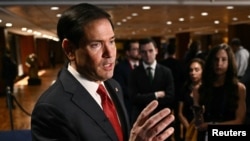
US Secretary of State Marco Rubio responded to Iranian Foreign Minister Abbas Araqchi's declaration on July 22 that Tehran's doctrine was an "eye for an eye" after President Donald Trump warned the United States would strike Iranian infrastructure each time Iran fired on commercial shipping in the strategic waterway.
"The president's policy is a head for an eye," Rubio told reporters told reporter on the sidelines of Association of Southeast Asian Nations (ASEAN) meetings in Manila on July 23. "They will pay a very heavy price for the things they're doing. They're already paying a very heavy price."
Turning to the issue of Iran’s nuclear program, which Washington has long sought to curb, Rubio cast doubt on Iran's willingness to negotiate a durable agreement, saying Tehran repeatedly sought talks but had a history of reneging on commitments.
"I just don't think they're serious about making a deal," Rubio said, adding that President Trump had increasingly reached the same conclusion.
He said Iranian officials were using intermediaries to signal interest in negotiations but repeatedly altered or violated agreements after reaching them.
"The problem with these guys...is they make a deal, they agree to something, and then they decide, 'Let's change it,'" Rubio said, adding he believed Iran would eventually become more willing to negotiate as economic and military pressure mounted.
Rubio said the United States was not pursuing regime change in Iran, describing Washington's primary objective as preventing Tehran from acquiring nuclear weapons.
"The US is seeking a denuclearized Iran that will never have a nuclear weapon," he said.
Asked about reports that Moscow was helping Iran target US forces after meeting with Russian Foreign Minister Sergei Lavrov on the sidelines of the ASEAN meetings, Rubio declined to discuss intelligence matters, saying he would not comment publicly even if such reports were accurate.
He said that Iran had spent years building missile and drone capabilities independently and that nothing currently being done by outside actors was materially increasing Tehran's ability to target Americans.
US Says 12th Night Of Strikes On Iranian Targets Over As Strait Of Hormuz Battle Continues
US Central Command (CENTCOM) said its forces have completed a 12th consecutive night of strikes on Iranian targets as Washington looks to regain total control over the Strait of Hormuz to allow international vessels to pass freely through the key waterway.
"US forces struck Iranian military targets including maritime capabilities, missile and drone storage facilities, coastal surveillance sites, and air defense assets. The strikes further degrade Iran's ability to attack civilian mariners and commercial vessels," CENTCOM said in a social media post on July 23 as it announced the completion of the action.
Iran's Islamic Revolutionary Guards Corps (IRGC) said on July 23 that its forces had stopped three oil tankers from passing through the Strait of Hormuz, which has been the focus of the war between Iran and the United States in recent weeks.
US President Donald Trump threatened on July 22 to ratchet up the pressure on Tehran if it continues to interfere with vessel transit in the strait.
"From this point forward, any time the Islamic Republic of Iran shoots at a ship in the Strait of Hormuz, whether it be by Missile, Rocket, Drone, or any other device or weapon, the United States will bomb and destroy ONE BRIDGE OR POWER PLANT, including those located next to, or in, the Capital City of Tehran," he said in a post on social media.
Iran-Backed Houthi Rebels Claim Strikes In Red Sea, Saudi Arabia Confirms One Tanker Hit
Saudi Arabia has confirmed that a ship belonging to a Saudi company has been struck in the Red Sea after Iran-backed Houthi rebels claimed to have hit two oil tankers in the waterway overnight.
Saudi state media on July 23 quoted an official source as saying the ship ENCELIA was hit by the rebels, resulting in a fire in the bow of the vessel. The source added that all crew members were safe.
There were no confirmed reports of other attacks, though the Houthis said they had attacked two Saudi tankers, a claim which could not be immediately verified.
The UK Maritime Trade Operations (UKMTO) also reported that an unknown projectile hit an oil tanker near the Saudi Red Sea coast, causing a fire but no casualties. It did not identify the ship.
The attack after the Houthis said earlier this week that they would impose a blockade on ships from Saudi Arabia, a key US ally and the world's biggest oil exporter, if they tried to pass through the Red Sea.
Saudi Arabia has been redirecting millions of barrels of oil from the Persian Gulf to the Red Sea after Iran effectively closed the Strait of Hormuz, which accounted for one-fifth of the world's oil supplies until the start of the US-Israeli war on February 28.
Iran Threatens Regional Energy Targets If Infrastructure Attacked
Iran's Islamic Revolutionary Guards Corps (IRGC) and Foreign Minister Abbas Araqchi issued a warning on July 22 that any US strikes on Iranian infrastructure would trigger retaliation against regional targets.
Majid Mousavi, commander of the IRGC Aerospace Force, said in a message carried by Iranian media said a blackout affecting US allies and partners in the region would be "certain" if Iran's bridges and power plants were targeted.
The IRGC Navy commander also warned against the use of what he described as "alternative routes" through the Strait of Hormuz, calling them unsafe and saying their use would have "severe and irreparable consequences." An IRGC spokesman separately warned shipping companies against using the southern route through the strait, claiming it had been mined, according to Iranian media.
Araqchi wrote on X that any attack on Iranian infrastructure would face a response with "no limits."
The warnings came hours after US President Donald Trump said in a Truth Social post that any Iranian attack on ships in the Strait of Hormuz would be met with US strikes on Iranian bridges or power plants.
Iran's Khatam al-Anbiya Central Headquarters, which oversees military operations, also warned that Iran's armed forces would prevent oil exports and target regional oil, gas, electricity, and economic infrastructure if US threats were carried out.
Iran Parliament Speaker Warns No Infrastructure Will Be Safe After Trump Threat
A top Iranian official warned on July 22 that "no infrastructure will be safe" if the United States follows through on President Donald Trump's threat to strike Iranian bridges and power plants in response to attacks on shipping in the Strait of Hormuz.
"If our security is not ensured, no infrastructure will be safe," Mohammad Baqer Qalibaf, speaker of Iran's parliament and the lead negotiator in cease-fire talks, wrote on X. "The equation of this war is clear: Either all or no one! In a region where we don't sell oil, no one will sell oil."
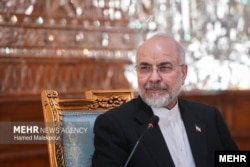
Qalibaf also said security in the Strait of Hormuz could only be restored "in the absence of American forces," adding that "the situation in the strait will not return to the way it was before the war."
His comments came after Trump warned the United States would retaliate against any Iranian attack on shipping in the Strait of Hormuz by bombing Iranian infrastructure.
"From this point forward, any time the Islamic Republic of Iran shoots at a ship in the Strait of Hormuz, whether it be by Missile, Rocket, Drone, or any other device or weapon, the United States will bomb and destroy ONE BRIDGE OR POWER PLANT," Trump wrote in a Truth Social post.
Earlier, Tasnim news agency, which is affiliated with Iran's Islamic Revolutionary Guards Corps, cited an unnamed military source reporting that Iran would respond to any US strikes on its infrastructure by targeting infrastructure and bridges elsewhere in the region.
Iraq Reports Losses Of $45 Billion In Oil Exports
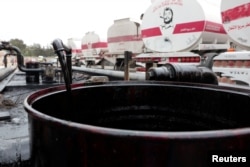
Iraq has lost an estimated $40 billion to $45 billion in revenue since the outbreak of the US-Iran war, largely because of a sharp drop in oil exports following the disruption of shipping through the Strait of Hormuz, a senior Iraqi official said on July 22.
Mazhar Saleh, financial adviser to Prime Minister Mohammed Shia al-Sudani, said Iraq's oil exports had fallen by about 90 percent, resulting in losses of up to $45 billion as of June. If the conflict and disruptions to shipping continue, losses could rise to around $50 billion, he said.
The conflict, which began with US-Israeli strikes on Iran on February 28, and the subsequent closure of the Strait of Hormuz by Iran's Islamic Revolutionary Guarda Corps (IRGC), has severely disrupted oil shipments and affected production across the region.
Before the conflict, Iraq produced about 4 million barrels of crude oil per day and exported roughly 3.5 million barrels daily, most of it through the Strait of Hormuz. Since then, Baghdad has sharply reduced production as storage facilities filled, redirecting limited exports through alternative routes, including pipelines to Turkey's Mediterranean port of Ceyhan and overland shipments through Syria.
Iraqi Oil Minister Bassem Mohammed Khudair said the ministry's monthly transfers to the state treasury had fallen from $7–8 billion before the conflict to about $1.5 billion today.
Oil exports typically account for about 90 percent of Iraq's government revenue.
Iran Says Death Toll From Latest US Attacks Exceeds 50
Iran's Health Ministry said more than 50 people have been killed in the latest wave of US attacks on the country.
Ministry spokesman Hossein Kermanpour wrote on X that 53 people had been killed and 592 injured in US attacks on Iran between June 27 and the early hours of July 22.
He said six of those killed were women and three were under the age of 18.
Kermanpour added that 36 of the wounded remain hospitalized.
He did not specify whether the figures include military personnel killed or wounded in the attacks, or whether they refer only to civilians.
Bulgarian Parliament Approves Deployment Of US Tanker Aircraft
The Bulgarian parliament has approved the temporary deployment of up to eight US refueling aircraft and 250 military personnel at one of its air bases.
The proposal, which followed a request from the Bulgarian prime minister, was approved on July 22 with 136 votes in favor, 13 against, and two abstentions. US aircraft and military forces will be stationed at the Bessemer base from July 24 to October 1.
On July 21, Iranian Foreign Ministry spokesman Esmail Baqaei warned Bulgaria about Washington's use of its bases, saying any participation and cooperation in the preparation and execution of US attacks "will be tantamount to complicity in committing the crime of aggression and war crimes."
Bulgarian officials have said the planes will be used for refueling missions and no offensive weapons will be stationed at the base.
Iran Continues Executions Amid Protest By Death Row Inmates
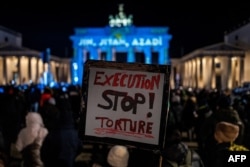
Iran executed a man it accused of carrying out "operational actions" during nationwide protests at the start of the year as the country's leadership ratchets up its crackdown on dissent, sparking a hunger strike among hundreds of death row inmates.
The Iranian judiciary's official Mizan news agency said 26-year-old law graduate Mehdi Khaneki was executed on July 22 for alleged weapons offenses and actions that "benefited" Israel, the United States, and "hostile groups."
The Paris-based National Council of Resistance of Iran (NCRI), the political arm of Mojahedin-e Khalq (MEK), disputed the charges, saying Khaneki was hanged because of his membership in the group and participating in protests in the city of Karaj.
To read the full report, click here.