




Iran Executes Another Protester Amid Surge In Use Of Death Penalty
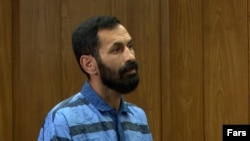
Iran has executed another person arrested during nationwide anti-government protests in January, the judiciary said on August 16.
Shahram Sadeqi was executed after a Revolutionary Court convicted him of carrying out an “operational action” benefiting Israel, the United States, and other groups deemed hostile by Tehran, according to the judiciary-affiliated Mizan news agency.
Authorities accused Sadeqi of driving a car into police officers during protests in Karaj on January 8, injuring seven, before setting the vehicle on fire and fleeing. Mizan said Sadeqi initially denied involvement but later confessed.
No evidence or documentation has been published regarding how Sadeqi’s trial was conducted or how the case was handled.
Since the start of the war with the United States and Israel on February 28, Iran has witnessed a surge in executions of people human rights groups consider political prisoners -- from demonstrators to alleged members of banned groups and those convicted of spying.
UN human rights chief Volker Türk said this month that he was alarmed by the rise in executions and death sentences in Iran and “that capital punishment continues to be used to instill fear among the population and suppress dissent.”
According to the latest data compiled by the Iran Human Rights group, more than 470 people have been executed in Iran so far this year, many of whom were sentenced to death in connection with the January protests.
Rights groups and international observers have raised concerns over the fairness of the proceedings, including allegations of coerced confessions and limited access to due process.
With reporting by RFE/RL's Radio Farda and dpa
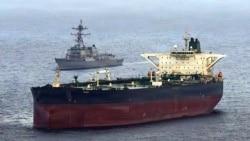
Iran Says Supertanker Hit Mine In Strait of Hormuz
Iran's Islamic Revolutionary Guards Corps (IRGC) said on October 17 that a supertanker carrying more than 2 million barrels of crude oil exploded and caught fire after hitting a naval mine in the Strait of Hormuz.
In a statement, the IRGC Navy said the vessel had been trying to pass through the strait "illegally," using a route not approved by Tehran. It said the tanker had switched off all its positioning and radar systems and was attempting the transit "through deception and with the support of the US military."
The IRGC did not name the vessel or give details on its crew or the extent of the damage. Its claims could not be independently verified.
In a separate incident, the British military's United Kingdom Maritime Trade Operations (UKMTO) center said it had received a delayed report of a tanker being struck by an unknown projectile about 68 nautical miles northeast of Al Jubayl, Saudi Arabia. UKMTO said all crew were safe and had been evacuated, with no environmental impact reported.
Iran's Security Challenges Compounded By Rising Domestic Insurgency
Iran's vast and restive southeastern province of Sistan-Baluchistan, located along the border with Afghanistan and Pakistan, has witnessed a deadly flare-up of violence in recent weeks.
Armed groups and Iranian security forces have clashed almost daily across the impoverished province, the site of a decades-long, low-level insurgency.
Separatist groups and Islamist militants in Sistan-Baluchistan, home to Iran's marginalized ethnic Baluch minority, are increasingly coordinating their efforts to challenge the Iranian state, experts say.
The intensifying insurgency has compounded the security threats facing Iran, which remains at war with the United States and Israel and braces for a possible resumption of major US combat operations.
To read the full report, click here.
US Sanctions Cuban State Bank Over Links To Iran, Rubio Says
WASHINGTON -- The United States on October 15 sanctioned Cuban state-owned Banco Internacional de Comercio S.A. (BICSA) for providing services to an Iranian bank under US sanctions, Secretary of State Marco Rubio said, highlighting Washington's efforts to disrupt financial links between countries it views as hostile to US interests.
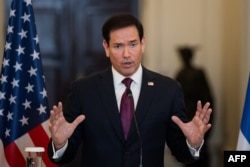
Rubio said BICSA had provided services to Iran's Karafarin Bank since at least 2022. The US Treasury Department sanctioned Karafarin Bank in 2020 under an executive order targeting Iran's financial sector.
The action against BICSA, announced alongside a separate Treasury Department move targeting Iranian financial actors, underscores the Trump administration's push to extend economic pressure beyond Tehran to countries and institutions that help sustain its financial networks.
"The Trump Administration will not tolerate a rogue state hosting hostile foreign military, intelligence and terror operations less than a hundred miles from the American homeland," Rubio said in a statement.
He described Cuba as an outpost for hostile foreign actors, including Iran, and said Washington would continue to identify and dismantle the Cuban government's financial and security ties with Tehran and other countries it considers threats.
Brett Erickson, a sanctions expert at Obsidian Risk Advisors, said the move reflected a broader effort to disrupt cooperation among economies facing US sanctions.
"Sanctioned economies have learned to survive by leaning on one another," Erickson told RFE/RL. "Washington is now attempting to dismantle those relationships, recognizing that economically isolating Iran means targeting not just Tehran, but the countries helping sustain it. Cuba is another front in that expanding campaign."
Erickson said the sanctions were unlikely to inflict significant economic damage on Iran by themselves but carried broader strategic importance as Washington sought to weaken the network of countries and institutions supporting sanctioned economies.
"These sanctions are unlikely to meaningfully damage Iran's economy on their own, but their strategic significance is greater than their immediate economic impact," he said, adding that the Treasury's Department's so-called Operation Economic Outcast was increasingly targeting the wider network sustaining Iran.
Under the measures, BICSA's property and interests in property within the US or under the possession or control of US persons must be blocked and reported to the Treasury Department's Office of Foreign Assets Control. Entities that are 50 percent or more owned by blocked persons are also subject to blocking.
Saudis Accuse Iran Of Encouraging Houthi Attacks On Riyadh
A Saudi Foreign Ministry official on October 14 accused Iran of encouraging Yemen's Houthi rebels to intensify attacks on Saudi Arabia, saying Tehran continues to arm, train, and support the group.
"Iran continues to arm, train, and support the Houthi militia in violation of UN Security Council resolutions," Rayed Krimly, deputy minister for public diplomacy at the ministry, said during a virtual briefing with reporters.
"We think the escalation of Houthi attacks in this latest phase of the conflict is being encouraged by Iran," he added.
Krimly said Riyadh remained in direct contact with Tehran but questioned whether Iran was prepared to make the concessions needed for a settlement.
"We still have direct communications with Iran," he said. "Overall, it still doesn't seem like the Iranians can make the necessary concessions to reach a solution."
He also accused the Iran-allied Houthis of refusing a Saudi request to meet in Muscat several weeks ago.
“At the beginning of this escalation, we asked them to meet in Muscat, Oman, and they refused,” Krimly said, describing it as the last communication between the sides.
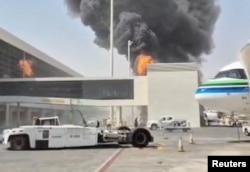
Separately, Saudi-led coalition spokesman Turki al-Maliki said on October 14 that the Houthis had launched 20 attacks on King Khalid International Airport in Riyadh this month. The coalition reported 17 deaths and 333 injuries in the attacks.
He called on the Houthis to stop targeting civilian infrastructure, including airports, ports, and oil facilities.
The renewed fighting has intensified pressure on Saudi Arabia, the world's largest crude oil exporter, following a series of deadly attacks on airports and energy infrastructure.
On October 12, US President Donald Trump also accused the Houthis of acting at Iran's behest in a Truth Social post.
"They've been silent for a long time, but now they've emerged again, probably at the behest of Iran," he wrote, also accusing the group of trying to push up oil prices ahead of the US midterm elections.
Yemen's civil war reignited in July after years of relative calm following a UN-brokered truce in 2022. Saudi Arabia has supported Yemen's internationally recognized government against the Houthis, who seized the capital, Sanaa, in 2014. A Saudi-led coalition intervened militarily in 2015.
UN Warns Hormuz Fertilizer Disruption Could Trigger Food Crisis
A failure by the United States and Iran to agree within weeks on a plan to transport fertilizer through the Strait of Hormuz could trigger a food security crisis in parts of Asia and Africa, a senior United Nations official warned.
Jorge Moreira da Silva, a UN undersecretary-general and executive director of the UN Office for Project Services, told Reuters on October 14 that a UN-backed mechanism could be activated within seven to 10 days of an agreement between Washington and Tehran.
"It's absolutely crucial to get the deal in the next few weeks. Otherwise, we will miss the planting season," he said on the sidelines of the annual meetings of the International Monetary Fund and World Bank in Bangkok.
The proposed plan would establish a coordination center in Oman to register vessels and arrange safe passage. UN monitors would work with local authorities at Gulf ports to verify cargo loading while ships would be tracked during transit.
The passage of just five vessels a day through the strait could maintain fertilizer supplies to countries in critical need, Moreira da Silva said.
The UN established a task force in March to facilitate fertilizer shipments through the waterway, but the mechanism has yet to be implemented.
Before the war began on February 28, the Strait of Hormuz handled roughly one-third of globally traded urea, the world's most widely used fertilizer, and nearly half of seaborne sulfur, a key industrial input. Fertilizer shipments from the Gulf have remained largely halted for more than six months, the International Food Policy Research Institute said.
An August report by the International Chamber of Commerce warned that prolonged disruption could push prices up by as much as 81 percent for cereals, 66 percent for oil crops, and 30 percent for animal products under its modeled scenario.
The crisis is compounded by shipping disruptions in the Black Sea and Red Sea, as well as climate risks, Moreira da Silva said.
A US State Department spokesman told Reuters that the US military would continue taking action against what Washington described as Iran's attempts to disrupt freedom of navigation through the Strait of Hormuz.
Trump Says US May Have 'Gone Too Far' In Killing Iranian Leaders
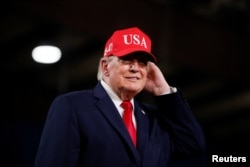
US President Donald Trump has suggested that the killing of senior Iranian leaders in US and Israeli strikes may have gone too far, saying Washington is struggling to identify whom to negotiate with in Tehran.
"We might have gone too far with the leaders because we don't know who the hell we're dealing with anymore," Trump said at a rally in Youngstown, Ohio, on October 12.
He echoed the sentiment two days later at a rally in Bullhead City, Arizona, saying on October 14: "I might have gone too far. I don't know who the hell to deal with."
Trump said Iran had replaced leaders killed in the strikes with officials from lower levels of its leadership, some of whom had also been killed.
"Their first-level leaders are gone; they picked a second level. Their second-level leaders are gone; they picked a third level. Half of them are gone," he said.
He added that Iranian officials had asked him not to kill any more leaders.
"They made me promise not to take out any more, and I did. I promised them," he said, without specifying when or to whom he had made the promise.
EU-Gulf Summit In Riyadh Postponed Amid Security Concerns
The European Union and the Gulf Cooperation Council have postponed a summit scheduled to take place in Riyadh on October 24, the European Council announced on October 15, with a new date to be announced later.
The decision comes amid escalating security concerns following missile and drone attacks by the Iran-allied Houthi rebels on Saudi Arabia. The GCC said the continued attacks and the extended suspension of operations at King Khalid International Airport were factors in the decision to reschedule the meeting.
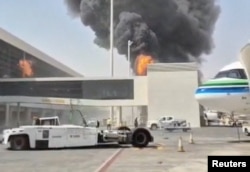
The European Council did not explicitly link the postponement to the attacks, but said relations between the EU and the GCC remained of strategic importance and that the bloc was committed to deepening the partnership.
The summit was due to bring together leaders from the EU and the six GCC member states: Saudi Arabia, the United Arab Emirates, Qatar, Kuwait, Bahrain, and Oman.
The meeting was expected to provide an opportunity to discuss cooperation between the two blocs amid heightened regional tensions and concerns over energy security and economic stability.
The first EU-GCC summit took place in Brussels on October 16, 2024, when leaders agreed to strengthen their strategic partnership and expand cooperation on regional security, trade, investment and energy.
German Court Jails 2 Over Iran-Linked Plots Against Jewish Targets
A court in Hamburg sentenced two men to prison on October 15 for espionage on behalf of Iran and involvement in preparations for attacks against Jewish and pro-Israel targets in Germany.
The Hanseatic Higher Regional Court sentenced the main defendant, a 54-year-old man identified as Ali S., to 8 1/2 years in prison. His 43-year-old co-defendant, Tawab M., received a sentence of 4 1/2 years.

According to Germany's Federal Public Prosecutor's Office, Ali S. received assignments directly from officers of the Islamic Revolutionary Guards Corps' Quds Force, its overseas operations unit.
The court found that the men had scouted potential targets, including Josef Schuster, president of the Central Council of Jews in Germany, and Volker Beck, president of the German-Israeli Association and a former member of parliament.
The main defendant also prepared an arson attack against a kosher grocery store in Berlin. Prosecutors said he tried to recruit Tawab M. to help arrange the assassination of Beck or find someone else to carry it out.
The planned attacks were not carried out. Beck had sought to join the proceedings as a private plaintiff but the court rejected his request, according to German public broadcaster Tagesschau.
Both men lived in Denmark. Ali S., a Danish citizen of Afghan origin, was arrested in Aarhus in June 2025 and transferred to Germany. Tawab M., an Afghan national, was arrested in Denmark in November 2025.
The Federal Public Prosecutor's Office indicted the men in May, and their trial began in Hamburg in June. Prosecutors sought the sentences ultimately imposed by the court, while defense lawyers called for acquittals.
Iran previously denied allegations linking Ali S. to its intelligence services.
The verdict came four months after 24 countries issued a joint statement condemning alleged Iranian state-linked plots and other hostile activities targeting dissidents, journalists, and Jewish and Israeli communities in Europe, North America, and Australia. The statement specifically named the IRGC's Intelligence Organization, the Quds Force, and Iran's Intelligence and Security Ministry.
UN Warns Middle East War Could Push 130 Million Into Poverty
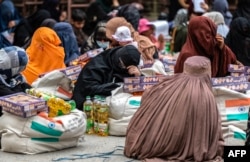
The United Nations Development Program (UNDP) warned that rising food and energy prices linked to the Middle East war could push an additional 130 million people into poverty this year if governments cannot shield consumers from higher costs.
UNDP chief Alexander De Croo told AFP that developing countries were struggling to sustain subsidies after successive shocks, including the COVID-19 pandemic and Russia's war in Ukraine. Rising debt and borrowing costs have further weakened their ability to support vulnerable households.
In a report published on October 11, UNDP said governments had increasingly limited financial resources to cushion the impact of higher energy and food prices. The agency recommended replacing broad subsidies with temporary, targeted assistance for the most vulnerable and called on wealthy countries and international financial institutions to provide developing economies with more affordable financing.
The warning comes amid broader evidence of worsening poverty. The World Bank's September update estimated that 824.3 million people worldwide, or 10.1 percent of the global population, lived in extreme poverty. It said rates were rising in the Middle East, North Africa, Afghanistan, and Pakistan.
X Suspends 13,000 Accounts In Iran, Russia, China Disinformation Probe
Social media platform X said it had suspended more than 13,000 accounts linked to three suspected foreign influence operations associated with Iran, Russia, and China that targeted political debate in the United States.
The company announced the suspensions on October 14, saying the networks had used fake accounts to publish and amplify political content targeting candidates and public figures across the political spectrum.
X said it had identified the accounts through proactive reviews and internal investigations. It did not disclose how many of the suspended accounts were associated with each of the three operations.
The company also outlined its policies on election-related content ahead of the November 3 US midterm elections, including restrictions on misleading information about when, where, and how to vote, as well as attempts to suppress turnout or intimidate voters.

The announcement came less than a week after OpenAI reported that it had banned a cluster of ChatGPT accounts originating in Iran that were used to support a covert influence operation involving fabricated journalist identities.
On October 8, OpenAI said it had identified almost 100 articles published or syndicated under seven fabricated bylines across roughly a dozen online publications worldwide.
The operators used ChatGPT to refine articles and editorial pitches, as well as generate social media comments. The fabricated journalist personas generally presented themselves as Western journalists, usually American, with backgrounds in international politics, the Middle East, human rights, or conflict.
OpenAI said the articles focused largely on the US-Iran conflict. It assessed that the operation appeared consistent with a commercial influence campaign conducted for a client, but said it had been unable to identify the actor behind it.