




Saudis Accuse Iran Of Encouraging Houthi Attacks On Riyadh
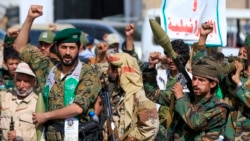
A Saudi Foreign Ministry official on October 14 accused Iran of encouraging Yemen's Houthi rebels to intensify attacks on Saudi Arabia, saying Tehran continues to arm, train, and support the group.
"Iran continues to arm, train, and support the Houthi militia in violation of UN Security Council resolutions," Rayed Krimly, deputy minister for public diplomacy at the ministry, said during a virtual briefing with reporters.
"We think the escalation of Houthi attacks in this latest phase of the conflict is being encouraged by Iran," he added.
Krimly said Riyadh remained in direct contact with Tehran but questioned whether Iran was prepared to make the concessions needed for a settlement.
"We still have direct communications with Iran," he said. "Overall, it still doesn't seem like the Iranians can make the necessary concessions to reach a solution."
He also accused the Iran-allied Houthis of refusing a Saudi request to meet in Muscat several weeks ago.
“At the beginning of this escalation, we asked them to meet in Muscat, Oman, and they refused,” Krimly said, describing it as the last communication between the sides.
Separately, Saudi-led coalition spokesman Turki al-Maliki said on October 14 that the Houthis had launched 20 attacks on King Khalid International Airport in Riyadh this month. The coalition reported 17 deaths and 333 injuries in the attacks.
He called on the Houthis to stop targeting civilian infrastructure, including airports, ports, and oil facilities.
The renewed fighting has intensified pressure on Saudi Arabia, the world's largest crude oil exporter, following a series of deadly attacks on airports and energy infrastructure.
On October 12, US President Donald Trump also accused the Houthis of acting at Iran's behest in a Truth Social post.
"They've been silent for a long time, but now they've emerged again, probably at the behest of Iran," he wrote, also accusing the group of trying to push up oil prices ahead of the US midterm elections.
Yemen's civil war reignited in July after years of relative calm following a UN-brokered truce in 2022. Saudi Arabia has supported Yemen's internationally recognized government against the Houthis, who seized the capital, Sanaa, in 2014. A Saudi-led coalition intervened militarily in 2015.
UN Warns Hormuz Fertilizer Disruption Could Trigger Food Crisis
A failure by the United States and Iran to agree within weeks on a plan to transport fertilizer through the Strait of Hormuz could trigger a food security crisis in parts of Asia and Africa, a senior United Nations official warned.
Jorge Moreira da Silva, a UN undersecretary-general and executive director of the UN Office for Project Services, told Reuters on October 14 that a UN-backed mechanism could be activated within seven to 10 days of an agreement between Washington and Tehran.
"It's absolutely crucial to get the deal in the next few weeks. Otherwise, we will miss the planting season," he said on the sidelines of the annual meetings of the International Monetary Fund and World Bank in Bangkok.
The proposed plan would establish a coordination center in Oman to register vessels and arrange safe passage. UN monitors would work with local authorities at Gulf ports to verify cargo loading while ships would be tracked during transit.
The passage of just five vessels a day through the strait could maintain fertilizer supplies to countries in critical need, Moreira da Silva said.
The UN established a task force in March to facilitate fertilizer shipments through the waterway, but the mechanism has yet to be implemented.
Before the war began on February 28, the Strait of Hormuz handled roughly one-third of globally traded urea, the world's most widely used fertilizer, and nearly half of seaborne sulfur, a key industrial input. Fertilizer shipments from the Gulf have remained largely halted for more than six months, the International Food Policy Research Institute said.
An August report by the International Chamber of Commerce warned that prolonged disruption could push prices up by as much as 81 percent for cereals, 66 percent for oil crops, and 30 percent for animal products under its modeled scenario.
The crisis is compounded by shipping disruptions in the Black Sea and Red Sea, as well as climate risks, Moreira da Silva said.
A US State Department spokesman told Reuters that the US military would continue taking action against what Washington described as Iran's attempts to disrupt freedom of navigation through the Strait of Hormuz.
Trump Says US May Have 'Gone Too Far' In Killing Iranian Leaders

US President Donald Trump has suggested that the killing of senior Iranian leaders in US and Israeli strikes may have gone too far, saying Washington is struggling to identify whom to negotiate with in Tehran.
"We might have gone too far with the leaders because we don't know who the hell we're dealing with anymore," Trump said at a rally in Youngstown, Ohio, on October 12.
He echoed the sentiment two days later at a rally in Bullhead City, Arizona, saying on October 14: "I might have gone too far. I don't know who the hell to deal with."
Trump said Iran had replaced leaders killed in the strikes with officials from lower levels of its leadership, some of whom had also been killed.
"Their first-level leaders are gone; they picked a second level. Their second-level leaders are gone; they picked a third level. Half of them are gone," he said.
He added that Iranian officials had asked him not to kill any more leaders.
"They made me promise not to take out any more, and I did. I promised them," he said, without specifying when or to whom he had made the promise.
EU-Gulf Summit In Riyadh Postponed Amid Security Concerns
The European Union and the Gulf Cooperation Council have postponed a summit scheduled to take place in Riyadh on October 24, the European Council announced on October 15, with a new date to be announced later.
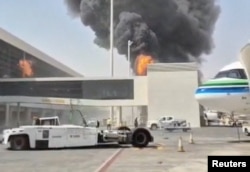
The decision comes amid escalating security concerns following missile and drone attacks by the Iran-allied Houthi rebels on Saudi Arabia. The GCC said the continued attacks and the extended suspension of operations at King Khalid International Airport were factors in the decision to reschedule the meeting.
The European Council did not explicitly link the postponement to the attacks, but said relations between the EU and the GCC remained of strategic importance and that the bloc was committed to deepening the partnership.
The summit was due to bring together leaders from the EU and the six GCC member states: Saudi Arabia, the United Arab Emirates, Qatar, Kuwait, Bahrain, and Oman.
The meeting was expected to provide an opportunity to discuss cooperation between the two blocs amid heightened regional tensions and concerns over energy security and economic stability.
The first EU-GCC summit took place in Brussels on October 16, 2024, when leaders agreed to strengthen their strategic partnership and expand cooperation on regional security, trade, investment and energy.
German Court Jails 2 Over Iran-Linked Plots Against Jewish Targets
A court in Hamburg sentenced two men to prison on October 15 for espionage on behalf of Iran and involvement in preparations for attacks against Jewish and pro-Israel targets in Germany.
The Hanseatic Higher Regional Court sentenced the main defendant, a 54-year-old man identified as Ali S., to 8 1/2 years in prison. His 43-year-old co-defendant, Tawab M., received a sentence of 4 1/2 years.

According to Germany's Federal Public Prosecutor's Office, Ali S. received assignments directly from officers of the Islamic Revolutionary Guards Corps' Quds Force, its overseas operations unit.
The court found that the men had scouted potential targets, including Josef Schuster, president of the Central Council of Jews in Germany, and Volker Beck, president of the German-Israeli Association and a former member of parliament.
The main defendant also prepared an arson attack against a kosher grocery store in Berlin. Prosecutors said he tried to recruit Tawab M. to help arrange the assassination of Beck or find someone else to carry it out.
The planned attacks were not carried out. Beck had sought to join the proceedings as a private plaintiff but the court rejected his request, according to German public broadcaster Tagesschau.
Both men lived in Denmark. Ali S., a Danish citizen of Afghan origin, was arrested in Aarhus in June 2025 and transferred to Germany. Tawab M., an Afghan national, was arrested in Denmark in November 2025.
The Federal Public Prosecutor's Office indicted the men in May, and their trial began in Hamburg in June. Prosecutors sought the sentences ultimately imposed by the court, while defense lawyers called for acquittals.
Iran previously denied allegations linking Ali S. to its intelligence services.
The verdict came four months after 24 countries issued a joint statement condemning alleged Iranian state-linked plots and other hostile activities targeting dissidents, journalists, and Jewish and Israeli communities in Europe, North America, and Australia. The statement specifically named the IRGC's Intelligence Organization, the Quds Force, and Iran's Intelligence and Security Ministry.
UN Warns Middle East War Could Push 130 Million Into Poverty
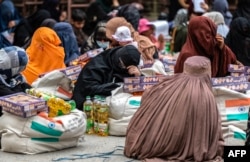
The United Nations Development Program (UNDP) warned that rising food and energy prices linked to the Middle East war could push an additional 130 million people into poverty this year if governments cannot shield consumers from higher costs.
UNDP chief Alexander De Croo told AFP that developing countries were struggling to sustain subsidies after successive shocks, including the COVID-19 pandemic and Russia's war in Ukraine. Rising debt and borrowing costs have further weakened their ability to support vulnerable households.
In a report published on October 11, UNDP said governments had increasingly limited financial resources to cushion the impact of higher energy and food prices. The agency recommended replacing broad subsidies with temporary, targeted assistance for the most vulnerable and called on wealthy countries and international financial institutions to provide developing economies with more affordable financing.
The warning comes amid broader evidence of worsening poverty. The World Bank's September update estimated that 824.3 million people worldwide, or 10.1 percent of the global population, lived in extreme poverty. It said rates were rising in the Middle East, North Africa, Afghanistan, and Pakistan.
X Suspends 13,000 Accounts In Iran, Russia, China Disinformation Probe
Social media platform X said it had suspended more than 13,000 accounts linked to three suspected foreign influence operations associated with Iran, Russia, and China that targeted political debate in the United States.
The company announced the suspensions on October 14, saying the networks had used fake accounts to publish and amplify political content targeting candidates and public figures across the political spectrum.
X said it had identified the accounts through proactive reviews and internal investigations. It did not disclose how many of the suspended accounts were associated with each of the three operations.
The company also outlined its policies on election-related content ahead of the November 3 US midterm elections, including restrictions on misleading information about when, where, and how to vote, as well as attempts to suppress turnout or intimidate voters.

The announcement came less than a week after OpenAI reported that it had banned a cluster of ChatGPT accounts originating in Iran that were used to support a covert influence operation involving fabricated journalist identities.
On October 8, OpenAI said it had identified almost 100 articles published or syndicated under seven fabricated bylines across roughly a dozen online publications worldwide.
The operators used ChatGPT to refine articles and editorial pitches, as well as generate social media comments. The fabricated journalist personas generally presented themselves as Western journalists, usually American, with backgrounds in international politics, the Middle East, human rights, or conflict.
OpenAI said the articles focused largely on the US-Iran conflict. It assessed that the operation appeared consistent with a commercial influence campaign conducted for a client, but said it had been unable to identify the actor behind it.
CENTCOM Says US Forces Destroyed Iran-Linked Vessel In Gulf Of Oman
The US military Central Command (CENTCOM) said American forces destroyed an Iranian-affiliated vessel in the Gulf of Oman after observing what it described as surveillance and targeting activity against US Navy ships.
In a statement published on October 14, CENTCOM said the operation had taken place on October 6. The command described the vessel as a dhow -- a traditional wooden sailboat -- and released video footage of the destruction.
CENTCOM said the crew had been safely removed before the vessel was destroyed and that efforts to repatriate them were ongoing. It did not disclose the number or identities of the crew members.
In the same statement, CENTCOM accused Iran's Islamic Revolutionary Guards Corps (IRGC) of targeting thousands of civilian mariners transiting regional waters over the previous seven months, in addition to US Navy warships.
Separately, Iranian media reported on October 14 that a fishing boat had been struck by a drone near Sirik, in the southern province of Hormozgan, injuring three crew members.
Iran's IRGC-linked Tasnim news agency cited local sources describing the incident as a US drone attack. However, provincial authorities said the source of the drone had not been identified, and the circumstances of the incident remained unclear.
There was no confirmed information linking the fishing-boat incident to the US operation announced by CENTCOM.
Iran Opens Case Against Satirist Over Khamenei Impression
Iranian authorities have opened a criminal case against Saeed Shakiba, a popular Instagram satirist, after a video in which he impersonates former Supreme Leader Ali Khamenei went viral.
Mizan, the judiciary’s news agency, said on October 14 that Tehran prosecutors had charged Shakiba with “publishing insulting and offensive content” and that “appropriate action” had been taken against him.
In the video clip, Shakiba parodies Khamenei’s frequent meetings with poets.
In recent days, pro-establishment social media users had shared the video and demanded legal action against him. Fars news agency, an affiliate of the Islamic Revolutionary Guards Corps (IRGC), called it “insulting and offensive” and said it contained “vile and obscene language.”
Shakiba’s supporters argue he was exercising his right to freedom of expression.
Shakiba’s Instagram page, which has around 1 million followers, has been shut down by the authorities all posts on his page have disappeared.
Shakiba is known mainly for voice impressions and comedy videos. He has criticized the Islamic republic and its policies, including after the deadly January protests when thousands were killed in the state's crackdown.
Attacks On Hormuz Shipping Hit Wartime High
Attacks on commercial ships in and around the Strait of Hormuz have surged to their highest daily level since the US-Israeli war with Iran began in late February, with at least 10 ships attacked in recent days, according to maritime security reports.
Singapore's Maritime and Port Authority said two Singapore-registered container ships were struck by unidentified projectiles on October 13 and 14. The GFS Pride caught fire and sank, but all 21 crew members were evacuated safely. The second vessel, GFS Giselle, sustained hull damage but reached a safe anchorage, with all 22 crew members accounted for and safe.
Vanguard Maritime Security reported four attacks on October 13, including one involving the tanker Alfonso, whose fate remained unknown at the time of reporting.
Iran's Islamic Revolutionary Guards Corps Navy separately said a container ship sank after striking a naval mine while using a route Tehran considered unauthorized. It did not clearly identify the vessel as the GFS Pride.
According to AFP, 23 attacks on ships had been recorded in the region since the beginning of October. The International Maritime Organization had recorded 106 confirmed incidents and 24 seafarer fatalities as of October 13.
The attacks have heightened concerns about commercial shipping and global energy supplies, as the Strait of Hormuz is a vital route for oil exports from the Persian Gulf. Although shipping activity and energy exports had reportedly recovered in recent weeks, the latest incidents threaten that progress.
The escalation comes amid a broader confrontation between Washington and Tehran, including a US naval blockade of Iranian ports. Responsibility for individual attacks remains unconfirmed in cases where authorities have identified projectiles but not their origin.