





IAEA Investigating Reports Of Attack On Iran's Darkhovin Nuclear Project
The UN nuclear watchdog has said it is looking into reports that Iran's planned Darkhovin nuclear power plant was hit overnight.
The International Atomic Energy Agency (IAEA) said the facility was still in the very early stages of construction and contained no nuclear material when it was last inspected.
Earlier on July 19, Iran's Atomic Energy Organization accused the United States of striking the site in Khuzestan Province, calling the attack a violation of international law.
Washington has not immediately commented on the allegation.
Darkhovin is a civilian nuclear power project that Iran began building in 2022. Unlike the country's better-known facilities at Natanz and Fordow, which are associated with uranium enrichment, Darkhovin is intended to generate electricity once completed.
Iran Says It Halted 4 Ships Attempting To Leave Hormuz Via 'Unsafe' Route
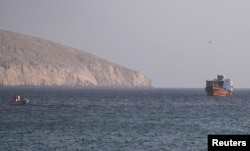
Iran's Islamic Revolutionary Guards Corps (IRGC) Navy said on July 19 that it stopped four ships attempting to transit the Strait of Hormuz without authorization.
According to the Tasnim news agency, which is affiliated with the IRGC, the vessels had switched off their navigation systems and ignored warnings from the force's Strait of Hormuz control base.
Two of the ships were involved in an incident and were forced to stop, while the other two abandoned their route, it added, without providing further details.
The IRGC claimed it has full control over the strategic waterway and warned that vessels attempting to use routes it considers unsafe would "certainly" face accidents.
Jordan Says No Evacuation Orders Issued For Aqaba Airport, Seaport After US Security Alert
Jordan said on July 19 that authorities had not issued evacuation orders for the airport or seaport in the Red Sea city of Aqaba and had detected no potential threats in recent hours.
The statement by a government spokesperson, carried by Jordan’s state news agency Petra, came after the US Embassy in Amman claimed Jordanian authorities had evacuated the two facilities because of a “specific and credible threat.”
Aqaba, Jordan's only coastal city, lies across the Red Sea from the Israeli port city of Eilat. Earlier on July 19, air raid sirens sounded in parts of Jordan following Iranian attacks, amid heightened regional tensions.
The US Embassy urged Americans to avoid traveling to Aqaba's airport and seaport until further notice and advised caution at locations associated with the United States. It did not provide details about the nature of the reported threat.
Kuwait Reports Fresh Iranian Missile, Drone Attacks As Tehran Claims Strikes On US Bases
Kuwait's military said it was intercepting Iranian missiles and drones on July 19, with air raid sirens sounding in parts of the country, while Iran said it had launched a fresh wave of attacks targeting US military bases in the Gulf state.
"Kuwaiti air defenses are currently confronting hostile missile and drone attacks," the military said, describing the barrage as "sinful Iranian aggression."
The AFP news agency reported warning sirens sounding in Kuwait City in the morning on July 19.
Iran's army said the attacks were part of the 17th phase of its Operation Saeqeh, claiming it targeted an ammunition depot at Camp Al-Adairi and facilities, including radar systems, at Ali Al Salem Air Base.
The latest exchange came a day after Kuwait said Iranian missile and drone attacks struck a power plant and an oil facility. Iran said the latest strikes were carried out in response to US attacks on Iranian territory.
US Launches Fresh Strikes On Iran After American Soldiers Killed in Jordan
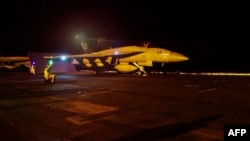
The US military said it has launched new air strikes on Iran, the eighth consecutive night it has done so, just hours after confirming two US soldiers were killed and another missing during defensive operations in Jordan during attacks launched by Tehran.
"Today at 6 p.m. ET, U.S. forces began launching new airstrikes against Iran at the Commander in Chief’s direction," US Central Command (CENTCOM) said in a statement on July 18.
"The strikes are designed to further degrade Iran’s ability to threaten commercial shipping in the Strait of Hormuz and swiftly punish Islamic Revolutionary Guards Corps forces who launched attacks against American service members in Jordan last night."
The battle to control the Strait of Hormuz, a crucial waterway that accounts for one-fifth of global oil and gas transit, continues to shred an accord aimed at stopping the fighting to allow Washington and Tehran to hammer out a peace deal.
2 US Service Members Killed, 1 Missing In Jordan After Iranian Missile Strike
The US military said two US service members were killed and another one is missing in Jordan as part of defensive operations against incoming Iranian ballistic missiles.
Four others were injured and evacuated to Jordanian hospitals, US Central Command (CENTCOM) said on X on July 18. Two of them have been discharged from the hospital, while several others were evaluated for minor injuries and returned to duty, it added.
"On July 17, two US service members in Jordan were killed in action as US Central Command...and partner forces defended against Iranian ballistic missile and drone attacks. Additionally, one service member is currently missing in action," CENTCOM said.
The statement did not specify where in Jordan the attack occurred or immediately identify the casualties.
The deaths would bring the total of known fatalities among US service members since the start of the US-Israeli strikes on Iran on February 28 to 16, with all but one listed as combat deaths.
Read more here.
Statement Attributed To Iran's Supreme Leader Blasts US, As Leaders Say MOU 'Suspended'
Iranian Supreme Leader Mojtaba Khamenei, in a written statement attributed to him, assailed Washington for what it said were repeated breaches in commitments made under an interim cease-fire framework and he vowed to teach the US "unforgettable lessons."
"Now that the American enemy seeks to incite war and bear its most serious consequences, it should know that the dear Iranian nation and the axis of resistance have unforgettable lessons to offer it," he said in the statement read by state TV late on July 18.
He added that US violations of the framework agreement "demonstrated to everyone the worthlessness of the American president's signature."
US forces have for the past seven nights struck at Iranian coastal areas and infrastructure sites after Iran fired on ships transiting the Strait of Hormuz, which Washington said was a violation of the terms of the memorandum of understanding (MOU) signed by both sides last month.
US Central Command (CENTCOM) said the attacks were designed to degrade Tehran's ability to attack ships in the strait.
Khamenei, the 56-year-old son and successor of Iran’s longtime leader, has not been seen in public since his father, Ali Khamenei, was killed in the first day of US-Israeli strikes on February 28. He was reportedly severely injured in the attack, raising questions about his health and his ability to carry out his duties as supreme leader.
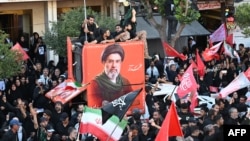
There have been no known audio or video recordings of Mojtaba Khamenei since February 28. He was not seen throughout six days of ceremonies and rallies during funeral services for his father in early July.
Experts said his absence from the funeral services inflicted a further blow to Khamenei's legitimacy and intensified questions about who runs the Middle Eastern country of some 90 million people.
According to the authorities, he did not attend his father's funeral because of security concerns.
Mojtaba Khamenei was a controversial pick as supreme leader. While his selection represented continuity during wartime, it also angered government supporters who said hereditary succession betrayed the anti-monarchist roots of the 1979 Islamic Revolution.
Despite his absence from public life, US intelligence services say that Mojtaba Khamenei likely still plays a prominent role in war strategy and managing peace talks with the US.
Prior to the release of the Khamenei statement, top Iranian officials on July 18 said the framework agreement with Washington was effectively "suspended" following the latest US air strikes.
"Unfortunately, the Americans have violated their obligations under the Islamabad declaration of intent through their aggressive measures," Deputy Foreign Minister Kazem Gharibabadi said in a televised interview.
He added that Washington had effectively abandoned its obligations under the MOU, forcing Iran to suspend implementation of all of its own commitments.
“None of those commitments are currently being implemented,” he said.
Foreign Ministry spokesman Esmail Baghaei made similar remarks, saying the MOU had “effectively been suspended.”
A day earlier, Iranian Major General Mohsen Rezaei threatened that Tehran was ready to resume "full-scale offensive operations" if US strikes against it continue for another two or three days.

The US-Iran framework agreement of mid-June was intended to lead to a permanent end to the war, stipulating that a final deal would be negotiated within 60 days.
A key clause was a US demand to open the Strait of Hormuz, which Iran had effectively blocked.
Traffic has irregularly moved through the waterway, although it currently appears to be virtually shut again after recent strikes by Iran on vessels that it said had not received its permission to transit, prompting the latest wave of US strikes.
With reporting by RFE/RL's Radio Farda, AFP, and Reuters
Bahrain Directs Citizens To Safety After Tehran Attack Claims
Bahrain’s Interior Ministry on July 18 advised its citizens and residents to head to a safe place as Tehran claimed it had targeted the Jufair military base in the north of the island.
The Jufair base, known as the Naval Support Activity (NSA) Bahrain, is the home of the US Fifth Fleet in the region.
The US military's Central Command (CENTCOM) has not commented on the Interior Ministry's announcement and the Iranian claim could be not independently verified.
“The siren has sounded, citizens and residents are urged to remain calm and head to the nearest safe place,” the ministry said in a social media post.
The ministry did not release any details about Iran's claim of an attack, potential casualties, or damage to infrastructure.
Citing the Baghdad-based AlGhadeer TV, Iran’s official news agency, IRNA, reported that Tehran had targeted the headquarters of the US Fifth Fleet.
Meanwhile, other media reports, quoting Iran’s Fars news agency, suggested that five key ports hosting the US military or commercial interests could be hit by Iranian strikes.
Iranian Prisoners Continue Strike Against Executions
Hundreds of inmates at Iran’s largest prison, Ghezel Hesar, are staging a hunger strike against the possible execution of six prisoners whom, rights organizations say, have already been shifted to solitary confinement.
Radio Farda, quoting the Iranian Human Rights Organization, reported that the protest began in Unit 2 of the prison on July 12, where the authorities are keeping around 1,500 prisoners.
A video posted by Iran Human Rights on X shows dozens of men lining both sides of a corridor inside a building, some holding Persian-language placards calling for an end to executions.
RFERL was unable to verify the location of the video and the date it was recorded.
According to the Iranian Human Rights Organization, the condition of some of the hunger-striking prisoners was critical but the authorities refused to transfer them to hospital for treatment.
The rights organization also released a video showing two apparently unconscious prisoners and their cellmates asking if they can be transferred to a hospital.
The prisoners on death row have reportedly been convicted of drug-related charges. Ghezel Hesar prison, in the city of Karaj, around 20 kilometers northwest of the Iranian capital, Tehran, is holding around 20,000 prisoners of whom 13,000 are facing charges relating to drugs.
Iran’s Ghezel Hesar Prison has a history of mass protests. In February 2024, prisoners started the “No to Executions Tuesdays” by staging a weekly hunger strike every Tuesday against the increasing number of death penalties. In one of those protests, prisoners sewed their lips together.
There has been no comment from Iranian officials in Tehran or from inside the Ghezel Hesar prison.
In a May 2025 statement, the New York-based Amnesty International reported that the Iranian regime has executed an “unprecedented” 2,159 people in 2025, the highest number globally since 1981.
Iran Warns Gulf Neighbors Of 'Corresponding' Military Response
In a stark warning following the seventh night of US strikes against Iran, the regime’s Islamic Revolutionary Guards Corps (IRGC) said that the country's Gulf neighbors must be ready to receive a “corresponding and proportional” response.
In the statement, the IRGC warned the “host nations” with US military bases to activate their civil defense units and relocate civilians away from potential military targets, Iran’s semi-official Tasnim news agency reported on July 18.
The IRGC warning came hot on the heels of an apparent shift in US military strategy, with strikes expanding from targets near the Strait of Hormuz to multiple sites across central and southern Iran on July 18.
Quoting the IRGC, Iran’s ISNA news agency reported that the groups's fresh warning is Iran’s direct response “to a shift in the US military strategy” over the past 24 hours.
Referring to the ongoing US strikes in its statement, the IRGC justified its warning by stating that Iran is executing the “reciprocal defense” following the “failure of international bodies to halt these actions.”
On July 17, the US Central Command (CENTCOM) said the fresh strikes are designed to continue degrading Iranian military capabilities at the direction of the commander in chief (US President Donald Trump).
CENTCOM said it "hit surveillance sites, military logistics infrastructure, underground weapons storage, and maritime capabilities” employing fighter aircraft, aerial drones, and warships in addition to other assets.
Earlier, Iran’s top military officials had threatened “full-scale offensive operations” if the US continued striking Iran for another two or three days. Quoting Major General Mohsen Rezaei, who is a senior military adviser to Iran’s Supreme Leader Mojtaba Khamenei, Iranian news agency IRIB reported that "Iran will no longer limit itself to retaliatory, like-for-like responses...and no political border will be safe."
Meanwhile, Tehran continued firing drones and missiles toward neighboring Bahrain, Iraq, Kuwait, Oman, and Qatar on July 17, resulting in damage to infrastructure.
Al-Jazeera reports that the security threat level was elevated in Qatar amid sounds of loud explosions in the capital, Doha, early on the morning of July 17. Quoting the Qatari Interior Ministry, the TV channel said a child was injured by falling shrapnel during the attacks.
Qatar hosts a major US military base and has been the target of regular Iranian drone and missile strikes since the beginning of the conflict in late February.
In Kuwait, the country’s Electricity, Water, and Renewable Energy Ministry said in a July 17 statement that a power and water desalination plant was hit in the Iranian strikes that sparked a fire, damaging a large number of electricity generation units.
As hostilities continue with risk of further expansion of the war, there are fresh calls for an immediate cease-fire and a resumption of dialogue.
On July 17, the foreign ministers of China and Pakistan, in a joint appeal, called for a return to the cease-fire agreed upon between Iran and the United States last month.