



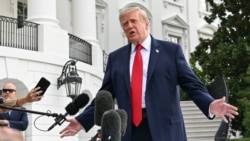

Iran Claims It Was ‘Prepared To Strike’ Ukraine, But Reconsidered
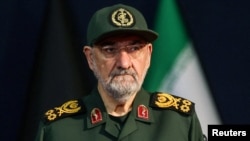
Iran was ready to hit Ukraine after Kyiv targeted an Iranian cargo vessel in the Caspian Sea last month but called off the attack, an adviser to Iran’s supreme leader said.
“We were prepared to strike three locations in Ukraine, but after they said the attack had been a mistake, we suspended our response in order to examine their claim,” Mohsen Rezaei told state TV on August 3.
“In any case, they will have to pay the price for their attack,” Rezaei added.
Tehran said the vessel was carrying civilian cargo and the Ukrainian strike killed an Iranian sailor. But Ukraine said the ship was transporting components for drones and missiles from Iran to Russia.
There was no immediate response from Kyiv to Rezaei's remarks.
However, several days after the July 25 incident, Ukrainian Foreign Minister Andrii Sybiha said he called his Iranian counterpart Abbas Araqchi to say Kyiv sought to avoid escalation."
"Our goal is to counter Russian aggression, which is the root cause of all incidents, and it is Russia who bears full responsibility for all provocations and casualties," Sybiha said in a post to X.
Iran and Russia have forged a close military relationship in recent years. Tehran has provided Moscow with domestically produced combat drones that Russia has used in its war against Ukraine. Kyiv has said that has made Tehran complicit in Russia’s war.
Trump Says Iran Has ‘Last Chance’ To Strike Deal
US President Donald Trump said Iran has one “last chance” to strike a deal to end the five-month war otherwise the country faced “decapitation.”
“I think we're going to maybe get something, but I want to give them every last chance before decapitation,” he told reporters during an event in the Oval Office on August 3, reiterating a threat to launch a major attack on Iran.
Over the weekend, Trump said he decided to “hold off” on what he promised would be an unprecedented attack on Iran, saying “the perimeters” of a deal have been agreed with Tehran.
Earlier on August 3, Iran said it was not negotiating with the United States. In response, Trump called Iran's leadership “unbelievably duplicitous,” in a social media post.
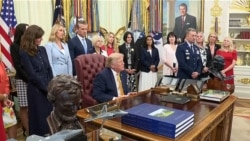

Asked about the status of the negotiations, Trump told reporters that “they are going on right now,” adding that the two sides were speaking at the request of Iran as well as US allies in the Persian Gulf, including Saudi Arabia, the United Arab Emirates, and Qatar.
“This is a last chance for them to sign a good document,” he said, referring to Iran.
An interim peace deal reached by Washington and Tehran collapsed in mid-July, just weeks after it was signed.
US Signs Deal To Boost Production Of Patriot, THAAD Systems
The United States has signed a deal with two American defense companies to boost the production of Patriot and THAAD air defense missiles.
In a statement on August 3, the Pentagon said the deal with Lockheed Martin and Northrop Grumman would allow the production of Patriots to triple and THAAD systems to quadruple.
The five-month war against Iran has depleted US stockpiles of Patriot and THAAD interceptors, which are considered Washington’s most advanced air defense systems.
During the war, Iran has fired thousands of ballistic missiles and combat drones at US military installations across the Middle East as well as US allies in the Persian Gulf.
In an analysis published on July 27, the Center for Strategic and International Studies (CSIS), a Washington-based think tank, said US stocks of Patriot and THAAD air defense missiles have been “diminished” by the conflict with Iran.
Before the war began in late February, the United States had over 2,300 Patriot and more than 450 THAAD interceptors. CSIS estimated that those figures have been halved or more.
"The air defense campaign has been largely successful with high -- though not perfect -- interception rates," but "this has required extensive use of interceptors," CSIS said.
Trump Tells Iran To Make A Deal Or Surrender
In a social media post on August 3, US President Donald Trump called on Iran to make a deal or surrender.
Trump dubbed Iran’s leadership “unbelievably duplicitous” after Tehran denied that it was in negotiations with Washington to end the five-month war.
"Whether Iran wants to admit it or not, we are, in fact, talking of a solution to a problem that they have caused, for decades,” the president wrote on Truth Social.
Late on August 1, Trump said he decided to "hold off" on what he promised would be an unprecedented attack on Iran, saying "the perimeters" of a deal have been agreed with Tehran.
But Iran’s Foreign Ministry on August 3 denied the country was in negotiations with the United States. The ministry said it was only holding talks with Oman to discuss shared control over the Strait of Hormuz, the world’s most important energy chokepoint.
Tehran effectively closed the strait, through which a fifth of the world’s oil supplies passed before the war, in retaliation for the United States and Israel launching a bombing campaign on the Islamic republic in late February.
In his Truth Social post on August 3, Trump said Iran had asked for talks -- "some would say 'beg'" -- but was now giving "their usual blather" about controlling the Strait of Hormuz.
Trump insisted that the strait "is already completely controlled by the United States Navy and our 'Blockade' or, as some say, 'The United States Wall of Steel!' Nothing gets through to Iran, unless we want it to, and nothing will get through, unless a Deal, or Total Surrender, is accomplished."
Washington reimposed a naval blockade on Iran following the collapse of a US-Iran interim deal signed in June.
Iran Denies Negotiations With US Taking Place
Iranian Foreign Ministry spokesman Esmaeil Baghaei has said that there are currently no negotiations under way between Iran and the United States.
In his weekly meeting with reporters on August 3, Baghaei said that what is currently under way are bilateral negotiations between Iran and Oman.
His remarks come as US President Donald Trump announced that talks with Iran will resume on August 3.
In response to Trump's remarks, Baghaei said that Iranian Foreign Minister Abbas Araqchi will be traveling to Najaf to take part in the Shia Muslim pilgrimage of Arbaeen. "and the rest of the negotiating team is in Iran."
A senior Iranian source also told Reuters that no talks were planned and that Araqchi would be unavailable at least until the end of the week.
Hassan Qashqavi, the spokesperson for the National Security and Foreign Policy Committee of Iran's parliament, said that there is currently "no discussion" with the United States.
In an interview published by the Iran's state-run ISNA news agency, Qashqavi said that the Iranian government is not negotiating with Washington, especially on the nuclear issue.
Qashqavi said that the Islamic republic's current priority is "the lifting of primary and secondary sanctions in [the US] Congress and the return of Iran's frozen assets."
Oil Prices Fall Sharply On Optimism Of Renewed Middle East Talks
Oil declined sharply early on August 3 as hopes of peace in the Middle East rose again following the latest remarks by US President Donald Trump.
The benchmark Brent crude futures fell more than 6 percent to $82.41 a barrel after Trump claimed that talks with Iran will restart on August 3. West Texas Intermediate fell 467 percent to $80.72 a barrel.
He also said he had called off an imminent "massive" attack on Iran as deals to reopen the Strait of Hormuz and resolve the impasse over Tehran's nuclear capabilities were in the works, although he did not provide details.
The war, which began with US-Israeli air strikes on Iran at the end of February, has caused oil prices to swing sharply -- going up when attacks intensified and falling when hope of a negotiated settlement resurfaced.
Trump Says Iran Talks To Resume August 3 After Calling Off 'Biggest Attack Since WWII’
US President Donald Trump said he called off the “biggest attack since World War II” against Iran following a plea from Tehran and requests from US Gulf allies, adding that peace negotiations would resume on August 3, with a deal on the crucial Strait of Hormuz “imminent.”
"Now what we're doing is we're talking to them in the form of a negotiation. It begins tomorrow [August 3] afternoon,” he told reporters on Air Force One on August 2.
Trump did not discuss the participants or a venue for any fresh negotiations. Qatar and Pakistan have been acting as mediators in talks between Washington and Tehran. On July 30, Qatar's Foreign Ministry said no high-level meeting was scheduled in Doha in the coming days following earlier remarks by Trump.
"I'd love to [make a deal]," Trump said. "It would save a lot of lives...So we had an attack that would have been the biggest attack since World War II and it would have been disastrous for them. And they didn't want us to do it."
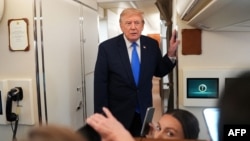
He said he was asked by Saudi Arabia, the United Arab Emirates, and Qatar, along with Iran, to call off the planned air strikes on Iran. Trump said Tehran asked "very strongly" to hold off. "They said we want to make a deal," he added.
"We were all set to go, at about this time right now, and it would have been a massive attack."
"But when the allies asked to call it off...and the reason they did is because they think there's a deal. There's a deal on Hormuz and there will be a deal on the...denuclearization of Iran."
"A deal is imminent having to do with the Hormuz Strait and also, ultimately, the denuclearization of Iran," he said.
The remarks followed up on comments he made a day earlier when he said had decided to "hold off" on fresh attacks because "the perimeters" of a deal had been agreed to with Tehran and that Israel was joining him in the commitment.
"The U.S.A. is locked and loaded and ready to go against the Islamic Republic of Iran, at levels of Military Terror, Strength, and Power not seen since World War II. Despite this, we have just been asked by Iran, and other Middle Eastern Countries, to hold off any attack in that the perimeters of a deal has been agreed to," Trump posted on Truth Social late on August 1.

"This would include the Immediate, Complete, and Total OPENING OF THE HORMUZ STRAIT, and an end to Iran's nuclear threat."
"Based on this request, I have agreed, for the future benefit of the WORLD and, likewise, the survival of a successful and prosperous Iran, to cancel the attack, subject to being able to rapidly make a DEAL," he wrote.
Trump has often threatened major attacks on Iran only to call them off, claiming an agreement between Washington and Tehran was imminent. Until now, a lasting peace agreement has been elusive, with tit-for-tat strikes by both sides resuming.
However, according to Iranian media, military sources in Iran denied Trump's claim that Tehran had asked Washington to refrain from launching new attacks.
Iran’s Mehr News Agency on August 2 quoted the unnamed sources as saying Trump's statement was "simply a new lie" and an attempt to "blackmail the rulers of the Persian Gulf and pressure them with threats."
Tehran did not immediately comment on the latest remarks regarding resumption of talks on August 3.
Although Trump initially said the elimination of Tehran's nuclear threat was the major aim of the US-Israeli war with Iran, which began on February 28, in recent weeks he has focused on the free flow of traffic through the important Strait of Hormuz.
More than 20 percent of the world's oil and gas supplies moved through the strait prewar, but Iran has at times effectively shut down the waterway, including with attacks on ships it said had not received proper approval from Tehran. Iran has also threatened to impose fees or tolls on ships in the strait.
The United States and other countries have insisted the strait is an international waterway and is not under the control of any nation.
Washington and Tehran signed a 60-day memorandum of understanding (MOU) on June 17 aimed at ending hostilities and reopening the strait. However, disputes over the meaning of the terms in the agreement have led to fresh attacks by both sides.
Early on August 3, the United Kingdom Maritime Trade Operations said it received a report of an incident involving a tanker some 20 nautical miles northeast of the Omani port of Khasab.
UKMTO said the master of a tanker reported hearing an explosion near the vessel, adding that the ship and its crew were safe.
Iran-backed Houthi rebels in Yemen in recent weeks opened a new front in the war by targeting oil facilities and striking oil tankers in the Red Sea as part of a naval blockade on Saudi Arabia, threatening to create a second chokepoint on global oil supplies after the effective closure of the Strait of Hormuz.
US Continues Maritime Blockade Of Iran As Tehran, Muscat Discuss New Route
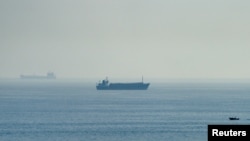
The US military's Central Command (CENTCOM) said on August 2 that its naval forces had redirected 35 commercial vessels, disabled two, and boarded two others in Middle Eastern waters amid Washington's resumed maritime blockade of Iran.
The CENTCOM update came as Iranian officials said Iran was in the final stages of talks with Oman over the Strait of Hormuz, with negotiators from the two countries trying to work out a joint mechanism to manage the strait.
However, according to Iranian state news agency IRNA, Iran's Foreign Ministry spokesperson Esmaeil Baqaei said the "understanding between Iran and Oman" did not mean the key waterway would be reopened and instead concerned an "unrelated" new route.
Baqaei blamed the difficulties in reopening the Strait on the United States, saying that, because of Washington's maritime blockade, reopening it was "an entirely different equation."
The effective closure of the Strait of Hormuz has long been one of the central issues in the war between the United States and Iran and one of the main obstacles to a negotiated settlement aimed at ending the broader conflict in the Middle East.
From the early days of the war, Tehran kept access to the waterway restricted, disrupting global oil markets and sending prices soaring. In the following months, it also sought to impose a toll on vessels passing through the Strait, a move that the United States described as unacceptable.
With reporting by Reuters and CNN.
Iran Executes 19-Year-Old Arrested During January Protests, Right Group Says
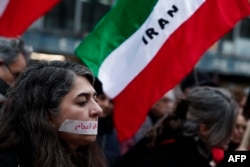
Iranian authorities have executed a 19-year-old man who was arrested during nationwide protests that began in late December and spread across the country in January, according to a US-based rights group.
Arvin Kheirkhahan was executed at about 4 a.m. on August 1 at Shahrud Prison in Iran's Semnan Province, the Human Rights Activists News Agency (HRANA) reported, citing a source close to his family.
Kheirkhahan had been sentenced to death by Branch 1 of the Shahrud Revolutionary Court on a charge of "enmity against God," according to HRANA. The sentence was upheld during the appeals process and by Iran’s Supreme Court, the group said.
Kheirkhahan was transferred to solitary confinement on July 29 ahead of his execution, according to Iran International.
His family gathered outside the prison on July 31 in an attempt to prevent the sentence from being carried out.
In a final conversation with his family, Kheirkhahan reportedly said: "Don't let them forget me. We stood up for the liberation of our homeland. Don't let the path we chose be silenced."
To read the full report, click here.
Iran Media Says Tehran Did Not Ask Trump To Halt Attacks
Iranian military sources have denied US President Donald Trump's claim that Tehran had asked Washington to refrain from launching new attacks, Iran’s Mehr News Agency reported on August 2.
Mehr, a conservative outlet, quoted the unnamed sources as saying Trump's statement was "simply a new lie" and an attempt to "blackmail the rulers of the Persian Gulf and pressure them with threats."
The sources said Iranian forces were at the highest level of readiness and prepared for any eventuality. They added that if a confrontation became inevitable, "the battlefield will be decisive," regardless of whether the United States continued its attacks or retreated.
Trump said in a post on his Truth Social platform on August 1 that "we have just been asked by Iran, and other Middle Eastern Countries, to hold off any attack" because "the perimeters of a deal has been agreed to."
He said the deal would include the "Immediate, Complete, and Total OPENING OF THE HORMUZ STRAIT" and an end to Iran's "nuclear threat."
"Based on this request, I have agreed, for the future benefit of the WORLD and, likewise, the survival of a successful and prosperous Iran, to cancel the attack, subject to being able to rapidly make a DEAL," Trump wrote.
Trump did not identify who he claimed had made the request on Iran's behalf.
Separately, Iran's Fars news agency -- which is affiliated with Iran's Islamic Revolutionary Guards Corps -- cited a source close to Iranian negotiators as saying the Strait of Hormuz would remain closed as long as "US hostile actions" continued.