




US Not Ruling Out Military Force Against Iran, Hegseth Says
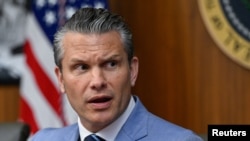
US Defense Secretary Pete Hegseth said that the United States was not ruling out the use of military force against Iran, as Washington imposed new sanctions on nearly 60 entities, individuals, and vessels as part of a major effort to economically pressure Tehran.
“By no means are we foreclosing using kinetic strikes anywhere in the Strait of Hormuz or around Iran,” Hegseth told reporters on August 24, adding that Iran would not be able to withstand the economic pressure being placed on it.
Earlier this month, Hegseth said that US forces could maintain the naval blockade of Iran indefinitely, adding that Washington could rotate its military ships in and out of the region as needed.
Hegseth’s latest comments came as the US Treasury Department announced the launch of an “economic D-Day” against Iran and warned that countries continuing to support Tehran risked becoming a “global pariah.”
Washington says the campaign is intended to sever the economic lifelines that sustain the Iranian government and further isolate Tehran internationally.
Bessent Says US Launching 'Economic Onslaught' On Iran, Demands Countries Cut Trade Ties With Tehran
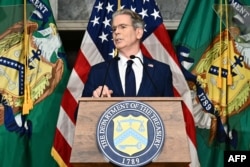
WASHINGTON -- US Treasury Secretary Scott Bessent announced a new effort to ramp up the pressure on Tehran, saying the United States is "launching an economic onslaught against Iran’s financial connections around the globe."
"Our objective is to sever every economic lifeline that sustains this tyrannical regime until Tehran stands alone," Bessent told a news conference in Washington on August 24, days after he and President Donald Trump warned of an "economic D-Day."
The announcement came nearly six months after the start of the US-Israeli war with Iran, which has choked off energy supplies from the Persian Gulf via the Strait of Hormuz.
The US is "ending" the threat from Iran, Bessent said, warning third countries that the United States will "be uncompromising in targeting any source of the [Iranian] regime's illicit revenue."
Bessent said that Trump was making phone calls to world leaders with specific requests, and that ever country would be given a defined timeline to "shut down...Iran-related activity we have identified."
Any country supporting Iran must be prepared to face US Sanctions, he added.
Reports: Trump Spoke With Pakistan Army Chief Ahead Of Tehran Visit
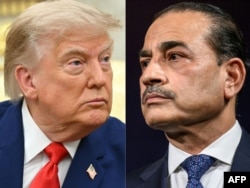
US President Donald Trump spoke with Pakistan’s army chief, Asim Munir, last week ahead of Munir’s visit to Tehran, as Islamabad makes a fresh attempt to mediate between Washington and Iran, according to Reuters and AFP.
Reuters cited three Pakistani sources, with one saying Washington’s main request was for Pakistan to use its influence to bring Iran back to negotiations. Two sources said Trump had initiated the call, although details of the conversation remain unclear.
AFP reported separately on the call, citing a US source familiar with the matter.
Munir arrived in Tehran on August 24 with Interior Minister Mohsin Naqvi.
The Pakistani military said the visit was “part of Pakistan’s efforts to promote regional peace and stability.”
Islamabad has played a key mediating role during the conflict, helping broker an framework agreement in June that later broke down as fighting resumed.
The latest diplomatic push comes as Washington threatens economic consequences for countries providing what Trump called “any type of lifeline to Iran,” potentially putting pressure on Pakistan, which continues to trade with its neighbor.
One Pakistani source told Reuters that there was “a trust deficit on both sides” between Washington and Tehran, adding that Munir’s aim was to reduce that gap.
Based on reporting by Reuters and AFP
China Warns Against Escalation As US Targets Iran Trade
China has urged Iran and the United States to exercise restraint and said it would take measures to protect its interests if Washington imposes secondary sanctions on countries doing business with Tehran.
“Sanctions and pressure will not help resolve problems. They will only heighten tensions and escalate the situation, which serves no party's interests,” the China Daily quoted Chinese Foreign Ministry spokesman Lin Jian as saying.
Lin's comments came hours before the United States was set to unveil a sweeping new economic campaign against Iran, including fresh sanctions that President Donald Trump has said will be “unprecedented.”
Lin urged the parties to return to dialogue as soon as possible and seek a political settlement.
US Treasury Secretary Scott Bessent is due to announce details of the new economic measures later on August 24.
Iran Accuses US Of 'Economic Terrorism' As Washington Tightens Pressure
Iran has criticized new US economic measures against Tehran on August 24, accusing Washington of waging “economic terrorism” and disputing US claims about the success of its military campaign.
US Treasury Secretary Scott Bessent said an “economic D-Day” against Iran had begun and warned that countries continuing to support Tehran risked becoming a “global pariah.” He said the campaign was intended to sever the economic lifelines sustaining the Iranian government and further isolate Tehran internationally.
Bessent also said that US President Donald Trump had “dismantled Iran's military capabilities, destroyed nearly 100 percent of its military factories, and buried its nuclear program.”
Iranian Deputy Foreign Minister Kazem Gharibabadi challenged those assertions, questioning why sweeping economic measures were necessary if Washington had achieved its military objectives.
“Your narrative doesn't add up,” he wrote on X on August 24.
Separately, Iranian Foreign Ministry spokesman Esmaeil Baqaei described the new US measures as “economic terrorism.”
“The America that was supposed to come to the aid of Iranians is using every tool at its disposal to punish Iranians,” he told reporters at a news conference on August 24.
Baqaei also suggested Tehran was now combining caution with greater risk-taking in its dealings with Washington.
“We have long been chess players, and in recent years we have become poker players as well,” he said. “For some time now, we have been playing a combination of the two.”
Bessent is expected to provide further details of the US economic measures later on August 24.
With reporting by RFE/RL's Radio Farda
Iran's Currency Plunges As Washington Readies 'Economic D-Day'
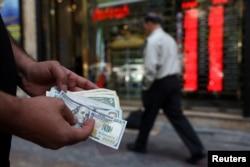
Iran’s already battered economy is showing renewed signs of stress as Washington prepares to unveil what US officials have described as some of the toughest sanctions yet against Tehran.
The Iranian currency fell to a new low on August 24, with the dollar reaching 2,016,400 rials on the open market.
The milestone came as US Treasury Secretary Scott Bessent warned that Washington was preparing an “economic D-Day” for Iran, with tougher sanctions and possible secondary measures against countries and companies that continue doing business with Tehran.
Read the full report by RE/RL's Radio Farda and Kian Sharifi here .
What Do We Know About Munir's Trip?
- By RFE/RL
Multiple media outlets are now reporting that Pakistan's army chief, Field Marshal Asim Munir, has departed Islamabad on a flight to Tehran.
This is Munir’s third official visit to the Iranian capital since the start of the U.S.-Iran conflict. He first visited Tehran on April 15 to advance mediation efforts, followed by a second visit on May 22.
The Pakistani military chief is accompanied by his country’s Interior Minister Mohsin Naqvi, who has been shuttling between Tehran and Islamabad since the beginning of the US-Iran conflict in late February.
Naqvi is believed to be Munir’s most trusted man in Pakistan’s civilian setup and has also developed rapport with senior officials of the Iranian regime.
Iran’s state news agency, IRNA, quoting a diplomatic source in Islamabad, reported that Munir will be meeting senior Iranian officials in Islamabad. There is still no official word from Pakistani authorities on Munir’s Tehran visit or his talks with the Iranian officials.
Nuclear-armed Pakistan is one of the key mediators in the Middle East conflict. In April, Islamabad hosted the first-ever direct talks between US and Iran since 1979.
US President Donald Trump, who has repeatedly praised the Pakistani leadership and once described Munir as his “favorite Field Marshal,” has said he extended the ceasefire with Iran at Pakistan’s request.
Munir's trip comes hours before US Treasury Secretary Scott Bessent is due to announce details of sweeping new economic measures against Iran, dubbed Economic D-Day.
Pakistan Army Chief To Visit Tehran Amid Mediation Efforts
Pakistan's army chief, Field Marshal Asim Munir, will visit Tehran on August 24, as Islamabad continues its efforts to mediate an end to the war in the Middle East, according to the Iranian Foreign Ministry.
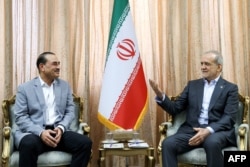
Iranian Foreign Ministry spokesman Esmail Baqaei said Munir would lead an official delegation to the Iranian capital to bolster bilateral cooperation and support regional peace and security.
Pakistan has played a key role in efforts to end the conflict between Iran and the United States, brokering a memorandum of understanding in June, although negotiations now appear stalled.
Separately, Baqaei announced that Oman's Foreign Minister Sayyid Badr al-Busaidi will visit Tehran on August 25 to continue discussions with Iranian officials on the Strait of Hormuz.
Iran President Admits Woes As US Treasury Chief Set To Speak On Sanctions Plan
Iranian President Masud Pezeshkian acknowledged the country was facing societal difficulties in the face of its conflict with the US and as Washington appears set to unveil plans to intensify sanctions on Tehran.
"I understand we have many problems in society right now. We are trying to prevent these as much as we can," Pezeshkian said in a speech broadcast on state television on August 24.
Pezeshkian said the government is committed to reducing inflation, which has become rampant since the start of US-Israeli strikes on Iran at the end of February and the subsequent US blockade of Iranian ports.

Pezeshkian also spoke of "major imbalances in water, electricity, gas, fuel, the environment, and the banking sector."
The Iranian president said Iran is facing a combination of war, sanctions, political pressure, and assassinations since he took office in July 2024.
Pezeshkian insisted Iran can withstand the pressure, claiming the people have "demonstrated resilience and solidarity."
Although serving as the country's president, questions remain as to his real power amid widespread confusion as to who is determining Iranian government and military policy.
The comments come ahead of planned remarks by US Treasury Secretary Scott Bessent, who is due to brief reporters at 1 p.m. Eastern time on August 24 on what he has called "the toughest sanctions in history" against Iran.
"At dawn begins an economic D-Day -- the single greatest financial offensive ever marshalled against an adversary," Bessent wrote in an opinion piece in The Financial Times on August 23.
"The world should understand that our objective is to sever every economic lifeline that sustains the tyrannical regime until Tehran stands alone," he wrote.
US President Donald Trump last week threatened to increase pressure on Tehran, calling it an "economic D-Day" for the country.
With reporting by dpa and AFP
US Central Command Says 70 Vessels Redirected Under Naval Blockade Of Iran
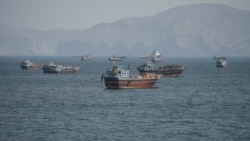
US Central Command (CENTCOM) announced on August 23 that the US military had redirected 70 commercial vessels, disabled three, and boarded two after Washington reimposed a naval blockade on Iran earlier this summer.