



Accessibility links

Breaking News

Iran Reportedly To Resume 'Morality' Patrols To Enforce Hijab Compliance

Updated
Earlier this month, Iranian authorities stepped up pressure on commercial and recreational venues, shutting down dozens of cafes, restaurants, and other businesses for purportedly failing to enforce the head-scarf laws on their premises.

Iran will reportedly resume so-called morality police patrols aimed at enforcing the country's laws on women wearing head scarves, or hijab.

Iranian police spokesman Saeed Montazerul-Mahdi said on July 16 that the patrols will crackdown on those wearing "extraordinary clothing" in public and who "insist on breaking the norms."

The statement came amid a flurry of unconfirmed social media posts regarding purported sightings of police vans patrolling several Iranian cities.

Police arrested actor Mohammed Sadeghi after he posted a video in response to another online video showing a woman being detained by the morality police. "Believe me, if I see such a scene, I might commit murder," he said.

The website of the semiofficial Hamshahri daily newspaper, which is affiliated with the Tehran municipality, said he was arrested for encouraging people to use weapons against the police.

The morality police patrols were suspended following months of unrest after the September 2022 death of Mahsa Amini while she was in police custody for an alleged head-scarf violation. Amini's family has said his daughter had no history of health problems and was beaten during her detention.

At least 500 people were killed in the unrest, and tens of thousands were detained. On May 17, the head of Iran’s judiciary announced that about 90,000 protesters had been pardoned by Supreme Leader Ayatollah Ali Khamenei.

Iranian Women Continue To Defy Head-Scarf Law As 'Morality' Patrols Return
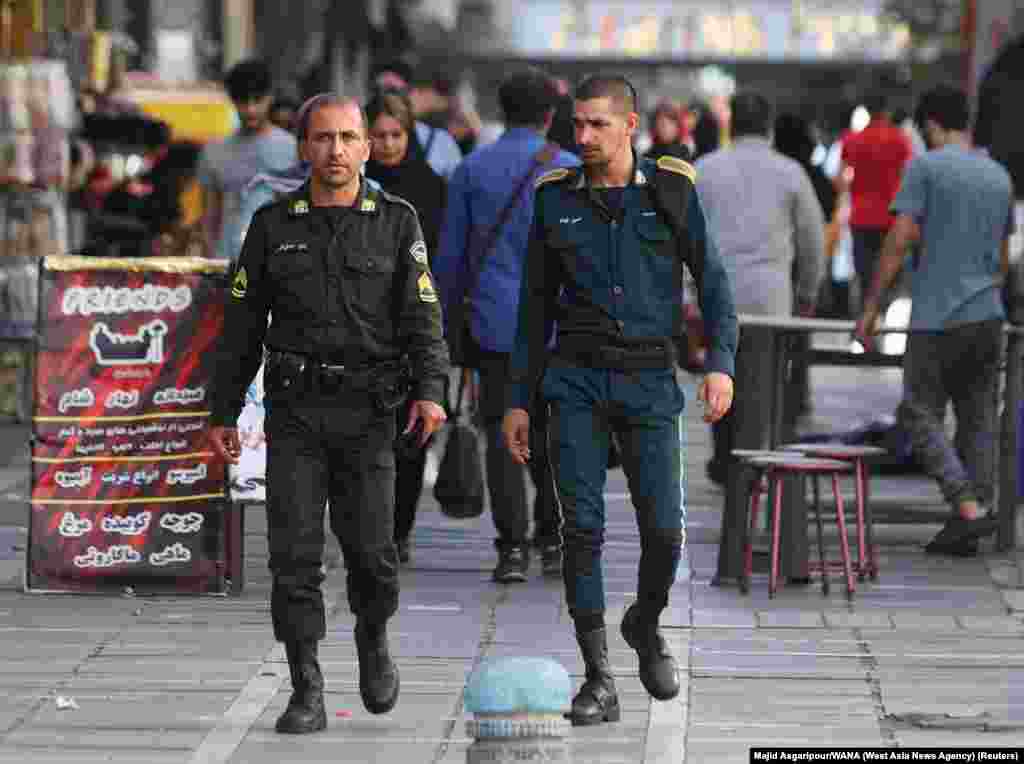
Two policemen walk through Tehran on July 16. The officer on the left is wearing the standard green uniform&nbsp;<strong><a href="https://www.pbs.org/newshour/world/future-of-irans-morality-police-unclear-after-official-said-force-was-closed" target="_blank">that is worn</a></strong>&nbsp;by units of the morality police.<br />
<br />
&nbsp;
1/7 Two policemen walk through Tehran on July 16. The officer on the left is wearing the standard green uniform that is worn by units of the morality police.

 
After protests that shook Iran and led to countless women opting to remove their head scarves, patrols of morality police have been seen on the streets once more following months of relative inactivity.
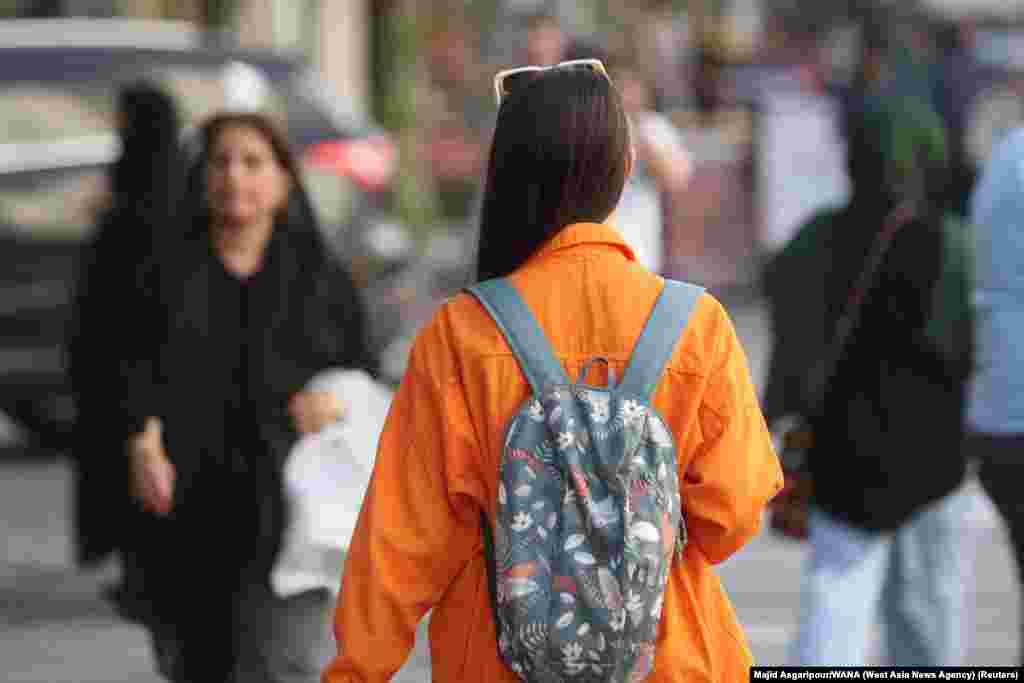
A woman goes without the mandatory hijab in Tehran on July 16.<br />
<br />
An Iranian official on July 16 <strong><a href="https://www.aljazeera.com/news/2023/7/16/irans-morality-police-return-as-authorities-enforce-hijab-rule">confirmed</a></strong> that patrols of the notorious morality police, known officially as Guidance Patrols, have returned to Iran&rsquo;s streets after months of keeping a low profile. The patrols&nbsp;enforce laws around clothing and behavior between the sexes.<br />
&nbsp;
2/7 A woman goes without the mandatory hijab in Tehran on July 16.

An Iranian official on July 16 confirmed that patrols of the notorious morality police, known officially as Guidance Patrols, have returned to Iran’s streets after months of keeping a low profile. The patrols enforce laws around clothing and behavior between the sexes.
 
After protests that shook Iran and led to countless women opting to remove their head scarves, patrols of morality police have been seen on the streets once more following months of relative inactivity.
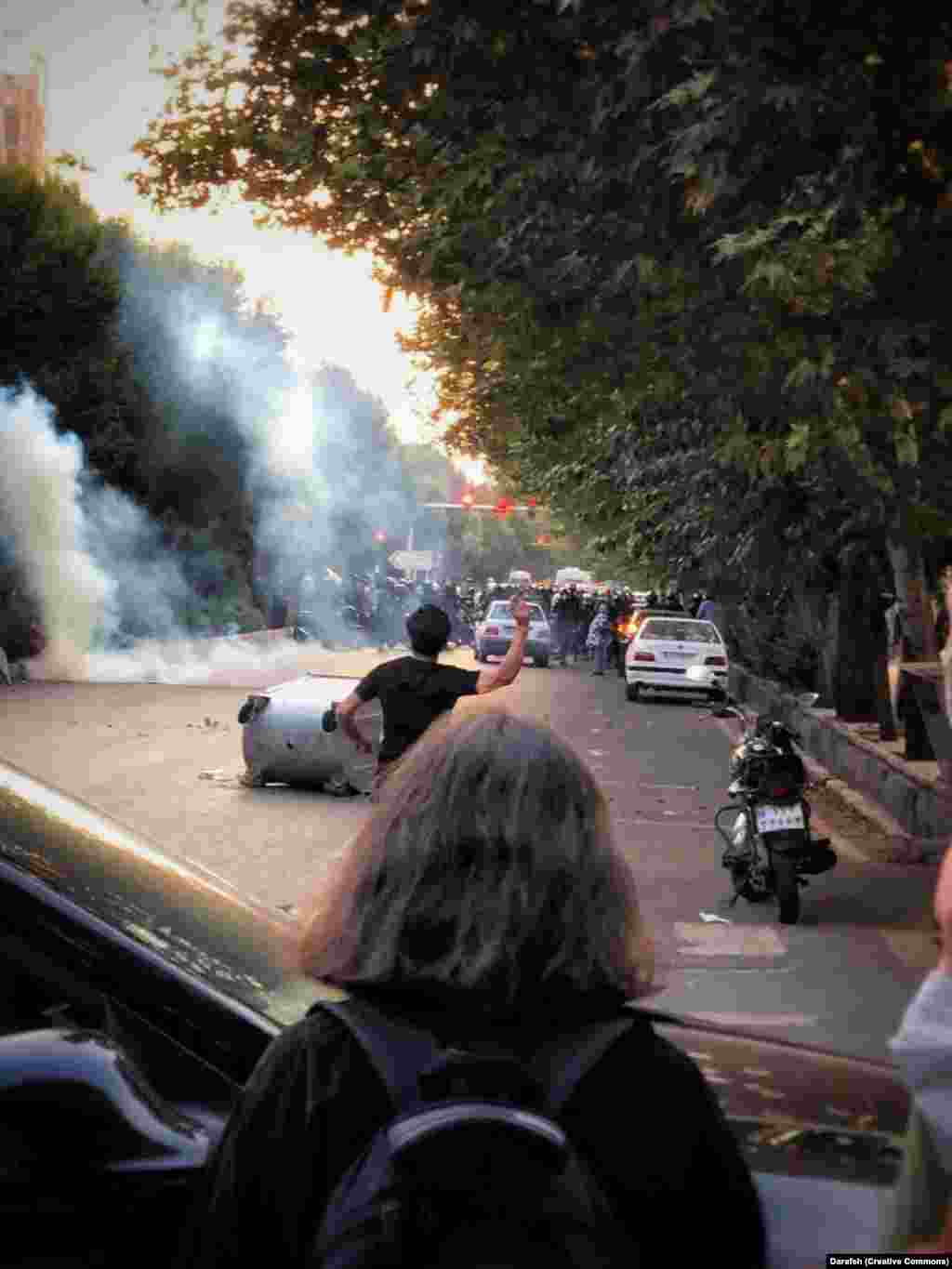
A September 2022 photo shows a young woman watching violent protests in Tehran following the death of Mahsa Amini.<br />
<br />
Throughout the widespread unrest that followed the September 2022 death of Amini while in the custody of the morality police, increasing numbers of women opted not to wear their hijabs. The head scarves have been mandatory in Iran since shortly after the 1979 Islamic Revolution. &nbsp;
3/7 A September 2022 photo shows a young woman watching violent protests in Tehran following the death of Mahsa Amini.

Throughout the widespread unrest that followed the September 2022 death of Amini while in the custody of the morality police, increasing numbers of women opted not to wear their hijabs. The head scarves have been mandatory in Iran since shortly after the 1979 Islamic Revolution.  
After protests that shook Iran and led to countless women opting to remove their head scarves, patrols of morality police have been seen on the streets once more following months of relative inactivity.
Unidentified policemen on a street corner in Tehran on July 16.<br />
<br />
The absence of morality police on the streets during and after the massive protests, and a vague statement from an Iranian official, led to <strong><a href="https://www.nytimes.com/2022/12/05/world/middleeast/iran-morality-police.html">false reports in Western media</a></strong> that the unit had been disbanded.
4/7 Unidentified policemen on a street corner in Tehran on July 16.

The absence of morality police on the streets during and after the massive protests, and a vague statement from an Iranian official, led to false reports in Western media that the unit had been disbanded.
After protests that shook Iran and led to countless women opting to remove their head scarves, patrols of morality police have been seen on the streets once more following months of relative inactivity.
Women walking without head coverings in Tehran on July 16.&nbsp;<br />
<br />
Morality police were previously identifiable by the <strong><a href="https://www.researchgate.net/figure/Caption-The-vehicle-of-gasht-e-ershaad-Persian-gsht-arshad-the-morality-police-is_fig7_334861388">vans with a green stripe</a></strong> that used to transport arrested people, but recent footage from Iranian cities appear to show morality police now <strong><a href="https://www.instagram.com/reel/CuycgkTIyfS/?igshid=MTIzZWMxMTBkOA%3D%3D">operating with unmarked white vans.</a></strong><br />
<br />
<br />
<br />
&nbsp;
5/7 Women walking without head coverings in Tehran on July 16. 

Morality police were previously identifiable by the vans with a green stripe that used to transport arrested people, but recent footage from Iranian cities appear to show morality police now operating with unmarked white vans.


After protests that shook Iran and led to countless women opting to remove their head scarves, patrols of morality police have been seen on the streets once more following months of relative inactivity.
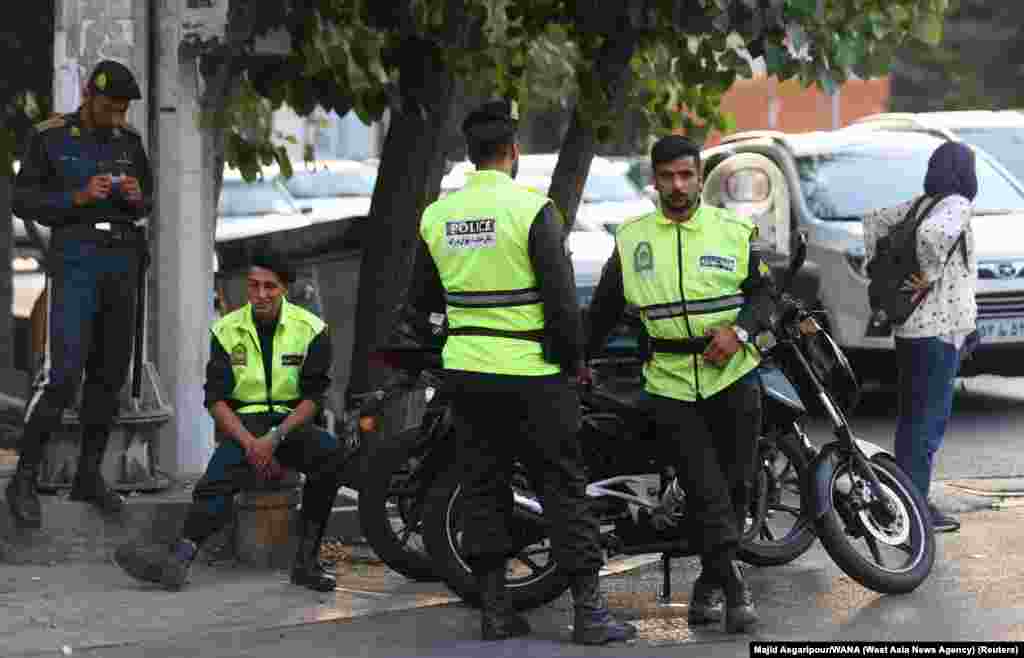
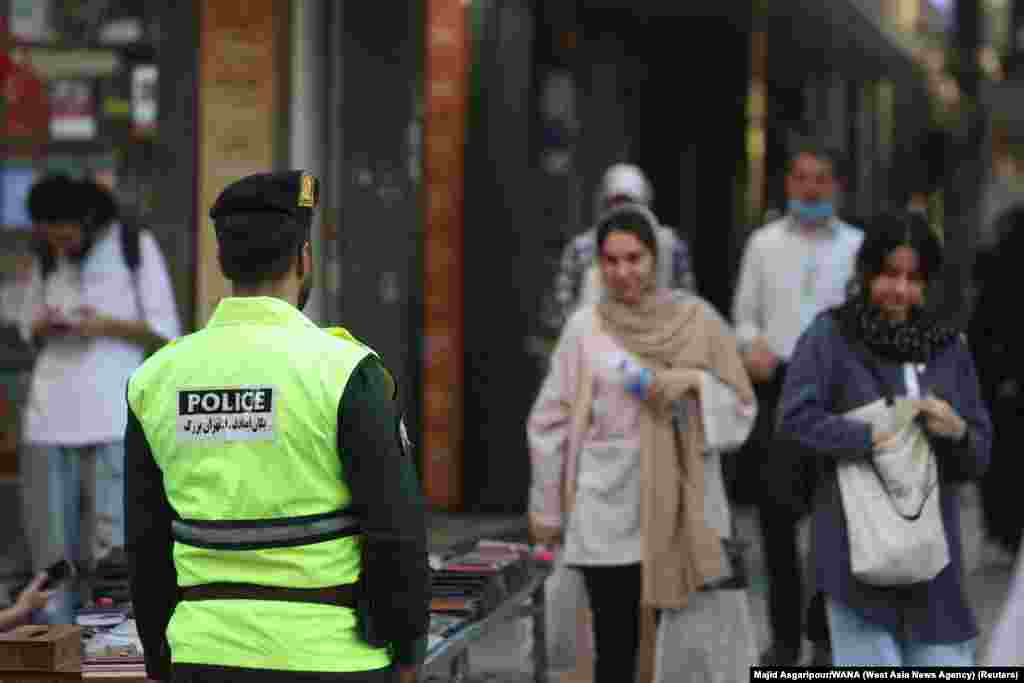
A policeman in Tehran as a woman (right) walks with her hair uncovered.<br />
<br />
Earlier this month, dozens of cafes and other businesses throughout Iran were shut down for purportedly allowing women to go uncovered.&nbsp;<br />
<br />
&nbsp;
6/7 A policeman in Tehran as a woman (right) walks with her hair uncovered.

Earlier this month, dozens of cafes and other businesses throughout Iran were shut down for purportedly allowing women to go uncovered. 

 
After protests that shook Iran and led to countless women opting to remove their head scarves, patrols of morality police have been seen on the streets once more following months of relative inactivity.
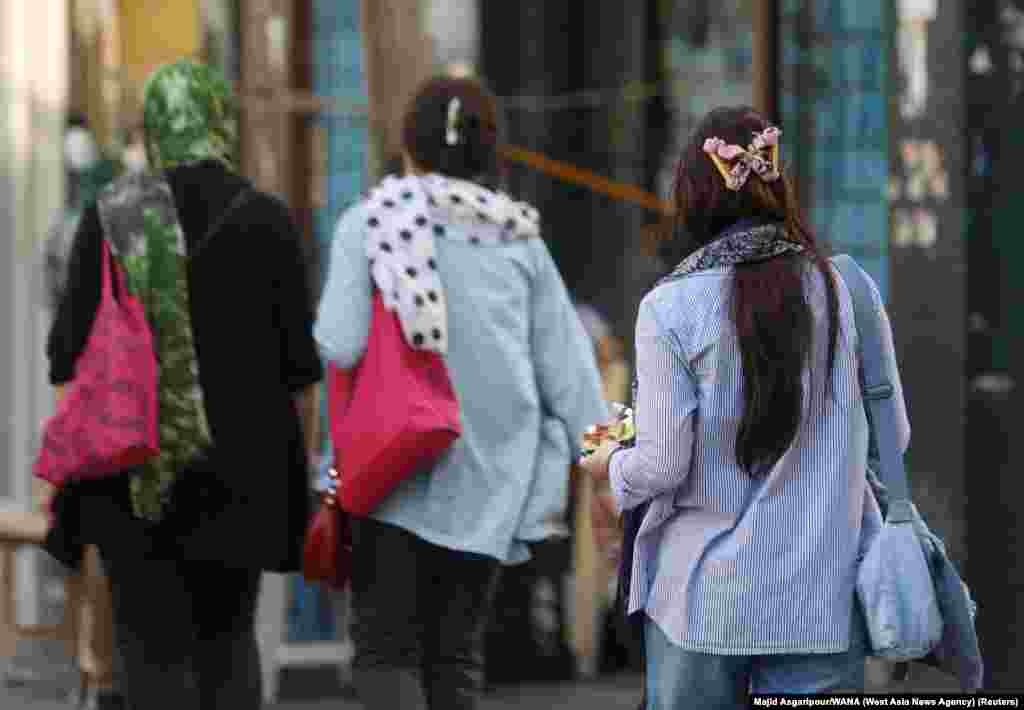
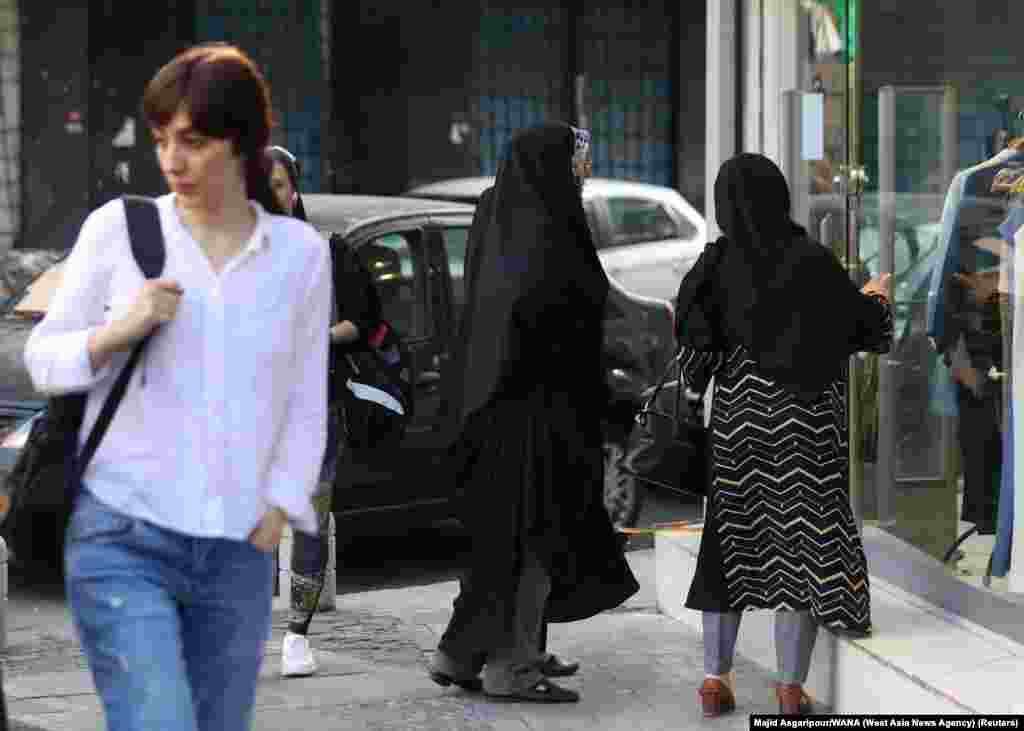
Contrasting clothing styles seen in Tehran on July 16.&nbsp;<br />
<br />
Shortly after the July 16 announcement that the morality police would return to on-the-spot enforcement, <strong><a href="https://www.radiofarda.com/a/rasht-protests/32506518.html">clashes broke out</a> </strong>in the northern city of Rasht after they attempted to arrest three women.&nbsp;
7/7 Contrasting clothing styles seen in Tehran on July 16. 

Shortly after the July 16 announcement that the morality police would return to on-the-spot enforcement, clashes broke out in the northern city of Rasht after they attempted to arrest three women. 
After protests that shook Iran and led to countless women opting to remove their head scarves, patrols of morality police have been seen on the streets once more following months of relative inactivity.
Previous slide
Next slide

The protests have been seen as one of the biggest threats to the Islamic government since it took power in 1979 as the unrest tapped into broader discontent over government corruption, economic mismanagement, and oppression.

Earlier this month, Iranian authorities stepped up pressure on commercial and recreational venues, shutting down dozens of cafes, restaurants, and other businesses for purportedly failing to enforce the head-scarf laws on their premises.

Closures were reported in Tehran, Islamshahr, Eshtehard, Parand, Rasht, and Motel Qu.

The hijab was made compulsory for women and girls over the age of 9 in 1981, two years after the Islamic Revolution in Iran. The move triggered protests that were swiftly put down by the government. Many women have flouted the rule over the years and pushed the boundaries of what officials say is acceptable clothing.

In the face of unrest, some religious and government figures have repeatedly advocated for a tougher stance by the government against offenders, even going as far as encouraging a "fire at will" approach against noncompliant women.

With reporting by AP
  • 16x9 Image

    RFE/RL's Radio Farda

    RFE/RL's Radio Farda breaks through government censorship to deliver accurate news and provide a platform for informed discussion and debate to audiences in Iran.

This item is part of
XS
SM
MD
LG