
The collapse of longtime Syrian President Bashar al-Assad last year was felt across the Middle East -- nowhere more than in Iran, his closest ally.
Assad’s fall was a major blow to Iran, which had used Syria to expand its regional influence and funnel weapons to armed groups fighting Israel, Tehran’s archrival.
One year on from Assad’s overthrow on December 8, 2024, Iran is still grappling with the consequences of its strategic defeat in Syria. The Islamic republic has attempted to rebuild its influence in Syria, but experts say there is likely no way back for Iran.
With Assad’s collapse, Iran lost its only “advanced base” in the Mediterranean Sea and saw the billions it spent on propping up Damascus go up in smoke, said Rami Abdulrahman, director of the UK-based Syrian Observatory for Human Rights.
“In other words, Iran, after expanding its reach in the region, has returned to its natural borders,” Abdulrahman told RFE/RL’s Radio Farda.
After Syria’s civil war broke out, Iran spent an estimated $30 billion to $50 billion supporting the Assad government from 2011 to 2020.
Tehran also trained, armed, and deployed tens of thousands of Shi’ite fighters from across the region to defend Assad. Tehran also sent hundreds of its own military personnel to Syria.

Those commitments underlined Syria’s importance to Iran. Under Assad, Syria was a cornerstone of Tehran’s “axis of resistance,” its loose network of proxies and partners in the region.
Syria was the only other state that was a member of the alliance, which also includes Lebanon’s Hezbollah, Tehran’s most important and potent proxy. Syria served as the primary supply route to Hezbollah -- a corridor that closed with Assad's departure.
No Easy Path To Reconciliation
Soon after Assad’s fall, Iranian Supreme Leader Ayatollah Ali Khamenei called on Syrians to “rise up” against the new authorities in comments that were widely seen as an attempt to interfere in Syria.
In March, when sectarian violence flared in western Syria, some accused Tehran of stoking unrest, noting that several Shi’ite militia leaders involved in the clashes had been trained by Iran’s Islamic Revolutionary Guards Corps (IRGC).
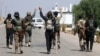
The incident, experts said, underscored Tehran’s attempts to use sectarian violence and alleged atrocities committed by forces loyal to Syria's interim president, Ahmed al-Sharaa, to regain its foothold in the country.
Experts say Iran is likely to cultivate local militias and proxy commanders rather than overtly deploying its forces.
“Documented reports about the Islamic republic's actions have not been published, but various media have published reports about Tehran's efforts to rebuild forces loyal to it in Syria,” said Ata Mohamed-Tabriz, a Spain-based Middle East expert.
“We also see that the Islamic republic is trying to cooperate with forces opposed to [Sharaa] or trying to amplify their voices.”
There have also been reports suggesting that Iran is looking to Russia, which has managed to cultivate ties with Sharaa, to help it establish relations with the new government.

But Abdulrahman believes there is no way back for Iran.
“There is no possibility, neither in terms of government nor in terms of popular base, even among Alawites, for accepting Iran's presence again in Syria. Among Alawites too, Iran is one of the countries most criticized,” he said.
Alawites are the sect of Shi'ite Islam to which Assad and many of his supporters belong. Shi’ite-majority Iran has portrayed itself as a protector of the sect.
Still, Syria's interim president has not entirely shut the door on Tehran, even as Iran is among only two states whose citizens are currently barred from entering the country.
Speaking about ties with Iran, Sharaa told Syrian state television in a recent interview that Tehran left “a deep wound” on Syrians, in reference to Tehran’s support for Assad during the civil war.
“But we do not say that the severance of relations between us and Iran will be permanent. If we reach a stage where Syria is respected, there is no interference in its internal affairs, and sectarian tensions are not fueled, relations will be established,” he said.

These dynamics now define the parameters of Syria’s emerging foreign policy. Since moving away from Iran, Damascus has seen many international sanctions lifted, including by the United States and Europe, opening doors to foreign investment in the war-ravaged country.
Syria’s new government is determined to protect these gains, and restoring ties with Tehran would require fundamental shifts in Iranian foreign policy -- changes that appear unlikely under the current leadership in Tehran, experts said.