


Accessibility links

Breaking News

'I Had No Idea What Was To Come': Iran's Former Empress Opens Up About Prerevolutionary Memoir

Former Iranian empress Farah Pahlavi  (file photo)
Former Iranian empress Farah Pahlavi (file photo)

Former empress Farah Pahlavi first published her memoirs two years before the events of 1979 collapsed her world, deposing her husband, Shah Mohammad Reza Pahlavi, and bringing an end to Iran's monarchy.

Pahlavi was 38 when she penned her accounts of her charmed life as a queen, known to Iranians as Shahbanou, to whom the idea of an Islamic revolution and indefinite exile was unthinkable.

"At the time I wrote my memoir, I had no idea what was to come," she said in a foreword for the republishing in English of her recollections, 1,001 Days: Memoirs Of An Empress, which will be released later this month, exposing her prerevolutionary life to a new generation.

A Fairy-Tale Life

Her life to that point was like a fairy tale: a commoner who married a king and became the queen of an ancient land when she was only 21.

She first met the shah -- who was crowned in 1941 and returned to power in 1953 following a CIA-backed coup -- at the Iranian Embassy in Paris, where she was studying architecture. In 1959, they married, and she became the 40-year-old monarch's third wife.

In Photos: The Extraordinary Life Of Farah Pahlavi, The Last Empress Of Iran
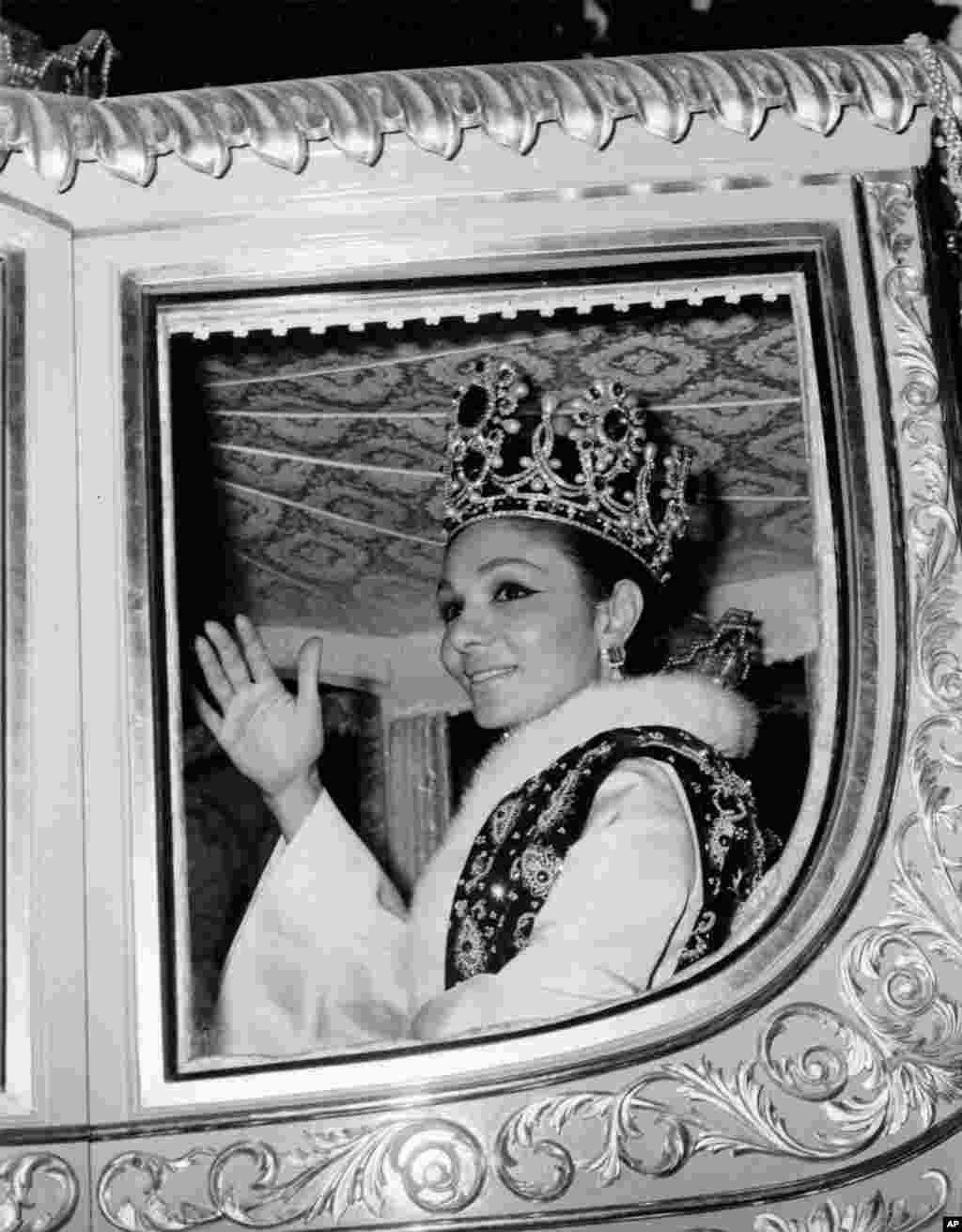
Empress Farah, wife of the shah of Iran, is pictured wearing her crown as she waves to crowds while driving through the streets of Tehran following their coronation ceremony on October 26, 1967. 
1/18 Empress Farah, wife of the shah of Iran, is pictured wearing her crown as she waves to crowds while driving through the streets of Tehran following their coronation ceremony on October 26, 1967. 
Farah Pahlavi was the last empress of Iran and the wife of the country's last shah, Mohammad Reza Pahlavi.
The shah of Iran, Mohammad Reza Pahlavi, and his wife, Farah (née Diba), are photographed during their wedding ceremony in Tehran on December 21, 1959. 
2/18 The shah of Iran, Mohammad Reza Pahlavi, and his wife, Farah (née Diba), are photographed during their wedding ceremony in Tehran on December 21, 1959. 
Farah Pahlavi was the last empress of Iran and the wife of the country's last shah, Mohammad Reza Pahlavi.
Queen Elizabeth II and Prince Philip of the United Kingdom pose with the shah and his wife, Farah, during their state visit to Iran in March 1961. 
3/18 Queen Elizabeth II and Prince Philip of the United Kingdom pose with the shah and his wife, Farah, during their state visit to Iran in March 1961. 
Farah Pahlavi was the last empress of Iran and the wife of the country's last shah, Mohammad Reza Pahlavi.
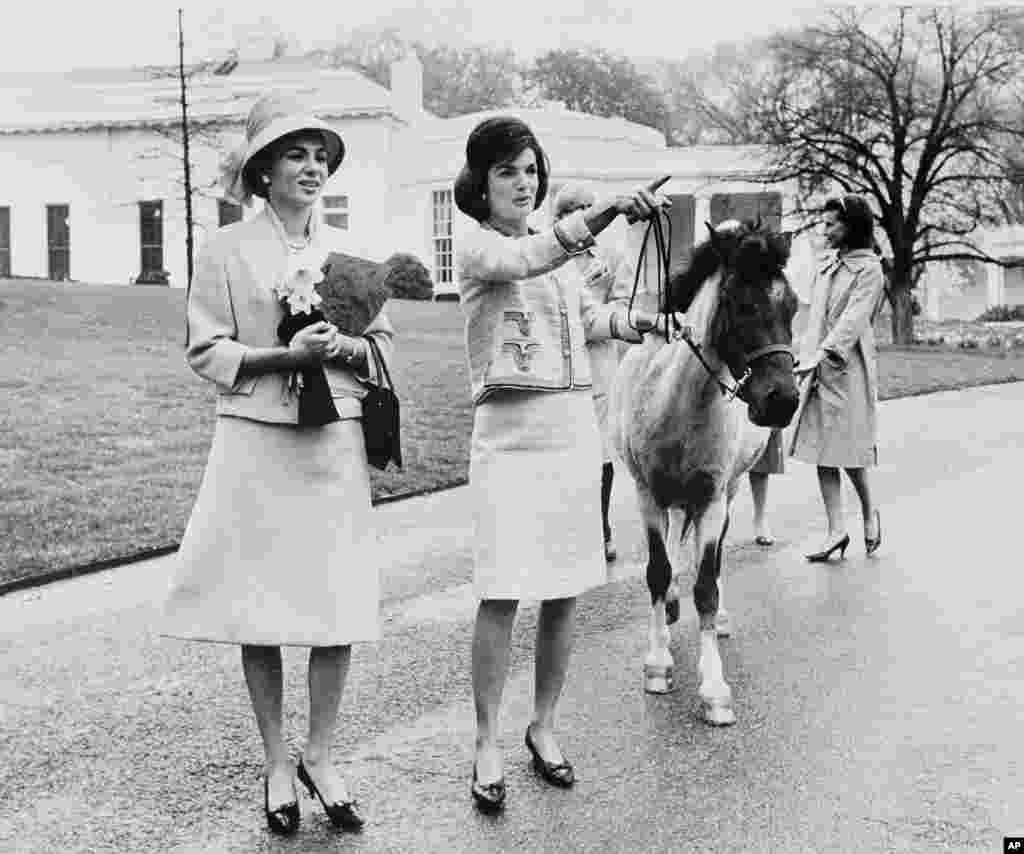
U.S. first lady Jacqueline Kennedy gives a guided tour of the White House grounds to Empress Farah in Washington in April 1962. Kennedy leads her daughter Caroline's pony, Macaroni, which had been nuzzling the empress, attracted by the daffodils she was carrying. In the background is the first lady's press secretary, Pamela Turnure. 
4/18 U.S. first lady Jacqueline Kennedy gives a guided tour of the White House grounds to Empress Farah in Washington in April 1962. Kennedy leads her daughter Caroline's pony, Macaroni, which had been nuzzling the empress, attracted by the daffodils she was carrying. In the background is the first lady's press secretary, Pamela Turnure. 
Farah Pahlavi was the last empress of Iran and the wife of the country's last shah, Mohammad Reza Pahlavi.
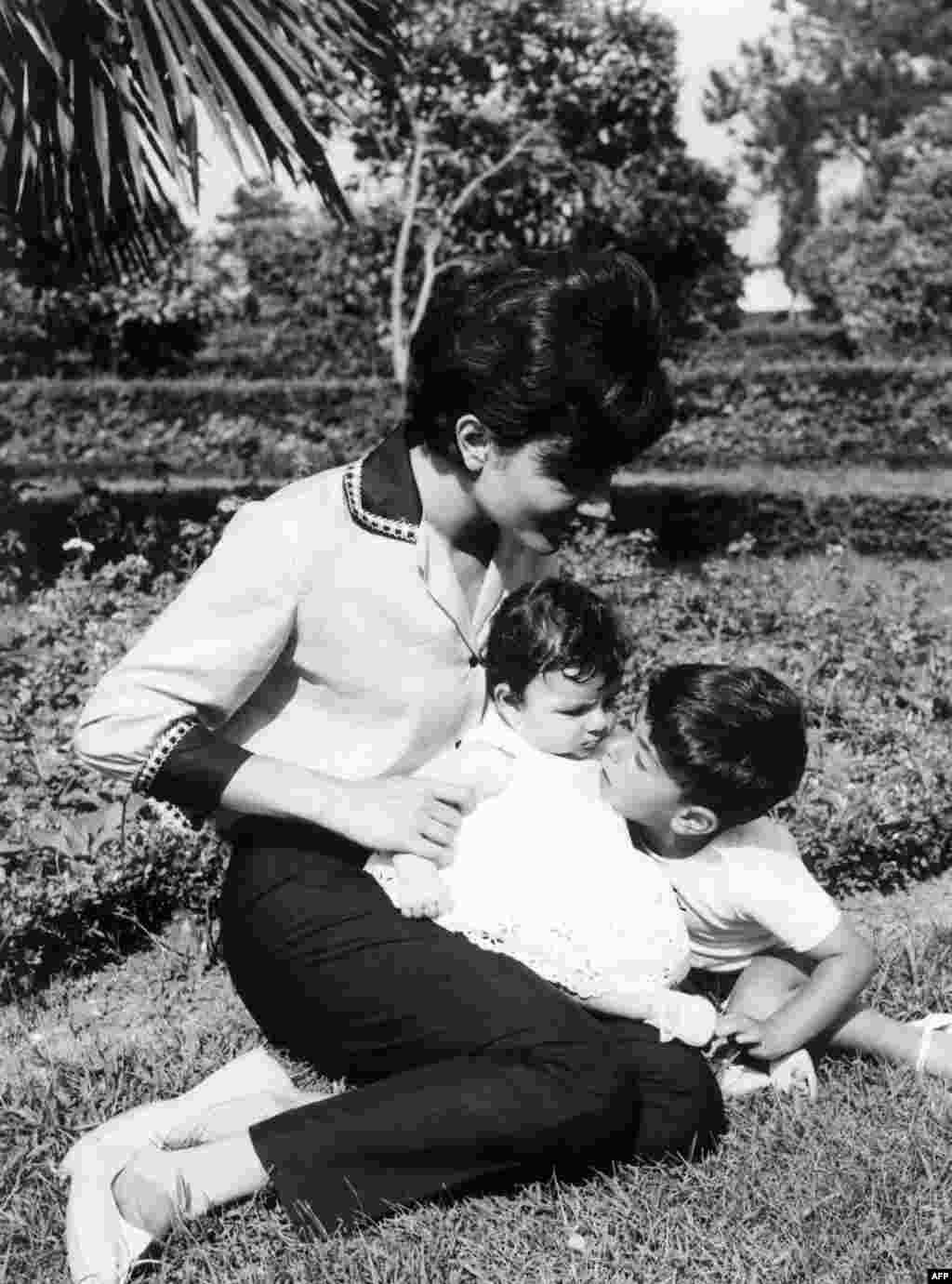
Empress Farah with her children, Prince Raza and Princess Farahnaz, in Tehran in 1963.
5/18 Empress Farah with her children, Prince Raza and Princess Farahnaz, in Tehran in 1963.
Farah Pahlavi was the last empress of Iran and the wife of the country's last shah, Mohammad Reza Pahlavi.
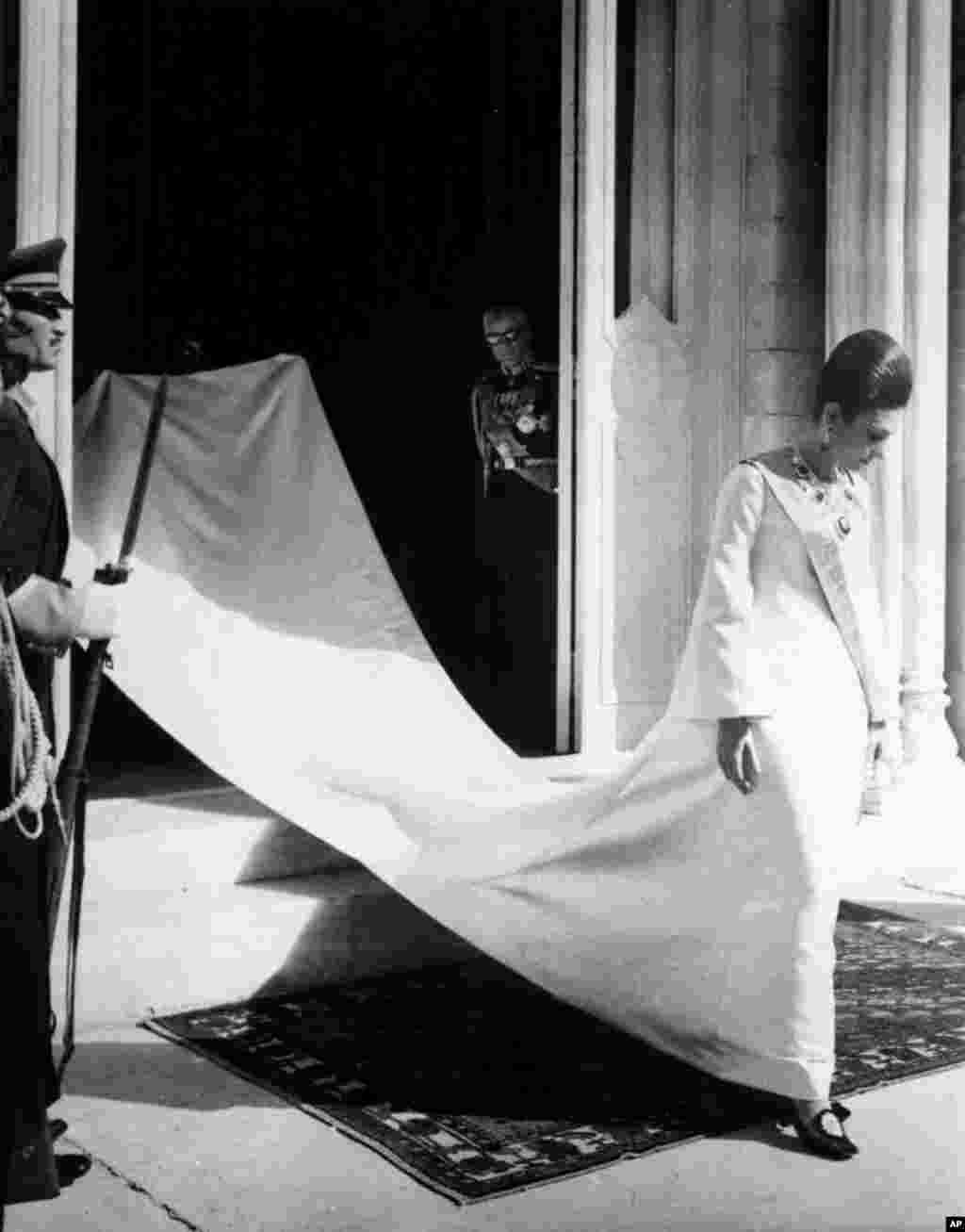
Empress Farah leaves the Marble Palace in Tehran in October 1967 for the coronation procession to the Golestan Palace. Her husband watches from the doorway.
6/18 Empress Farah leaves the Marble Palace in Tehran in October 1967 for the coronation procession to the Golestan Palace. Her husband watches from the doorway.
Farah Pahlavi was the last empress of Iran and the wife of the country's last shah, Mohammad Reza Pahlavi.
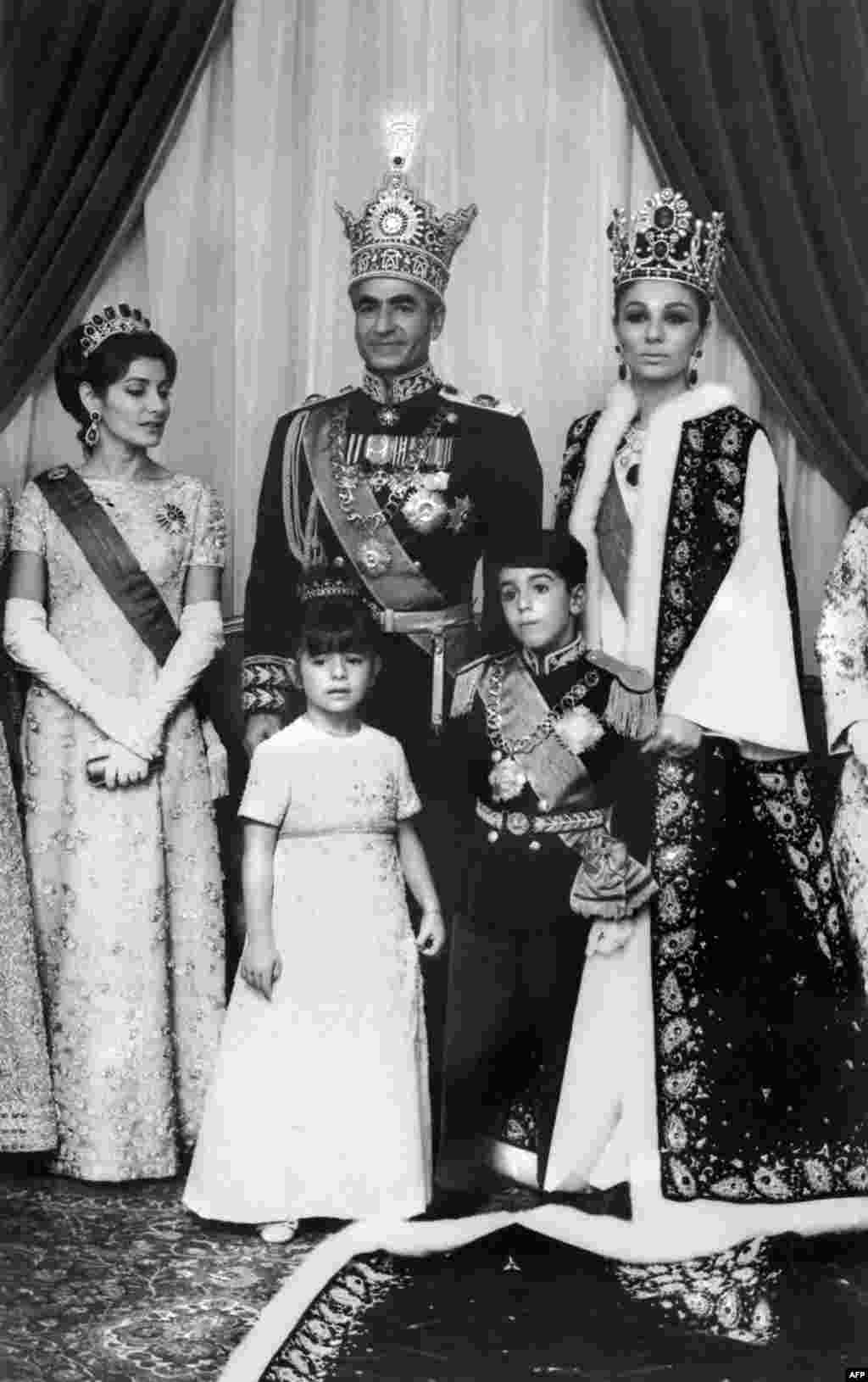
A family portrait taken in October 1967 after the coronation ceremony. Princess Shahnaz Pahlavi (left), Princess Farahnaz Pahlavi (second from left), Shah Mohammad Reza Pahlavi (center), Prince Ali Reza Pahlavi (second from right), and Empress Farah (right).
7/18 A family portrait taken in October 1967 after the coronation ceremony. Princess Shahnaz Pahlavi (left), Princess Farahnaz Pahlavi (second from left), Shah Mohammad Reza Pahlavi (center), Prince Ali Reza Pahlavi (second from right), and Empress Farah (right).
Farah Pahlavi was the last empress of Iran and the wife of the country's last shah, Mohammad Reza Pahlavi.
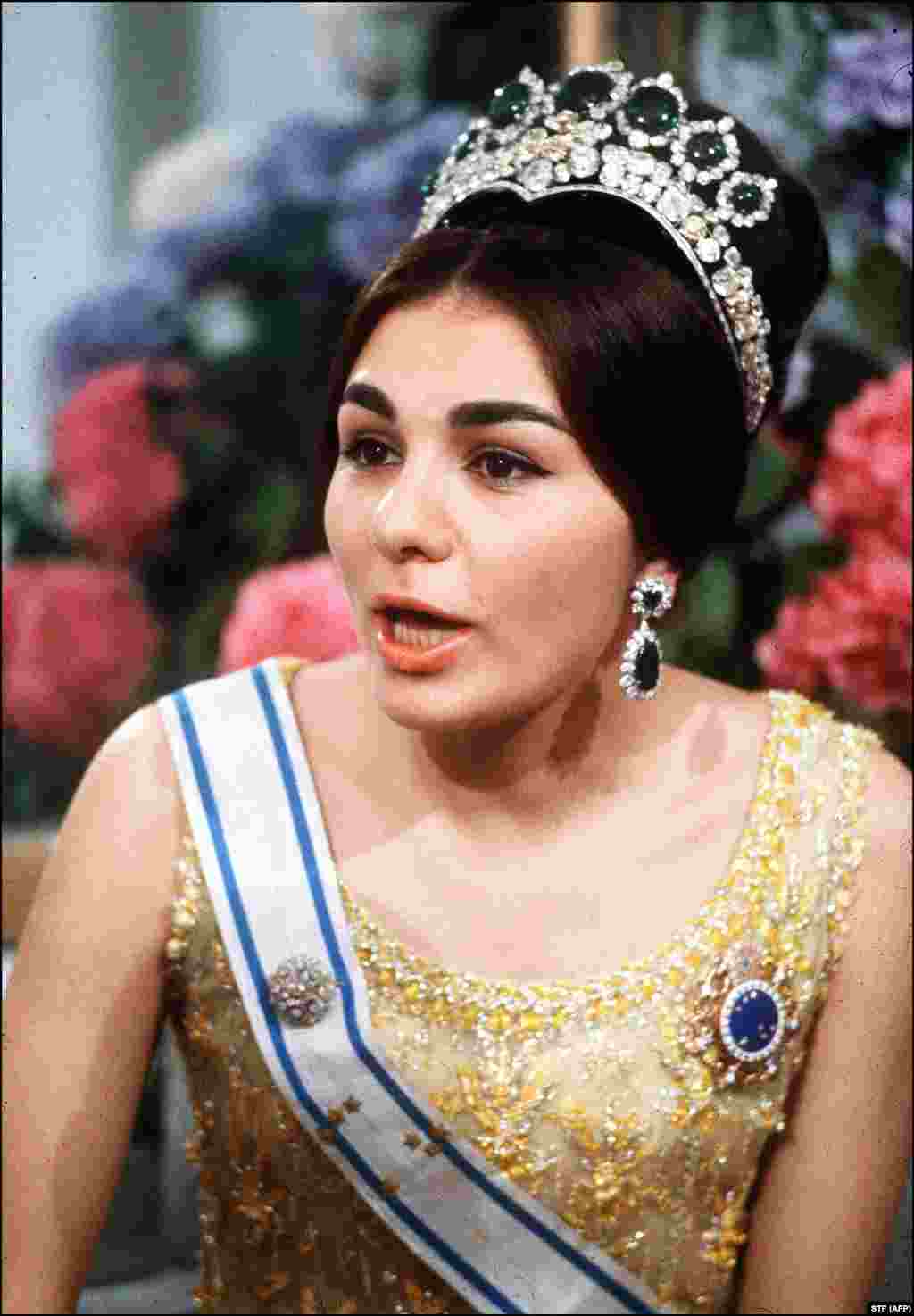
Empress Farah wearing her crown in Tehran in 1970.
8/18 Empress Farah wearing her crown in Tehran in 1970.
Farah Pahlavi was the last empress of Iran and the wife of the country's last shah, Mohammad Reza Pahlavi.
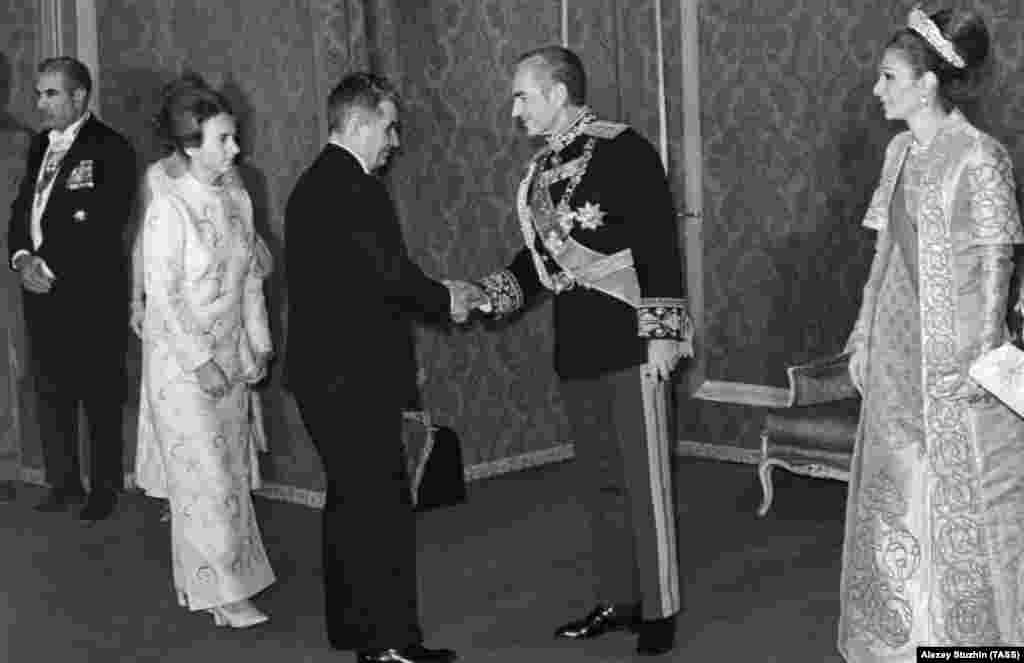
Romanian communist leader Nicolae Ceausescu visits Iran in October 1971. Ceausescu (left) shakes the hand of the shah. Empress Farah is on the right. 
9/18 Romanian communist leader Nicolae Ceausescu visits Iran in October 1971. Ceausescu (left) shakes the hand of the shah. Empress Farah is on the right. 
Farah Pahlavi was the last empress of Iran and the wife of the country's last shah, Mohammad Reza Pahlavi.
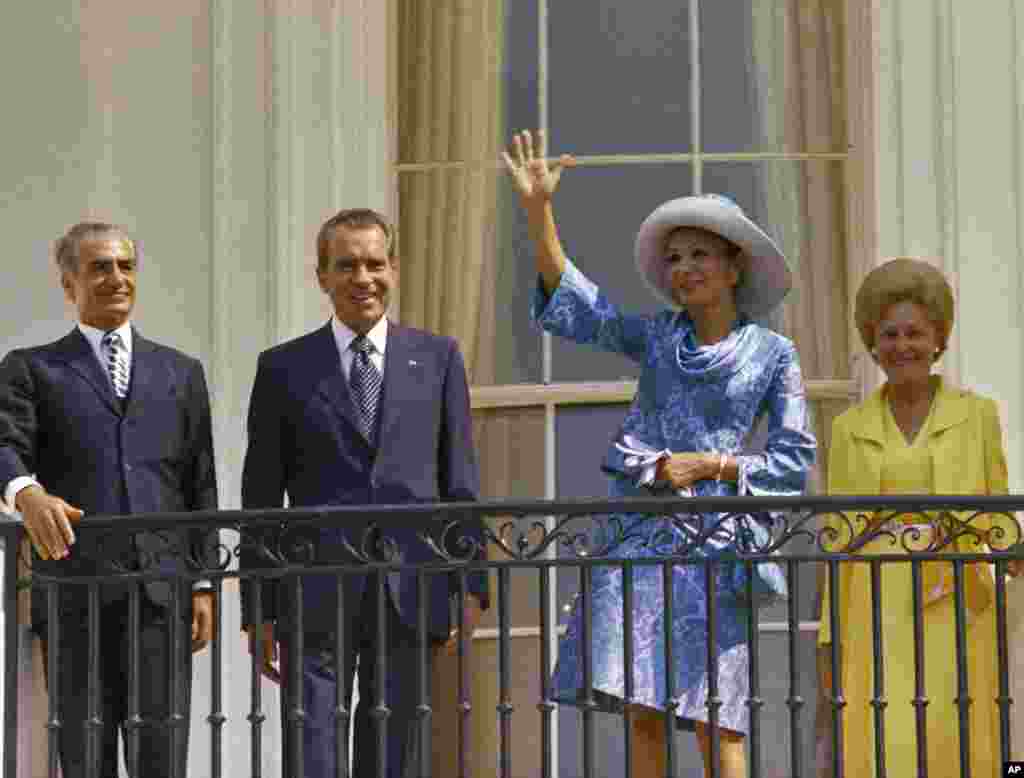
The shah and Empress Farah with President Richard M. Nixon and Mrs. Pat Nixon on a White House balcony in Washington, D.C. in July 1973. 
10/18 The shah and Empress Farah with President Richard M. Nixon and Mrs. Pat Nixon on a White House balcony in Washington, D.C. in July 1973. 
Farah Pahlavi was the last empress of Iran and the wife of the country's last shah, Mohammad Reza Pahlavi.
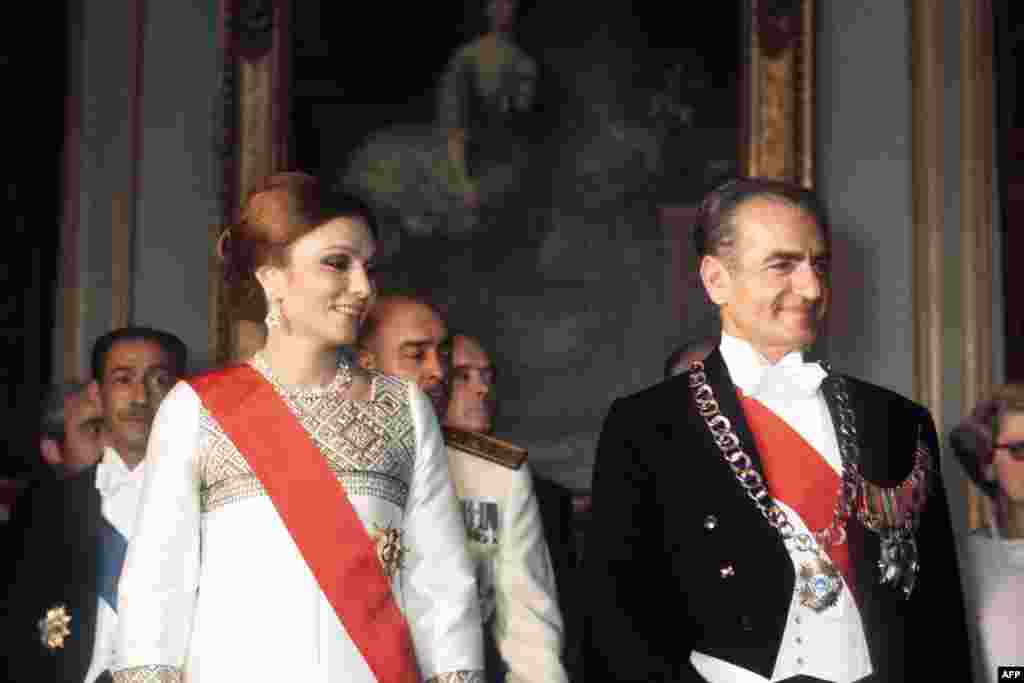
The shah and Empress Farah visit Versailles, near Paris, in June 1974.
11/18 The shah and Empress Farah visit Versailles, near Paris, in June 1974.
Farah Pahlavi was the last empress of Iran and the wife of the country's last shah, Mohammad Reza Pahlavi.
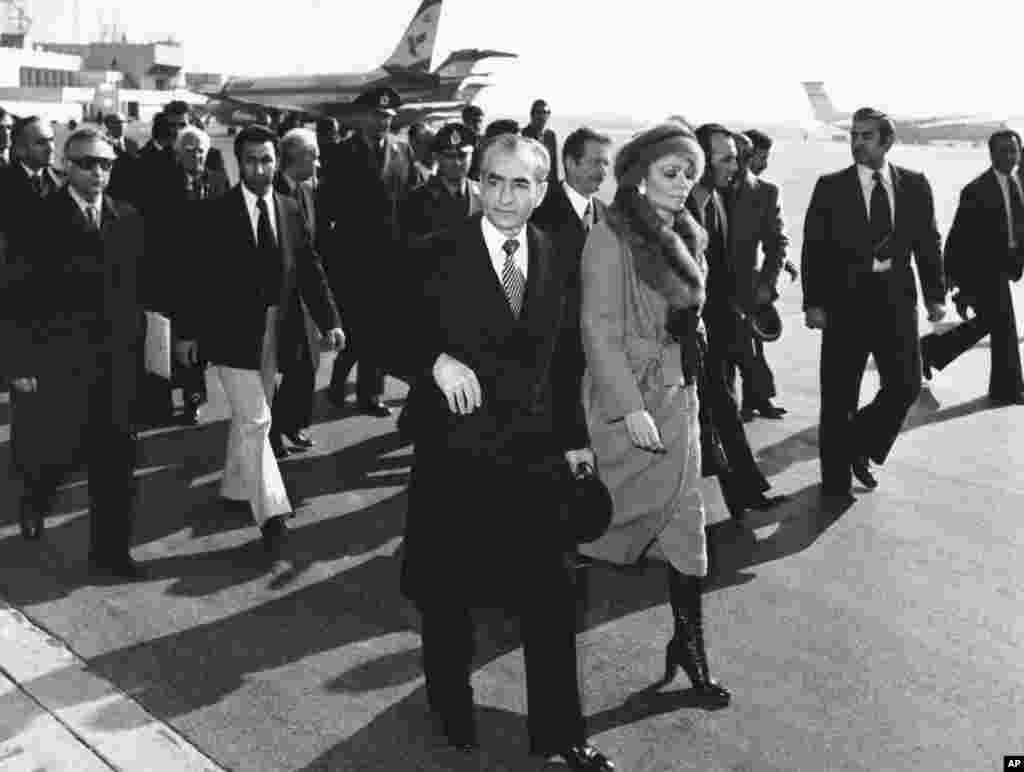
The shah and Empress Farah make their way to board a plane at Mehrabad Airport in Tehran as they flee the country amid the tumult of the Iranian Revolution in January 1979.
12/18 The shah and Empress Farah make their way to board a plane at Mehrabad Airport in Tehran as they flee the country amid the tumult of the Iranian Revolution in January 1979.
Farah Pahlavi was the last empress of Iran and the wife of the country's last shah, Mohammad Reza Pahlavi.
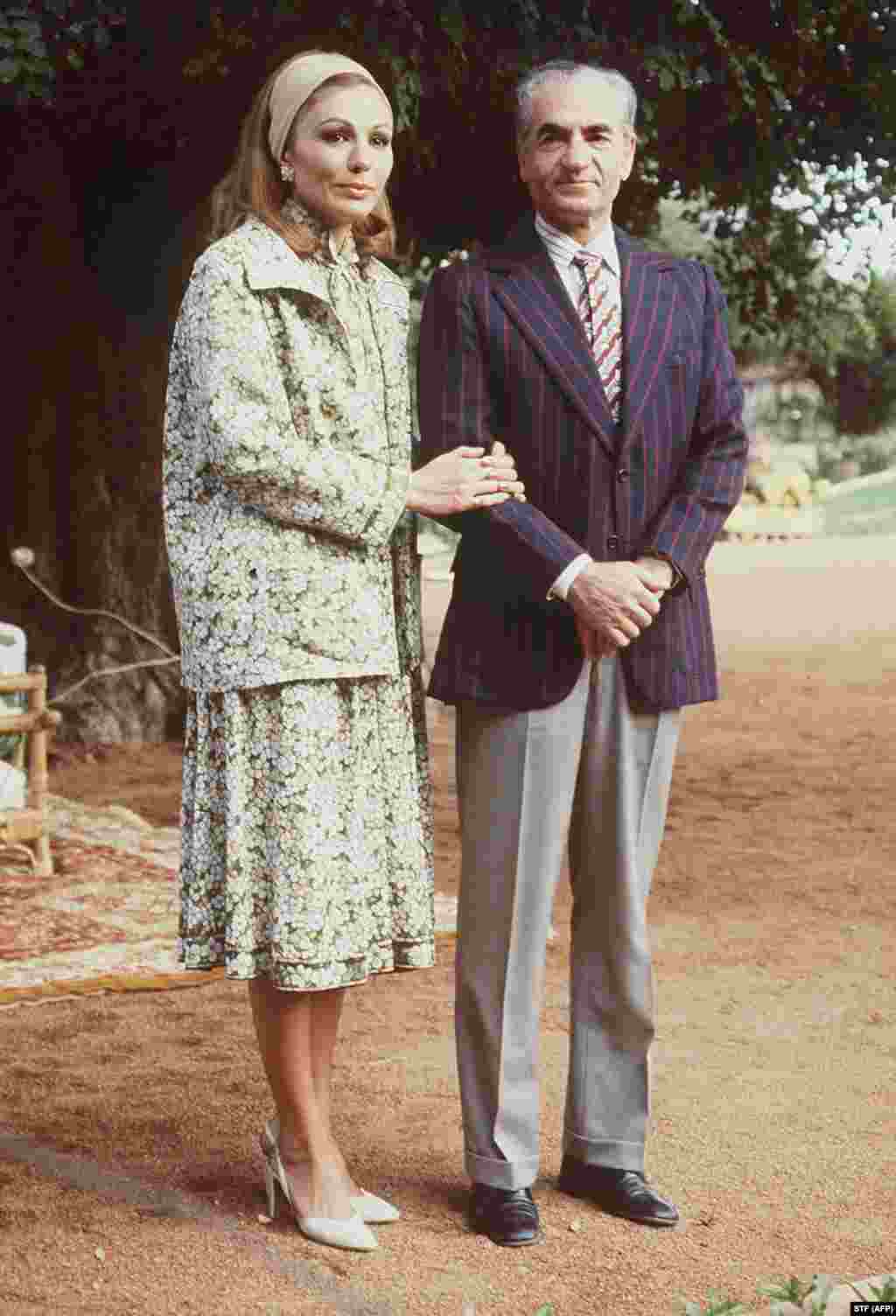
The deposed shah and Farah pose for a photographer in Marrakesh, Morocco, a few days after fleeing Iran in January 1979.
13/18 The deposed shah and Farah pose for a photographer in Marrakesh, Morocco, a few days after fleeing Iran in January 1979.
Farah Pahlavi was the last empress of Iran and the wife of the country's last shah, Mohammad Reza Pahlavi.
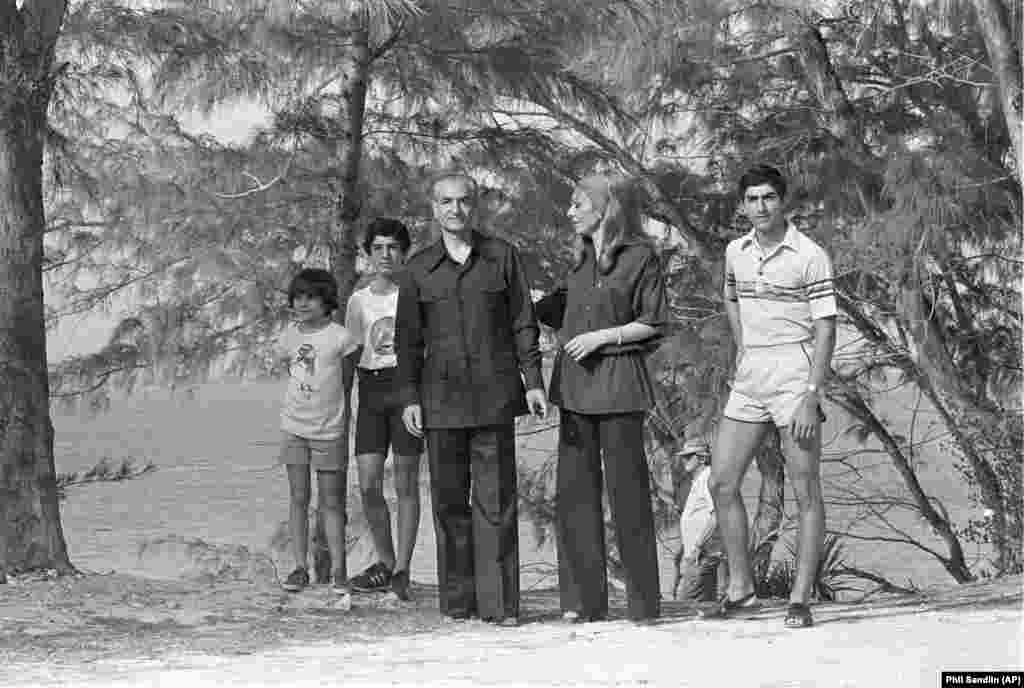
The shah with his children and Farah vacationing in the Bahamas in March 1979. 
14/18 The shah with his children and Farah vacationing in the Bahamas in March 1979. 
Farah Pahlavi was the last empress of Iran and the wife of the country's last shah, Mohammad Reza Pahlavi.
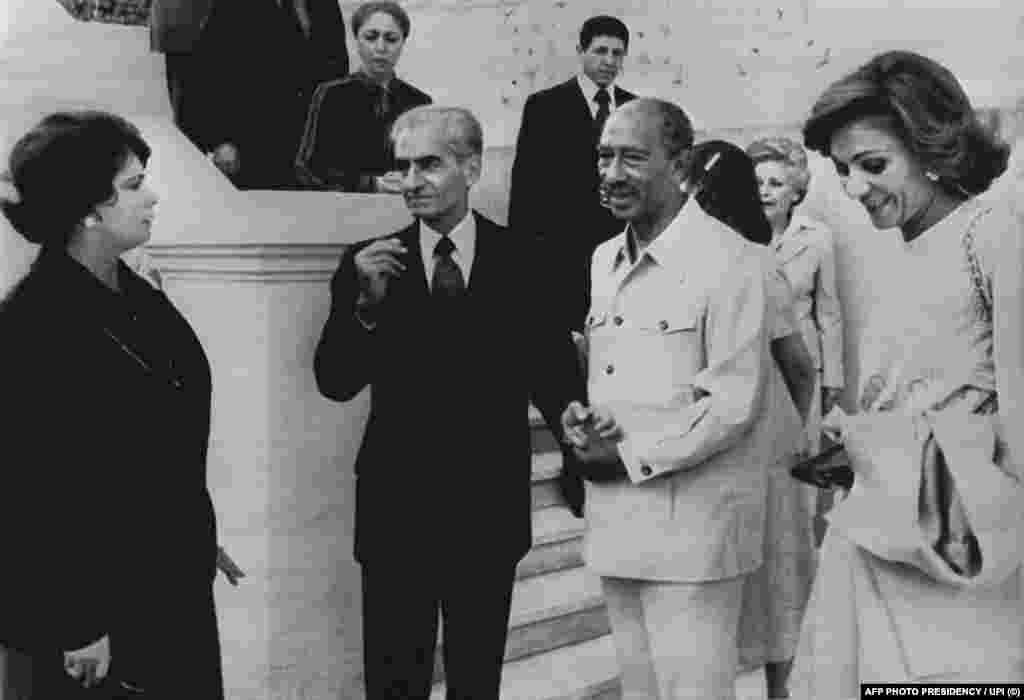
Egyptian President Anwar Sadat (second from right) with the shah (left), Empress Farah (right), and Sadat's wife, Jihan, at a residence north of Cairo in April 1980.
15/18 Egyptian President Anwar Sadat (second from right) with the shah (left), Empress Farah (right), and Sadat's wife, Jihan, at a residence north of Cairo in April 1980.
Farah Pahlavi was the last empress of Iran and the wife of the country's last shah, Mohammad Reza Pahlavi.
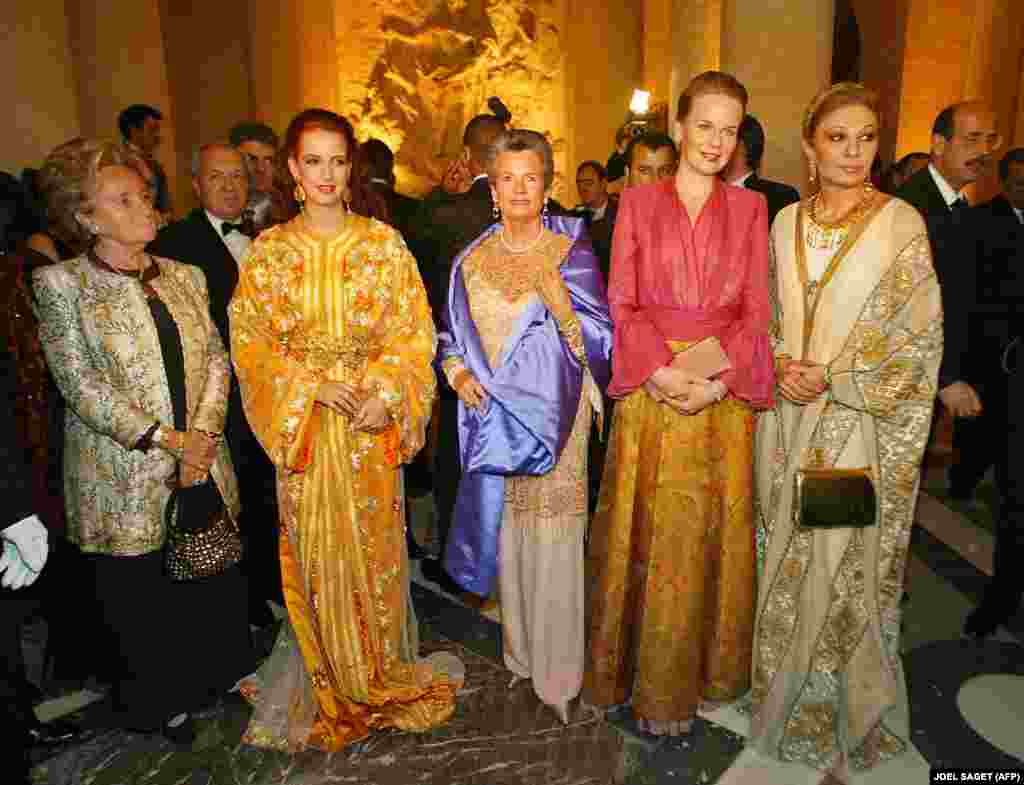
Bernadette Chirac, the wife of French President Jacques Chirac (left), Princess Lalla Salma of Morocco (second from left), Children's Foundation President Anne-Aymone Giscard d'Estaing (center), Princess Mathilde of Belgium (second from right), and former Iranian Empress Farah Pahlavi (right) pose as they arrive at the Palace of Versailles in France to attend a charity gala in December 2003.
16/18 Bernadette Chirac, the wife of French President Jacques Chirac (left), Princess Lalla Salma of Morocco (second from left), Children's Foundation President Anne-Aymone Giscard d'Estaing (center), Princess Mathilde of Belgium (second from right), and former Iranian Empress Farah Pahlavi (right) pose as they arrive at the Palace of Versailles in France to attend a charity gala in December 2003.
Farah Pahlavi was the last empress of Iran and the wife of the country's last shah, Mohammad Reza Pahlavi.
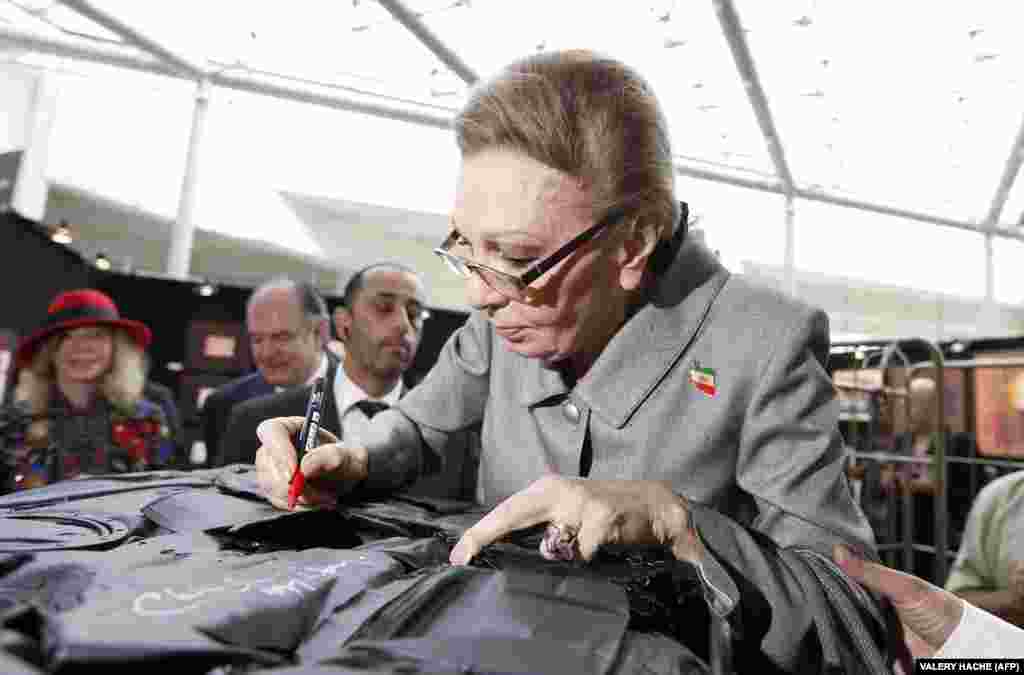
Farah signs an autograph as she visits a contemporary art fair in Monaco in April 2013. 
17/18 Farah signs an autograph as she visits a contemporary art fair in Monaco in April 2013. 
Farah Pahlavi was the last empress of Iran and the wife of the country's last shah, Mohammad Reza Pahlavi.
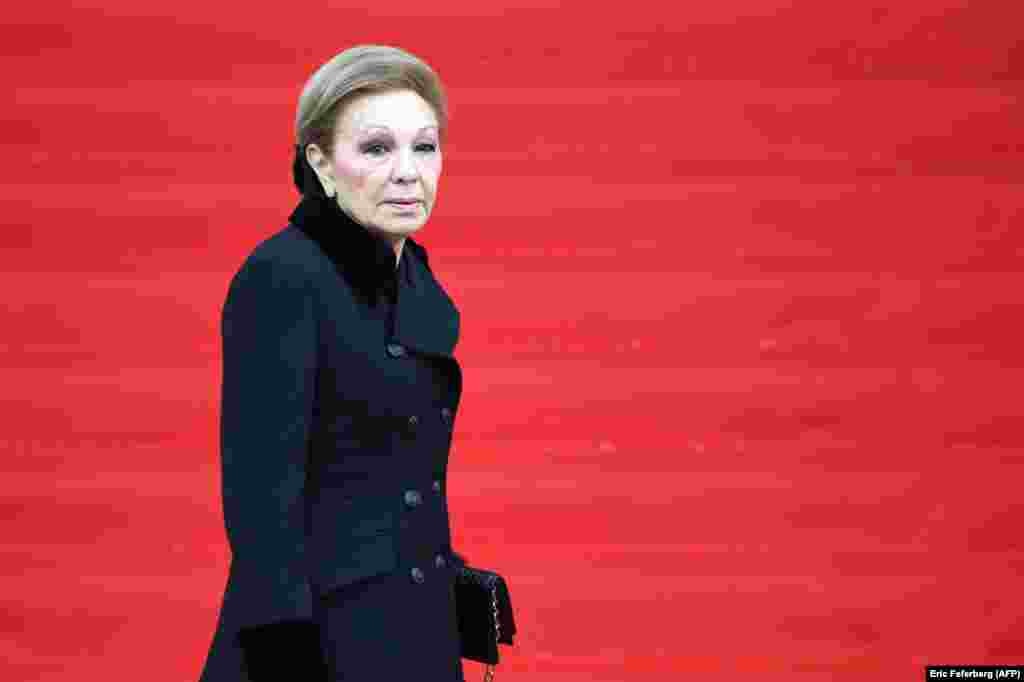
Iran's former Empress Farah arrives to attend a church service for French ex-President Jacques Chirac at the Saint-Sulpice church in Paris shortly after his death in September 2019. 
18/18 Iran's former Empress Farah arrives to attend a church service for French ex-President Jacques Chirac at the Saint-Sulpice church in Paris shortly after his death in September 2019. 
Farah Pahlavi was the last empress of Iran and the wife of the country's last shah, Mohammad Reza Pahlavi.
Previous slide
Next slide

Pahlavi recalls the shah telling her about the responsibilities she would have as his wife, yet she was still surprised by the extent of her duties.

She raised four children -- including Crown Prince Reza, born just 11 months after her wedding -- while devoting much of her time to social causes and cultural affairs, including the promotion of Iranian and Western art, which brought her widespread praise and popularity.

Crowned An Empress

In 1967, she was crowned as the empress of Iran -- Shahbanou -- by the shah, who also crowned himself the King of Kings, or Shahanshah, in a lavish ceremony. She says she stills remember the occasion fondly as a milestone for women.

"I've always said that the day I was crowned [empress of Iran] represented the crowning of every woman in my country," Pahlavi said in a recent interview with RFE/RL’s Radio Farda in which she spoke about her memoirs, first published in French.

Pahlavi supported many charities and institutions, including the Institute for The Intellectual Development of Children and Adolescents, which she helped establish. She traveled throughout her country, visiting remote regions while meeting with locals and those in need, including lepers.

Her visits to orphanages, hospitals and deprived regions often made the front pages of newspapers and magazines.

​A 'Genuine, Human Face'

Historian Robert Steele says Pahlavi became the "genuine, human face" of the monarchy.

"Of course, this was carefully choreographed propaganda, which was quite effective, but Farah took this role of 'mother' of the Iranian people very seriously," said Steele, a visiting research fellow at the London School of Economics. "Farah was, to all intents and purposes, the genuine, human face of the Pahlavi monarchy."

She also mingled with world leaders, celebrities, and renowned artists such as Andy Warhol, who in 1976 traveled to Iran and took a polaroid picture of her for what would be an iconic portrait.

In the 1970s, she helped purchase over 300 masterpieces from contemporary Western artists, including Alberto Giacometti, Henry Moore, René Magritte, Pablo Picasso, Jackson Pollock, Pierre-Auguste Renoir, and Mark Rothko. The impressive collection, estimated at $3 billion, is kept at the Tehran Museum of Contemporary Art inaugurated in 1977.​

Farah Diba with her husband, Shah Mohammed Reza Pahlavi, in Morocco shortly after they had fled Iran in January 1979.

​During those years, Pahlavi was full of hope and energy, devoting herself to a country she cherished and wanted to see progress.

"I did not want to lose sight of Iran's glorious history, so revered by the entire world, but I wanted my compatriots to benefit from modernity, education, health, and industrialization as well," she wrote in the foreword of her republished memoirs.

Steele said Pahlavi stayed away from politics while focusing on her passion for art, literature, music, and architecture.

"One of the reasons that she remained popular, even after the revolution, was because she had been largely detached from the murky world of Iranian politics," Steele said. “Ultimately, however, in spite of their cultural importance, the events Farah organized and the artwork she collected contributed to the underlying discontent with the Pahlavi regime."

"At a time when opposition groups decried the 'Westoxicifation' of the Iranian population, the Pahlavi court's European tastes and love of Western culture marked it for special criticism," he said.

Revolution, Indefinite Exile

Opposition to the shah had been building due to a backlash against his Westernization and secularization efforts, political repression, and a widening gap between the rich and the poor amid excesses by the shah and his entourage. Those excesses included extravagant festivities celebrating 2,500 years of empire.

Pahlavi defends the 1971 celebration, for which food was catered from Paris.

"There was not one little mistake and we were very happy," she said in a recent online conversation about her memoirs organized by Harvard University.​


"We were very much criticized by the Western press because they didn't realize this is a country of such great history, they only [covered] the details of food, the tents, and so on," Pahlavi added.

She has also in the past downplayed human rights abuses under the shah, claiming that the feared secret police, SAVAK, maintained security and stability in the country.

In January 1979, following several months of strikes and violent protests, Pahlavi fled Iran with her husband, spending the rest in her life dealing with loss and exile. Just days after her flight, the Islamic Revolution succeeded with the return of Ayatollah Ruhollah Khomeini, who took power and created an Islamic republic that today faces criticism for repressive policies and serious human rights abuses.

Tragic Losses

Eighteen months after fleeing her homeland, Pahlavi lost her husband, who died from cancer in Egypt. About 20 years later, in 2001, her youngest daughter, 33-year-old Leila, died from an overdose in London. Eleven years later, her youngest son, Alireza, took his own life at the age of 44 after battling with depression for several years.

"I've had a very interesting life, very hard and very beautiful at the same time," she said in her online chat.

Pahlavi, who turned 83 in October, still closely follows events in her country, where nostalgia for the Pahlavi era is widespread even among those who grew up after the 1979 revolution.

She told RFE/RL that her greatest wish is "freedom for Iran," adding that her love and connection to her country has remained strong despite more than four decades in exile.

"I always want to keep hope alive and not allow bitterness in my heart, and I always say that I hope light will overcome darkness," she said.

  • 16x9 Image

    Golnaz Esfandiari

    Golnaz Esfandiari is managing editor of RFE/RL's Radio Farda, which breaks through government censorship to deliver accurate news and provide a platform for informed discussion and debate to audiences in Iran. She has reported from Afghanistan and Haiti and is one of the authors of The Farda Briefing newsletter. Her work has been cited by The New Yorker, The New York Times, The Washington Post, and other major publications. Born and raised in Tehran, she is fluent in Persian, French, English, and Czech.

  • 16x9 Image

    Hossein Ghavimi

    Hossein Ghavimi is a broadcaster with RFE/RL's Radio Farda in Prague. 

This item is part of
XS
SM
MD
LG