


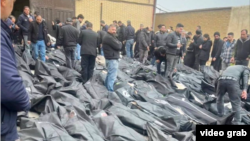
The government of Iran's reformist President Masud Pezeshkian has published the names and national ID numbers of 2,985 individuals killed during recent nationwide protests.
The publication of the government-sanctioned list on February 2 has transformed newsstands into grim memorials, triggering debate over whether the move represents a genuine breakthrough in transparency or a calculated attempt to sanitize a far larger tragedy.
Released by the Pezeshkian administration, the list identifies nearly 3,000 victims. State-aligned newspapers prominently displayed the names on their front pages, portraying the disclosure as evidence of the government's "courageous transparency."
Human rights organizations and activists, however, accuse the Islamic republic of attempting to "hijack the narrative" and significantly downplay the true scale of the casualties.
The president's office has officially placed the death toll at 3,117, attributing the discrepancy between that figure and the published list to 131 unidentified bodies.
However, in an interview with RFE/RL's Radio Farda, Mahmood Amiry-Moghaddam, director of the Oslo-based Iran Human Rights (IHR), said the sheer volume of names itself amounts to an admission of a "vast massacre" the state could no longer conceal.
"They couldn't satisfy public opinion with a lower figure," Amiry-Moghaddam said.
"This is an official admission of a widespread slaughter. Even 3,000 is an immense number, but based on our experience, secrecy remains at a very high level."
Rights groups say such discrepancies are consistent with past patterns. In 2024, IHR verified 503 drug-related executions in Iran, while the government officially acknowledged only 15.
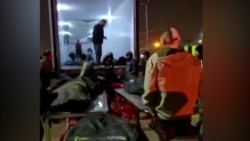

The US-based rights group HRANA conducted a preliminary review of the government's list, describing it as "rushed" and riddled with spelling errors, duplicate entries, and incomplete identity details, as well as a complete absence of contextual information such as the time, location, or cause of death.
Critics argue that by failing to specify whether those killed were protesters, bystanders, or members of the security forces, the authorities have made it nearly impossible for the public to independently verify the data or hold specific officials accountable.
Public outrage has also been fueled by a scandal at the state-run Ofogh TV channel. On February 1, the host of the program Khat-Khatti (Doodle) sparked nationwide backlash after mockingly suggesting that the bodies of protesters were being stored in "supermarket freezers" or "ice-cream makers."
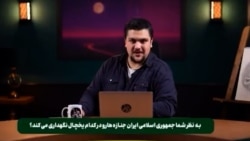

Reformist journalist and former Tehran mayor Gholamhossein Karbaschi said the incident exposed a deeper rot. He criticized the government for ballooning the budget of the state broadcaster (IRIB), which he described as being run by an "illiterate" group who are fundamentally disconnected from the grieving public.
While the government continues to stand by its figure of roughly 3,100 deaths, human rights defenders believe the true number of those killed during the wave of protests -- which began on December 28 -- is likely far higher.
"Our estimate, based on eyewitnesses and precise data, suggests that figures mentioned in the media -- such as 20,000 or 30,000 -- do not seem unrealistic," Amiry-Moghaddam said.
He added that even in IHR's current verification process, roughly half of the confirmed victims do not appear on the government's official list.
Meanwhile, HRANA, whose figures RFE/RL has regularly cited since the violent crackdown began, says its confirmed death toll -- including members of the security forces -- has reached 6,842. An additional 11,280 deaths remain under investigation, while more than 49,000 people have been arrested.

