


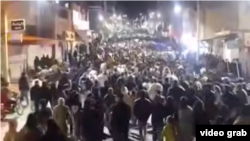
What initially started as protests over economic grievances has snowballed into the biggest threat to Iran's clerical rulers in several years.
Prominent activists inside the country who spoke to RFE/RL's Radio Farda said the nationwide demonstrations suggest many Iranians want the clerical establishment gone.
But they added that change must come from within, not as the result of foreign intervention. The United States has threatened to intervene militarily if the authorities continue their brutal crackdown on demonstrators.
"What we're seeing is a sign that people have reached a shared understanding," said Mehdi Mahmudian, a Tehran-based political activist and human rights defender. "This is no longer just teachers protesting or a single social group. This time, the voiceless have formed an alliance."

According to Mahmudian, protesters are no longer calling for reforms to the clerically dominated political system but are demanding fundamental change.
"What needs to change now is the Islamic republic itself, and it has to change from the ground up," he said.
The ongoing demonstrations are the largest in Iran since the Women, Life, Freedom movement in 2022. The authorities crushed those protests, killing hundreds of protesters.
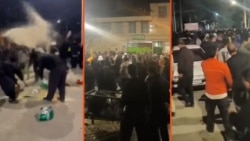
The authorities have also responded to the latest round of protests with brute force, killing dozens of protesters and arresting over 1,000 others. That, activists said, has shown the authorities' unwillingness to listen to and address the legitimate grievances of the population.
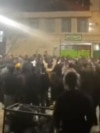

An economic collapse spurred by soaring inflation and a free-falling national currency has been widely cited as the catalyst for the protests.
Religious scholar and rights activist Sedigheh Vasmaghi said worsening living conditions have pushed large segments of society past the breaking point.
"The economic and livelihood situation of the people is more chaotic today than ever before," Vasmaghi told Radio Farda.
She said the authorities find themselves in a far weaker position than during previous waves of unrest, citing the worsening economic crisis in the country that has been fueled by crippling US sanctions as well as government mismanagement and corruption.
Vasmaghi warned the state's widening crackdown could radicalize the situation further.
"If the state persists, this will inevitably turn confrontational," she said. "The people, through force, will overthrow the establishment."
No Military Intervention, But Support Welcome
Despite the increasingly confrontational tone, activists are adamant they do not want foreign military involvement in Iran. Mahmudian drew a clear distinction between international support and intervention.
"Support and interference are not the same," he said. "International institutions can and should offer support within the framework of international law, but any military attack or foreign military intervention is unequivocally condemned."
Vasmaghi echoed that position, stressing that outside military action would undermine the legitimacy of the protests.
"I personally oppose foreign military intervention," she said. "The global community should support peaceful protests, but there must be no intervention."
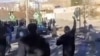
Rights activist Motahareh Gunei pointed to unprecedented inflation in recent months as further evidence that the public wants change.
"People no longer have any expectations of the Islamic republic," she told Radio Farda. "They are saying clearly: We do not want this system."
Gunei described scenes during protests in recent days in which crowds marched directly toward security forces, suggesting the population no longer feels it has anything left to lose.
"We want this message to reach the world," Gunei said. "We do not want this political establishment."

