



US Embassy In Riyadh Hit By Drones
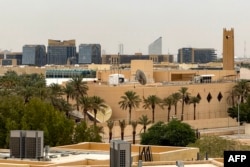
The US Embassy in Riyadh was struck by two drones on March 3, causing a "limited fire" and "minor material damage," Saudi Arabia’s Defense Ministry said, as tensions escalate in the wider Middle East.
The ministry said an initial assessment pointed to a drone attack on the diplomatic compound in the Saudi capital. Later reports said additional drones were targeting the site as Iran continued its retaliatory attacks across the Persian Gulf following US and Israeli strikes which have resulted in rocket and drone fire across the region.
Separately, Saudi forces intercepted several drones inbound toward the kingdom, the ministry added.
The Riyadh embassy building was empty at the time of the attack and no casualties were reported.
Iran's War Strategy: Raise The Cost Of Conflict To Secure An Eventual Cease-Fire
- By Kian Sharifi
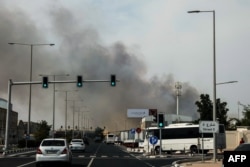
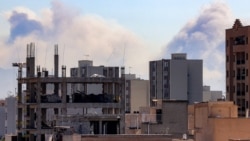
As United States and Israel wage war against Iran, Tehran is widening the theater of the conflict and raising the costs for Washington in a bid to secure an eventual cease-fire, experts say.
Iran has fired hundreds of missiles and drones targeting US military bases as well as key energy and commercial sites in Saudi Arabia, the United Arab Emirates, Kuwait, Bahrain, and Qatar -- all American allies -- since February 28.
"The objective is to increase the costs for the United States -- both directly and indirectly -- in order to convince Washington that it cannot succeed in this war," Hamidreza Azizi, a fellow at the German Institute for International and Security Affairs, told RFE/RL.
"Tehran wants to demonstrate that this is a war the United States cannot win, and that it therefore needs to bring it to an end as soon as possible."
Read more here.
France To Send Defense Systems And Destroyer to Cyprus
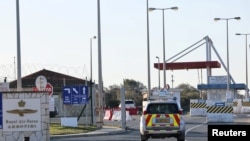
France plans to deploy antimissile and anti-drone systems to Cyprus following a drone attack on a British air base on the island, according to Reuters, citing the semiofficial local news agency CNA.
France will also reportedly send a destroyer in addition to the defense systems.
French President Emmanuel Macron informed Cypriot President Nikos Christodoulides of the decision on March 3, the report said.
A Cypriot government source, speaking on condition of anonymity, also confirmed the report to Reuters.
The development comes after Greece offered assistance to Cyprus and deployed four F-16 fighter jets to the island hours after two attacks on the British RAF Akrotiri base on March 2,
In the first attack on the base, an Iranian-made Shahed drone struck the runway, causing limited damage. Several hours later, two additional drones were intercepted.
Senior Cypriot officials said the drone attack was likely launched by Lebanon’s Iran-backed Hezbollah militia. They stressed that the target was the base -- a sovereign British territory -- not Cyprus itself.
Britain said on March 1 that it had agreed to a US request to use its bases for “defensive” strikes against Iran. Prime Minister Keir Starmer later said UK bases in Cyprus would not be used by US bombers.
Cyprus has asked Britain to ensure the bases are used only for humanitarian purposes.
The International Atomic Energy Agency (IAEA) has verified through recent satellite photos that the entrance structures of Iran’s underground Natanz Fuel Enrichment Plant have been damaged.
US Embassy In Riyadh Hit By Drones
The US Embassy in Riyadh was struck by two drones on March 3, causing a "limited fire" and "minor material damage," Saudi Arabia’s Defense Ministry said, as tensions escalate in the wider Middle East.
The ministry said an initial assessment pointed to a drone attack on the diplomatic compound in the Saudi capital. Later reports said additional drones were targeting the site as Iran continued its retaliatory attacks across the Persian Gulf following US and Israeli strikes which have resulted in rocket and drone fire across the region.
Separately, Saudi forces intercepted several drones inbound toward the kingdom, the ministry added.
The Riyadh embassy building was empty at the time of the attack and no casualties were reported.
Red Crescent Says '787 People' Killed Over Past 4 Days
The Iranian Red Crescent said on March 3 that the death toll from Israeli and US attacks on Iran had reached “787 people.”
The organization, a public body operating under the supervision of the Islamic republic’s government, also said 153 counties across Iran had been affected by the strikes.
The Red Crescent released its casualty figures without providing details or a breakdown.
Officials of the Islamic republic say “165” of those killed were students at a girls’ school in Minab, where funeral ceremonies for some of the victims were held on March 3. Iranian state media have published a list containing “57 names” of those killed at the school.
The United States and Israel say they are not aware of any strike on the school.
Iranian authorities, however, attribute the incident to the two countries and say they will pursue the matter in international legal forums.
Trump Again Slams UK’s Lack Of Participation In Initial Strikes On Iran
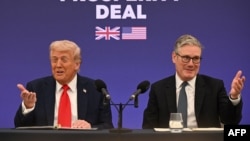
Donald Trump has once again criticized the UK, saying that the relationship between the two countries was "not like it used to be."
Responding to Britain’s failure to take part in the initial Israeli and US strikes against Iran, the American president told The Sun newspaper that America does not need Britain to carry out military operations in the Middle East, but said UK Prime Minister Keir Starmer had "not been helpful." He also praised France and Germany as allies, saying "now we have very strong relationships with other countries in Europe."
Starmer announced on March 1 that he would allow the United States to use British military bases for defensive strikes. However, those bases were not used in the initial attack on Iran.
UK Minister for Intergovernmental Relations Darren Jones said London prefers to act in such situations when aligned with international partners and when there is a clear legal basis for action.
Starmer said on March 2 that Trump had "expressed his opposition to our decision not to participate in the initial strikes, but my duty is to determine what is in Britain’s national interest.”
Also from CENTCOM:
CENTCOM Releases Images of Destruction of IRGC Command Centers And Bases
US military officials said on March 2 that they had destroyed command centers of the Islamic Revolutionary Guards Corps (IRGC), Iran's air defense systems, as well as missile and drone launch sites.
“U.S. forces, in ongoing operations, have destroyed Islamic Revolutionary Guard Corps command and control facilities, Iran’s air defense capabilities, missile and drone launch sites, and military airfields,” the US Central Command wrote in a post on X.
Meanwhile, the IRGC said early on March 3 that it had targeted a US air base in the Sheikh Isa area of Bahrain with a “large-scale drone and missile attack.” The official IRNA news agency, citing the IRGC, reported that 20 drones and three missiles were launched and claimed that the “main command headquarters of the base” was destroyed, though no evidence was provided.
Israel Expands Deployment Deeper Into Southern Lebanon
The Israel Defense Forces (IDF) announced they have deployed troops deeper into southern Lebanon, beyond the five positions previously held, as part of what they described as an “enhanced forward defense posture.”
Soldiers from the 91st “Galilee” Regional Division are positioned at multiple points near the border to strengthen security in northern Israel, the army said.
The IDF said it is conducting targeted strikes against Hezbollah infrastructure to neutralize threats and prevent infiltration into Israeli territory. The expanded deployment follows a series of rocket and drone attacks by Hezbollah on northern Israel that began early on March 2 in retaliation for Israel’s killing of Iranian Supreme Leader Ayatollah Ali Khamenei. The attacks continued overnight into the morning of March 3.
The Israeli military said the measures are intended to provide an additional layer of security for residents in northern Israel while countering threats from Hezbollah.
Rubio Defends Iran Strikes, Warns 'Hardest Hits' Still to Come
- By RFE/RL

US Secretary of State Marco Rubio has defended Washington’s decision to strike Iranian targets, describing the attacks as a preemptive move to protect American forces from what he called an “imminent threat,” and warning that “the hardest hits are yet to come from the US military.”
“There absolutely was an imminent threat,” Rubio told reporters in Washington on March 2. Speaking on Capitol Hill before a closed-door briefing with lawmakers, he described the strikes as both a response to an “imminent threat” and a pre-emptive move.
“We knew that there was going to be an Israeli action. We knew that that would precipitate an attack against American forces,” Rubio said. “If we didn’t preemptively go after them before they launched those attacks, we would suffer higher casualties. This had to happen, no matter what.”
Responding to Rubio's statement, Iranian Foreign Minister Abbas Araqchi said on March 3 that the US Secretary of State's comments showed that the US "entered a war of choice on behalf of Israel."
The United States and Israel launched a large-scale offensive against Iran on February 28, targeting what officials described as missile sites and military infrastructure. The strikes marked one of the most direct confrontations between Washington and Tehran in years and immediately triggered a regional escalation.
Iran responded by firing missiles at US bases in several Persian Gulf states, widening the conflict beyond Israeli-Iranian hostilities and raising fears of a broader regional war. US military officials said American air defenses intercepted many incoming projectiles, though some bases reported damage and casualties.
President Donald Trump signaled that further action could follow. In remarks to US media, Trump warned that a “big wave” of attacks was still ahead, suggesting that the weekend strikes were only the beginning of a sustained campaign aimed at degrading Iran’s military capabilities.