



First Non-Iranian Tanker Crosses Hormuz With Tracking Signal On
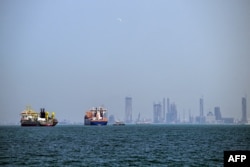
The oil tanker Karachi, sailing under the Pakistani flag and carrying crude loaded in the United Arab Emirates, has become the first non-Iranian vessel to pass through the Strait of Hormuz while broadcasting its AIS tracking signal since shipping through the chokepoint sharply declined.
Data from MarineTraffic, a vessel-tracking platform, shows the 237-meter tanker entered Iran’s exclusive economic zone on March 15 at 11:33 UTC and crossed the strait about three hours later before continuing into the Gulf of Oman.
The successful transit suggests some commercial shipments may be receiving negotiated safe passage through the strategic waterway, which normally carries about a fifth of global oil supplies.
Traffic through the strait has dropped sharply in recent weeks as tankers avoid the route.
Oil prices eased slightly on March 16 amid hopes that limited shipping could resume through the waterway.
Iranian Foreign Minister Abbas Araqchi said in a March 15 interview with CBS that Tehran was unwilling to negotiate with Washington but was open to talks with other countries about safe passage through the Strait of Hormuz, adding that several countries had already been in contact.
Iran has previously signaled it may allow certain vessels through the strait while restricting ships linked to the United States or Israel.
UN Expert Warns Of Widespread Rights Abuses In Iran

A United Nations human rights expert has urged Iranian authorities to end the use of excessive force against civilians, release detainees held for exercising fundamental freedoms, and restore unrestricted Internet access amid escalating military tensions in the region.
Presenting a report to the UN Human Rights Council on March 16, Special Rapporteur Mai Sato detailed widespread abuses during nationwide protests that began on December 28 last year, such as shootings of protesters, arbitrary detentions, forced confessions, and reports that some detainees, including children, face the death penalty.
The report also describes raids on hospitals and the intimidation of victims’ families.
Sato said the situation has worsened following recent US and Israeli strikes on Iran, which have reportedly killed more than 1,000 civilians and displaced hundreds of thousands.
Internet shutdowns and deteriorating prison conditions have further isolated detainees and the wider population, raising concerns about accountability and civilian protection.
First Non-Iranian Tanker Crosses Hormuz With Tracking Signal On
The oil tanker Karachi, sailing under the Pakistani flag and carrying crude loaded in the United Arab Emirates, has become the first non-Iranian vessel to pass through the Strait of Hormuz while broadcasting its AIS tracking signal since shipping through the chokepoint sharply declined.
Data from MarineTraffic, a vessel-tracking platform, shows the 237-meter tanker entered Iran’s exclusive economic zone on March 15 at 11:33 UTC and crossed the strait about three hours later before continuing into the Gulf of Oman.
The successful transit suggests some commercial shipments may be receiving negotiated safe passage through the strategic waterway, which normally carries about a fifth of global oil supplies.
Traffic through the strait has dropped sharply in recent weeks as tankers avoid the route.
Oil prices eased slightly on March 16 amid hopes that limited shipping could resume through the waterway.
Iranian Foreign Minister Abbas Araqchi said in a March 15 interview with CBS that Tehran was unwilling to negotiate with Washington but was open to talks with other countries about safe passage through the Strait of Hormuz, adding that several countries had already been in contact.
Iran has previously signaled it may allow certain vessels through the strait while restricting ships linked to the United States or Israel.
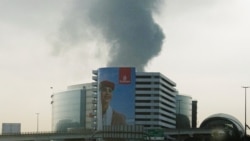
Flames and smoke shut down Dubai International Airport in the United Emirates on March 16 after an Iranian drone strike hit a nearby fuel tank. One of the world's busiest airports, Dubai has been repeatedly hit since Iran launched strikes on Gulf nations after it was attacked in February. No injuries were reported and Dubai Airports said flights were gradually resuming. Video by RFE/RL's Radio Farda and Will Tizard.



Israel Confirms Ground Operations in Southern Lebanon
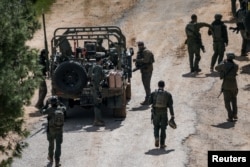
Israel’s military said it has begun “limited and targeted ground operations” in southern Lebanon, aimed at Hezbollah fighters and infrastructure near the border.
The Israel Defense Forces said the moves are "part of broader defensive measures to protect residents in northern Israel" and they follow artillery and air strikes intended to reduce threats before troops advanced.
The move means that the Israeli army is now active in areas where it had not previously operated, though officials said it remains unclear whether troops will hold the new positions.
The fighting comes after a cease-fire between Israel and Hezbollah collapsed following the February 28 US-Israeli attack on Iran.
Lebanese authorities say hundreds of civilians have been killed in Israeli strikes and nearly one million displaced as concerns grow that Israel could expand the offensive and occupy territory in southern Lebanon.
Based on reporting by dpa
'We Hope For A Better Future': Iranian Directors Speak At Oscars
Iranian directors Mohammadreza Eyni and Sara Khaki, whose film Cutting Through Rocks was in the running for a Best Documentary Oscar, spoke to the media at the Academy Awards ceremony on March 15.
"We really wanted to celebrate this moment with our people, but we don't have Internet access to talk with them," said Eyni. "We don't know how they get their news. And also this is not the priority anymore, because as Iranians we have so many other priorities right now, and we hope for a better future and peace for our country."
Cutting Through Rocks, which follows the first Iranian woman elected as a councilwoman in a rural village, ultimately didn't get the Best Documentary award, losing out to Mr. Nobody Against Putin, a movie about a young Russian schoolteacher waging quiet resistance against the Kremlin’s war on Ukraine.
Israel Claims It Destroyed Khamenei’s Aircraft At Tehran Airport
Israel says it destroyed an aircraft belonging to Ayatollah Ali Khamenei, the late supreme leader of the Islamic Republic, describing it as a “strategic asset,” at Mehrabad Airport in Tehran.
RFE/RL's Radio Farda says it cannot verify the claim, particularly under wartime conditions and Internet disruptions.
In a report published in Persian on the social media platform X, the Israeli military said the aircraft was used by Khamenei and other senior officials of the regime, as well as members of Iran’s armed forces, to facilitate military procurement, and manage communications through domestic and international flights with countries in the so-called “axis of resistance,” a loose network of partners and proxies of Iran in the Middle East region.
The Israeli military also claimed that destroying the aircraft would damage the Islamic republic leadership’s ability to coordinate with allied countries, strengthen its military capabilities, and rebuild its forces.
EU Set To Approve New Sanctions On Iran Over Rights Abuses
- By RFE/RL
European Union foreign ministers are set to rubber stamp a new round of sanctions against Iran during their meeting in Brussels today.
The asset freezes and visa bans are targeting 16 people and three entities who the bloc believes are responsible for human rights abuses during a crackdown on demonstrators in Iran earlier this year.
Among those targeted are Qolam Ali Mohammadi who oversees all Iranian prisons, and Mohammad Moazami Goudarzi, chief of the country's so-called preventive police, a branch of the national police responsible for public order and crime prevention.
The sanctions also include the head of Greater Tehran’s cyber police, Davud Moazami Goudarzi who according to documents seen by RFE/RL “frequently targets dissidents and regime opponents, but also important cultural figures who do not conform to strict social and gender roles, such as female artists.”
Among the entities designated for sanctions by Brussels is Iranian cyberoperations group Emennet Pasargad, which stands accused of compromising the subscriber database of the French satirical magazine Charlie Hebdo and advertising it for sale on the dark web. It is also accused of targeting advertising billboards during the Paris Olympic Games in 2024.
The Naji Research and Development Company (NRDC) --which developed the Nazer mobile application that is used as a surveillance tool to monitor Iranian citizens for the country’s law enforcement forces -- is also set to be sanctioned.
EU Eyes Naval Mission To Help Secure Strait of Hormuz

EU foreign ministers will discuss extending the bloc’s Red Sea naval mission to help secure the Strait of Hormuz, EU foreign policy chief Kaja Kallas said, as the Iran war has largely halted shipping through the crucial waterway.
"It is in our interest to keep the Strait of Hormuz open, and that's why we are also discussing what we can do in this regard," Kallas told journalists in Brussels ahead of the talks on March 16.
About 20 percent of the world’s crude oil normally passes through the strait, and disruptions have pushed energy prices higher.
One option that will be discussed is to expand the mandate of Operation Aspides, an EU naval mission launched in 2024 to protect vessels from attacks by Iran-backed Houthi rebels in Yemen.
Kallas said adapting the existing mission would be the fastest way to bolster maritime security, though member states must agree.
Alternatives include forming a “coalition of the willing,” with France already signaling support for a "defensive" mission to reopen the strait.
Based on reporting by AFP
Oil-Loading Operations Suspended Again At Crucial UAE Port
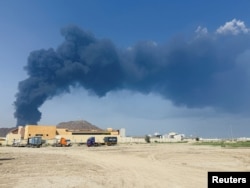
Oil-loading operations have been suspended at the United Arab Emirates port of Fujairah after a drone attack sparked a fire in the emirate's petroleum industrial zone, according to Reuters
Fujairah, located on the Gulf of Oman just outside the Strait of Hormuz, is typically a critical exit point for about 1 million barrels of crude oil per day, which amounts to roughly 1 percent of global demand.
Civil defense teams are now working to bring the fire under control, Fujairah authorities said, adding that no casualties have been reported.
The suspension marks the second major disruption at the vital ship-refueling hub in recent days. Operations at Fujairah had only just resumed on March 15 after a separate drone strike over the weekend.
Based on reporting by Reuters
Reuters has now shared some user-generated footage of the fire at Dubai's international airport this morning.