



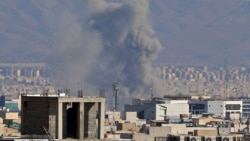
Drone Hits Iranian Kurdish Opposition Base in Iraq
A drone struck an arms depot at the headquarters of an Iranian Kurdish opposition group in the town of Dekala in Iraq’s Kurdistan region on March 4, wounding two fighters, security sources told Reuters.
Iran has long accused the autonomous Kurdish region of harboring militant groups involved in attacks on the Islamic republic and has repeatedly targeted their bases.
As the US-Israeli strikes pound targets in Iran, Iranian Kurdish armed groups based in Iraqi Kurdistan have held discussions with US officials in recent days about the possibility of attacking Iranian security forces in western Iran, according to reports.
Starmer Urges 'Cool Head' As Middle East Conflict Fuels Escalation Fears
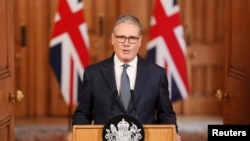
UK Prime Minister Keir Starmer says Britain needs to keep a "cool head" to tamp down public concerns about escalation as the conflict in the Middle East rages.
Starmer was grilled by lawmakers during Parliament's question period on March 4, enduring heaving opposition criticism a day after US President Donald Trump questioned his leadership over Britain's limited support for US-Israeli strikes on Iran.
"I know the whole country is worried about the potential for escalation," Starmer said. "We need to act, therefore, with clarity, with purpose and with a cool head."
Saudi Oil Complex Is Hit Again
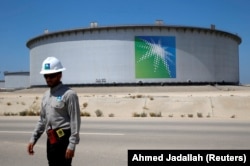
Saudi Aramco's Ras Tanura complex, home to the kingdom’s largest domestic refinery and a major crude export terminal, has been struck again by an unidentified projectile, four sources told Reuters.
The incident on March 4 came two days after a reported drone attack shut the refinery.
Saudi Arabia’s Defense Ministry said initial indications suggested the latest strike was carried out by a drone but caused no damage. An Saudi Energy Ministry source said supplies were not disrupted.
Persian Gulf producers, including Saudi Arabia, the United Arab Emirates, Kuwait and Iraq have been unable to ship oil through the Strait of Hormuz since US and Israeli attacks on Iran began on February 28.
Hundreds of vessels have anchored near the strait as Iran threatens to fire on ships attempting to transit it.
US Says It Sank Iranian Destroyer Sank Near Sri Lanka
The Iranian Navy destroyer Dena sank near the Sri Lanka in the Indian Ocean on March 4 after an explosion following an attack by a submarine.
US defense chief Pete Hegseth confirmed the hit to reporters in Washington.
"An American submarine sunk an Iranian warship that thought it was safe in international waters," he said. "Instead, it was sunk by a torpedo."
Sri Lanka's military rescued at least 30 crew members from the warship as it was sinking, according to Reuters, which cited Sri Lanka's foreign minister.
According to Sri Lankan officials, the rescue operation began after the destroyer sent a distress signal early March 4. Sri Lanka’s navy launched the mission after receiving the call.
Sri Lankan Foreign Minister Vijitha Herath did not provide further details about the incident, but said the government would take “appropriate measures.”
Local Sri Lankan media reported that the ship ran into trouble near the coastal town of Galle in the south of the country, and that several injured crew members were taken to a hospital in the port city.
Sri Lankan authorities said the Dena had about 180 crew members, and search operations were continuing for others who may have been on board. Sources in Sri Lanka's navy and Defense Ministry said at least 101 people were missing after the incident.
On March 2, U.S. President Donald Trump said the American military had sunk nine Iranian naval vessels in its attacks, adding that “some of them were relatively large and important.” He also said that after destroying Iran’s naval headquarters, US forces would target other Iranian military vessels.
Iran’s government has not yet reacted to the report, though some state news agencies have republished the story citing AFP.
Tehran's Landmark Azadi Tower Seen Surrounded By Smoke And Flames
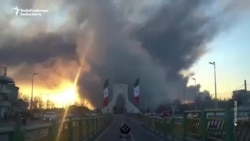
Chaos and destruction was seen around Tehran's landmark Azadi Tower on March 3, as local residents scramble to help the injured and navigate through thick smoke.
Widespread damage and hundreds of deaths have been reported in the wake of joint US-Israeli strikes on Iran that began on February 28.
Read more on the significance of Iran's Azadi tower here.

Spanish PM Says Country’s Position Is 'No to War'

Spain’s prime minister has said his government opposes the US and Israeli attacks on Iran, describing Madrid’s position as “no to war” and warning against further escalation in the conflict.
Pedro Sanchez made the remarks in a televised address on March 4 amid a dispute with Washington after US President Donald Trump criticized Spain for refusing to support the military operation against Iran.
Earlier, the Spanish government had described the US and Israeli bombing of Iran as reckless and illegal and subsequently banned US aircraft from using naval and air bases in southern Spain for the operation.
Trump said on March 3 that he had instructed the US Treasury secretary to suspend all trade with Spain over Madrid’s stance.
In his remarks, Sánchez said the world cannot solve its problems through “conflicts and bombs,” stressing that his government’s stance could be summed up in three words: “No to war.”
He also warned against such conflicts, saying that 'this is how humanity's great disasters start."
"You cannot play Russian roulette with the destiny of millions," he said.
Referring to the consequences of the Iraq war -- including the rise of Islamist terrorism and a surge in energy prices -- Sanchez said the consequences of attacking Iran are also uncertain and unlikely to lead to a more just global order.
Trump also said on March 3 that he was dissatisfied with Britain. The United Kingdom had initially refused to allow the United States to use its bases -- including Diego Garcia in the Indian Ocean -- for the initial strikes on Iran.
However, UK Minister Keir Starmer slightly softened his position on March 1 and allowed limited use of his country’s bases.
New Wave Of Israeli Attacks Targets Sites In Tehran
The Israeli army said on March 4 that it had launched a new wave of attacks on Tehran.
At the same time, several news channels inside Iran reported a series of explosions in parts of the capital, including eastern and northeastern Tehran.
Iran’s state media have not reported on the attacks.
Meanwhile, Internet disruptions have limited the availability of real-time information about the locations that may have been targeted.
Air Raid Sirens Sound in Israel
Missile attack warning sirens have sounded across several parts of Israel.
Footage circulating from the skies over Jerusalem shows missiles being intercepted.
Israel’s emergency services say there have been no reports of missile impacts or possible casualties thus far.
Strikes On Iran Push Up Prices in Neighboring Afghanistan
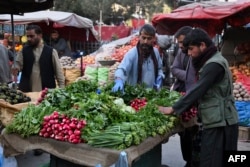
The US-Israeli strikes on Iran have led to price hikes in neighboring Taliban-run Afghanistan, residents and traders say.
In the western Afghan province of Herat, which borders Iran, shoppers report sharp increases in the cost of food staples and fuel. Herat resident Ms. Ahmadi, who asked that her full name not be used for security reasons, told RFE/RL’s Radio Azadi that the economic repercussions of the strikes were quickly evident.
“This situation in Iran has had a very bad impact on Afghanistan as well," she said. "The price of liquid gas, tomatoes, and other household necessities has gone up a lot.”
Similar concerns are reflected in the capital, Kabul.
Ahmad Faizi, a bookseller, said rising prices have made daily purchases difficult for his family.
“A jar of jam used to be 80 afghanis ($1.30); now it is 150. Gas was 60 afghanis per kilo, and now it is 75,” he said. “I’m worried people may be left hungry.”
Afghanistan’s markets rely heavily on imports from Iran, Pakistan, and Central Asia. Taliban authorities have said trade with Iran exceeded $1.6 billion so far this year.
Shopkeeper Khyal Mohammad said that sugar, tea, cooking oil, and eggs have all seen price increases in recent days.
Iranian media reports that Tehran has temporarily banned the export of food and agricultural products.
Azarakhsh Hafezi of the Afghanistan Chamber of Commerce and Investment warned that prolonged disruptions could lead not only to inflation but also to potential shortages.
“The issue is not only rising prices, but my concern is that famine may occur,” he said.
Reports: Iranian Kurdish Militias Discuss Attacks On Iran With US Officials
Iranian Kurdish armed groups based in Iraq’s Kurdistan Region have held discussions with US officials in recent days about the possibility of attacking Iranian security forces in western Iran, according to reports by Reuters and CNN citing informed sources.
A coalition of Kurdish groups along the Iran–Iraq border is reportedly training for potential operations aimed at weakening Iran’s military while US and Israeli forces strike Iranian targets.
Two sources said the objective would be to create conditions for a broader uprising against the government.
The groups have reportedly sought US military backing and discussed possible weapons supplies through the CIA.
However, no final decision on an operation has been made. Some assessments suggest Iranian Kurdish factions may currently lack the resources and unity needed to overthrow the government.