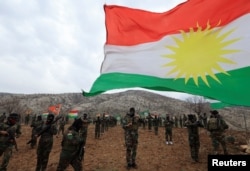




Seventh US Service Member Dies In The War, US Military Says
Israeli Opposition Leader Tells RFE/RL Iran's Oil 'Lifeline' Must Be Cut
- By Ray Furlong
TEL AVIV -- Yair Lapid, the leader of the opposition in Israel, says air strikes on Iranian oil fields --which have showered Tehran in black rain -- were needed to cut the "lifeline of the regime" in Iran.
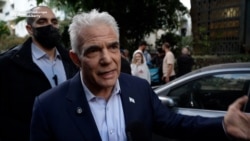

Speaking to RFE/RL at a downtown location hit on March 8 by falling debris from an intercepted Iranian missile, Lapid also indicated that Israel reserves the right to strike any new supreme leader who takes power following the death last weekend of Ayatollah Ali Khamenei.
"It depends who is the leader," he said. "This is our way of protecting ourselves from death and destruction. Because, you know, this is what this regime is."
To read the full report, click here.
2 Killed, 12 Injured By 'Projectile' In Saudi Arabia
Two people were killed and 12 others injured in Saudi Arabia's Al-Kharj city after an unspecified "military projectile" hit a residential area, according to a statement by the Saudi Civil Defense published on March 8.
While the statement didn't specify the origin of the projectile, Al‑Kharj hosts a massive air base and has been targeted repeatedly by Iran over the past week as Tehran launched waves of retaliatory attacks on countries in the Gulf after the initial US–Israeli strikes on the country.
A day earlier, Iranian President Masud Pezeshkian said he wanted to "personally apologize to neighboring countries" hit by Tehran's missiles and drones. Shortly after, his statement was defiantly criticized by powerful national-security chief Ali Larijani and other Iranian officials.
Several of other Gulf states, including the United Arab Emirates, Qatar, Kuwait, and Bahrain, reported new attacks or interceptions of Iranian drones and missiles on March 7 and 8.
Israel Killed Iran's Senior Military Commander, Military Says
The Israel Defense Forces (IDF) said it eliminated a senior commander of the Islamic Revolutionary Guard Corps, Abolqassem Babaeian, in its March 7 strike on Tehran.
In a statement published on March 8, the IDF said Babaeian was newly appointed to head Iran's Supreme Leader's military office, after his predecessor was killed following Tel Aviv's initial air strikes.
The statement added that Babaeian was "responsible for coordinating between the Iranian terror regime's various force employment organizations to execute operations against the State of Israel and emergency operations. "
The report of his death follows a series of other senior figures in the Iranian leadership who were killed by US–Israeli air strikes during their war against Tehran, now in its ninth day.
Trump: New Iranian Leader 'Not Going To Last Long' Without US Approval
President Donald Trump said the new Iranian leader "is not going to last long" without US approval, as Tehran was expected to announce a successor to the late Supreme Leader Ayatollah Ali Khamenei.
"He's going to have to get approval from us," Trump told the American TV network ABC. "If he doesn't get approval from us he's not going to last long."
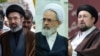
In his earlier comments, Trump indicated that the United States was not interested in further negotiations with Iran after several rounds of talks that did not reach a breakthrough.
"At some point, I don't think there will be anybody left maybe to say, 'We surrender,'" Trump said speaking to reporters aboard Air Force One on March 7, as he warned that more Iranian officials could become targets in the war.
To read the full report, click here.
Iran Rejects Cease-Fire, Calls For 'Permanent End' To War
Iran's Foreign Minister Abbas Araqchi on March 8 rejected the possibility of a cease-fire in the war with the United States and Israel, saying there must be a "permanent end" to the war.
In an interview with the American TV network NBC, Araqchi claimed that the United States and Israel are "requesting a cease-fire," referring to the 12-day war in June 2025 and the current war, which is now in its ninth day.
"This is not going to happen," he added. "There needs to be a permanent end to the war, and until we get to that point, I think we need to continue fighting for the safety of our people."
This claim comes as US President Donald Trump announced on March 6 that no other agreement will be reached with Iran other than "unconditional surrender."
As Iranian President Masud Pezeshkian had earlier rejected Trump's demand, Araqchi reiterated Tehran's stance, saying: “We will never surrender. We will resist as long as necessary.”
Zelenskyy Says Ukrainian Drone Experts Heading To Middle East
President Volodymyr Zelenskyy says Ukraine's drone experts will arrive in the Middle East as early as "next week," as Kyiv seeks enhanced air defense cooperation with the United States.
"We can see how many different air defense systems there were in the Middle East, including Patriots, but this is not enough in modern attacks and modern technologies. Ukraine has expertise and experience," Zelensky told a press conference in Kyiv on March 7.
"Next week, when the experts are on site, they will look at the situation and help," he said when asked how his country would be able to help the United States and the Gulf states to repel Iranian drone attacks.

Tehran has long been an ally of Russia, supplying it with military equipment and technology -- including for drone development -- and fueling Moscow's war effort against Ukraine.
In response, Ukraine developed cost-effective interceptor drones, which it says offer an efficient way to repel large-scale drone attacks that would otherwise require far more expensive air defense systems.
According to the Financial Times, the United States and an unnamed country from the Gulf region were interested in purchasing Ukrainian drones, while Kyiv reportedly offered an exchange of it for more air defense systems.
Khamenei's Successor To Be Announced
Iran's Islamic republic leaders have held a vote regarding who will replace the late Ayatollah Ali Khamenei as supreme leader and were due to announce the successor, said an official.
Ayatollah Alam al-Hoda, a senior cleric in Iran's Assembly of Experts, was quoted on March 8 by the semiofficial Mehr news agency as saying, "The elections for the leadership have been held and the leader has been appointed."
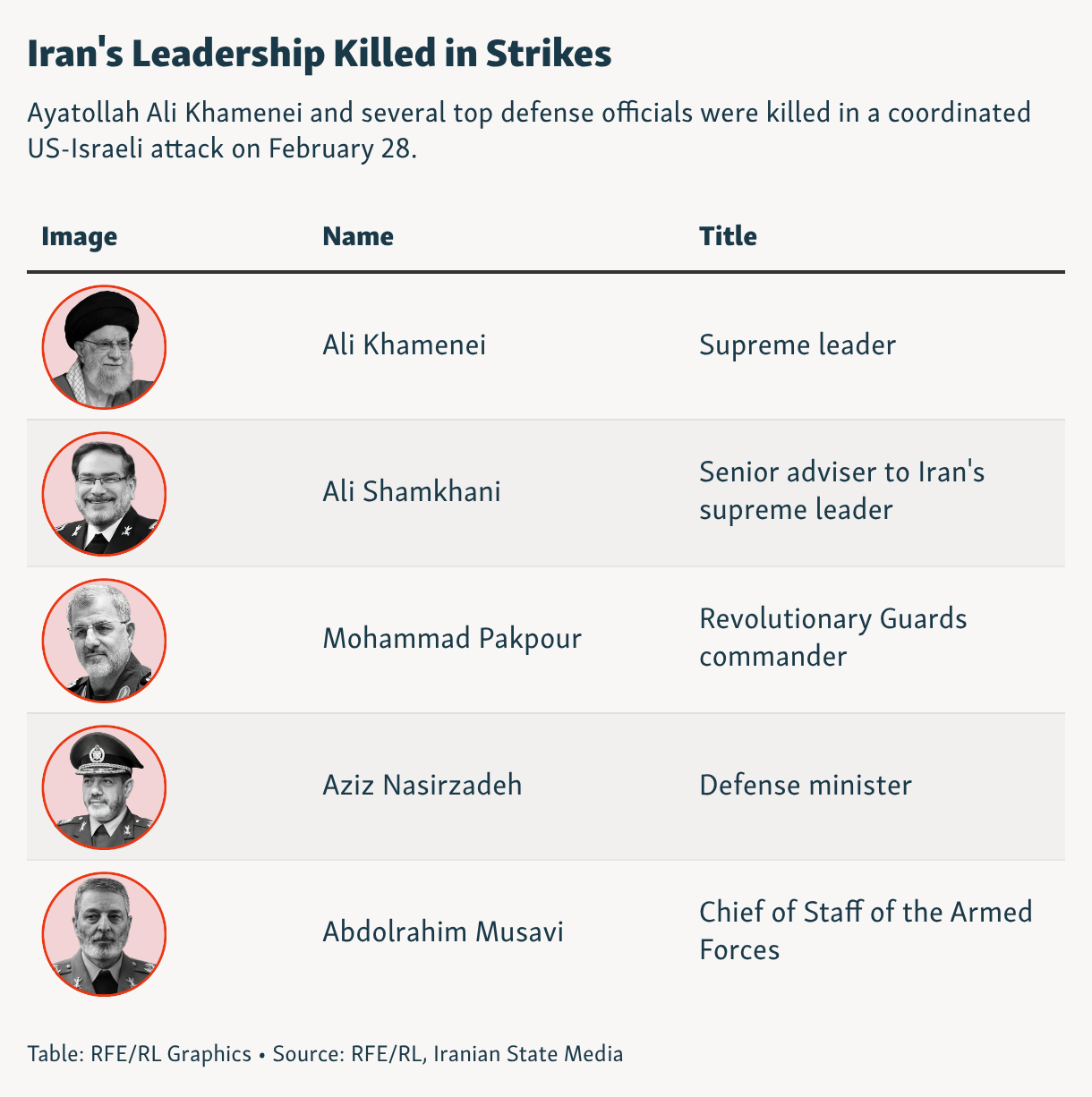
Khamenei was killed in a US-Israeli air strike on February 28, the first day of the war that has spread throughout the region over the past week.
To read the full report, click here.
Iran Targets Kuwait Airport, Bahrain Desalination Plant
Iran continued its retaliatory attacks on Arab countries hosting US bases in the Persian Gulf on March 8, targeting Kuwait International Airport and a desalination plant in Bahrain.
The latest attacks also claimed the lives of two Kuwaiti border guards, bringing the death toll in the conflict in the southern Persian Gulf country to 16, according to the AFP news agency, citing the Kuwaiti Interior Ministry.
According to the agency, after large explosions were heard on March 7 in the cities of Dubai in the United Arab Emirates and Manama in Bahrain, Saudi Arabia, the United Arab Emirates, Qatar and Kuwait have reported new attacks on their territory.
Bahrain's Interior Ministry announced on March 8 that a desalination plant in the country had been targeted following an Iranian drone attack.
Bahrain has accused Tehran of indiscriminately targeting civilian infrastructure with a deliberate agenda.
In a region facing chronic shortages of drinking water and low annual rainfall, this marks the second desalination plant to be targeted in the past week.
According to Ahmad Nafisi, deputy political and security governor of Hormozgan Province in Iran, the US military attacked one of the desalination plants on Qeshm Island last week. The claim drew immediate concern from Kaveh Madani, director of the United Nations Water Institute.
"The desalination plant and part of the Qeshm water and electricity facilities, which supplied between 12,000 and 15,000 liters of water daily to Qeshm Island and its affiliated villages, have been hit. Currently, water supply is facing challenges in 30 villages in the central, Hara and Shahab districts of Qeshm," Nafisi said.
Madani, while warning about the consequences of such actions, described the strike as "very dangerous."
Wladimir Van Wilgenburg: Kurdish Groups Need US 'Guarantees' Before Iran Offensive
The United States is considering arming Iranian Kurdish opposition groups based in neighboring Iraq, according to reports, with the aim of fomenting an uprising inside the Islamic republic.
The possibility of the United States supplying weapons to the exiled groups and supporting potential cross-border ground attacks in western Iran comes amid a joint US-Israeli aerial campaign against Tehran, launched on February 28.
RFE/RL spoke to Iraq-based Kurdish expert Wladimir van Wilgenburg, who said the Iranian Kurdish groups are deeply cautious about becoming entangled in the US-Israeli war on Iran.
"These Kurdish groups will not launch an offensive if they don't have any guarantees for any form of political recognition," said van Wilgenburg.
To read the interview, click here.