




European Nations, Japan Say Ready To Help Secure Passage Through Strait Of Hormuz
US European allies and Japan say they are ready for "appropriate" efforts to secure passage through the key Strait of Hormuz, as the already widespread conflict in the Middle East threatens to spin out of control, with energy infrastructure damaged across the region.
"We express our readiness to contribute to appropriate efforts to ensure safe passage through the Strait," said a joint statement from the leaders of the United Kingdom, France, Germany, Italy, the Netherlands, and Japan published on March 19.
"We welcome the commitment of nations who are engaging in preparatory planning," it added, while also criticizing Tehran for its recent attacks on civilian vessels and energy infrastructure in the region.
The statement did not outline specific parameters of the contributions by European nations and Japan.
To read the full report, click here.
Israel's Strike On South Pars Hits Iran, And Iranians, Where It Hurts Most
When Israeli jets struck the South Pars gas complex near Asaluyeh, they hit more than pipes and compressors. They struck the single piece of infrastructure most essential to Iran’s ability to function -- a field that provides 75 percent of Iran's domestic gas supply and powers roughly 80 percent of the country's electricity generation.
The strike halted output at two refineries with a combined daily capacity of around 100 million cubic meters, sending prices soaring and triggering Iranian retaliatory strikes on energy infrastructure in Gulf Arab states, including Qatar's Ras Laffan liquefied natural gas (LNG) terminal.
South Pars was already struggling before the first bomb fell. Straddling the maritime border with Qatar in the Persian Gulf -- where the same reservoir is known as North Dome and supplies roughly 20 percent of global LNG -- Iran's side of the field has suffered years of chronic underinvestment.
To read the full report, click here.
Tulsi Gabbard Says US, Israel Have Different Goals In War With Iran
US Director of National Intelligence Tulsi Gabbard stated on March 19 during a hearing before the House Intelligence Committee on worldwide threats that the United States and Israel do not have the same goals in their military operations against Iran.
"The objectives that have been laid out by the president are different from the objectives that have been laid out by the Israeli government," Gabbard said.
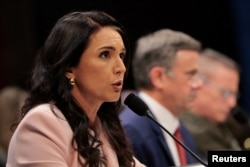
"We can see through the operations that the Israeli government has been focused on disabling the Iranian leadership," she added. "[US President Donald Trump] has stated that his objectives are to destroy Iran's ballistic missiles launching capability, their ballistic missile production capability, and their navy," she added.
Gabbard also commented on the war with Iran in a meeting with the US Senate Intelligence Committee on March 18, saying that US attacks have weakened the Iranian government but the Islamic republic still exists and poses a threat to US interests.
US Could Lift Sanctions On Iranian Oil On Tankers, Says Bessent
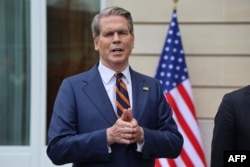
US Treasury Secretary Scott Bessent said Washington may soon lift sanctions on roughly 140 million barrels of Iranian oil stranded on tankers, aiming to boost global supply and ease prices amid disruptions caused by Iran’s closure of the Strait of Hormuz.
Speaking in an interview with the Fox Business Network on March 19, Bessent said the additional oil could cover "10 days to two weeks of supply" and help stabilize markets.
Bessent added that the US could release more oil from the Strategic Petroleum Reserve, the government’s emergency oil stockpile, and is in talks with Japan on securing safe passage through the strait, with Tokyo potentially increasing its own emergency stock releases.
He stressed that Washington would not intervene in financial markets but would focus on boosting physical supply to offset shortages.
Bessent also warned that China has become an “unreliable” supplier of refined fuels, citing reduced exports of products such as jet fuel, which has added to supply strains in Asia.
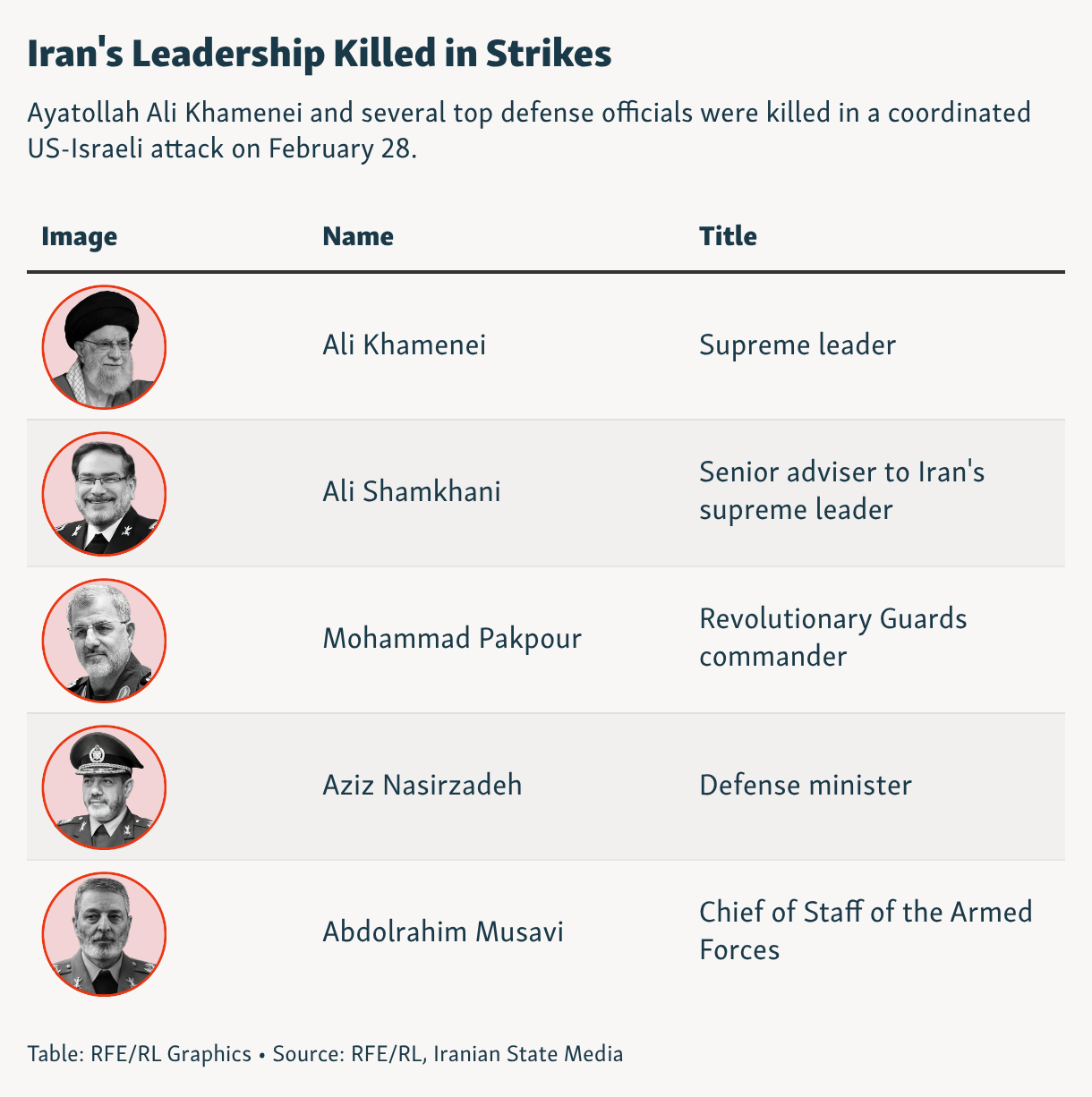
RFE/RL's graphics department has updated its list of top Iranian officials who have been confirmed dead since the US and Israel's war on Iran began on February 28.
US Central Command (CENTCOM) has shared a video on X, showing what it says are US forces "destroying Iranian naval targets that threaten international shipping in and near the Strait of Hormuz."
Kallas Says Iran Attacks On Qatar Risk Further Escalation
EU foreign policy chief Kaja Kallas has warned that Iran's attacks on Qatar's energy infrastructure are fueling instability in the region.
"The Iran's attacks on Qatar's energy infrastructure create further chaos and it's clear that we need an exit from this war, not [an] escalation," Kallas told reporters ahead of the EU council meeting in Brussels on March 19.
"This is equally important for Ukraine, as Russia stands to gain from the Iran war," she later wrote in a post on X.
Iran Says It Will 'Boycott US' But Compete At World Cup
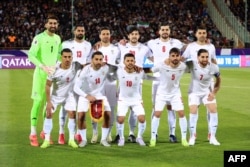
Iran will "boycott the United States" but still plans to compete in the upcoming soccer World Cup, the country's football federation chief, Mehdi Taj, said as uncertainty grows over the team’s participation amid the ongoing conflict.
Iran is scheduled to play group matches in the US, but officials have opened talks with soccer's world governing body, FIFA, about relocating games. World Cup co-host Mexico has indicated it would be willing to stage Iran's games at the tournament, if needed.
FIFA has not changed the tournament schedule, although US President Donald Trump has warned that Iranian players could face safety risks if they travel to the country. Tehran rejected those remarks, insisting its team cannot be excluded.
The dispute comes despite earlier assurances from FIFA that Iran would be welcome, raising questions over logistics, visas, and security ahead of the tournament co-hosted by the United States, Canada, and Mexico.
If Iran -- which is drawn with Belgium. Egypt, and Italy in the group phase -- does not participate in the World Cup, it is unclear which country could replace it.
Saudi Refinery Stops Oil Loadings As Gulf Energy Facilities Come Under Fire
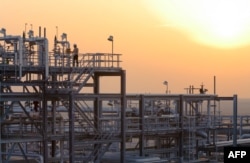
The key Saudi port of Yanbu has stopped oil loadings, two sources told Reuters on March 19, after the Saudi Defense Ministry said it had intercepted a ballistic missile over the city.
Earlier, an aerial attack targeted Saudi Aramco’s SAMREF refinery in the Red Sea port on March 19, though an industry source said the impact was minimal.
The attacks follow an Iranian evacuation warning for energy facilities across Saudi Arabia, the United Arab Emirates, and Qatar after a strike on Iran’s South Pars gas field.
Yanbu is a critical export hub on the Red Sea and one of the main alternatives for Persian Gulf oil shipments since Iran effectively shut the Strait of Hormuz, a route that normally carries about a fifth of global supply.
The UAE’s Fujairah port, another key outlet, has also been hit by attacks, disrupting operations.
Strikes across the region -- including damage to Qatar’s Ras Laffan LNG hub -- have heightened concerns over energy supply security.
Based on reporting by Reuters
Oil Jumps, Stocks Slide As Gulf Attacks Raise Energy Supply Fears
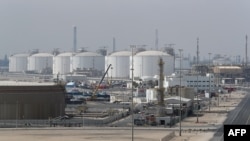
Oil prices surged and global stocks fell sharply on March 19 as escalating attacks on Persian Gulf energy infrastructure heightened fears of supply disruptions.
Brent crude jumped 7 percent to pass $115 per barrel, while US crude briefly topped $100, after Iranian strikes hit Qatar’s Ras Laffan liquefied natural gas hub and followed threats to target more regional facilities. European gas prices spiked more than 30 percent.
Equity markets reacted negatively, with major Asian indexes -- including Tokyo and Seoul -- posting steep losses, with declines seen across global markets.
The conflict has effectively disrupted traffic through the Strait of Hormuz, a key route for about a fifth of global oil and gas flows, adding to market volatility.
Rising energy costs have fueled concerns about renewed inflation and potential interest rate hikes, with central banks warning of growing economic uncertainty as the crisis deepens.