




Iran Freedom Congress Convenes In London
The Iran Freedom Congress conference began its second day in London on March 29, with the participation of hundreds of civil-society activists, political figures, and academics.
Majid Zamani, one of the organizers of the congress, said that despite differences in their political and social orientations, the participants agree on ending authoritarian rule and moving toward a system based on human rights and pluralism.
Conference organizers also stressed that the congress does not claim to seek leadership of the country after a regime change. Its goal, they said, is to provide a space for "convergence" and to define practical paths for a democratic transition in Iran.
Revolutionary Guard Threatens US, Israeli Universities
The Islamic Revolutionary Guards Corps (IRGC) has announced that it considers Israeli and American universities in the Middle East "legitimate targets" in response to what it called an "attack on the Iran University of Science and Technology."
In a statement, the IRGC said that if "these attacks" continue, then Iran will target two educational establishments "in retaliation for the destroyed Iranian universities."
Iranian media reported that a US-Israeli strike hit a building at Tehran's Iran University of Science and Technology on the morning of March 28 without causing any casualties. Footage circulating online showed smoke coming from a damaged building, although the reported strike has not been confirmed by the US or Israel nor verified by RFE/RL.
It is unclear which second institution the IRGC statement refers to.
The Revolutionary Guards also warned that employees, professors, and students of American and Israeli universities in the region should stay away from the areas around campuses and announced that if the US government does not condemn the "attack on universities" by noon Tehran time on March 30, this threat will be implemented.
Zelenskyy Accuses Russia Of Sharing Satellite Imagery With Tehran

Ukraine’s president accused Russia of sharing detailed satellite imagery with Tehran over the past week, helping Iran to target US and British military facilities and oil and gas fields in the Gulf region and elsewhere.
Volodymyr Zelenskyy’s comments, made March 28, add to earlier reports that Russia had been providing Tehran with intelligence, imagery, and other information that Iran used to hit attack military and targets.
In a post to X, Zelenskyy made a veiled reference to recent US decision to partially waive sanctions on Russian oil amid energy prices that have soared amid the Iran war.
“Who is helping whom when sanctions are lifted from” Russia, he said, “an aggressor that earns daily revenue and provides intelligence for strikes against American, Middle Eastern, UK, and US–UK bases and so on?”
“We know that if they make images once, they are preparing,” he said in separate comments to NBC News. “If they make images a second time, it’s like a simulation. The third time it means that in one or two days, they will attack.”
US officials have said Russia was providing intelligence to Iran as Tehran retaliates against US and Israeli attacks. In addition to air bases and oil infrastructure, Iranian missiles and drones also targeted a CIA station in the Saudi capital of Riyadh.
Russia stands to benefit from the spike in global energy prices caused by the US war. However, Ukraine for the past week has waged a drone campaign to knock out some of Russia’s most important oil export facilities in the Baltic Sea, and keep Moscow of profiting from high prices.
Qalibaf: US Talks About Negotiating But Plans Ground Attack
Iranian parliamentary speaker Mohammad Baqer Qalibaf has accused the United States of "secretly" planning a ground attack in its military campaign despite talking about peace.
In a statement marking the "30th day of the Iranian National Defense" on March 29, Qalibaf said a 15 point peace plan proposal put forward by Washington is an attempt to get "what it can't achieve in the war."
On March 25, Iran said it received the proposal through intermediaries but rejected it saying it amounted to "surrender." Tehran then responded with five conditions of its own to end the war.
US President Donald Trump has ordered thousands more troops to the region, including Marines and paratroopers, for a possible ground invasion.
The new forces add to 50,000 troops that are already in the region, scattered around US bases.
US Secretary of State Marco Rubio said earlier this week that the deployments were meant "to give the president maximum optionality and maximum opportunity to adjust the contingencies, should they emerge."
UAE Air Defenses 'Actively Engaging' With Missiles And Drones
The United Arab Emirates (UAE) said that its air defense systems were actively responding to missile and drone attacks, as Iran threatened new strikes against the countries in the Gulf.
"UAE Air Defences system are actively engaging with missiles and UAV threats," the ministry wrote on X on March 29. The statement added that the "sounds heard across the country are the result of ongoing engaging operations."

Hours earlier, Israel said it struck a naval research site in Iran on March 28, with several blasts reported in the capital, Tehran.
Iranian President Masud Pezeshkian threatened retaliation against regional countries, many of which host US military bases: "If you want development and security, don't let our enemies run the war from your lands."
Houthis Strike Israel Again, While Iran To Allow 'Nonhostile' Nations' Ships Through Strait
Yemen's Iran-allied Houthi rebels deepened their involvement in the Middle East war, launching a second salvo of missiles within 24 hours against Israel, while Tehran said it will give permission for ships from "nonhostile" nations to pass through the Strait of Hormuz.
Meanwhile, Israel intensified its attacks against Iran, targeting an Iranian naval research facility and striking the capital, Tehran, late on March 28 as the conflict continues its spread across regional borders.
And in Washington, the US military is preparing plans for weeks of ground operations in Iran, The Washington Post reported, citing unnamed US officials, with the White House suggesting that any such preparations would be routine contingency planning by military leaders.
To read the latest news report, click here.
Pentagon Works On Plans For Possible Ground Operations In Iran: Washington Post
The US military is preparing plans for weeks of ground operations in Iran, The Washington Post reported late on March 28, citing unnamed US officials, with the White House suggesting that any such preparations would be routine contingency planning by military leaders.
The report also said it was not certain US President Donald Trump would approve the Pentagon's plans for the use of ground forces.
Any potential ground operation would not be a full-scale invasion but was more likely to involve a mixture of special forces operations and regular infantry troops, the Post cited officials as saying.
The report comes as Trump has ordered several thousands of Marines, some 2,000 members of the elite 82nd Airborne Division, and other troops to join the 50,000 already in the region.
A number of Navy amphibious assault ships and other warships are also in the region or on the way.
The unnamed US officials told the Post that the planning has been in development for weeks.
Trump has mixed threats of greater attacks with the possibilities of a peace deal in comments about the US-Israeli war with Iran, now entering its second month.
The Post reported that White House press secretary Karoline Leavitt said in response to its inquiries: "It's the job of the Pentagon to make preparations in order to give the commander-in-chief maximum optionality. It does not mean the president has made a decision."

Officials told the Post that discussions within the administration have touched on the possibility of seizing Kharg Island, a key oil terminal of Iran and a major cog in the country's economic machine.
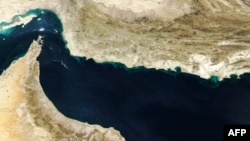
Other options discussed included raids on coastal areas near the Strait of Hormuz, which has been effectively blocked by Iran, creating a bottleneck of oil and gas shipments and roiling world financial markets.
US Secretary of State Marco Rubio, during a trip to Paris for the Group of Seven meeting (G7) said the United States will be able to achieve its war goals without the need for ground troops.
Trump himself has played down the possibility of ground troops, saying at one point that he was not planning to send troops "anywhere," although he appeared to leave open the possibility should it be required.
Putting ground troops into action would carry major risks -- both politically for the president and physically for those forces involved.
Israeli Military Says It Will Have Mostly Destroyed Iran's Arms Production Ability 'Within A Few Days'
The Israeli military said Iran’s weapons production capabilities will be largely destroyed "within a few days" and that it will take Tehran a "long time" to reconstitute them. Military spokesman Brigadier General Effie Defrin said the Israel Defense Forces (IDF) aim to "complete their attacks on all key components of the [Iranian] military industry" in the coming days. "This means that we will have destroyed most military production capabilities," he added. "It will take the regime a long time to rebuild them." The IDF claims to have struck some 90 percent of the key sites of the Iranian arms industry since the start of the US-Israeli war with Iran on February 28, according to the Times of Israel.
Yemen's Houthi Rebels Attack Israel For Second Time In 24 Hours, Group's Military Says
Yemen's Houthi rebels attacked Israel on March 28 for the second time in less than 24 hours, vowing to continue military operations, according to the group's military spokesperson, Yahya Saree.
A US-designated terrorist organization, the Houthis' involvement risks prolonging a war that has already drawn in US forces, Gulf Arab states, and Israel across multiple fronts.
Their entry into the conflict, ending nearly a month of restraint since the war began, raised immediate fears of a simultaneous disruption to two of the world's most critical shipping lanes.
Iran has already effectively closed the Strait of Hormuz; the Houthis have now signaled they could move against the Bab al-Mandab Strait, through which roughly 10 percent of the world's seaborne oil passes.
20 Pakistani-Flagged Ships Allowed To Pass Through Strait Of Hormuz, Pakistani Foreign Minister Says
Pakistan's Foreign Minister Ishaq Dar said on March 28 that Iran had agreed to allow an additional 20 Pakistani-flagged ships to pass through the Strait of Hormuz, with two vessels permitted to transit daily.
The Strait of Hormuz accounts for around one-fifth of global oil shipments and the effective closure of it by Iranian forces has become a central issue of the conflict, which started with US-Israeli strikes on Iran on February 28.
Last weekend, US President Donald Trump said the United States would "obliterate" Iran's power plants if Tehran keeps blocking the key waterway after 48 hours.
He later extended the deadline to March 27 and then by another 10 days, as Washington awaited Iran's official response to its 15-point peace proposal, which included several key demands the United States had been pushing for prior to the war.
The Pakistani government has been acting as a mediator between Iran and the United States and has conveyed the US peace plan to Tehran. It also announced that it would host the foreign ministers of Saudi Arabia, Turkey, and Egypt for talks on the matter on March 29–30.
Read more here.
In separate comments on March 26, Trump said that he believed Iran was seeking negotiations because of its "present" to the United States, which he said allowed 10 oil tankers to pass through the Strait of Hormuz.
Tehran has earlier suggested that ships from "non-hostile" nations would have clear passage through the Strait of Hormuz. However, even if some vessels are allowed through, the overall uncertainty has made it difficult to secure insurance, effectively preventing ships from using the waterway.