




Kuwaiti Desalination Plant Hit; Iran Blames Israel
Hours after Kuwait announced that a desalination facility in the country had been attacked, a spokesman for Iran's Islamic Revolutionary Guards Corps (IRGC) blamed Israel for the attack.
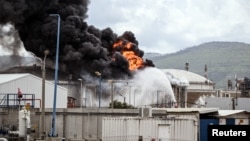
Kuwait's Ministry of Electricity, Water and Renewable Energy confirmed the attack on one of the country's electricity generation and water distillation facilities on March 30, saying an Indian worker was killed in the attack and that "significant material damage" was caused.
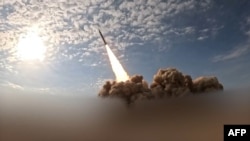
Kuwait said that Iran was behind the strike.
However, the IRGC issued a statement claiming the attack on Kuwait's desalination facilities was carried out by Israel "under the pretext of accusing the Islamic republic."
The statement also called for an end to the presence of US military forces in the region.
Iran Says It Rejects 'Unrealistic' US Peace Plan
Tehran has said it received, reviewed, and rejected a 15-point US peace plan that was delivered through Pakistani emissaries.
On March 30, Iran called the plan "unrealistic, illogical, and excessive" while launching more missiles and drones at targets in Israel.
"What has been discussed so far have been messages about America's willingness and request for negotiations, which we received from some intermediaries, including Pakistan," Iranian Foreign Ministry spokesman Ismail Baghaei said.
Trump has imposed an April 6 deadline for Iran to open the Strait of Hormuz and accept a deal ending the war or face US strikes on its power plants.
On March 29, Trump hailed progress in talks with Iran, saying they were being held directly and indirectly with "reasonable" leaders and asserted Tehran was partially opening the crucial Strait of Hormuz, the waterway through which some 20 percent of the world's oil and natural gas supplies pass.
But he has yet to elaborate on what he called direct talks with Iran, whose leaders deny negotiations are taking place.
To read the full report, click here.
Trump Renews Warning To Iran: Reach Deal Soon Or Face Energy Sector Attacks
US President Donald Trump has renewed his warning to Tehran to reach a deal to end the war soon and open the Strait of Hormuz or he will order air strikes with the aim of "completely obliterating" Iran's oil export hub of Kharg Island, oil wells, and power plants.
For the second day in a row, the US leader said a deal is likely at hand, but he also said in a social media post on March 30 that "if for any reason a deal is not shortly reached" US forces will react " by blowing up and completely obliterating all of their Electric Generating Plants, Oil Wells and Kharg Island (and possibly all desalinization plants!), which we have purposefully not yet 'touched.'"
To read the full report, click here.
Trump: US Engaged In 'Serious Discussions' With Iran
US President Donald Trump says the United States is engaged in "serious discussions" with "a new, and more reasonable, regime" in Iran aimed at ending ongoing military operations.
Trump wrote on his Truth Social platform that "great progress" has been made but warned that if a deal with Iran is not reached soon, the United States could escalate its actions by "blowing up and completely obliterating all of their Electric Generating Plants, Oil Wells and Kharg Island."
Quick roundup of other news stories connected to the war with Iran:
An Iranian Foreign Ministry spokesman said that Tehran has not had "any direct talks" with the United States since the last round of talks, although it was not clear which talks he was referring to. Regarding reports that negotiations between Iran and the United States are being held through intermediaries, Ismail Baghaei said: "What has been discussed so far have been messages about America's willingness and request for negotiations, which we received from some intermediaries, including Pakistan."
Shmuel Abramzon, the chief economist at the Israeli Finance Ministry, said on March 30 that the country's economy is on track to shrink in the first quarter of 2026 due to the war with Iran. Based on current indicators of economic activity and the experience of past wars, Abramzon said that the Israeli economy is expected to experience negative growth of 9.5 percent.
Citing military sources, the Spanish newspaper El Pais reported that the country has closed its airspace to US aircraft engaged in the war with Iran.
Zelenskyy Offers Russia Halt On Energy Strikes Amid Oil Crisis Sparked By Iran War
Ukrainian President Volodymyr Zelenskyy says he has offered Russia a mutual halt on strikes against energy sites in the two countries in response to a global oil crisis triggered by the war in Iran.
"If Russia is ready to stop hitting Ukrainian energy facilities, we will not respond against their energy sector," Zelenskyy told journalists in a WhatsApp chat on March 30.
Iran Confirms IRGC Naval Commander Killed
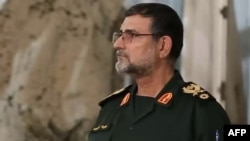
Iran's Islamic Revolutionary Guards Corps (IRGC) has confirmed the death of commander Alireza Tangsiri in an Israeli air strike last week.
The IRGC's Sepah News website said on March 30, five days after Israel reported the death, that Admiral Alireza Tangsiri "succumbed to severe injuries" from the attack.
Israel had said the commander was killed in a strike in Bandar Abbas, a key southern port city on the Strait of Hormuz.
In a statement, the IRGC said that Tangsiri was targeted "while organizing and strengthening forces and strengthening the defensive shield of the islands and coasts" and died "due to the severity of his injuries."
The IRGC did not provide further details in the statement about Tangsiri's death or his possible successor.
In June 2019, the US Treasury Department designated Tangsiri as a "Specially Designated Global Terrorist."
The IRGC navy coexists with Iran's regular naval forces and specializes in "guerrilla" warfare, often using fast-attack boats, in the Persian Gulf and Strait of Hormuz.
After Iranian Threats, American University Of Armenia Moves Online

In response to threats from Iran against US- and Israeli-affiliated universities in the region, the American University of Armenia (AUA) has suspended in-person classes and moved to online instruction.
In a statement, the Yerevan-based university said that it had received no direct threats and it was just taking a "precautionary measure."
On March 29, the Islamic Revolutionary Guards Corps announced that it considers Israeli and American universities in the Middle East "legitimate targets" in response to attacks it claimed hit universities in the capital Tehran and in the central city of Isfahan.
Those reported strikes have not been confirmed by the US or Israel.
Iran Using Banned Cluster Weapons, Says Rights Watchdog
Human Rights Watch (HRW) says the Iranian government has repeatedly made use of cluster munitions delivered by ballistic missiles, which violates the laws of war and may constitute war crimes.
The New York-based rights group reported that three separate Iranian attacks involving cluster munitions had hit populated areas in Israel, killing at least four people.
"Iran's use of cluster munitions in populated areas of Israel poses a foreseeable and long-lasting danger to civilians," said Patrick Thompson, Human Rights Watch's crisis, conflict, and arms researcher.
"Cluster munition bomblets are dispersed over a wide area, making them unlawfully indiscriminate in violation of the laws of war."
HRW said that although Iran is not a party to the 2008 Convention on Cluster Munitions -- which comprehensively bans all production and use of these weapons -- international humanitarian law still bans indiscriminate attacks, including those that cannot distinguish between civilians and military targets.
Commander Of Iran’s Natural Resources Protection Unit Killed
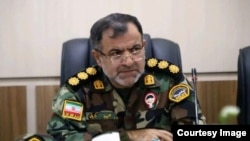
Iranian media have reported that Majid Zakariaei, commander of the protection unit of the Natural Resources and Watershed Management Organization, a government body responsible for forests and water resources, has been killed.
According to the semiofficial ISNA news agency, Zakariaei was wounded in attacks on March 28.
The report said he died on the night of March 29.
Zakariaei had served as commander of the unit for one year and had previously headed the protection unit of Iran’s State Land Affairs Organization.