



Russia Aiding Iran With Satellite Intelligence And Cyber Support, Ukraine Says
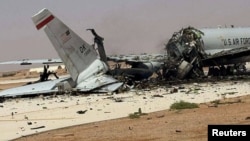
A Ukrainian intelligence assessment reviewed by Reuters alleges that Russia has provided covert support to Iran by supplying satellite imagery and assisting cyber operations during the current conflict.
The report says Russian satellites conducted at least 24 surveys across 11 Middle Eastern countries in late March, mapping 46 sites including US military bases, airports, and oil fields.
It describes a pattern in which Iranian missile and drone strikes followed shortly after these surveys.
A Western military source and a regional security source told Reuters that they had also observed heightened Russian satellite activity and intelligence sharing.
The assessment further claims that Moscow and Tehran maintain a “permanent communications channel” to exchange data, potentially involving Russian military spies in Tehran.
It also details growing cyber cooperation, with Russian and Iranian hacking groups coordinating attacks on regional infrastructure.
The allegations come amid deepening military ties between Russia and Iran since the start of Russia's full-scale invasion of Ukraine, including cooperation on drones and intelligence-sharing agreements.
Reuters said it could not independently verify the claims, while a US spokeswoman said no external support has affected the operational success of the United States.
Russia and Iran had no immediate comment.
Air And Missile Strikes Hit Cities Across Iran
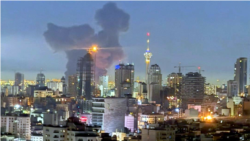
Iranian official and media reports say multiple cities, including Tehran, Isfahan, and Ahvaz, were hit by widespread air and missile strikes on the night of April 6–7.
Airports, military sites, and infrastructure were among the targets, with Israel claiming it struck several Tehran airports, destroying aircraft and facilities.
Footage shared on social media appeared to show columns of flame and smoke near the Iranian capital's Mehrabad airport.
Explosions and fighter jet activity were also recorded across the country, including in Mashhad and Tabriz.
Reported casualties include at least 15 people killed in Tehran Province, four soldiers in Isfahan, and two civilians in Hormozgan, with others injured.
Significant damage was reported in Qom and other areas.
Israel said it had completed a “wave” of strikes, while also detecting Iranian missile launches in response, signaling a continued escalation of hostilities.
New Iranian Supreme Leader 'Incapacitated,' Intelligence Memo Says
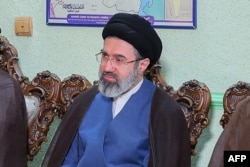
An intelligence memo seen by The Times of London claims Iran’s new supreme leader, Mojtaba Khamenei, is incapacitated and receiving treatment in Qom, leaving him unable to govern.
Based on US and Israeli intelligence shared with Persian Gulf allies, the memo says he is unconscious with a severe condition after being wounded in the same strike that killed his father, Ayatollah Ali Khamenei.
The younger Khamenei's absence from public view and reliance on written statements and AI-generated footage have fueled doubts about his leadership.
The memo also reveals preparations in Qom for the elder Khamenei’s burial, including plans for a large mausoleum possibly accommodating multiple family members.
The situation raises questions about who holds real power in Iran, with speculation that the Islamic Revolutionary Guards Corps may be exercising de facto control of the county.
We are now closing the live blog for the day. We'll be back tomorrow at 7:30 a.m. Central European time to cover the latest events across the Middle East.
Trump Issues Stark 'One Night' Warning to Iran, Touts Daring Rescue
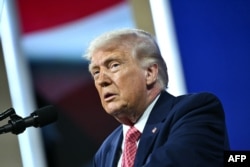
WASHINGTON -- US President Donald Trump renewed his threat to wipe out Iran's power plants and bridges if it doesn't reach an agreement to end the war and open the Strait of Hormuz, warning the country could be “taken out in one night.”
Speaking on April 6 at a White House news conference alongside Defense Secretary Pete Hegseth, Joint Chiefs Chairman Dan Caine, and CIA Director John Ratcliffe, Trump framed the moment as a defining point in a rapidly escalating confrontation.
“The entire country could be taken out in one night -- and that night might be tomorrow night,” Trump said, underscoring an April 7 deadline for Iran to comply with the US demands.
"This is a critical period. They have a period of, well, till tomorrow, at eight o'clock.
To read the full story, click here.
Iran Rejects Cease-Fire, Demands Permanent End To War As Trump Deadline Looms
Iran has conveyed a 10-point response to US proposals for ending the war to Pakistan, rejecting a temporary cease-fire and demanding a permanent end to hostilities, Iran's official IRNA news agency reported on April 6, as US President Donald Trump's deadline for massive strikes on Iranian energy infrastructure draws closer.
The response, described by IRNA as the product of two weeks of reviews at the highest levels of the Iranian establishment, rules out a cease-fire while laying out a set of conditions including a permanent end to hostilities across the region, a safe passage protocol for the Strait of Hormuz, reconstruction commitments, and the lifting of sanctions.
The report carried by IRNA did not offer further details.

Iranian Foreign Ministry spokesman Esmail Baqaei had signaled Tehran's position earlier in the day.
"A cease-fire means creating a pause to regroup and commit crimes again," he said at his weekly press conference. "No rational person would do that." Iranian officials have made clear they do not want to be caught in a situation similar to Gaza or Lebanon, where a cease-fire on paper left them vulnerable to renewed attack.
The response lands as Trump's self-imposed deadline -- Tuesday, April 7, at 8pm US Eastern Time -- closes in.
Trump has threatened to unleash a sweeping bombing campaign against Iranian power plants and bridges if Tehran does not reopen the Strait of Hormuz. "Tuesday [April 7] will be Power Plant Day, and Bridge Day, all wrapped up in one, in Iran. There will be nothing like it!!! Open the F****** Strait, you crazy bastards, or you'll be living in Hell - JUST WATCH!" he wrote on Truth Social.
Read more here.
Strikes Hit Iranian Petrochemical Facilities In South Pars
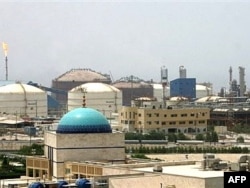
Israeli strikes hit petrochemical facilities in southern Iran on April 6, Iranian media reported, with damage reported but no casualties.
Iranian media said the strikes included the South Pars petrochemical complex in Asaluyeh, a key energy hub in the country’s south.
Separately, Defense Minister Israel Katz said on the same day that Israel had "just carried out a powerful strike on the largest petrochemical facility in Iran, located in Asaluyeh, a central target responsible for about 50 per cent of the country's petrochemical production."
Iranian outlets said utility providers supplying power, water, and oxygen to the complexes were targeted, disrupting operations, though one major plant was not damaged.
Local authorities in Marvdasht, north of Shiraz in southern Iran, said a separate strike caused only minor damage and did not halt activity.
The attacks come amid escalating strikes on energy infrastructure.
The South Pars gas field, a key supplier of Iran’s domestic energy, has been targeted before, as have petrochemical sites in Mahshahr.
Costa Warns Against Targeting Civilian Infrastructure
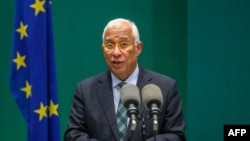
European Council President Antonio Costa has said “only a diplomatic solution will settle” the conflict after five weeks of war in the Middle East.
In a post on X on April 6, he stressed that “any targeting of civilian infrastructure, namely energy facilities, is illegal and unacceptable,” warning that civilians would bear the brunt of any escalation.
He added that “only negotiations will” bring peace, urging Iran to halt regional attacks and restore navigation through the Strait of Hormuz.
Costa's remarks come after US President Donald Trump threatened strikes on Iran’s energy infrastructure if Tehran does not meet his ultimatum to reopen the strait.
Head Of UN Nuclear Watchdog Says Strikes Near Bushehr Plant 'Must Stop'
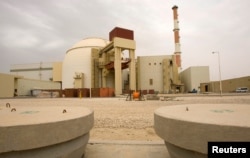
The director of the International Atomic Energy Agency, Rafael Grossi, has warned that military strikes near Iran’s Bushehr nuclear power plant pose a "very real danger to nuclear safety."
In an IAEA X post on April 6, Grossi was quoted as saying such actions “could cause a severe radiological accident with harmful consequences for people and the environment in Iran and beyond,” adding that they “must stop.”
Earlier, Iran’s atomic energy chief Mohammad Eslami accused the UN nuclear watchdog of inaction that “emboldens aggression” against nuclear facilities, warning that repeated strikes near the Bushehr power plant risk serious consequences.
In a letter to Grossi, Eslami said Iran’s only operating nuclear power plant had been targeted four times, with the latest attack killing a security guard and injuring others.
Tehran has called on the IAEA to explicitly condemn the attacks, while criticizing what it describes as an insufficient response from the agency.
In the same IAEA X post on April 6, the UN nuclear watchdog said that its analysis of satellite imagery confirmed “recent impacts of military strikes” close to the Bushehr plant, including one just 75 meters from the site perimeter, while noting the facility itself had not been damaged.
Russia’s state-owned nuclear agency, Rosatom, has evacuated staff from Bushehr in recent days, continuing a withdrawal that began after the conflict escalated in the region in late February, according to Russian news agencies.
The Bushehr plant was built with Russian assistance and is jointly run by Iranian and Russian personnel.
With reporting by Reuters
Iran Executes Another Protester Detained In January Unrest
Iran has executed a protester detained during anti-government demonstrations in January, according to the judiciary’s media outlet Mizan, the HRANA human rights group reports.
Ali Fahim was put to death on April 6 after his sentence was upheld by the Supreme Court, authorities said.
He had been convicted by a Tehran Revolutionary Court of security-related charges, including involvement in an arson attack on a Basij militia base -- allegations rights groups dispute.
His execution brings to four the number of defendants in the same case put to death in recent days, raising concerns about others still at risk.
Among them is Abolfazl Salehi Siavashani, another defendant in the case, who has reportedly been transferred to solitary confinement, sparking fears he could face imminent execution.
Rights organizations have criticized Iran’s use of capital punishment, citing reports of forced confessions and unfair trials.