



Iran's War Strategy: Raise The Cost Of Conflict To Secure An Eventual Cease-Fire
- By Kian Sharifi
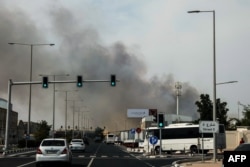
As the United States and Israel wage war against Iran, Tehran is widening the theater of the conflict and raising the costs for Washington in a bid to secure an eventual cease-fire, experts say.
Iran has fired hundreds of missiles and drones targeting US military bases as well as key energy and commercial sites in Saudi Arabia, the United Arab Emirates, Kuwait, Bahrain, and Qatar -- all American allies -- since February 28.
"The objective is to increase the costs for the United States -- both directly and indirectly -- in order to convince Washington that it cannot succeed in this war," Hamidreza Azizi, a fellow at the German Institute for International and Security Affairs, told RFE/RL.
"Tehran wants to demonstrate that this is a war the United States cannot win, and that it therefore needs to bring it to an end as soon as possible."
Read more here.
'We're Worried About Our Future': Afghan Migrants Flee Back Home
Fearing the recent joint US–Israeli attacks against Iran that began on February 28, Afghan migrants in the country have been fleeing back to neighboring Taliban-run Afghanistan.
There are no official figures on how many Afghans have left Iran since the onset of hostilities, but several returnees told RFE/RL’s Radio Azadi that fear and uncertainty played a role in their decision.
Emal Anwari, who fled Afghanistan's western Herat Province after the Taliban seized power in August 2021, had been working in a juice factory in Karaj.
When the conflict began on February 28, he and six family members left in the early hours of the morning.
“We spent the night in Mashhad and stayed there until around 7 a.m., then set off toward the Dogharoun border crossing," he told Radio Azadi. "Unfortunately, the border was closed, and my family and I remained on the road there until 8 p.m. When the border reopened, we were finally able to cross from Iran into Afghanistan.”
Now staying with an uncle in Herat, Anwari worries about finding work.
“Our biggest concern is how to earn a living,” he said.
Iran says it hosts more than 6 million Afghans, many without legal status.
Ezzatullah Mehran, a 27-year-old Afghan studying journalism and mass media in Tehran, has also returned.
Worried about instability, he and nearly 40 other students have left their studies unfinished.
"We're worried about our future,” he said.
Satellite Images Show Destruction, Fires In Middle East Amid Ongoing Iran Conflict
Before and after images capture sites in the Middle East hit by US-Israeli and Iranian strikes.
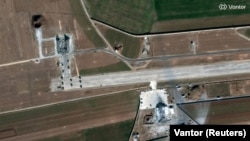
Satellite Images Show Destruction, Fires In Middle East Amid Ongoing Iran Conflict
Trump Says He Told Iran 'Too Late' For Talks
US President Donald Trump said it is "too late" for talks with Iran after Tehran made a bid to hold discussions amid the US-Israeli military operation.
"Their air defense, Air Force, Navy, and Leadership is gone. They want to talk. I said 'Too Late!'" Trump wrote in a social media post on March 3.
He did not say when Iranian officials had indicated they were willing to enter talks.
Our graphics department have come up with this visualization of how oil and gas prices have been affected by the recent outbreak of hostilities in the Middle East:
Prisoners From Evin Reportedly Evacuated To Unknown Location
The wife of Mustafa Mohammad Hassan, a student imprisoned at Tehran's notorious Evin Prison, announced the evacuation of Ward 209, where most political prisoners are held.
"Ward 209 of Evin Prison has been evacuated and the prisoners have been transferred to an unknown location. Other prisoners, including political prisoners and financial criminals, are still in Ward 7," he wrote on X on March 3.
"Counter-Terror Unit forces have left the prison and are stationed in surrounding buildings," he reported.
RFE/RL is unable to independently verify this report.
Hassan's wife has appealed for urgent attention, warning of a potential "humanitarian disaster" regarding the prisoners.
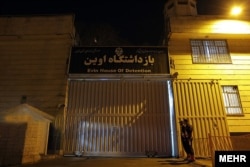
Hassan, a graduate student at the Philosophy of Science department at Sharif University of Technology, has been detained since early February.
On March 1, the Narges Mohammadi Foundation, named for the imprisoned Nobel Peace Prize-winning human rights activist, once again expressed deep concern about the dangerous situation of political prisoners and detained protesters who are trapped behind bars following the US and Israeli military attacks on Iran.
The foundation also referred to reports published by human rights groups saying the situation at Evin Prison has become critical, with staffing, food, and medical shortages.
"The prison management has collapsed, and the staff have evacuated the wards by locking the doors -- a situation that has disrupted prisoners' access to the prison store and basic necessities."
“In the women's ward of Evin and Ward 7 of this prison, food distribution has been stopped and only a limited amount of bread has been provided to prisoners."
The Narges Mohammadi Foundation also wrote that it has verified similar and independent reports from families of prisoners at Qezel Hesar Prison in Karaj and Lakan Prison in Rasht. The relatives reported food shortages, shop closures, and reduced access to medical care for prisoners.
German Foreign Ministry Summons Iranian Ambassador
The German Foreign Ministry announced that it had summoned Iranian ambassador in Berlin and has asked Tehran officials to stop attacks on countries in the region.
On March 3, the ministry announced in a message on X that it had called on Iranian leaders to "immediately end reckless attacks against countries in the region."
The German Foreign Ministry also announced that it condemns Iran's "arbitrary and disproportionate" missile and drone attacks, including attacks on civilian targets.
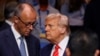
US President Donald Trump is hosting German Chancellor Friedrich Merz on March 3, his first meeting with a foreign leader since the United States and Israel launched strikes on Iran.
The long-planned meeting between Trump and Merz was intended to focus on the war in Ukraine and tense trade relations between the European Union and the United States, but the escalating conflict with Iran has reportedly affected the agenda.
Merz, a staunch critic of the Islamic republic's leaders, has said Berlin understands the "relief" of the Iranian people that "the rule of the mullahs is coming to an end." However, he has declined to comment on the legal legitimacy of the US and Israeli attacks on Iran.
Germany, France, and Britain have announced they will only participate in "defensive" actions alongside their allies in the Gulf region.
Iran Denies Responsibility For Drone Attack In Oman
The General Staff of the Iranian Armed Forces reported on March 3 that no attack had been carried out "against Omani soil and ports."
The official Oman News Agency, citing security sources, announced that several tanks in the commercial port of Duqm were targeted by several drones, and that at least one of the drones hit a fuel tank.
The port had previously been targeted by a drone attack on March 1. While Iran has not formally claimed responsibility for the first attack, Foreign Minister Abbas Araqchi suggested that Tehran was behind it in comments made to Al Jazeera.
“What happened in Oman was not our choice. We have already told our armed forces to be careful about the targets they choose,” Araghchi said, adding that the Iranian Army was acting on general instructions.
Iran's Assembly Of Experts Building In Qom Hit By Air Strike
The building that houses Iran's Assembly of Experts, the body that will elect the country's next supreme leader, has been severely damaged by air strikes.
Verified video from local media and witnesses posting online on March 3 showed the building in the holy city of Qom almost completely demolished.
The state-run IRIB news agency reported that a separate office belonging to the assembly in Tehran was struck late on March 2. The news agency said both facilities had been "evacuated in advance" and that no casualties were recorded.
Axios also quoted an unnamed Israeli official confirming that the Israeli Air Force had struck the building in Qom, 150 kilometers (90 miles) south of Tehran, to "to disrupt the process of appointing a new supreme leader."
Top Pentagon Official Defends Air Strikes
WASHINGTON -- The Pentagon's top policy official defended US military operations against Iran as a limited, US-directed campaign to blunt a growing missile threat, rejecting suggestions Washington was drawn into war at Israel's urging or pursuing open-ended regime change.
Testifying before the Senate Armed Services Committee on March 3, Under Secretary of Defense for Policy Elbridge Colby said the strikes were ordered by US President Donald Trump to degrade Iran's expanding arsenal of ballistic and cruise missiles and one-way attack drones, and to ensure Tehran cannot obtain a nuclear weapon.

Colby described the campaign as centered on curbing "the ability of the Islamic republic to project military power against US bases, our forces, etc., as well as our allies and partners in the region and beyond."
He said Trump had directed a military campaign with defined objectives: Degrade and destroy Iran's missile and drone capabilities and place the United States "in a position to deny Iran's ability to obtain a nuclear weapon."
Lawmakers questioned how the strikes align with the Trump administration's National Defense Strategy, which calls for allies and partners to shoulder more of the burden for collective security.
Colby acknowledged that direct US operations against Iran fall outside that typical burden-sharing framework. Still, he argued the action remains consistent with the broader strategic goals of restoring deterrence and protecting US forces.
While Israel is conducting significant operations of its own, Colby stressed that Washington acted based on its own threat assessment and national interests.
Pressed on whether Washington supported the killing of Iran's supreme leader, Ali Khamenei, Colby sought to draw a clear line.
"Those are Israeli operations," he said, distancing the United States from direct responsibility for Khamenei's death and narrowing the scope of US objectives to military degradation rather than leadership decapitation.
Colby did not directly interpret Trump's rhetoric encouraging the Iranian people to seize a "historic opportunity," but he emphasized that the US campaign is not a nation-building intervention.
Colby stressed the operation does not envision deploying US ground forces to reshape Iran's political system. Instead, he presented it as a limited effort to degrade military capabilities, prevent nuclear acquisition, and restore deterrence.