




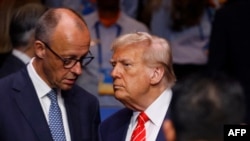
WASHINGTON -- US President Donald Trump will meet German Chancellor Friedrich Merz at the White House on March 3, with transatlantic security and Ukraine high on the agenda.
But as Washington intensifies military operations against Iran, European officials fear the war in the Middle East will divert attention from supporting Ukraine as it battles Russia's full-scale invasion, now in its fifth year.
The concern is not only political, that Washington’s attention may drift. It's also practical: Ukraine's defense depends heavily on American-made interceptors, cruise missiles, and other precision munitions that the Pentagon is now expending in significant quantities elsewhere.
In an interview with RFE/RL in Washington on March 2, Polish Deputy Prime Minister and Defense Minister Wladyslaw Kosiniak-Kamysz acknowledged the strain.
"If we look at the American involvement in the Middle East and how it affects Europe, Poland, and Ukraine -- it involves the supply of military equipment, missiles for Patriot systems, supplies for Ukraine, and the production capacity of American industry," he said. "It will have an impact."
How large that impact will be remains unclear, he added, because "it depends on the duration of the conflict." But he warned that "the center of gravity of interest is shifting to the Middle East," stressing that "Europe must do more."
For Ukraine, that shift could prove decisive.
Retired US Army Colonel Richard Williams, a former senior NATO defense official, described Kyiv's position as increasingly fragile if the conflict in the Middle East widens or drags on.
"I'd say the Ukrainian strategic situation…is precarious -- and increasingly so if this conflict is prolonged or worsens," he told RFE/RL.
Key American munitions stockpiles, he warned, "are going to be increasingly low, at a time when no one can accurately predict the US's top priority need for them."
The consequences, he suggested, are straightforward. Cruise missiles, anti-aircraft interceptors, and other guided munitions are finite, and replenishment "takes months." Given likely US priorities, Ukraine "must be ultra cautious…especially with munitions of US origin."
A Supply Chain Shock
In Kyiv, officials are already bracing for turbulence in the global defense market.
Kateryna Chernohorenko, a former deputy defense minister, warned on social media that the Middle East escalation could quickly ripple into Ukraine's defense industry.
"The situation in the Middle East can very quickly escalate into a crisis of defense industry in Ukraine," she wrote on March 2, predicting sharp changes in "prices, quotas, and supply chains."
Her message was urgent and practical. Ukrainian manufacturers -- from FPV drone producers to electronic-warfare and rocket companies -- should "act very quickly" to secure remaining stocks of critical components and form reserves for the next 12 to 24 months.
Firms should combine purchases and book production quotas together, she said, while the government must accelerate localization of key components "at maximum speed."
The underlying fear is that global competition for parts and finished weapons will intensify, pricing out or delaying Ukrainian orders.
Ukrainian President Volodymyr Zelenskyy voiced his concern over the matter in an interview published by the Italian daily newspaper Corriere della Sera on March 3.
"It could become difficult to procure missiles and weapons for the defense of our airspace," Zelenskyy said. "The Americans and their allies in the Middle East could need them for defense, for example anti-Patriot missiles."
Russia Watches -- And Profits
Beyond supply chains, European officials also see strategic risks.
Kosiniak-Kamysz warned that turmoil in the Middle East could benefit Moscow economically. Higher oil and gas prices, he said, are "dangerous, because that money pumps up the defense and arms industry, which threatens the security of Poland and NATO’s eastern flank."
For Poland and other frontline NATO states, Russia "has long been the greatest threat," he stressed. A distracted United States could compound that danger.
Yet there are countervailing dynamics.
Retired US General David Petraeus, former commander of US Central Command and CIA director, argued that Iran's capacity to assist Moscow has been significantly reduced.
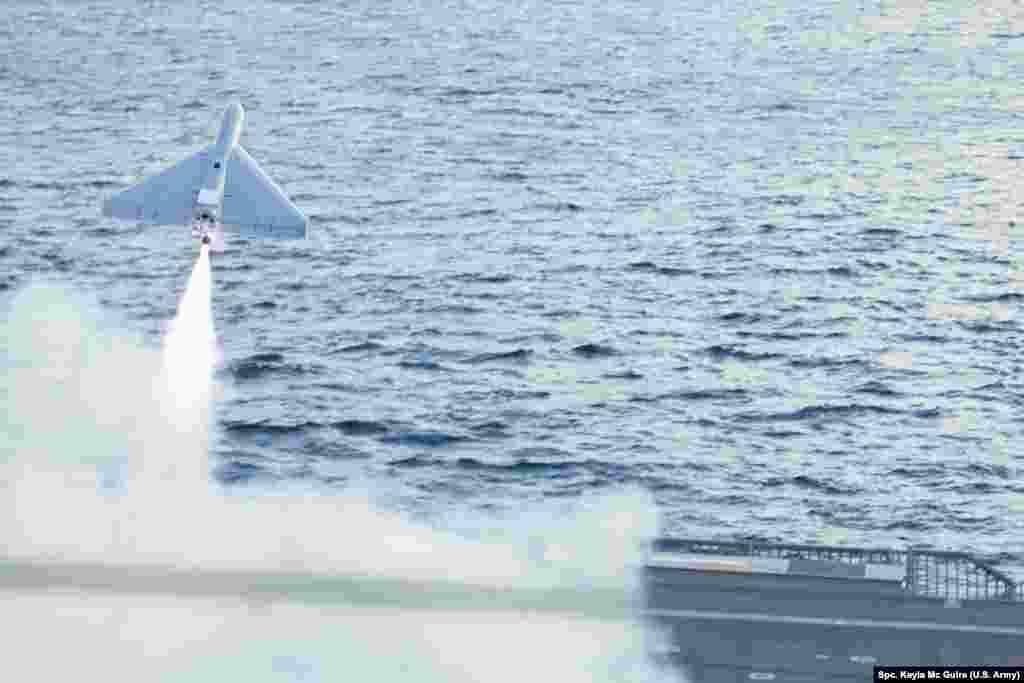
"Iran is no longer in a position to help Russia with Shahed drones or other capabilities," he told RFE/RL, though Tehran had previously provided "significant assistance" and transferred intellectual property that enabled Russia to produce and improve them domestically.
Return To Sender? America's 'Shahed Clone' Included In Military Buildup Around Iran
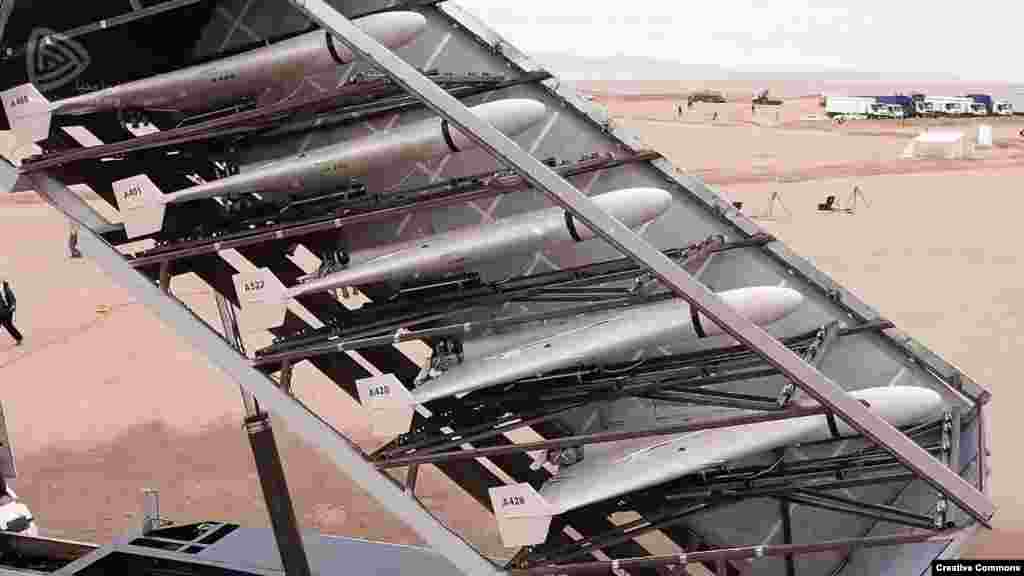
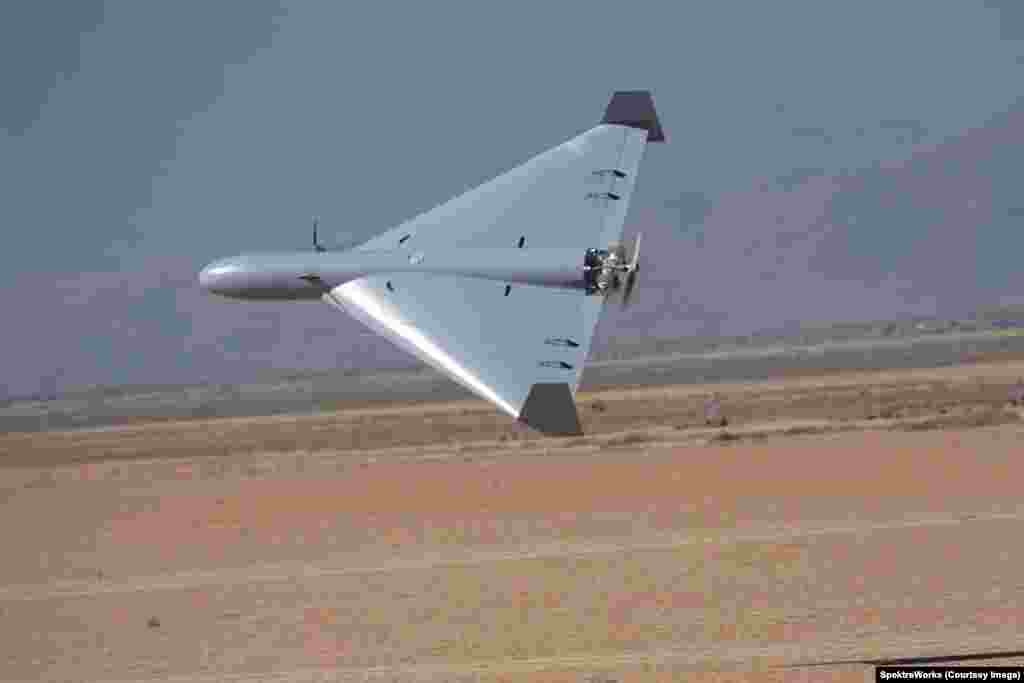
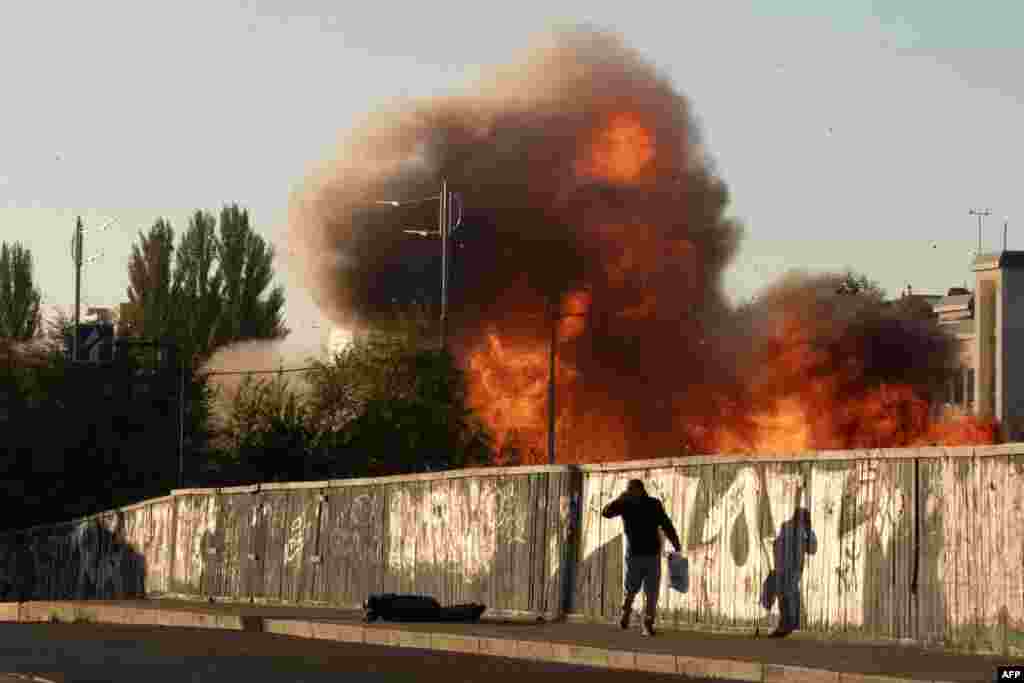
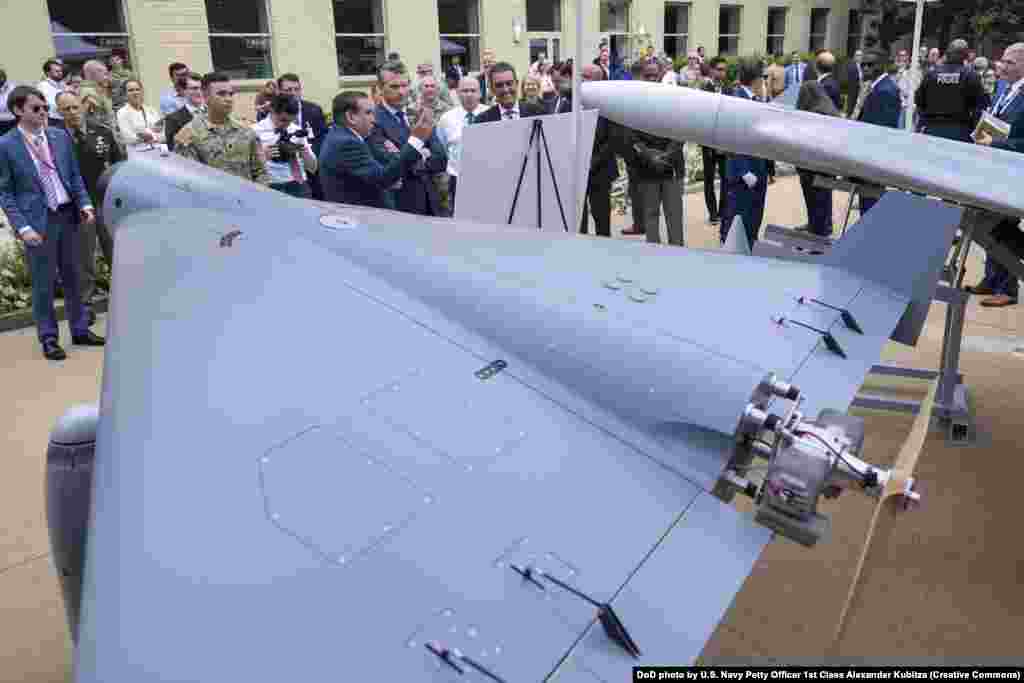
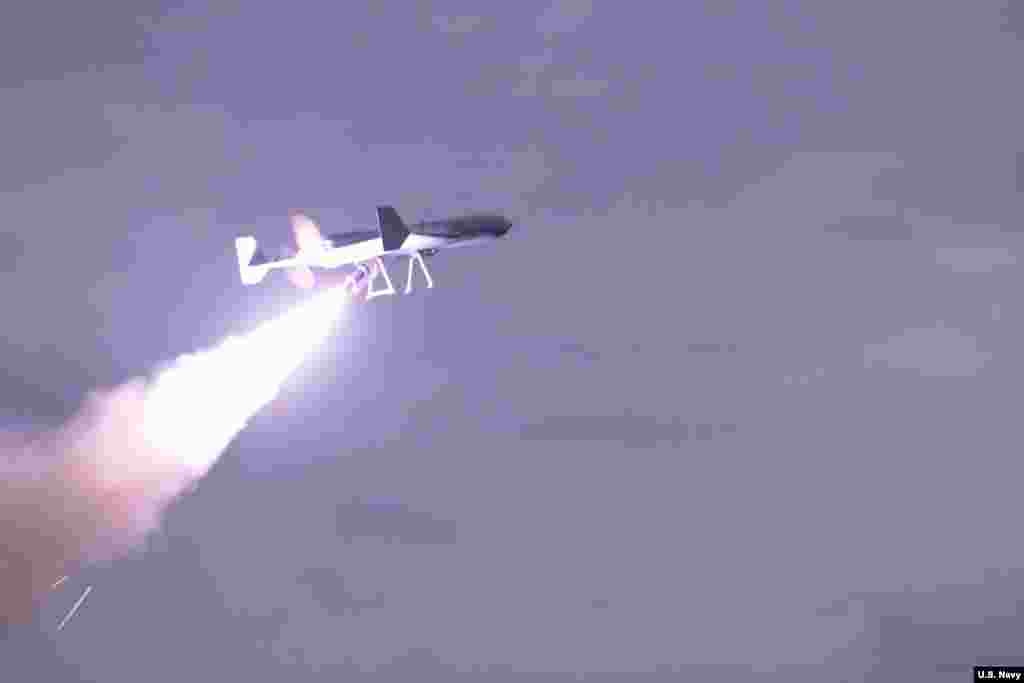
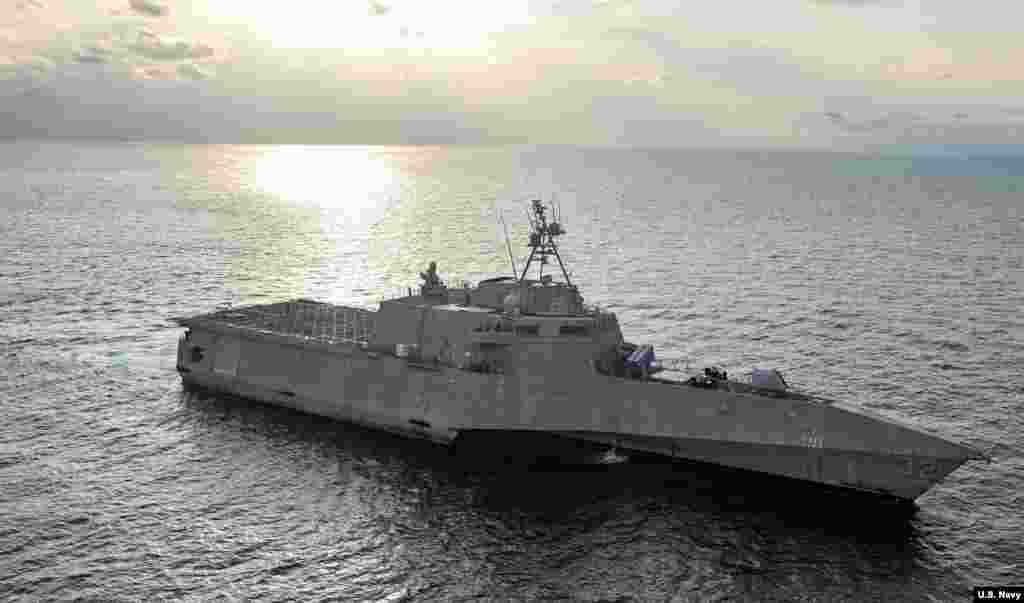
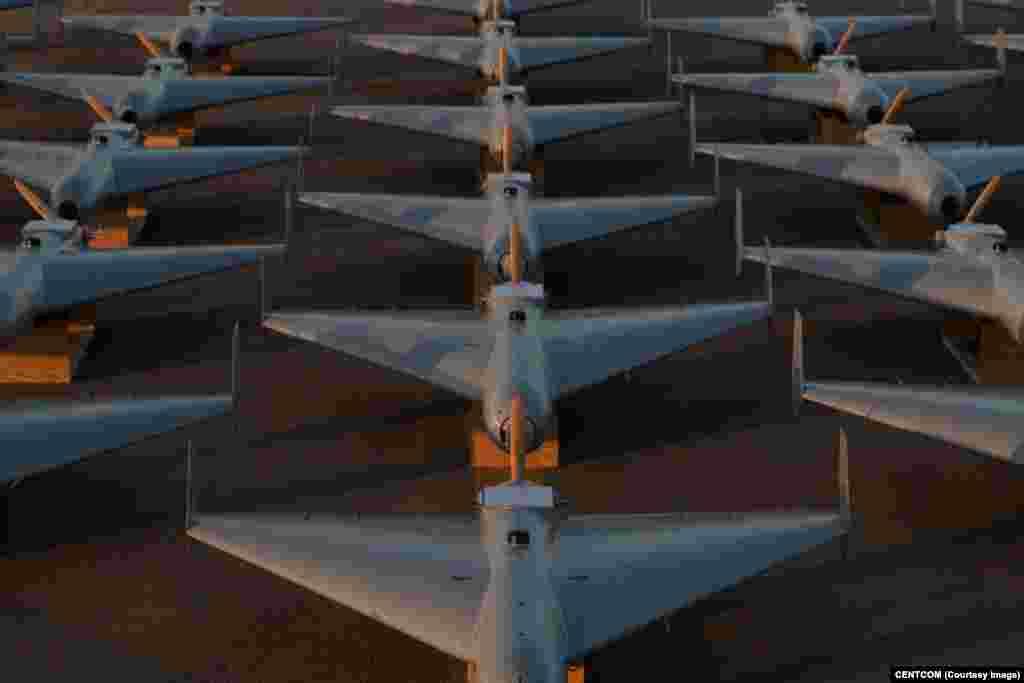
At the same time, Petraeus dismissed the notion that Moscow could meaningfully bolster Iran's air defenses. Russia, he said, cannot even keep its own advanced systems operational, as Ukrainian drones regularly destroy radars and launchers.
More broadly, he suggested the US campaign sends a signal of deterrence. It demonstrates both "considerable" capabilities and a willingness to use them -- a combination that shapes adversaries' calculations.
The Balancing Act
For Ukraine, the implications cut both ways.
On one hand, a weakened Iran could mean fewer drones and less technological cooperation flowing to Russia. On the other, a United States deeply engaged in the Middle East may conserve high-end munitions for its own contingencies.
Williams cautioned that even Ukraine's other suppliers could hesitate amid uncertainty. As the conflict escalates, he said, partners may become "increasingly hesitant to meet Kyiv's needs."
That places a premium on conservation, diversification, and domestic production -- the very steps Chernohorenko urged.
As Trump hosts Merz in Washington, European leaders are expected to seek reassurances that Ukraine will not be sidelined.
But the arithmetic of war -- industrial capacity, stockpiles, and competing theaters -- may prove harder to manage than diplomatic messaging.
For now, Europe faces a stark reality: If America’s center of gravity shifts, it will have to shoulder more of Ukraine’s defense, and do so quickly.

