


The United States is considering arming Iranian Kurdish opposition groups based in neighboring Iraq, according to reports, in a move that could open a new front in the war on Iran and risks igniting a civil war in the Middle East country.
Several Iranian opposition Kurdish groups are based in Iraq's semi-autonomous Kurdish region and have been waging a low-level insurgency against Tehran for years. Some have demanded autonomy within Iran while others are fighting for secession from the Islamic republic.
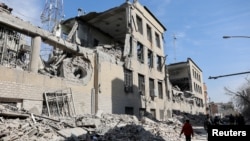
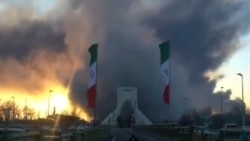
The possibility of the United States supplying weapons to Iranian Kurdish groups and supporting potential cross-border ground attacks in the western part of the country comes as the United States and Israel wage a massive aerial bombardment of Iran.

The US aim, experts say, would be to stretch Tehran's military resources, weaken the state's grip on power, and foment an uprising inside Iran, a multiethnic country of some 90 million people.
Iran's clerical rulers, despite the killing of Supreme Leader Ayatollah Ali Khamenei and senior military leaders, have not capitulated or fragmented and maintain control of the country since the joint US-Israeli air campaign began on February 28.
"The main goal is to make sure the Islamic republic starts losing control of some areas of the country," said Michael Horowitz, an independent defense expert based in Israel.
"The assessment may be that by doing so, other minorities as well as the broader opposition may be inspired. Some elements within the regime who may be tempted to defect or flee may also see this as a sign that they should do so now, before the situation spins fully out of control."
Kurds make up around 10 percent of Iran's population and primarily live in the country's west along the border with Iraq. Iran has long been accused of suppressing and discriminating against the country's ethnic minorities, including Kurds.
Sascha Bruchmann, a military and security affairs analyst at the London-based International Institute for Strategic Studies, said possible ground incursions by Iranian Kurdish groups into western Iran could stretch Tehran's military resources.
"If the Kurdish factions were to stage a concerted series of attacks, the IRGC [Islamic Revolutionary Guards Corps] would have to seek reinforcements," said Bruchmann, referring to the elite branch of Iran's armed forces.
"However, that would weaken their posture in core cities such as Tehran, Isfahan, or Karaj. It would thus create a dilemma for the regime where to send sparse reinforcements in times when coordination is also more difficult. It is this dilemma and thinning out of forces that is the operational goal."
The risks of the United States possibly arming Iranian opposition Kurds groups are considerable, experts say.
"Washington could trigger a civil war and the fragmentation of the country, which could have lasting consequences," said Horowitz.


Many of these groups were previously armed but have since laid down their weapons.
"If they engage in a long-term war against Iran, and the US support disappears, this will prove very dangerous for them," said Horowitz.
The United States recently cut support to the Syrian Democratic Forces (SDF), a Kurdish-led militia that was a key US partner for years in the war against the Islamic State extremist group.
Longstanding Disputes
In anticipation of a US attack on Iran, five Iranian opposition Kurdish groups based in Iraqi Kurdistan announced a new political coalition last month aimed at overthrowing the Islamic republic and ultimately achieving Kurdish autonomy.

The new coalition includes the Kurdistan Freedom Party (PAK), the Democratic Party of Iranian Kurdistan (PDKI), the Kurdistan Free Life Party (PJAK), the Organization of Iranian Kurdistan Struggle (Khabat), and the Komala of the Toilers of Kurdistan. The coalition does not include several Kurdish political heavyweights such as the Komala Party of Iranian Kurdistan.
Iran has sporadically conducted military strikes against the exiled Kurdish groups, which Tehran has designated as terrorist organizations and accused them of serving American and Israeli interests. Those attacks could intensify if the United States arms the groups.
On March 4, Iran launched rocket attacks at a camp near the border operated by the PAK, the group said, adding that one person was killed and three wounded. A day earlier, drone strikes struck a base run by the PDKI in northern Iraq.
Experts say it is unclear if the various Iranian Kurdish groups in Iraq can settle their deep differences and have the willingness and ability to fight against the Islamic republic.
"There are longstanding disputes, and they need to prove solidarity on the field," said Bruchmann. "It is less about the potential impact of some better or more weapons from the US, but rather the will to fight the Iranian regime decisively and coordinate military attacks among them that will decide whether the Kurds will add a ground element to the US-Israeli air campaign."

