




'Endgame' For Iran's Oil Sector? How US Blockade May Impact Tehran's Calculus
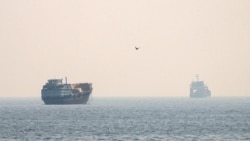
Weeks of US and Israeli air strikes, sanctions, and restrictions have hit Iran hard, but it could be geology that eventually pushes it into making concessions in its ongoing standoff with the United States.
As the US naval blockade of Iran approaches the end of its third week, data from shipping and industry monitors suggests that tankers have been unable to move Iranian crude through the Strait of Hormuz toward markets in Asia.
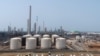
This means that Iranian oil storage capacity is rapidly filling, and the clock is ticking before Iran will need to cease production. That's the problem for Tehran, analysts say, as it tries to withstand US pressure to negotiate a peace agreement.
To read the full news analysis by Ray Furlong, Hannah Kaviani, and RFE/RL's Radio Farda, click here.
Iran's Conservative Camp Split Over US Talks To End War
- By Kian Sharifi
In the face of a devastating US-Israeli bombing campaign, Iran's rival political factions cast aside their differences to unite behind the country's decision-makers.
But since a cease-fire with the United States came into force on April 8, deep-rooted political differences in the Islamic republic have spilled out into the open.
The public rupture over Tehran's attempts to negotiate an end to the two-month-long war has pitted Iran's small but vocal faction of ultraconservatives against more moderate conservatives, a confrontation that has been laid bare in the halls of parliament and on the front pages of state-affiliated media.
To read the full report, click here.
Russia Yet To Decide On Returning Employees To Iran's Bushehr Plant
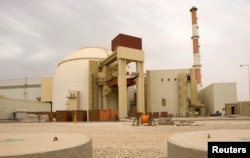
The situation around Iran's Bushehr nuclear power plant is calming, but Russia has yet to decide on the return of its employees to the plant after they were taken out of the country because of the war.
Aleksei Likhachev, CEO of Rosatom -- Russia's state nuclear energy company -- announced on April 29 that the situation at Bushehr is "becoming slightly clearer," and that about 1,000 Iranian employees have returned to their workplace.
"We are receiving invitations from the Iranian nuclear industry management to return the [Russian specialists] as soon as possible, but no such decision has been made yet," he told reporters.
Rosatom, which manages and oversees the Bushehr nuclear power plant, evacuated more than 300 of its employees to Russia.
Iran has said the area around the plant was targeted by air strikes four times during the war. Rafael Grossi, director-general of the International Atomic Energy Agency, said one bomb landed "75 meters" from the plant and called for a halt to attacks anywhere near it.
China's Energy Giant Announces Earnings Boost As Iran War Ripples Through Chinese Economy
Sinopec, China’s state-owned oil and natural gas giant, announced stronger-than-projected first-quarter earnings buoyed by a surge in energy prices from the war in Iran.
During an earnings briefing on April 29, Sinopec said its net profits rose by 28 percent year-on-year in the first quarter, while shares in the company rose 2.4 percent in the Hong Kong stock market.
Shares in other major Chinese oil companies PetroChina and China National Overseas Oil Corporation (CNOOC) rose 2.7 and 1.4 percent, respectively. Sinopec also expects chemical exports to rise 26 percent in 2026.
The eight-week blockade of the Strait of Hormuz and fighting in Iran have tightened global supply for oil, gas, and petrochemicals, raising prices and lifting profit margins for energy companies.
The announcement comes as economic fallout from the war begins to take hold across China's manufacturing-dependent economy. China has withstood the worst of the energy shocks from the war, but the war has also begun to impede natural gas imports. Sinopec reported a loss of 830 million yuan ($121.4 million) from reduced supplies, as well as a 7.6 percent reduction in the usage of its refineries.
At a meeting on April 28, Beijing pledged to strengthen the economy by prioritizing energy security and technology self-sufficiency. The Politburo, China's top decision-making body, said it would "systemically respond" to external challenges, as the extended blockade of Hormuz begins to take effect on the country's economy.
Labor Activist: 750,000 People Registered As Unemployed Since Start Of War
Hassan Sadeghi, head of Iran's Union of Veteran Workers, said that since the start of the US-Israeli war with Iran, around 750,000 people have newly registered as unemployed.
The Unemployment Insurance Fund, which before the war had supported around 180,000 people, has now grown to nearly 1 million beneficiaries, according to Sadeghi. He said the surge in applications was placing an extreme burden on available resources.
Large-scale job losses among workers have been reported due to strikes on Iran's petrochemical and steel industries.
Although no precise figures have been released on how many people have lost their jobs due to strikes and the shutdown of production facilities, reports indicate that tens of thousands of employees lost their jobs in connection with the steel sector alone, given the scale of strikes on major plants such as the Mobarakeh Steel Company in Isfahan.
According to preliminary estimates by Iran’s Labor Ministry, the 40-day war resulted in the loss of more than 1 million jobs, with 2 million people directly or indirectly affected by unemployment.
UN: Iran Executed 21 People, Arrested Over 4,000 Since Escalation of Conflict
Iran has executed at least 21 people and detained more than 4,000 more since the escalation of conflict in the Middle East, the United Nations Human Rights Office said.
According to the UN Human Rights Office, at least nine people have been executed in connection with the January 2026 protests, 10 on charges of alleged membership in opposition groups, and two on espionage charges.
The organization also said that more than 4,000 of people have been arrested in Iran on national security-related charges since the beginning of the conflict.
“I am appalled that -- on top of the already severe impacts of the conflict– the rights of the Iranian people continue to be stripped from them by the authorities, in harsh and brutal ways,” said UN Human Rights Chief Volker Turk in the statement.
“In times of war, threats to human rights increase exponentially. Yet even where national security is invoked, human rights can only be limited where strictly necessary and proportionate, and for a legitimate end. And core, non-derogable rights -- such as protection against arbitrary detention, and the right to fair trial -- must be respected absolutely, at all times."
Previously, Amnesty International warned that cease-fires in the Middle East could not prevent the humanitarian crisis from escalating, saying civilians in Iran continue to face the "double threat" of war and repression.
Human rights groups, including Amnesty International, say Iran carries out one of the highest numbers of executions per capita in the world and ranks among the countries with the highest total executions globally, after China, for which reliable data is limited.
Two organizations, the Norway-based Iranian Human Rights and Together Against the Death Penalty, based in Paris, have reported that Iran executed at least 1,639 people in 2025.
According to the rights groups, this is the highest annual execution total recorded in Iran since 1989.
Trump Says Iran 'Better Get Smart Soon'
US President Donald Trump asserted that Iran is incapable of reaching a non-nuclear deal.
Writing on his Truth Social network on April 29, Trump said: "Iran can't get its act together. They don't know how to sign a non-nuclear deal. They better get smart soon!"
He did not elaborate further on what such a "deal" would entail.
His post also featured an AI-generated image of Trump, in aviator sunglasses, holding a machine gun with fires blazing behind him.
This new statement by the US president comes as negotiations between Iran and the United States remain deadlocked after a round of talks in Islamabad failed to produce any positive results amid an ongoing cease-fire.
It was reported earlier this week that Iran had made a proposal to open the Strait of Hormuz in exchange for lifting the naval blockade by the US military, but reports indicate that US government officials have not accepted this offer.
US Secretary of State Marco Rubio explicitly called the offer unacceptable.
In Iran, officials have often remained silent on the matter, but in recent media discussions, the issue has been raised that lifting the naval blockade should be a precondition for negotiations for any agreement with the United States, while the Iranian government's resistance to dismantling Tehran's nuclear program has been cited as one of the main obstacles to the failure of Iran-US negotiations.
Japanese Vessel Safely Passes Strait of Hormuz
Japanese Prime Minister Sanae Takaichi has confirmed that a Japanese-linked vessel that had been stranded in the Persian Gulf safely passed through the Strait of Hormuz on April 29 and is heading to Japan with three Japanese crew members on board.
In a post on X published on April 29, she also emphasized the importance of quickly restoring free and safe navigation through the strait for vessels of all countries, including Japan, and said she had conveyed this position to Iranian President Masud Pezeshkian.
"The Government of Japan considers this passage of a Japan-related vessel as a positive development," Japan's Foreign Ministry said in a separate statement.
Iran has restricted commercial shipping from transiting through the strait, while the United States has enforced a naval blockade on all ships entering or leaving Iranian ports. This has led to sharply reduced traffic and ongoing disruptions to global oil flows.
US Flags Sanctions Risk Over China 'Teapot' Refineries
- By RFE/RL
The US Treasury Department has warned that China-based independent "teapot" refineries, especially in Shandong Province, pose sanctions risks due to their role in importing Iranian crude oil.
According to the Treasury, China buys about 90 percent of Iran's oil exports, much of it processed by these smaller refineries, generating revenue for Tehran.
"This revenue ultimately benefits the Iranian regime, its weapons programs, and its military," the Treasury statement said.
The United States has intensified economic pressure on Iran by targeting the country’s international shadow banking infrastructure, shadow shipping fleet, and Chinese "teapot" refineries that support Tehran’s oil trade, as part of the administration’s "maximum pressure" campaign, Treasury Secretary Scott Bessent said in a post on X.
Bessent stated that Iran's key oil export hub, Kharg Island, is nearing storage capacity, a situation that could force Tehran to reduce oil production. He added that this could cost the country around $170 million per day in lost revenue and potentially cause "permanent damage to Iran's oil infrastructure."
"Treasury will continue to exert maximum pressure and any person, vessel, or entity facilitating illicit flows to Tehran risks exposure to U.S. sanctions," Bessent wrote on X.
We are now closing the live blog for the day. We'll be back at 7:30 a.m. Central European time to cover the latest events across the Middle East.