Iran's supreme leader said Tehran would keep in place its ban on holding any talks with the United States.
Ayatollah Ali Khamenei made the comments on state TV on November 3, on the eve of the 40th anniversary of the seizure of the U.S. Embassy in Tehran.
"One way to block America's political infiltration is to ban any talks with America. It means Iran will not yield to America's pressure," Khamenei was quoted as saying.
"Those who see negotiations with the U.S. as the solution to every problem are certainly mistaken," he was quoted as saying. "Nothing will come out of talking to the U.S. because they certainly and definitely won't make any concessions."
444 Days: Looking Back At The U.S.-Iran Hostage Crisis
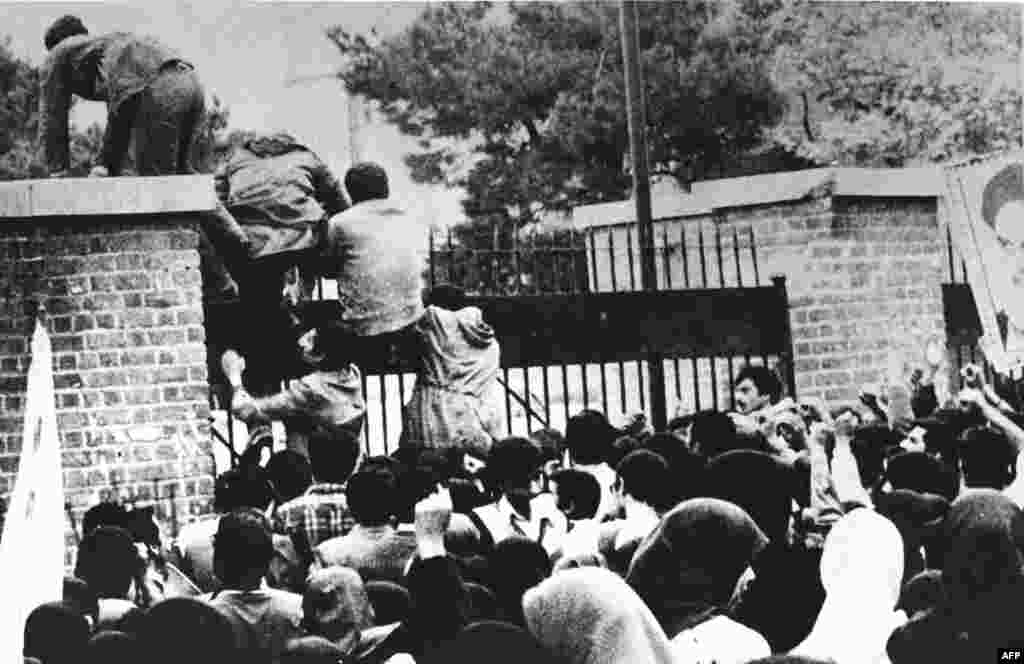
1/19Several hundred young Iranians, supported by a crowd of more than 3,000, climb the walls of the U.S. Embassy at 10:30 a.m. on November 4, 1979. They blindfolded and handcuffed dozens of U.S. citizens they found inside. Protesters had seized the Tehran compound months before, capturing a U.S. Marine on February 14, but order was restored after several hours.
Forty years ago, on November 4, 1979, student followers of Ayatollah Ruhollah Khomeini stormed the U.S. Embassy in Tehran and took dozens of American hostages. The attack sparked a diplomatic crisis that reverberates through the region to this day.
Show moreShow less
2/19Iran's monarch, Shah Mohammad Reza Pahlavi, leaves his country for the last time on January 16, 1979, going first to Egypt. He and his wife, Empress Farah, were greeted by President Anwar Sadat (second from right). Iranian students were angry that U.S. President Jimmy Carter later allowed the shah to travel to New York for cancer treatment. The shah had fled Tehran amid a surge of demonstrations against his rule. His troops had answered some of them with deadly gunfire.
Forty years ago, on November 4, 1979, student followers of Ayatollah Ruhollah Khomeini stormed the U.S. Embassy in Tehran and took dozens of American hostages. The attack sparked a diplomatic crisis that reverberates through the region to this day.
Show moreShow less
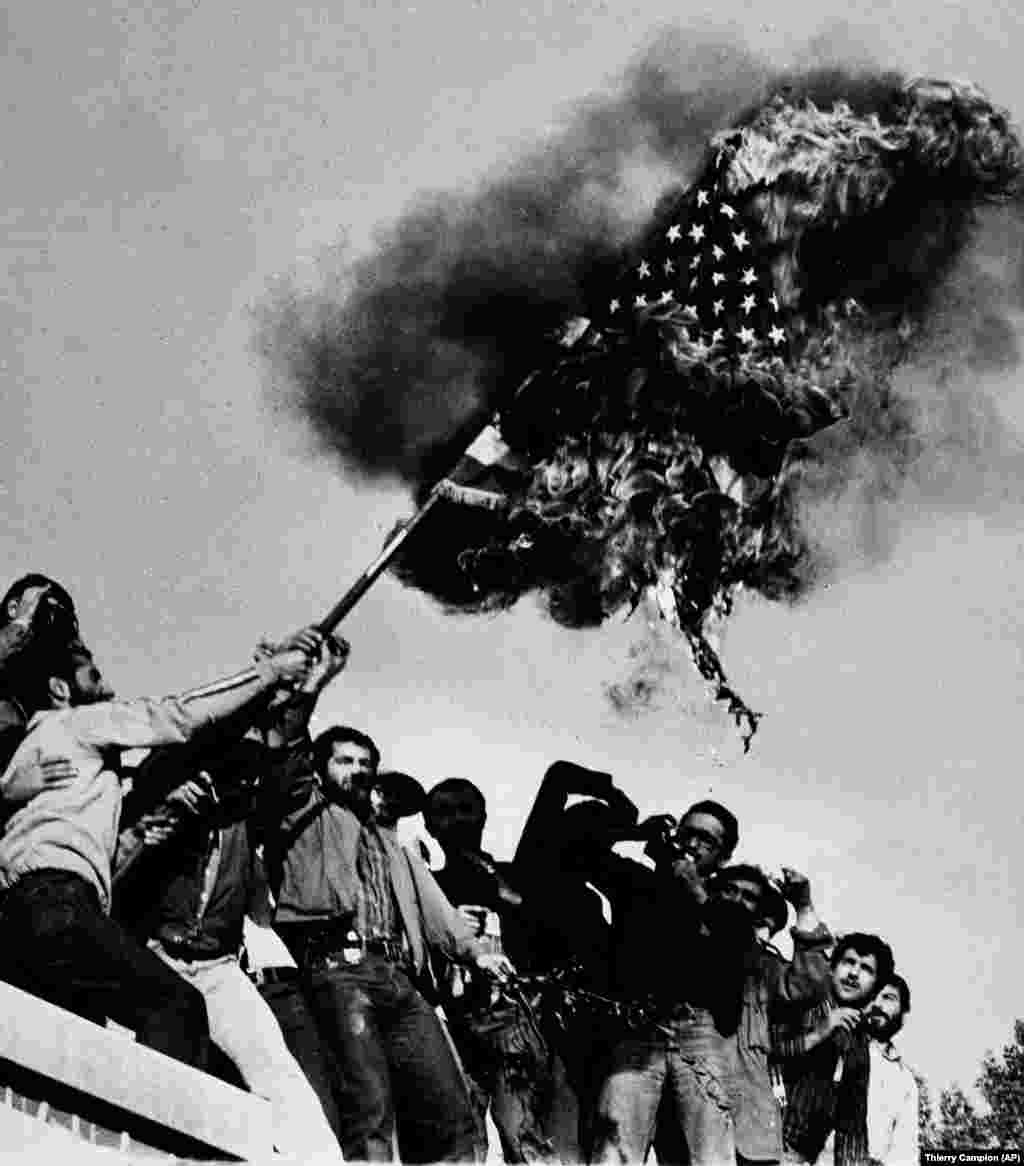
3/19Demonstrators burn an American flag on November 9, 1979, atop the wall of the U.S. Embassy in Tehran. Weeks after the shah's departure, Ayatollah Ruhollah Khomeini returned from his 14-year exile in Paris to jubilant crowds. In March 1979, a referendum showed an overwhelming margin in favor of replacing the monarchy with an Islamic government.
Forty years ago, on November 4, 1979, student followers of Ayatollah Ruhollah Khomeini stormed the U.S. Embassy in Tehran and took dozens of American hostages. The attack sparked a diplomatic crisis that reverberates through the region to this day.
Show moreShow less
4/19Anger and frustration about the hostages held in Tehran grew in the United States throughout the crisis. An anti-Iranian demonstration was held in Washington, D.C., on November 9, 1979.
Forty years ago, on November 4, 1979, student followers of Ayatollah Ruhollah Khomeini stormed the U.S. Embassy in Tehran and took dozens of American hostages. The attack sparked a diplomatic crisis that reverberates through the region to this day.
Show moreShow less
5/19The Iranian captors took pains to show the American hostages looking comfortable. This image of an embassy staffer and a U.S. Marine was presented at a Tehran news conference on November 9, 1979. But the outside world had almost no access to the captives and, in reality, they struggled to cope. They endured beatings, a mock execution, and two would attempt suicide.
Forty years ago, on November 4, 1979, student followers of Ayatollah Ruhollah Khomeini stormed the U.S. Embassy in Tehran and took dozens of American hostages. The attack sparked a diplomatic crisis that reverberates through the region to this day.
Show moreShow less
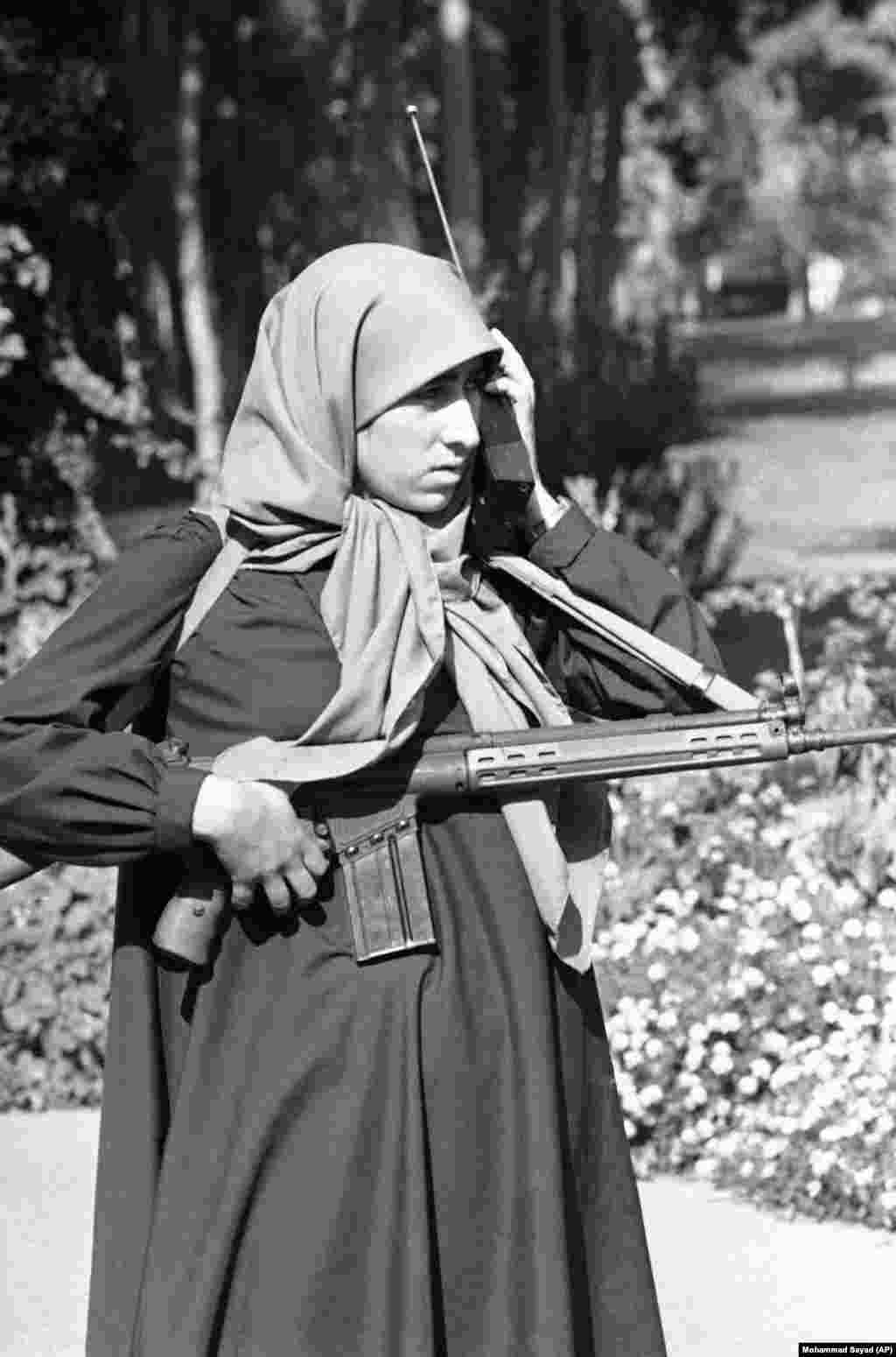
6/19An Iranian student security guard patrols the embassy on November 10, 1979, as thousands of demonstrators gathered, chanting anti-American slogans. Leaders of the hostage-takers later said they never expected to hold the embassy for more than a few hours. They said they changed their plan after Ayatollah Khomeini endorsed their actions.
Forty years ago, on November 4, 1979, student followers of Ayatollah Ruhollah Khomeini stormed the U.S. Embassy in Tehran and took dozens of American hostages. The attack sparked a diplomatic crisis that reverberates through the region to this day.
Show moreShow less
7/19Three hostages released from the U.S. Embassy on November 19, 1979, are driven from a press conference to the airport. From left: Kathy Gross, 22, of Cambridge Spring, Pennsylvania; Marine Sergeant Ladell Maples, 23, of Earle, Arkansas; and Marine Sergeant William Quarles, 23, of Washington, D.C.
Forty years ago, on November 4, 1979, student followers of Ayatollah Ruhollah Khomeini stormed the U.S. Embassy in Tehran and took dozens of American hostages. The attack sparked a diplomatic crisis that reverberates through the region to this day.
Show moreShow less
8/19Thirteen Americans were freed on November 21, 1979, and taken to the U.S. Air Force base in Wiesbaden, West Germany, where they appeared before journalists. Lloyd Rollins, at the podium, read a statement from their former captors. Front row from the left: Terry Robinson, Joseph Vincent, James Hughes, Joan Walsh, Kathy Gross, and Anne Johnson. Back row from left: Terry Tedford, Liz Montagne, Wesely Williams, William Quarles, Ladell Maples, and David Walker.
Forty years ago, on November 4, 1979, student followers of Ayatollah Ruhollah Khomeini stormed the U.S. Embassy in Tehran and took dozens of American hostages. The attack sparked a diplomatic crisis that reverberates through the region to this day.
Show moreShow less
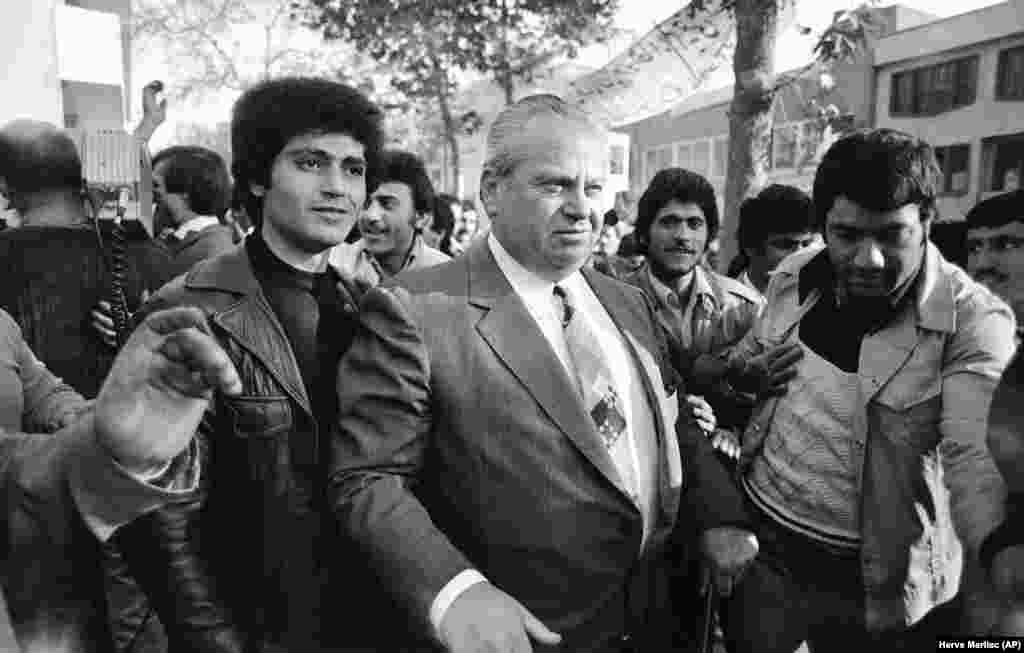
9/19Efforts by the International Red Cross to check on the hostages were thwarted. The organization’s delegate, Andre Tschiffeli (center), was only allowed a two-hour meeting with the student captors on November 24, 1979. He was given no access to the hostages. United Nations representatives were also kept away.
Forty years ago, on November 4, 1979, student followers of Ayatollah Ruhollah Khomeini stormed the U.S. Embassy in Tehran and took dozens of American hostages. The attack sparked a diplomatic crisis that reverberates through the region to this day.
Show moreShow less
10/19Iranian orphan girls in chadors demonstrate outside the embassy on November 27, 1979, demanding the return of the shah for prosecution.
Forty years ago, on November 4, 1979, student followers of Ayatollah Ruhollah Khomeini stormed the U.S. Embassy in Tehran and took dozens of American hostages. The attack sparked a diplomatic crisis that reverberates through the region to this day.
Show moreShow less
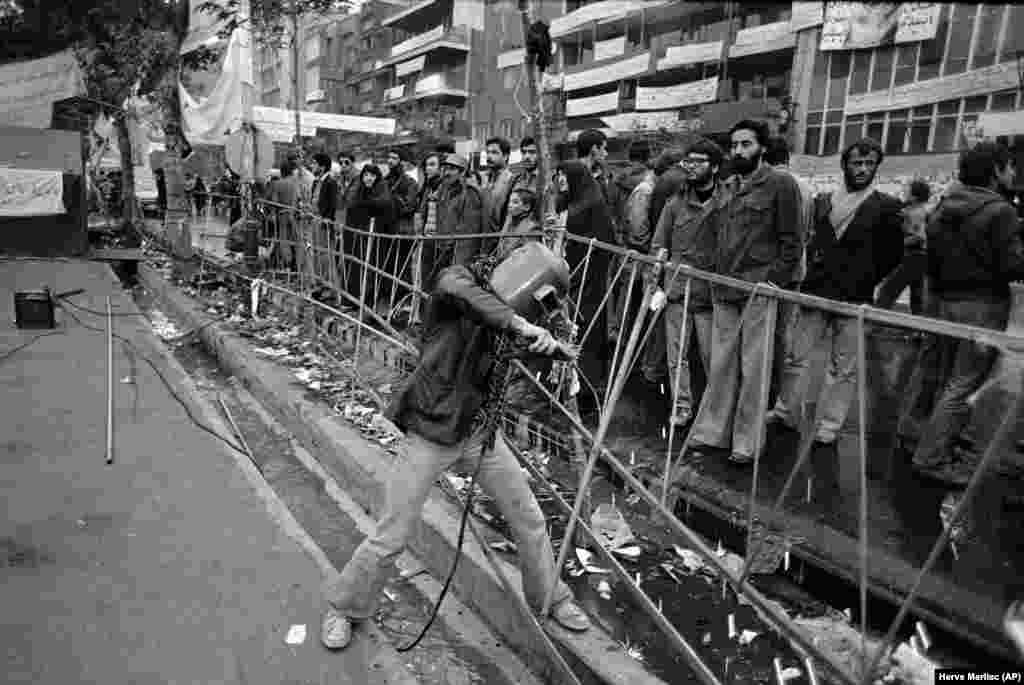
11/19To hold back the growing crowds of anti-American demonstrators, a steel fence was erected around the embassy gates as Iranians marched to mark the holy day of Tasua on November 29, 1979.
Forty years ago, on November 4, 1979, student followers of Ayatollah Ruhollah Khomeini stormed the U.S. Embassy in Tehran and took dozens of American hostages. The attack sparked a diplomatic crisis that reverberates through the region to this day.
Show moreShow less
12/19Some U.S. citizens were sympathetic to the Iranian students’ demands: Two Americans, Carol Downer (left) of Los Angeles and Rebecca Chalker (right) of Tallahassee, Florida, hold up a sign in front of the U.S. Embassy calling for the death of the shah on December 15, 1979. The sign was attributed to Chicago postal workers.
Forty years ago, on November 4, 1979, student followers of Ayatollah Ruhollah Khomeini stormed the U.S. Embassy in Tehran and took dozens of American hostages. The attack sparked a diplomatic crisis that reverberates through the region to this day.
Show moreShow less
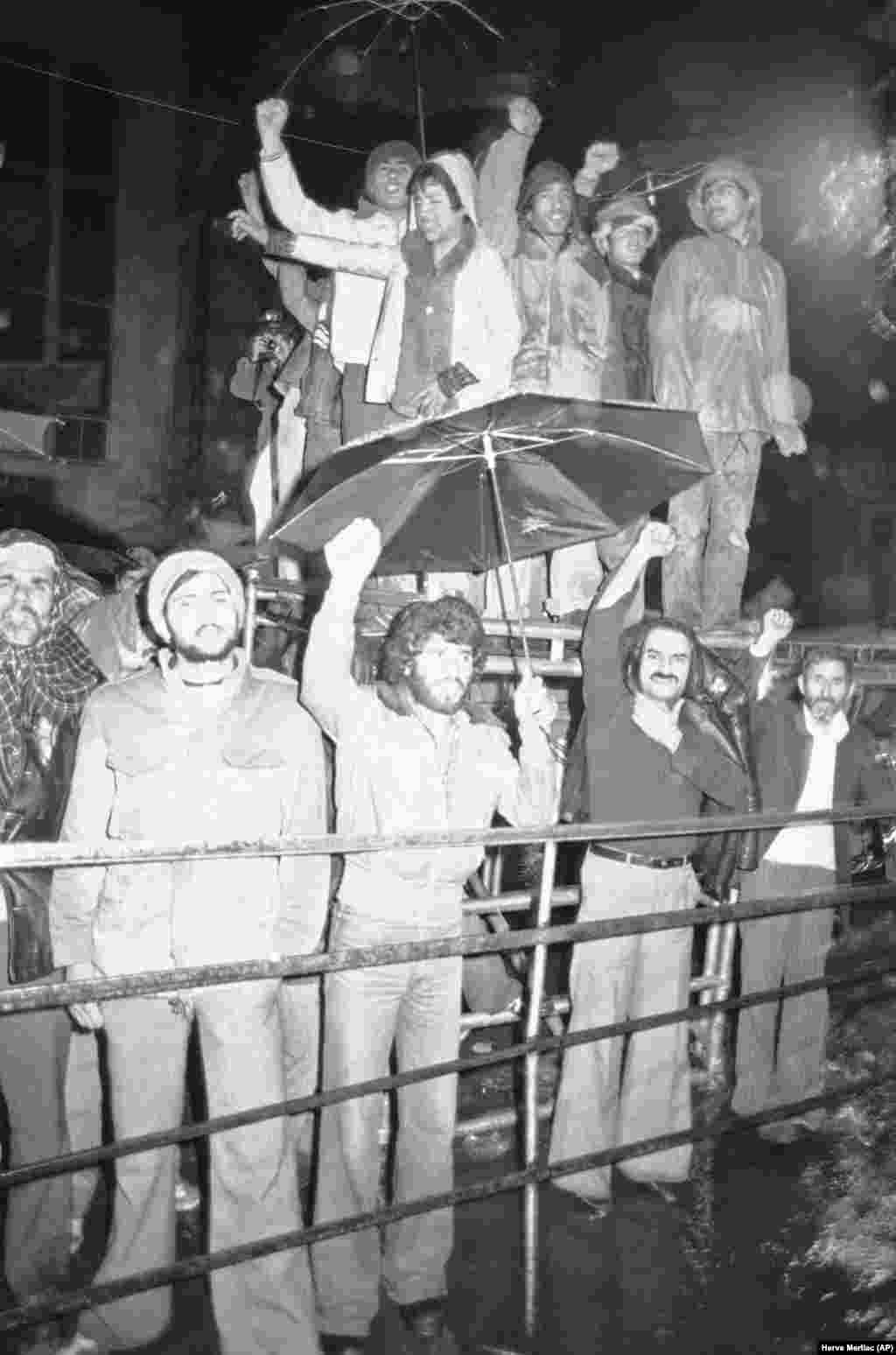
13/19Iranians braved heavy rain to demonstrate their solidarity with hostage-holding students on December 15, 1979, after the news broke that the shah gone to Panama.
Forty years ago, on November 4, 1979, student followers of Ayatollah Ruhollah Khomeini stormed the U.S. Embassy in Tehran and took dozens of American hostages. The attack sparked a diplomatic crisis that reverberates through the region to this day.
Show moreShow less
14/19The American hostages are shown on Christmas Eve 1979. Hundreds of cards sent from well-wishers in the United States were delivered to Iranian guards, who promised to hand them over to the hostages after inspection, but never did.
Forty years ago, on November 4, 1979, student followers of Ayatollah Ruhollah Khomeini stormed the U.S. Embassy in Tehran and took dozens of American hostages. The attack sparked a diplomatic crisis that reverberates through the region to this day.
Show moreShow less
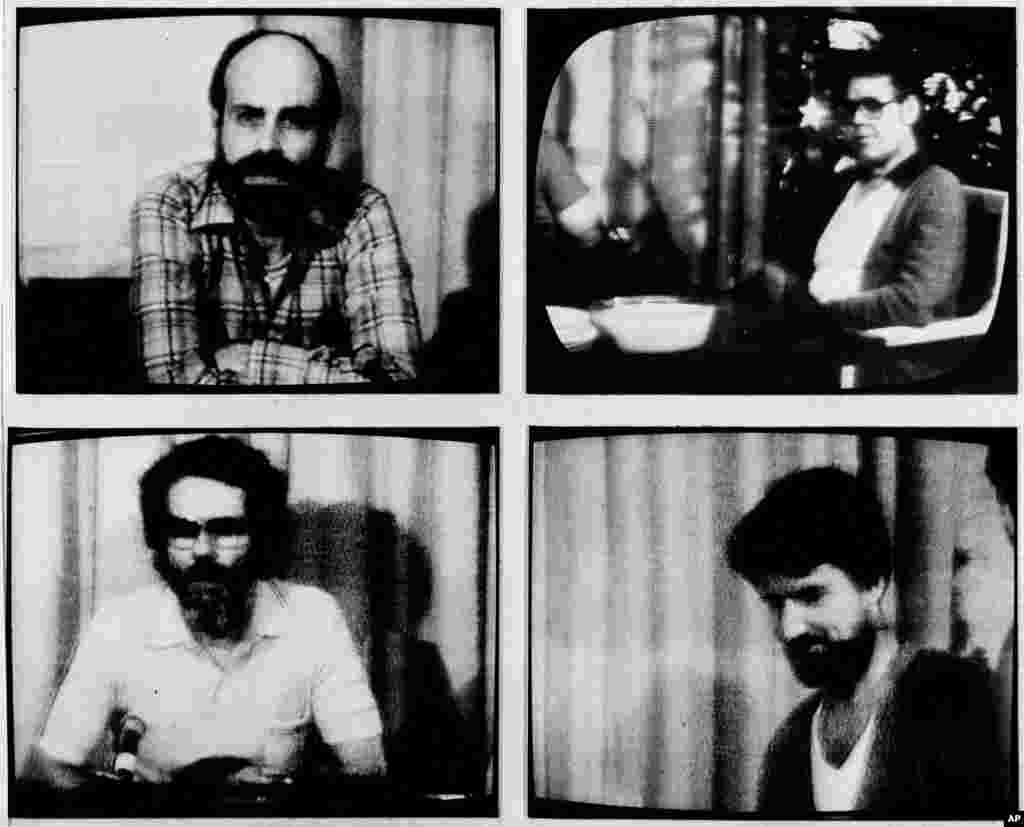
15/19After their second Christmas in captivity, the hostages were allowed to send messages to their families. Their statements were shown on U.S. television on December 27, 1980. Clockwise from upper left: Barry Rosen of Brooklyn, New York; Bert Moore of Mount Vernon, Ohio; William B. Royer Jr. of Houston, Texas; and John Graves of Reston, Virginia.
Forty years ago, on November 4, 1979, student followers of Ayatollah Ruhollah Khomeini stormed the U.S. Embassy in Tehran and took dozens of American hostages. The attack sparked a diplomatic crisis that reverberates through the region to this day.
Show moreShow less
16/19U.S. President Jimmy Carter is shown preparing for a televised address from the Oval Office on April 25, 1980. He reported that his decision to send a hostage-rescue mission into Iran had ended in disaster. Operation Eagle Claw had to be aborted. Eight U.S. servicemen died.
Forty years ago, on November 4, 1979, student followers of Ayatollah Ruhollah Khomeini stormed the U.S. Embassy in Tehran and took dozens of American hostages. The attack sparked a diplomatic crisis that reverberates through the region to this day.
Show moreShow less
17/19The wreckage of a burned-out American C-130 Hercules cargo plane is inspected by Iranian troops in the Dasht-e Kavir desert, some 500 kilometers from Tehran, on April 26, 1980. An RH-53 helicopter collided with the plane during the attempt to free the American hostages. Mechanical problems and a sandstorm hampered the mission, and a U.S. commander advised Carter to abort. The accident happened after the abort order was given. The helicopter's rotor churned up sand, blocking visibility. Carter put much of the blame for his loss in the 1980 presidential election on his failure to free the hostages.
Forty years ago, on November 4, 1979, student followers of Ayatollah Ruhollah Khomeini stormed the U.S. Embassy in Tehran and took dozens of American hostages. The attack sparked a diplomatic crisis that reverberates through the region to this day.
Show moreShow less
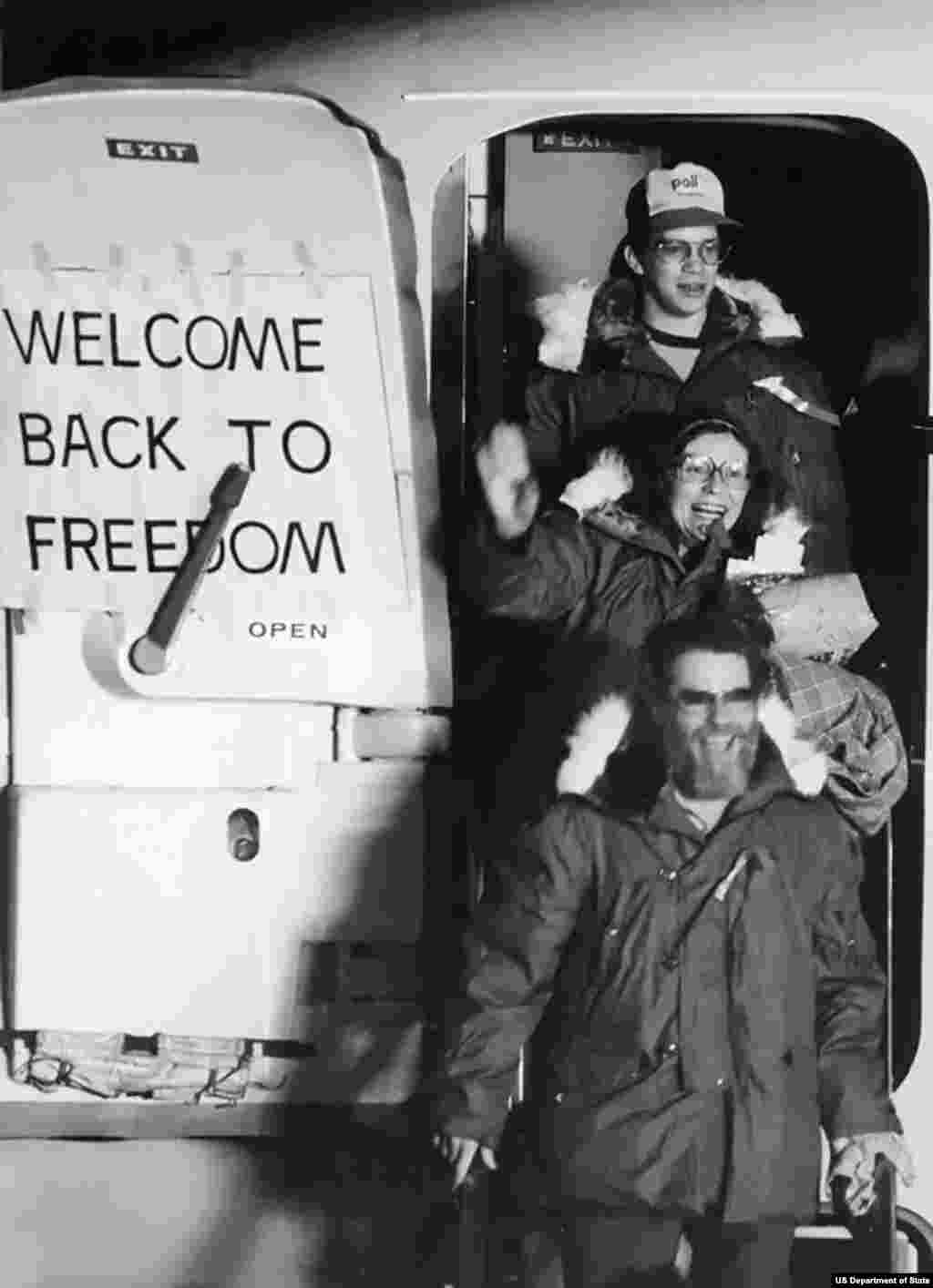
18/19Finally freed after a tortuous negotiation process mediated by Algeria, the 52 remaining hostages arrive in Wiesbaden, West Germany, on January 20, 1981. The captives were released just minutes after Ronald Reagan was sworn in as U.S. president. Fourteen hostages had been released over the previous year, including one for medical reasons.
Forty years ago, on November 4, 1979, student followers of Ayatollah Ruhollah Khomeini stormed the U.S. Embassy in Tehran and took dozens of American hostages. The attack sparked a diplomatic crisis that reverberates through the region to this day.
Show moreShow less
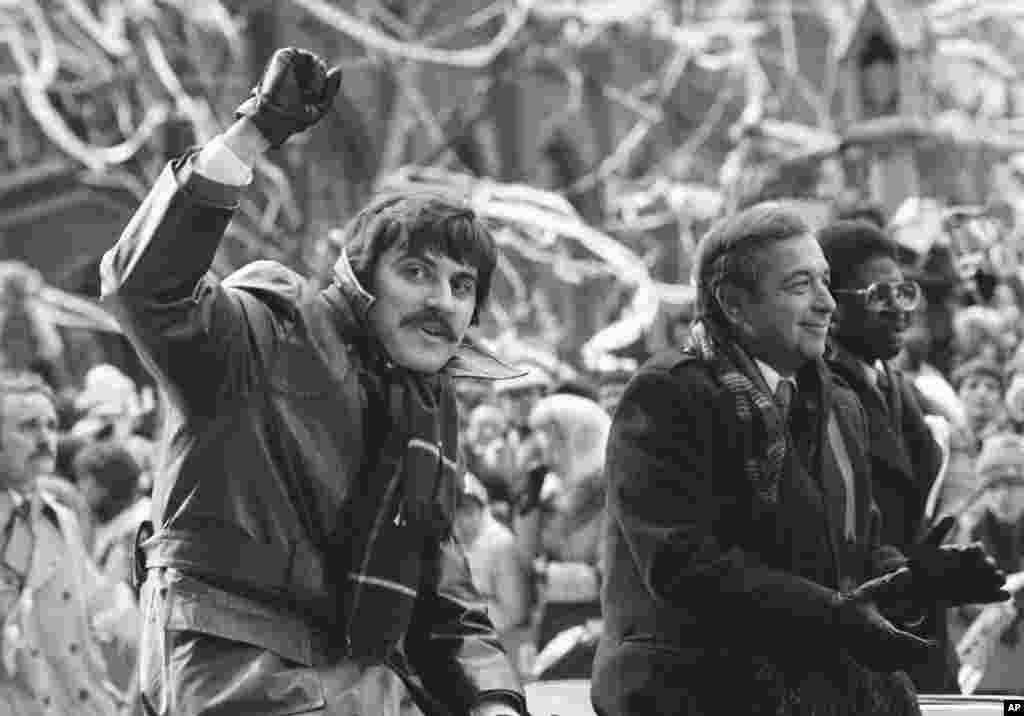
19/19Former hostage Alan Golacinski of Silver Spring, Maryland, waves during a ticker-tape parade in Manhattan that honored the returning Americans on January 30, 1981. The agreement that resulted in the release of the hostages called for the unfreezing of $7.9 billion of Iranian assets abroad. The hostages were blocked from suing Iran, but in 2015, they were granted $4.4 million each by the U.S. government. The money was taken from an $8.9 billion fine against French bank BNP Paribas for its role in the violation of economic sanctions against Iran.
Forty years ago, on November 4, 1979, student followers of Ayatollah Ruhollah Khomeini stormed the U.S. Embassy in Tehran and took dozens of American hostages. The attack sparked a diplomatic crisis that reverberates through the region to this day.
Show moreShow less
Previous slide
Next slide
Never amicable, relations between Tehran and Washington have spiraled downward after U.S. President Donald Trump abandoned the landmark 2015 pact which curbed Tehran's nuclear ambitions in return for lifting crippling Western sanctions.
Washington has since reimposed economic sanctions aimed at halting all Iranian oil exports.
"The U.S. has not changed since decades ago...it continues the same aggressive, vicious behavior and the same international dictatorship," Khamenei said.
On November 4, 1979, Iranian students overran the U.S. Embassy complex in Tehran to demand Washington hand over the ousted U.S.-backed shah, after he was admitted to a U.S. hospital.
The crisis ended after 444 days with the release of 52 Americans.
The two countries broke off diplomatic ties in 1980.