Armenian Prime Minister Nikol Pashinian (right) meets with Arayik Harutiunian in Yerevan in October 2022.
Arayik Harutiunian, the ethnic Armenian leader of Nagorno-Karabakh, has announced that he will be resigning from his post amid rising political tensions over a continuing blockade by Azerbaijan and apparent differences over how to deal with the situation.
“I made this final decision two days ago, taking into account my interactions with all internal and external actors and the public in recent weeks. This is a well-considered decision made solely by myself based on the analysis of the data I have,” Harutiunian said on August 31.
Harutiunian said his resignation would go into effect as of September 1.
Harutiunian also said that State Minister Gurgen Nersisian has been relieved of his post and that Security Council Secretary Samvel Shahramanian had been appointed to replace him and given “wide powers.”
Nagorno-Karabakh Blockade: Desperate Armenians Pile Food In Front Of UN
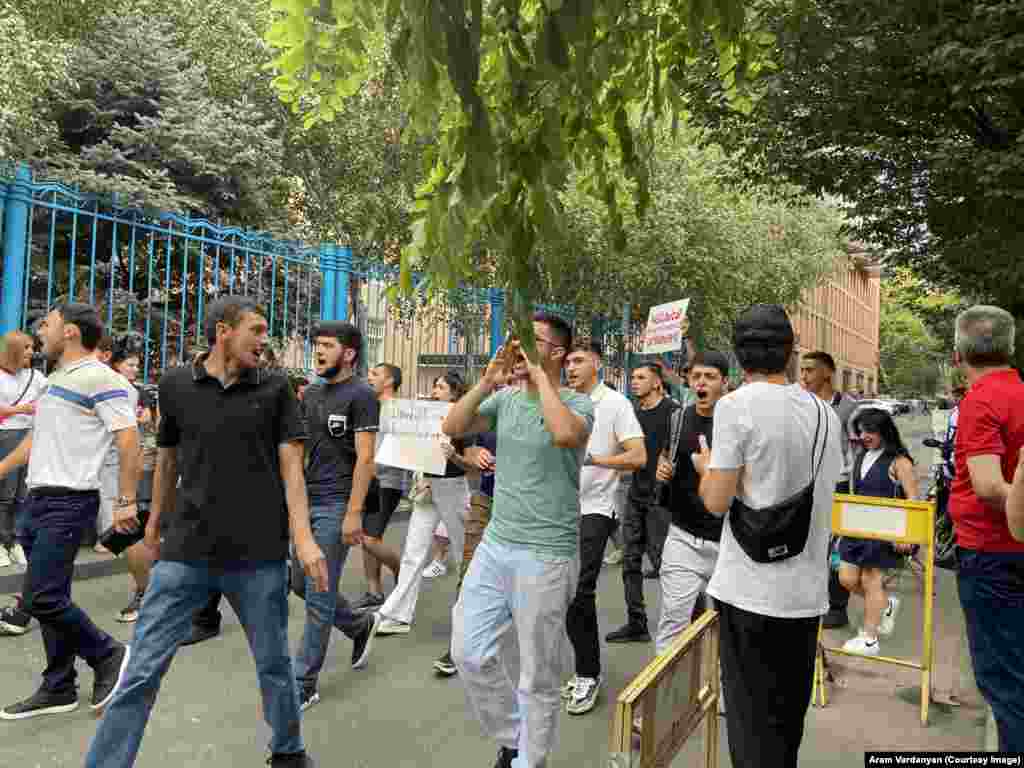
1/8Protesters march near the Yerevan headquarters of the United Nations in Armenia on July 24.
One woman holds a sign calling for the UN to "immediately send humanitarian cargo" to Nagorno-Karabakh.
As Azerbaijan continues a blockade of Nagorno-Karabakh, protesters placed tons of food in front of the United Nations’ office in Yerevan, calling for the organization to deliver the desperately needed supplies.
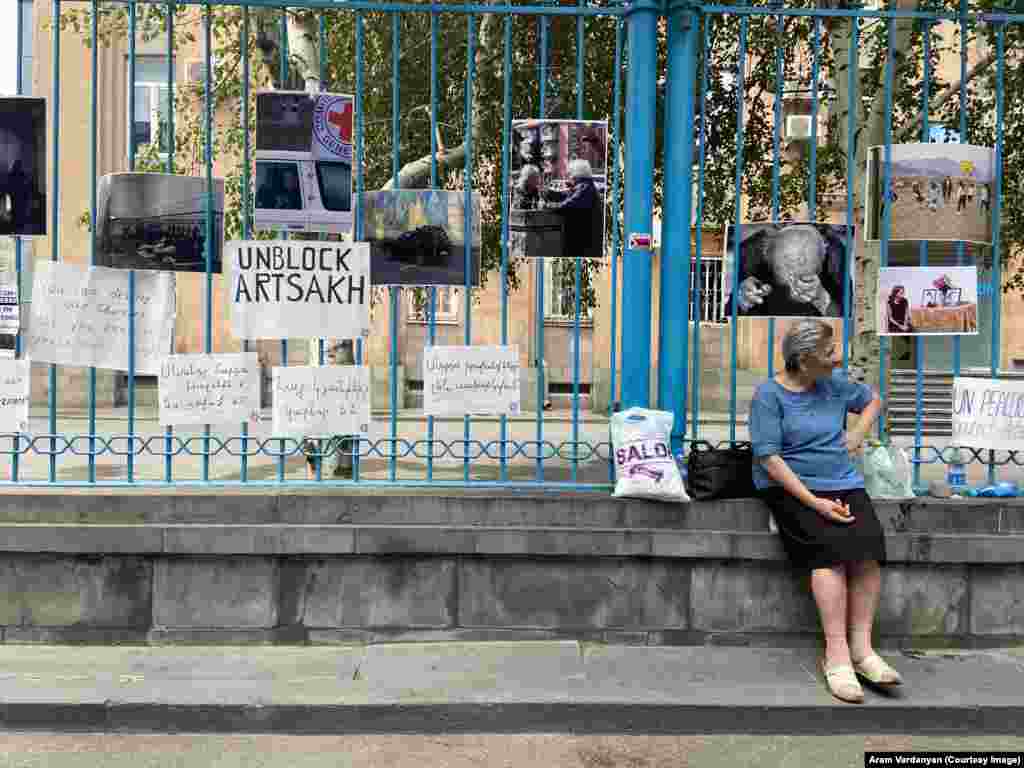
2/8Fencing outside the UN headquarters in Yerevan covered with posters on July 24, including recent images from inside Nagorno-Karabakh, where two children died recently after their single mother left them alone to source food supplies. Armenians refer to Nagorno-Karabakh as Artsakh.
As Azerbaijan continues a blockade of Nagorno-Karabakh, protesters placed tons of food in front of the United Nations’ office in Yerevan, calling for the organization to deliver the desperately needed supplies.
3/8An empty supermarket in Stepanakert, the largest city of Nagorno-Karabakh, photographed on July 18.
Nagorno-Karabakh, a breakaway region of Azerbaijan that is populated primarily by ethnic Armenians, has been under blockade by Baku since December 2022. From mid-June, Azerbaijan has apparently prevented all supplies entering the territory from Armenia.
As Azerbaijan continues a blockade of Nagorno-Karabakh, protesters placed tons of food in front of the United Nations’ office in Yerevan, calling for the organization to deliver the desperately needed supplies.
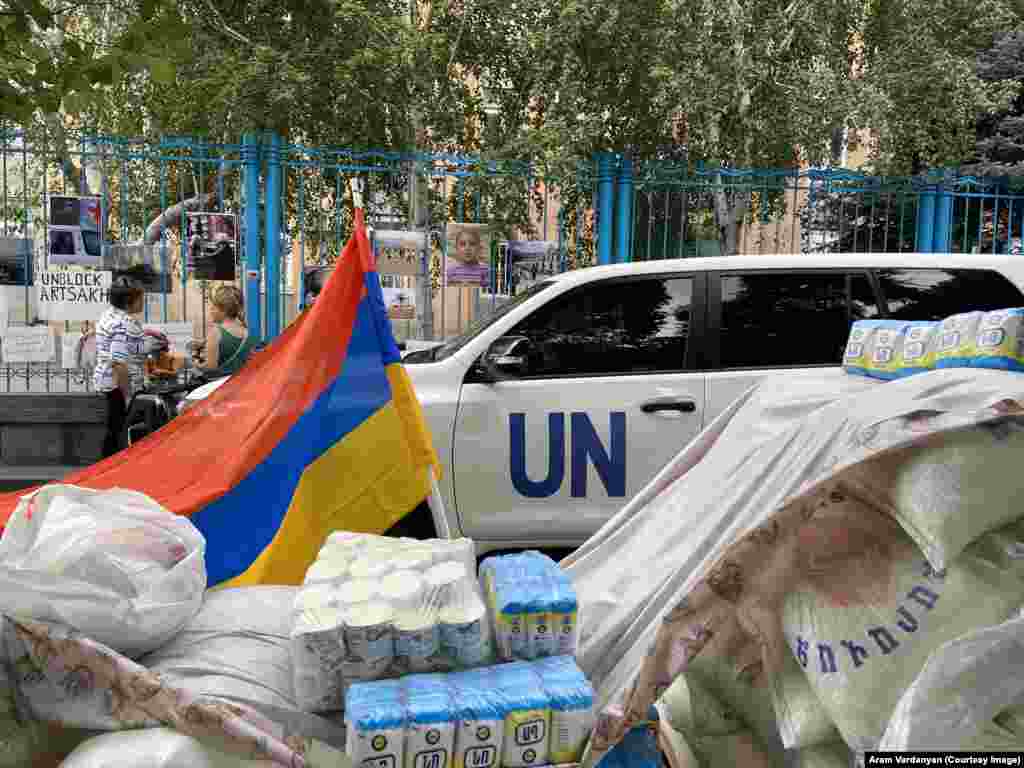
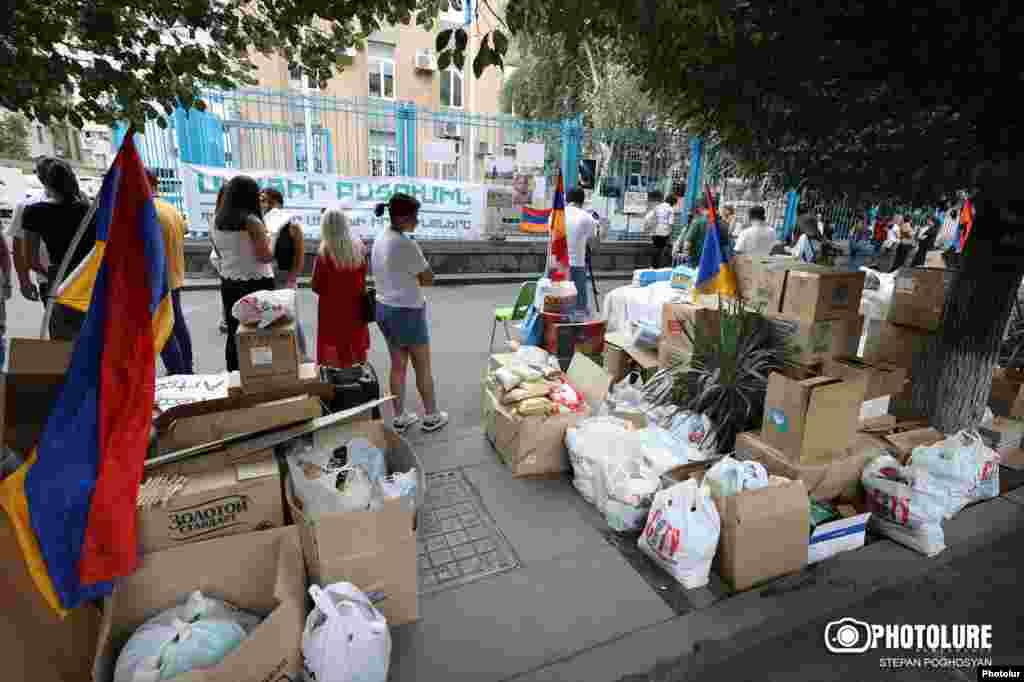
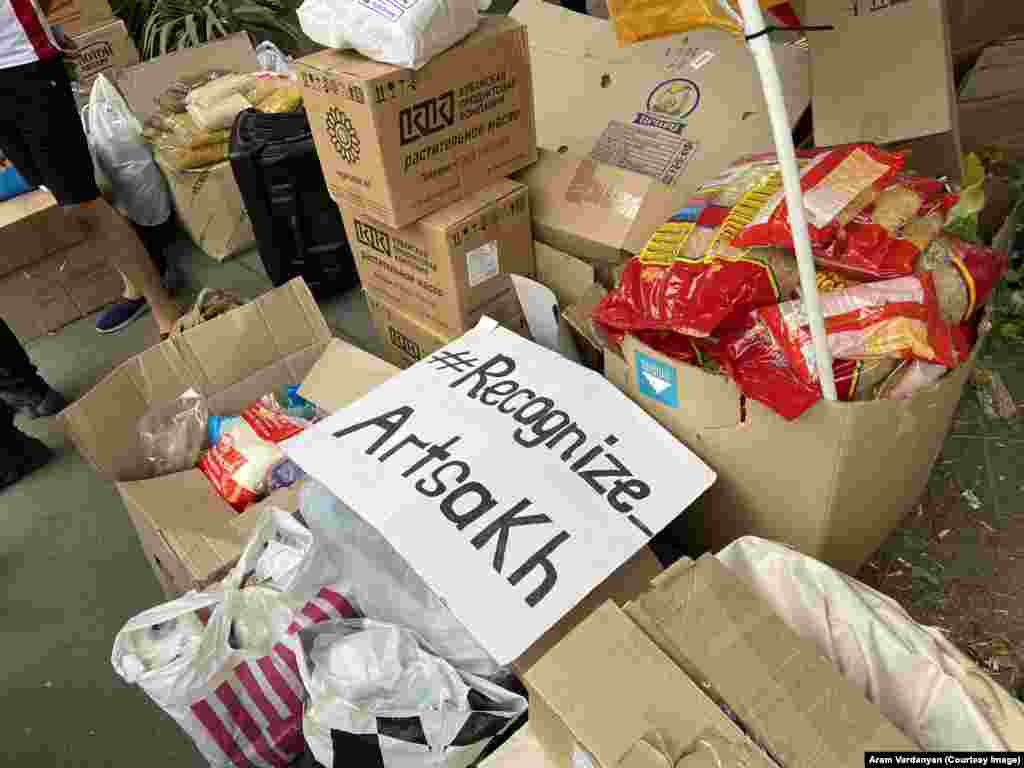
4/8Piles of food placed outside the UN headquarters by protesters in Yerevan. Speakers at the July 24 demonstration called for the international organization to transport supplies into Nagorno-Karabakh.
Aram Vardanian, who attended the protest outside the UN house on July 24, told RFE/RL that the organization is being singled out because “wherever there is a shortage of food, the UN has always tried to deliver humanitarian aid.”
As Azerbaijan continues a blockade of Nagorno-Karabakh, protesters placed tons of food in front of the United Nations’ office in Yerevan, calling for the organization to deliver the desperately needed supplies.
5/8Piles of food outside the UN building in Yerevan.
Vardanian adds, “It doesn’t even matter the political debates surrounding this specific territory, if there are people in need and they lack basic items like sugar or salt, it’s been the UN’s responsibility for decades to create a system of delivery.”
As Azerbaijan continues a blockade of Nagorno-Karabakh, protesters placed tons of food in front of the United Nations’ office in Yerevan, calling for the organization to deliver the desperately needed supplies.
6/8Food placed outside the UN headquarters in Yerevan.
RFE/RL requested comment by e-mail from the UN late on July 23 and early on July 24. A spokesperson responded that the request was made too late for a response before publication. Calls to the organization went to an automated answering system and were then cut off.
As Azerbaijan continues a blockade of Nagorno-Karabakh, protesters placed tons of food in front of the United Nations’ office in Yerevan, calling for the organization to deliver the desperately needed supplies.
7/8A protest in central Yerevan on July 21 calling for an end to the blockade of Nagorno-Karabakh.
Several mass protests have been held in Armenia over recent days as the conditions inside Nagorno-Karabakh have dramatically worsened. Marut Vanian, a journalist inside Stepenakert, told RFE/RL on July 23 that the situation is “just getting worse day by day.”
As Azerbaijan continues a blockade of Nagorno-Karabakh, protesters placed tons of food in front of the United Nations’ office in Yerevan, calling for the organization to deliver the desperately needed supplies.
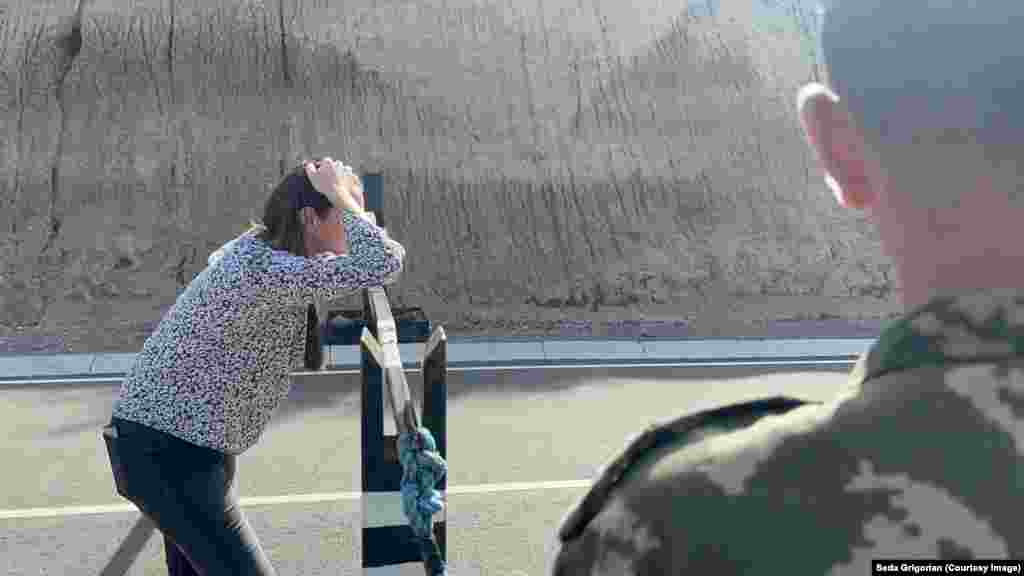
8/8A woman looks in the direction of Nagorno-Karabakh from a checkpoint near the southern Armenian village of Kornidzor on July 23.
In a recent interview, Armenia's Prime Minister Nikol Pashinian likened the Nagorno-Karabakh blockade to an ethnic "ghetto" of the kind created by Nazi forces during World War II.
Azerbaijani President Ilham Aliyev, in a recent address, said that if Armenia "completely renounces any kind of encroachment on the territory of Azerbaijan," a peace treaty will be possible before the end of 2023.
As Azerbaijan continues a blockade of Nagorno-Karabakh, protesters placed tons of food in front of the United Nations’ office in Yerevan, calling for the organization to deliver the desperately needed supplies.
Previous slide
Next slide
It is not clear who will succeed Harutiunian.
Under an amendment adopted by the region’s parliament in June, the de facto president of Nagorno-Karabakh can be elected by the lawmaking body in the event of martial law. In that case, the elected leader is to hold the post through the remainder of the popularly elected predecessor's term.
Harutiunian was elected in May 2020 for a five-year term. A few months later, in September, a war broke out with Azerbaijan, resulting in the defeat of the Armenian side later that year.
Harutiunian's resignation takes place against the background of a continuing blockade by Azerbaijan that has resulted in severe shortages of food, fuel, and other basic products in the region of about 120,000. Stepanakert has demanded that Azerbaijan unblock the Lachin Corridor that it has effectively closed off from cargo traffic since the middle of June.
Baku denies it is blockading the region and has proposed opening an alternative road passing through the Azerbaijani-controlled town of Agdam, but ethnic Armenian authorities in Nagorno-Karabakh have rejected that offer.
RFE/RL’s Armenian Service, operating out of a bureau in Yerevan, is a leading source of trusted reporting and technical innovation, reaching outsized audiences when developments demand authoritative, up-to-the-minute news most.