Accessibility links

Breaking News

U.S. Pledges To Work With Partners On Monitoring Mission As Tens Of Thousands Arrive In Armenia

Updated
Refugees from Nagorno-Karabakh sit in the back of a truck upon their arrival in the border village of Kornidzor, Armenia, on September 27.

The U.S. State Department says it will work with allies and partners on an international monitoring mission after nearly half the population of Nagorno-Karabakh fled following an offensive by Azerbaijan that gave Baku complete control of the breakaway region.

State Department spokesman Matthew Miller told reporters the United States would work toward establishing a mission as the Armenian government said more than 53,000 people had left Nagorno-Karabakh since September 24.

The updated number of refugees accounts for nearly half of the region's population. The exodus began after Azerbaijan opened the only road leading from the breakaway region to Armenia four days after a cease-fire agreement that ended a lightning military operation.

Yerevan over the weekend asked the United Nations to send a monitoring mission to assess the human rights and security situation as it attempts to absorb the ethnic Armenians.

'I Have Nothing': Ethnic Armenians Face Dire Conditions Amid Mass Exodus From Nagorno-Karabakh
please wait

No media source currently available

0:00 0:03:46 0:00

The foreign ministers of Armenia and Turkey on September 27 held a telephone conversation to discuss the situation, the Armenian Foreign Ministry said.

The foreign ministers of Russia and Azerbaijan also spoke by phone to discuss providing humanitarian assistance and ensuring the rights and security of the local Armenian population, the Russian Foreign Ministry said.

Meanwhile, U.S. Agency for International Development (USAID) chief Samantha Power and a top U.S. diplomat arrived in Azerbaijan and met with President Ilham Aliyev.

Power was to raise concerns about the humanitarian situation and address the prospects for "a durable and dignified peace between Azerbaijan and Armenia" based on mutual respect for each other's territorial integrity and sovereignty, USAID said in a statement.

Aliyev's press service said during the meeting opinions were exchanged about the current situation, which arose as a result of "anti-terrorist measures" implemented in the region. Aliyev noted that talks were under way between representatives of Azerbaijan and ethnic Armenian residents of Nagorno-Karabakh in the direction of reintegration, the press service said.

Aliyev also said Baku was ready to organize a visit to the region of a UN liaison office representative accredited in the country in the near future.

Mass Exodus: Thousands Of Ethnic Armenians Flee Nagorno-Karabakh
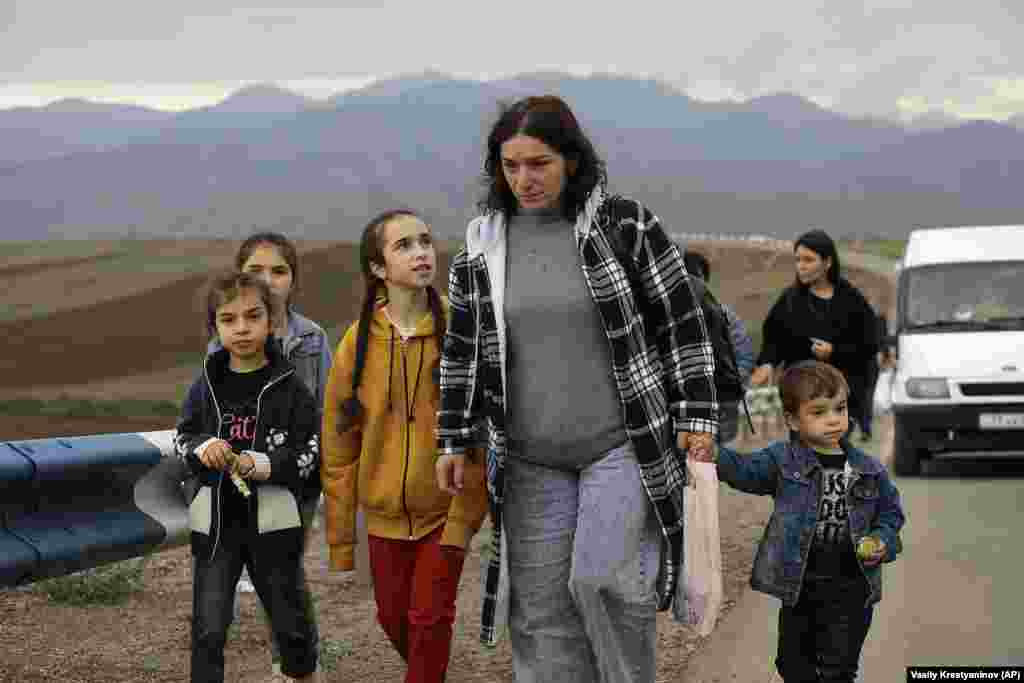
Refugees walk along the road from Nagorno-Karabakh to Kornidzor in Armenia on September 26 amid a&nbsp;<strong><a href="https://rus.azatutyun.am/a/32610409.html" target="_blank">massive exodus</a></strong>&nbsp;that followed an Azerbaijani offensive, which gave Baku complete control of the mountainous region.
1/12 Refugees walk along the road from Nagorno-Karabakh to Kornidzor in Armenia on September 26 amid a massive exodus that followed an Azerbaijani offensive, which gave Baku complete control of the mountainous region.
Tens of thousands of ethnic Armenians have fled Nagorno-Karabakh for Armenia, many of them hungry and exhausted from their travels and worried about the uncertainties that lie ahead.
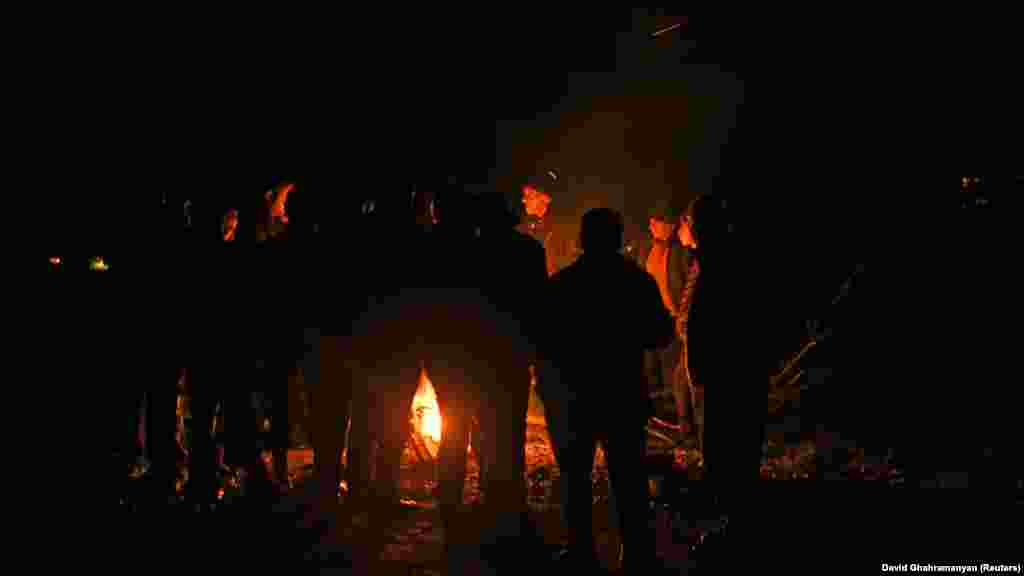
Refugees stay warm by a fire along the road to the Armenian border as they wait for traffic to resume on September 25.<br />
<br />
Armenia and Azerbaijan have fought two wars in the last three decades over the region, which became a majority ethnic Armenian enclave within the internationally recognized borders of Azerbaijan after the Soviet collapse.
2/12 Refugees stay warm by a fire along the road to the Armenian border as they wait for traffic to resume on September 25.

Armenia and Azerbaijan have fought two wars in the last three decades over the region, which became a majority ethnic Armenian enclave within the internationally recognized borders of Azerbaijan after the Soviet collapse.
Tens of thousands of ethnic Armenians have fled Nagorno-Karabakh for Armenia, many of them hungry and exhausted from their travels and worried about the uncertainties that lie ahead.
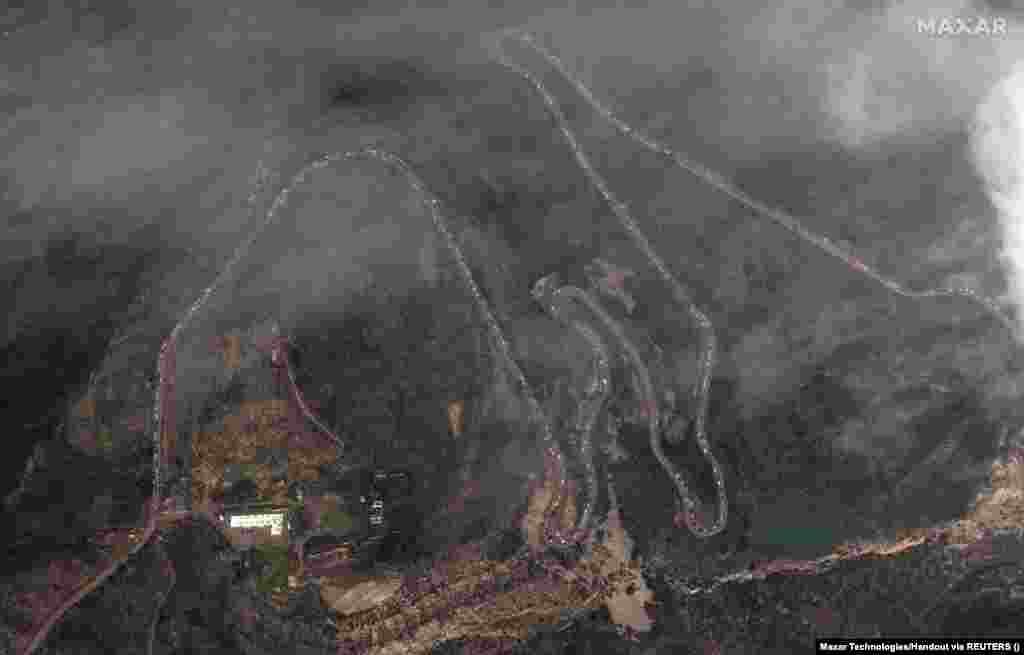
A satellite image shows a long traffic jam along the Lachin Corridor, the only route from Nagorno-Karabakh to Armenia, on September 26.<br />
<br />
The region initially came under the control of ethnic Armenian forces, backed by the Armenian military, in separatist fighting that ended in 1994. During a war in 2020, however, Azerbaijan took back large parts of Nagorno-Karabakh as well as neighboring territory held by Armenian forces.<br />
<br />
<br />
<br />
&nbsp;
3/12 A satellite image shows a long traffic jam along the Lachin Corridor, the only route from Nagorno-Karabakh to Armenia, on September 26.

The region initially came under the control of ethnic Armenian forces, backed by the Armenian military, in separatist fighting that ended in 1994. During a war in 2020, however, Azerbaijan took back large parts of Nagorno-Karabakh as well as neighboring territory held by Armenian forces.


Tens of thousands of ethnic Armenians have fled Nagorno-Karabakh for Armenia, many of them hungry and exhausted from their travels and worried about the uncertainties that lie ahead.
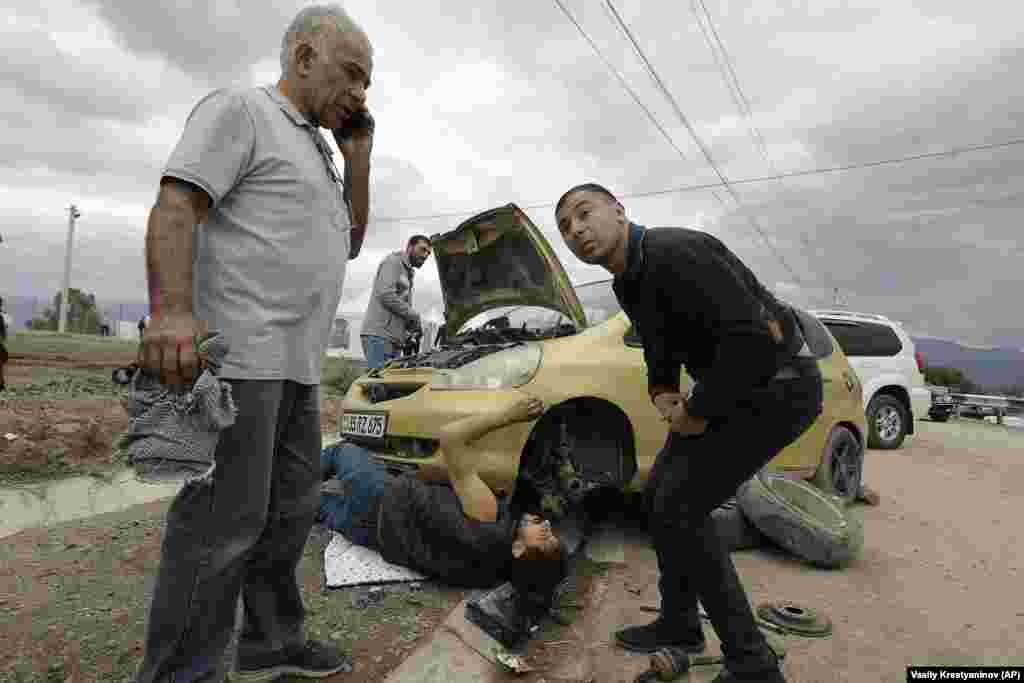
Armenian refugees repair a car on the road from Nagorno-Karabakh to Armenia.<br />
<br />
The war in 2020 ended with a Russian-brokered cease-fire and the deployment of Russian peacekeepers. Those peacekeepers did little, however, to prevent the advances by Azerbaijani forces as they launched what they called an &quot;anti-terrorist operation&quot; in Nagorno-Karabakh.<br />
<br />
<br />
<br />
<br />
&nbsp;
4/12 Armenian refugees repair a car on the road from Nagorno-Karabakh to Armenia.

The war in 2020 ended with a Russian-brokered cease-fire and the deployment of Russian peacekeepers. Those peacekeepers did little, however, to prevent the advances by Azerbaijani forces as they launched what they called an "anti-terrorist operation" in Nagorno-Karabakh.


Tens of thousands of ethnic Armenians have fled Nagorno-Karabakh for Armenia, many of them hungry and exhausted from their travels and worried about the uncertainties that lie ahead.
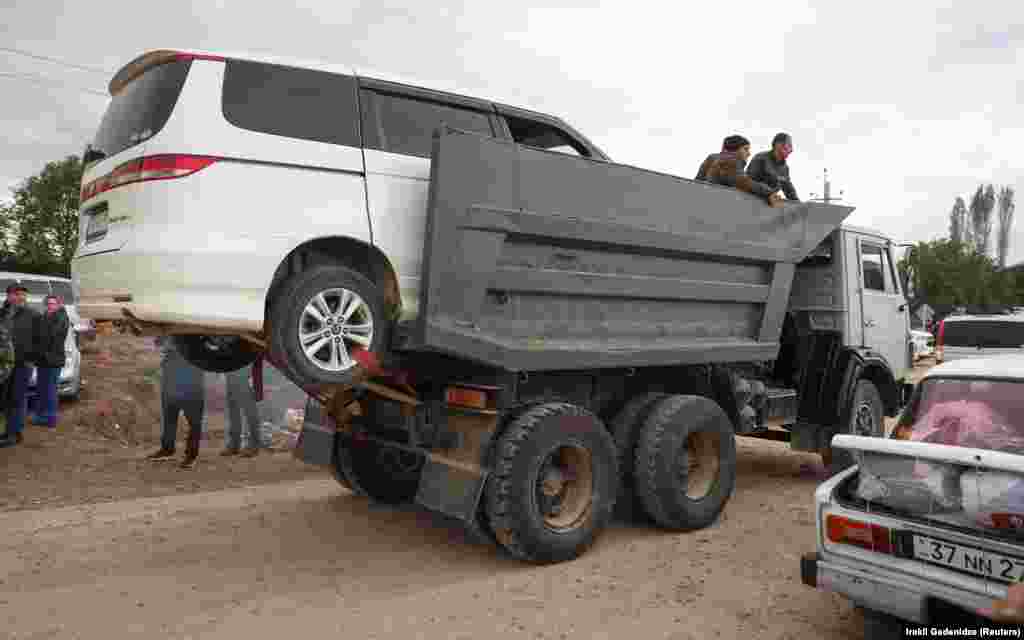
A truck carrying a minivan and refugees arrives in Armenia.<br />
<br />
Prior to its offensive, Azerbaijan had maintained a monthslong blockade of Nagorno-Karabakh, claiming it had concerns about illicit weapon shipments, which cut the 120,000 residents off from essential supplies.<br />
<br />
<br />
<br />
&nbsp;
5/12 A truck carrying a minivan and refugees arrives in Armenia.

Prior to its offensive, Azerbaijan had maintained a monthslong blockade of Nagorno-Karabakh, claiming it had concerns about illicit weapon shipments, which cut the 120,000 residents off from essential supplies.


Tens of thousands of ethnic Armenians have fled Nagorno-Karabakh for Armenia, many of them hungry and exhausted from their travels and worried about the uncertainties that lie ahead.
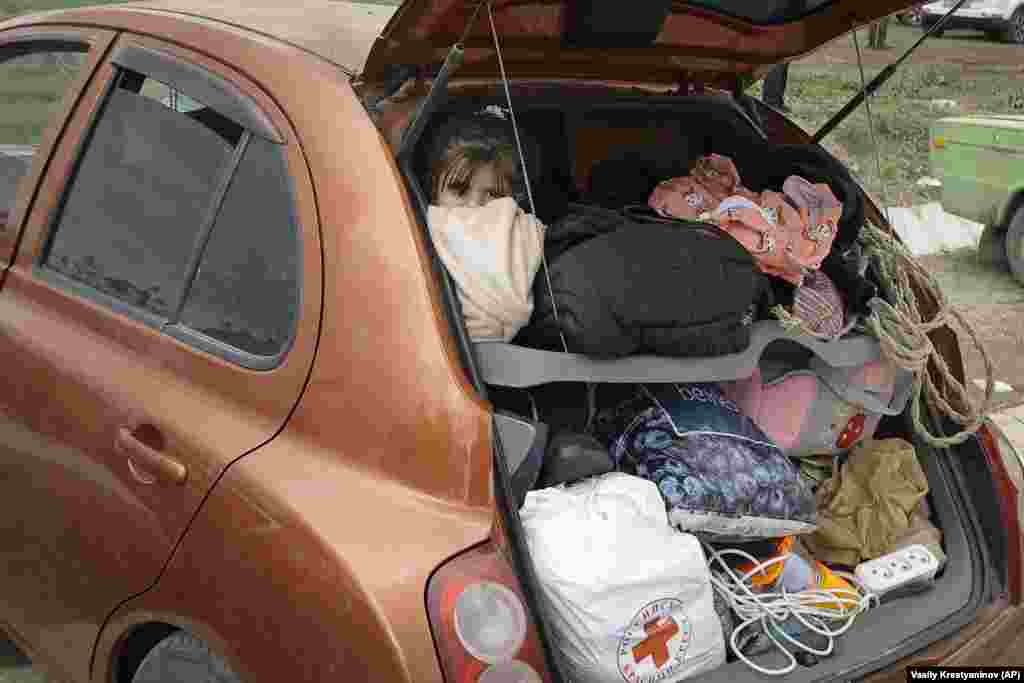
A refugee looks out from a car on the road to Armenia. Many refugees have been stuck on the road, some without enough food and water.<br />
<br />
Azerbaijan opened the road on September 24, four days after a cease-fire agreement that ended the lightning military operation.&nbsp;
6/12 A refugee looks out from a car on the road to Armenia. Many refugees have been stuck on the road, some without enough food and water.

Azerbaijan opened the road on September 24, four days after a cease-fire agreement that ended the lightning military operation. 
Tens of thousands of ethnic Armenians have fled Nagorno-Karabakh for Armenia, many of them hungry and exhausted from their travels and worried about the uncertainties that lie ahead.
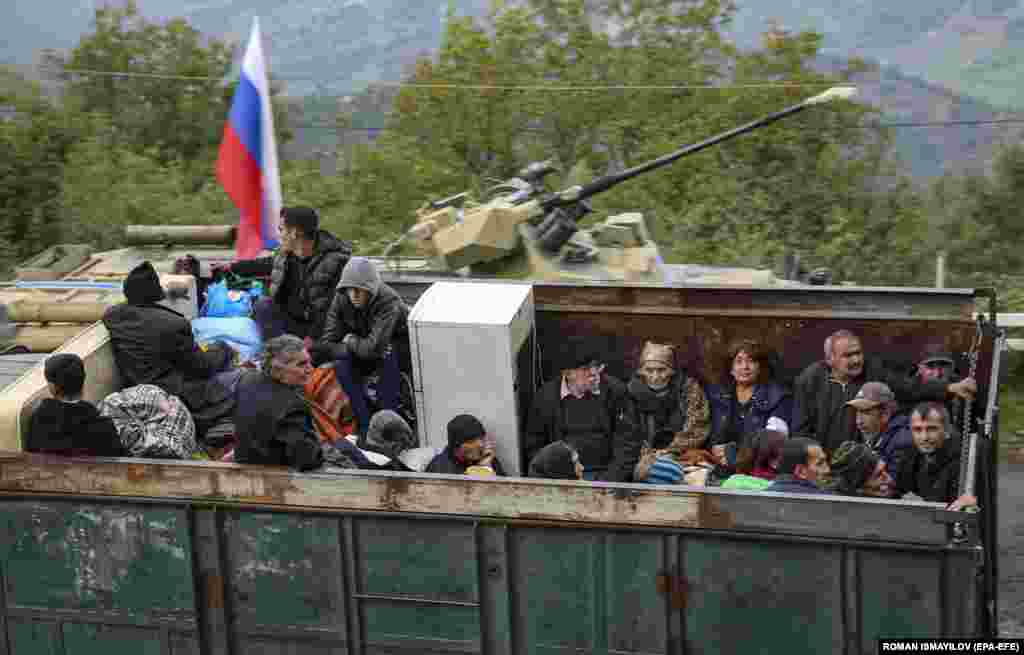
Armenian refugees sit in the back of a truck at the Lachin checkpoint, controlled by Russian peacekeepers and Azerbaijani border guards, as they wait to cross into Armenia.<br />
<br />
Baku has pledged equal treatment for ethnic Armenians, but Yerevan has warned of possible &quot;ethnic cleansing.&quot;<br />
<br />
<br />
<br />
&nbsp;
7/12 Armenian refugees sit in the back of a truck at the Lachin checkpoint, controlled by Russian peacekeepers and Azerbaijani border guards, as they wait to cross into Armenia.

Baku has pledged equal treatment for ethnic Armenians, but Yerevan has warned of possible "ethnic cleansing."


Tens of thousands of ethnic Armenians have fled Nagorno-Karabakh for Armenia, many of them hungry and exhausted from their travels and worried about the uncertainties that lie ahead.
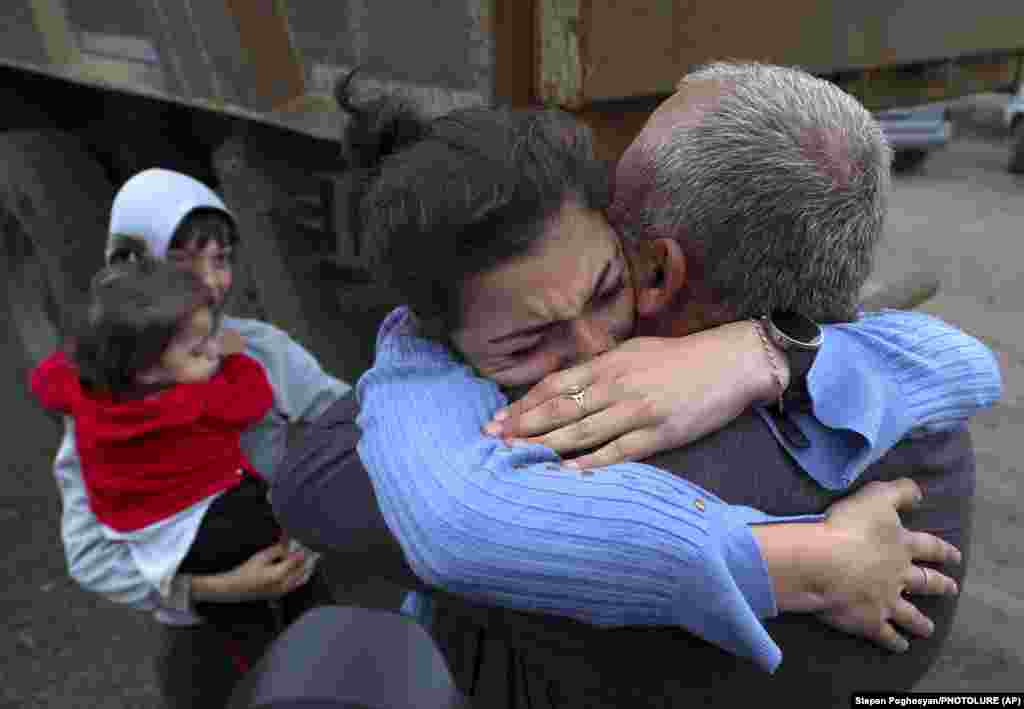
Armenians embrace after arriving in Kornidzor, Armenia.<br />
<br />
<br />
<br />
&nbsp;
8/12 Armenians embrace after arriving in Kornidzor, Armenia.


Tens of thousands of ethnic Armenians have fled Nagorno-Karabakh for Armenia, many of them hungry and exhausted from their travels and worried about the uncertainties that lie ahead.
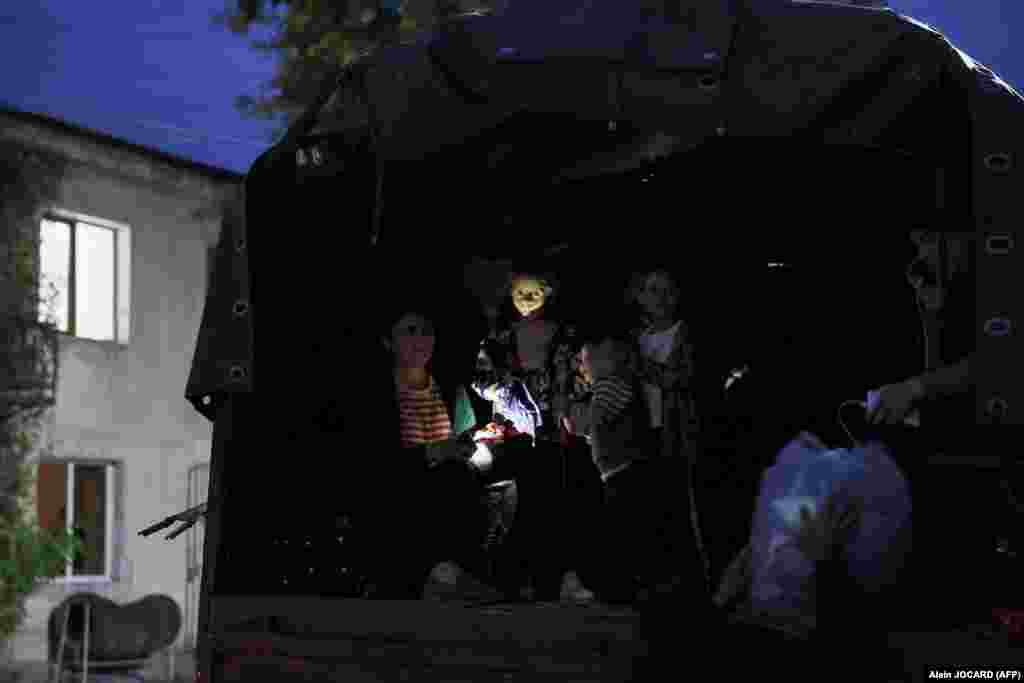
Refugees wait in a truck in Goris, in southern Armenia, before moving on to Yerevan.<br />
<br />
U.S. Secretary of State Antony Blinken told Azerbaijani President Ilham Aliyev on September 26 that he must protect civilians in Nagorno-Karabakh.<br />
<br />
&nbsp;
9/12 Refugees wait in a truck in Goris, in southern Armenia, before moving on to Yerevan.

U.S. Secretary of State Antony Blinken told Azerbaijani President Ilham Aliyev on September 26 that he must protect civilians in Nagorno-Karabakh.

 
Tens of thousands of ethnic Armenians have fled Nagorno-Karabakh for Armenia, many of them hungry and exhausted from their travels and worried about the uncertainties that lie ahead.
Armenian refugees&nbsp;gather at a Red Cross registration center in Goris.<br />
<br />
Blinken also told Aliyev that there must be unhindered humanitarian access to Nagorno-Karabakh.<br />
<br />
&nbsp;
10/12 Armenian refugees gather at a Red Cross registration center in Goris.

Blinken also told Aliyev that there must be unhindered humanitarian access to Nagorno-Karabakh.

 
Tens of thousands of ethnic Armenians have fled Nagorno-Karabakh for Armenia, many of them hungry and exhausted from their travels and worried about the uncertainties that lie ahead.
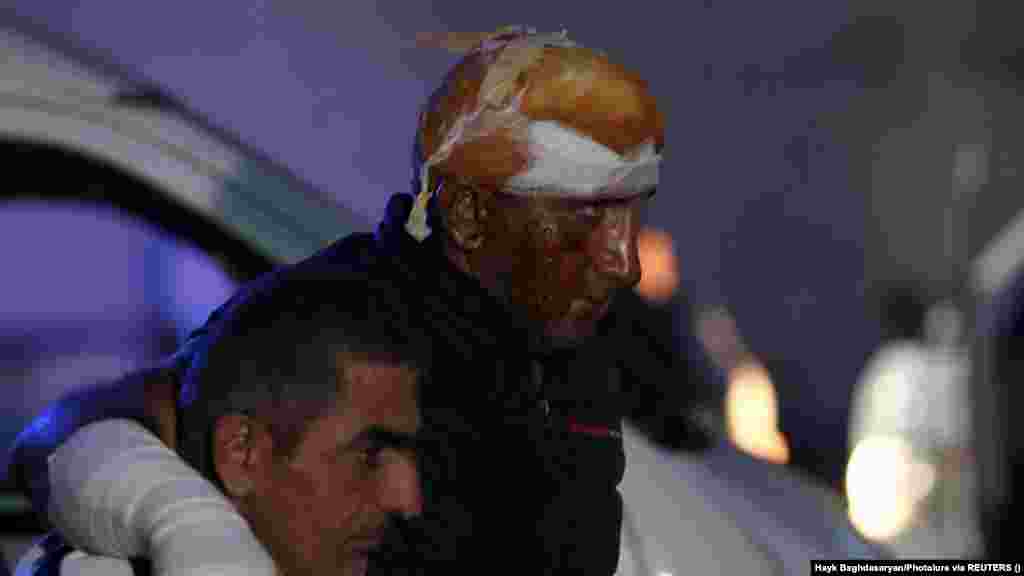
A man injured in an explosion at a fuel depot near Stepanakert, in Nagorno-Karabakh, is helped out of an ambulance upon arriving at a burn center in Yerevan.<br />
<br />
The breakaway region&#39;s ombudsman, Gegham Stepanian, told RFE/RL that 68 people were confirmed dead in the blast, which occurred as people seeking to flee to Armenia had lined up to fuel their cars. The cause of the explosion has not been determined.
11/12 A man injured in an explosion at a fuel depot near Stepanakert, in Nagorno-Karabakh, is helped out of an ambulance upon arriving at a burn center in Yerevan.

The breakaway region's ombudsman, Gegham Stepanian, told RFE/RL that 68 people were confirmed dead in the blast, which occurred as people seeking to flee to Armenia had lined up to fuel their cars. The cause of the explosion has not been determined.
Tens of thousands of ethnic Armenians have fled Nagorno-Karabakh for Armenia, many of them hungry and exhausted from their travels and worried about the uncertainties that lie ahead.
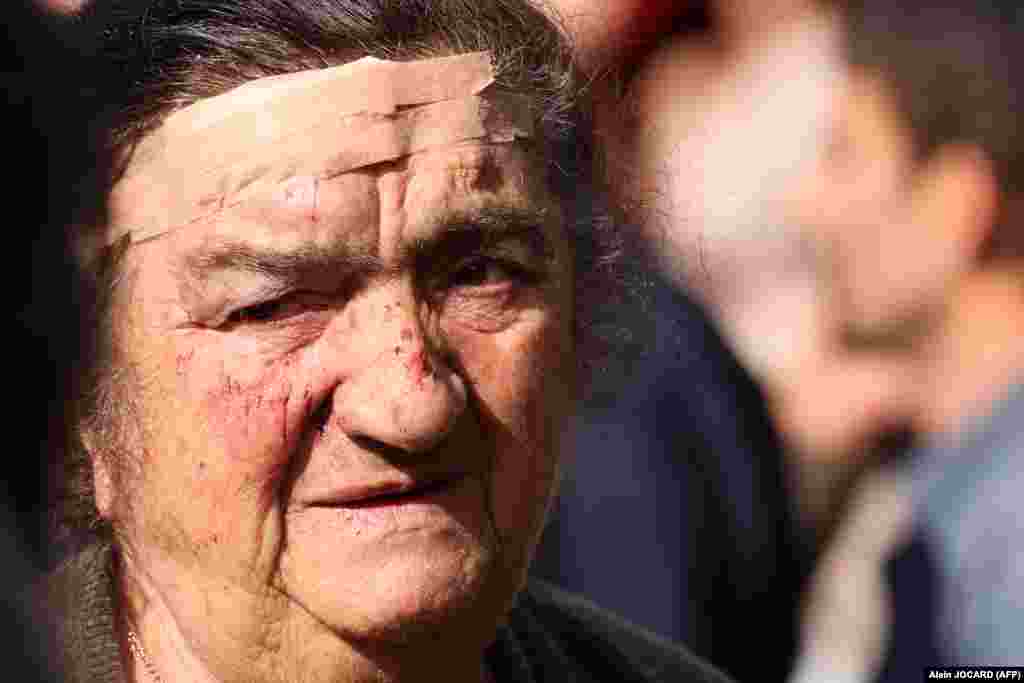
An elderly woman with a head wound waits to be registered as a refugee in Goris on September 27. The family was involved in a car accident as they were fleeing from Nagorno-Karabakh.<br />
<br />
A total of 192 Azerbaijani troops were killed and 511 were wounded during Azerbaijan&rsquo;s offensive last week&nbsp;the country&rsquo;s Health Ministry <strong><a href="https://apnews.com/article/nagorno-karabakh-azerbaijan-armenia-troops-killed-offensive-1d13668014fac4e44a76c04b54378268" target="_self">announced</a> </strong>on September 27.<br />
<br />
Ethnic Armenian Nagorno-Karabakh officials said that at least 200 people on their side, including 10 civilians, were killed and over 400 were wounded in the fighting.
12/12 An elderly woman with a head wound waits to be registered as a refugee in Goris on September 27. The family was involved in a car accident as they were fleeing from Nagorno-Karabakh.

A total of 192 Azerbaijani troops were killed and 511 were wounded during Azerbaijan’s offensive last week the country’s Health Ministry announced on September 27.

Ethnic Armenian Nagorno-Karabakh officials said that at least 200 people on their side, including 10 civilians, were killed and over 400 were wounded in the fighting.
Tens of thousands of ethnic Armenians have fled Nagorno-Karabakh for Armenia, many of them hungry and exhausted from their travels and worried about the uncertainties that lie ahead.
Previous slide
Next slide

The U.S. delegation arrived in Azerbaijan after visiting Armenia, where Power said Washington would stand in solidarity with Yerevan. She also announced a $11.5 million humanitarian aid package for Armenia, but said it was essential the international community gain access to Nagorno-Karabakh amid reports of injuries and a lack food and other essentials.

German Foreign Minister Annalena Baerbock called on Azerbaijan on September 27 to allow international observers to enter Nagorno-Karabakh and announced that Berlin was stepping up its humanitarian aid for the refugees.

"I have decided to significantly increase our humanitarian aid once again and to increase our additional funding for the International Committee of the Red Cross from 2 million to 5 million euros ($5.28 million)," Baerbock said.

Earlier on September 27, Azerbaijani authorities announced that they had detained the separatist region's former prime minister, Ruben Vardanian, at a border crossing.

Azerbaijan's State Border Service (DSX) said Vardanian, a former Russian citizen of Armenian descent who served as prime minister in the de facto government of the breakaway region for less than four months before being removed from the post in February, was detained at the border and transferred to Baku.

His wife, Veronika Zonabend, has confirmed her husband's detention.

Officials in the region also were still dealing with the aftermath of a blast that occurred on September 25 as people seeking to flee to Armenia lined up to fuel their cars. The cause of the blast has not been determined.
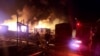
Nagorno-Karabakh's ombudsman, Gegham Stepanian, said the number of confirmed deaths in the explosion is 68 -- far lower than previous reports that had put the number as high as 125. Stepanian told RFE/RL that so far only 21 victims have been identified.

Baku said on September 27 that 192 Azerbaijani soldiers and one civilian had been killed during the September 19-20 blitz offensive. Another 511 soldiers were wounded in the course of the operation, Azerbaijan's Health Ministry said in a statement.

Newborn Refugee: Two-Week-Old Infant Among Exodus Of Ethnic Armenians From Nagorno-Karabakh
please wait

No media source currently available

0:00 0:03:18 0:00

The European Union also said it would increase humanitarian aid by 5 million euros ($5.2 million) in response to growing needs caused by the crisis.

The EU stressed in a statement the need for transparency and access for international humanitarian and human rights groups and for more detail on Baku's vision for Karabakh Armenians' future in Azerbaijan.

During the meeting, Hikmet Haciyev, a foreign policy adviser to Aliyev, outlined Azerbaijan's plans to provide humanitarian assistance and security to the local population.

The meeting also discussed a possible meeting of Nagorno-Karabakh stakeholders on October 5 in Granada.

"The participants took note of the shared interest of Armenia and Azerbaijan to make use of the possible meeting in Granada to continue their normalization efforts," the statement said.

Armenian representative Armen Grigorian and Haciyev "engaged in talks on possible concrete steps to advance the Armenia-Azerbaijan peace process in the upcoming possible meeting, such as those with regard to border delimitation, security, connectivity, humanitarian issues, and the broader peace treaty," the statement said.

The statement added that the EU believes that the meeting should be used by both Yerevan and Baku to reiterate publicly their commitment to each other’s territorial integrity and sovereignty in line with previous agreements.

Armenia and Azerbaijan have fought two wars in the last three decades over the region, which had been a majority ethnic Armenian enclave within the internationally recognized border of Azerbaijan since the Soviet collapse.

The region initially came under the control of ethnic Armenian forces, backed by the Armenian military, in separatist fighting that ended in 1994. During a war in 2020, however, Azerbaijan took back parts of Nagorno-Karabakh along with surrounding territory that Armenian forces had claimed during the earlier conflict.

That fighting ended with a Russian-brokered cease-fire and the deployment of Russian peacekeepers. Those peacekeepers did little, however, to prevent the advances by Azerbaijani forces.

With reporting by RFE/RL's Azerbaijani Service, AP, AFP, The New York Times, and Reuters
  • 16x9 Image

    RFE/RL's Armenian Service

    RFE/RL’s Armenian Service, operating out of a bureau in Yerevan, is a leading source of trusted reporting and technical innovation, reaching outsized audiences when developments demand authoritative, up-to-the-minute news most.

  • 16x9 Image

    RFE/RL's Azerbaijani Service

    Despite near-total government control over the media, RFE/RL's Azerbaijani Service has built a high-impact social-media presence in Azerbaijan and a reputation as a leading source of independent news.

This item is part of
XS
SM
MD
LG