Accessibility links

Breaking News

Kosovo Serbs Warn They Will Again Block Roads If License-Plate Deal Not Extended

Updated
Ethnic Serbs in the north of Kosovo have been using car plates issued by Serbian institutions since the end of the war with acronyms of Kosovo cities, such as KM (Kosovska Mitrovica), PR (Pristina), or UR (Urosevac).

The head of the main Serb political party in Kosovo has warned that members of the Serb minority will again block roads if Kosovar authorities do not agree to again delay the implementation of a rule under which ethnic Serbs must switch their car license plates to local ones.

In July, Kosovo's government declared Serbian identity documents and vehicle license plates would no longer be valid on Kosovo territory.

The move has been met with strong and sometimes violent resistance by ethnic Serbs who live in the northern part of the country.

The government in Pristina agreed to extend until the end of October the deadline for the change of license plates after Serb protesters put up roadblocks and fired their guns into the air and in the direction of Kosovo police officers during the July standoff. No one was injured.

Prime Minister Albin Kurti earlier this week announced the deadline will still expire at the end of the month despite calls by Kosovo's main backers, the United States and the European Union, to delay the rule for 10 months and avoid ethnic tensions.

"We already delayed the deadline.... The last date is October 31 when all Kosovo citizens who have old automobile plates, which are a legacy of the Milosevic era, will be able to convert them into legitimate ones," Kurti told reporters in Pristina on October 25, referring to late Yugoslav President Slobodan Milosevic.

Kosovo Tensions Resurface As Showdown Looms Over License Plates
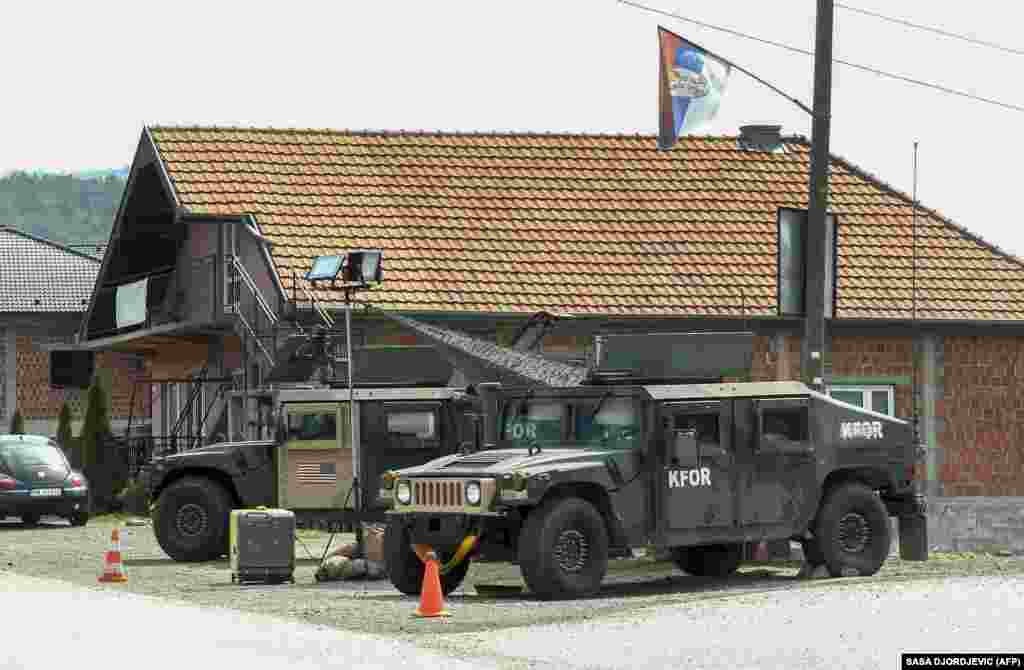
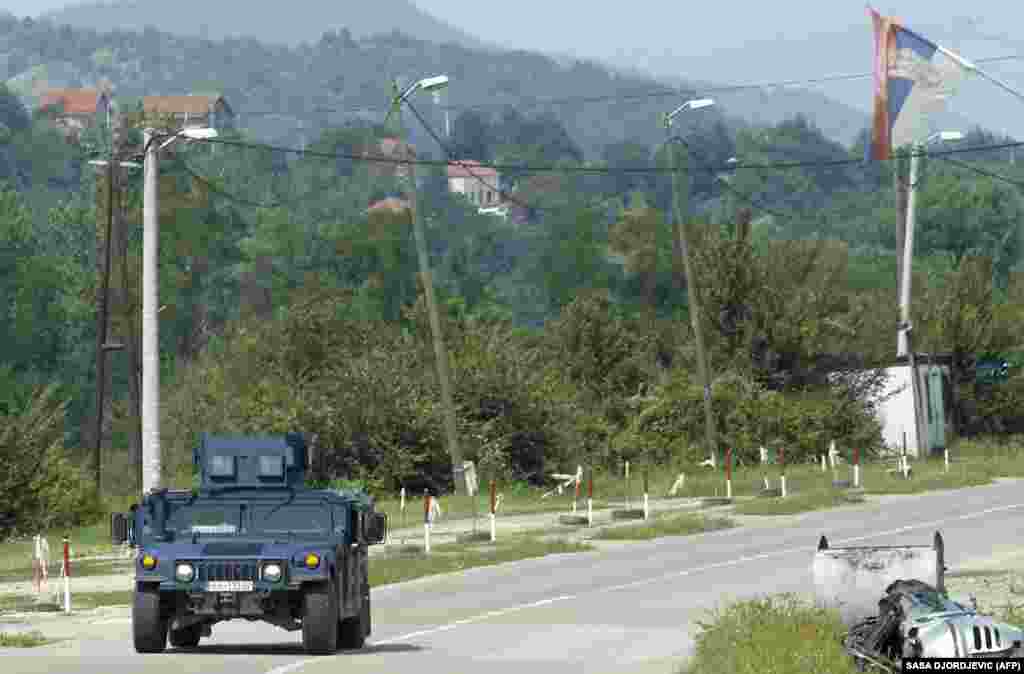
American Humvees from the NATO-led peacekeeping mission in Kosovo patrol near Leposavic on September 1.<br />
<br />
U.S. NATO peacekeepers were seen in force on the streets of northern Kosovo on September 1 as tensions reemerged in the region over a countdown announced for the enforcement of car license-plate requirements.<br />
&nbsp;
1/8 American Humvees from the NATO-led peacekeeping mission in Kosovo patrol near Leposavic on September 1.

U.S. NATO peacekeepers were seen in force on the streets of northern Kosovo on September 1 as tensions reemerged in the region over a countdown announced for the enforcement of car license-plate requirements.
 
Pristina is pressing ahead with requiring minority ethnic Serbs to use Kosovo-issued car license plates, sparking new tensions in the ethnically divided territory.
A flyer showing Kosovar (top) and Serbian car license plates with the words &ldquo;No surrender! [Serbian plates] will remain!&rdquo;<br />
<br />
On September 1, Pristina announced that some 50,000 ethnic Serbs in Kosovo must exchange their Serbian license plates for ones issued by Kosovo by October 1. The prime minister of Kosovo, Albin Kurti, offered a tax break of some 5,000 euros to those who make the switch.
2/8 A flyer showing Kosovar (top) and Serbian car license plates with the words “No surrender! [Serbian plates] will remain!”

On September 1, Pristina announced that some 50,000 ethnic Serbs in Kosovo must exchange their Serbian license plates for ones issued by Kosovo by October 1. The prime minister of Kosovo, Albin Kurti, offered a tax break of some 5,000 euros to those who make the switch.
Pristina is pressing ahead with requiring minority ethnic Serbs to use Kosovo-issued car license plates, sparking new tensions in the ethnically divided territory.
A Kosovar police officer works at the Jarinje border crossing from northern Kosovo into Serbia on September 1.<br />
<br />
Kurti called the move more &quot;nothing more or less than an expression of the exercise of [Kosovar] sovereignty&rdquo; and claimed the Serbian-issued plates being used by Serbs in Kosovo &ldquo;are the legacy of the Milosevic regime,&rdquo; referring to Serbia&#39;s late wartime leader Slobodan Milosevic.
3/8 A Kosovar police officer works at the Jarinje border crossing from northern Kosovo into Serbia on September 1.

Kurti called the move more "nothing more or less than an expression of the exercise of [Kosovar] sovereignty” and claimed the Serbian-issued plates being used by Serbs in Kosovo “are the legacy of the Milosevic regime,” referring to Serbia's late wartime leader Slobodan Milosevic.
Pristina is pressing ahead with requiring minority ethnic Serbs to use Kosovo-issued car license plates, sparking new tensions in the ethnically divided territory.
An armored Kosovar police vehicle drives near Leposavic in the north of Kosovo on September 1.<br />
<br />
Tensions flared over the license-plate requirement this summer after Pristina announced the rule would go into effect on September 1. After Serbs set up roadblocks, the United States and EU pressured Kurti to delay the move.
4/8 An armored Kosovar police vehicle drives near Leposavic in the north of Kosovo on September 1.

Tensions flared over the license-plate requirement this summer after Pristina announced the rule would go into effect on September 1. After Serbs set up roadblocks, the United States and EU pressured Kurti to delay the move.
Pristina is pressing ahead with requiring minority ethnic Serbs to use Kosovo-issued car license plates, sparking new tensions in the ethnically divided territory.
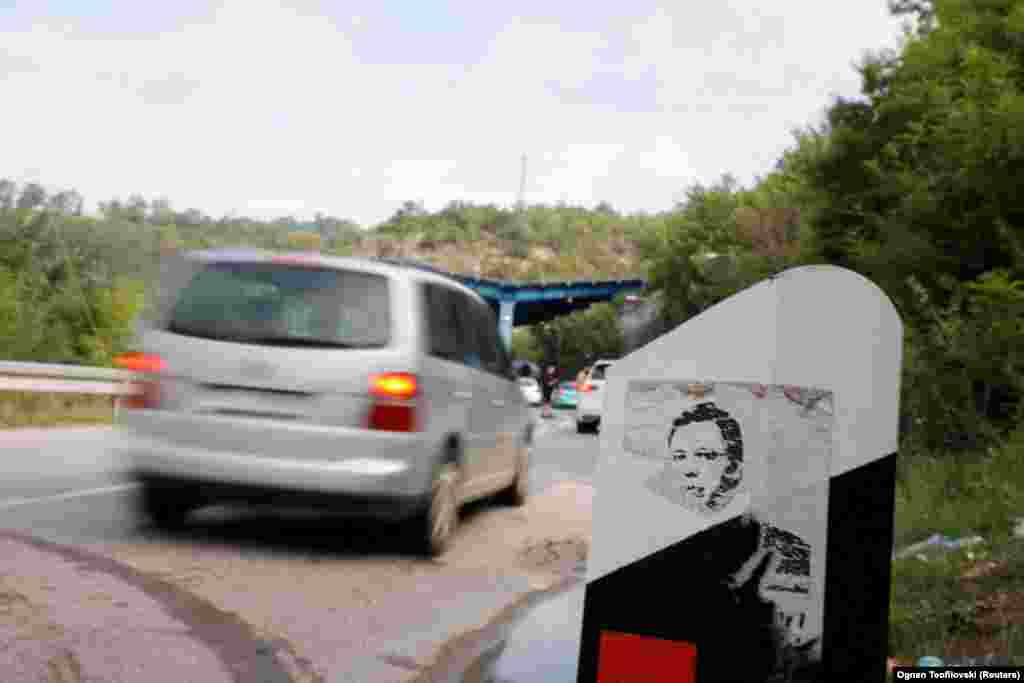
A sticker with an image of Serbian President Aleksandar Vucic near the Jarinje border on September 1.<br />
<br />
Serbia views Kosovo as part of its territory and rejects the authority of Pristina over the region. Kosovo&rsquo;s independence is partially accepted internationally, with around half of UN member states recognizing it as an independent state.
5/8 A sticker with an image of Serbian President Aleksandar Vucic near the Jarinje border on September 1.

Serbia views Kosovo as part of its territory and rejects the authority of Pristina over the region. Kosovo’s independence is partially accepted internationally, with around half of UN member states recognizing it as an independent state.
Pristina is pressing ahead with requiring minority ethnic Serbs to use Kosovo-issued car license plates, sparking new tensions in the ethnically divided territory.
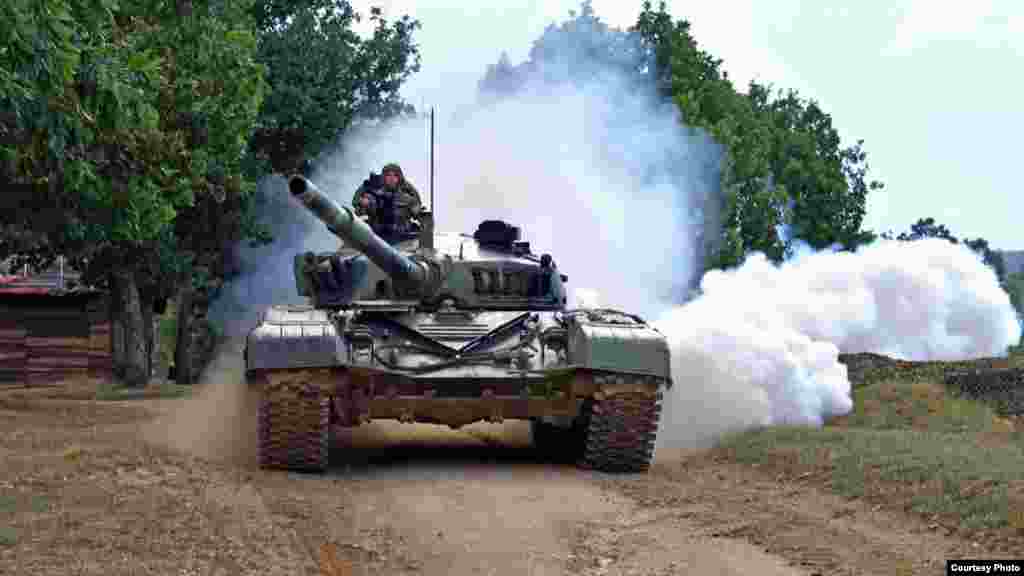
A Serbian tank takes part in drills near Kosovo on August 31.<br />
<br />
Earlier that day, Serbia&rsquo;s Defense Ministry announced that military drills were being held alongside the border with Kosovo to &quot;ensure peace and security on the administrative line.&quot;
6/8 A Serbian tank takes part in drills near Kosovo on August 31.

Earlier that day, Serbia’s Defense Ministry announced that military drills were being held alongside the border with Kosovo to "ensure peace and security on the administrative line."
Pristina is pressing ahead with requiring minority ethnic Serbs to use Kosovo-issued car license plates, sparking new tensions in the ethnically divided territory.
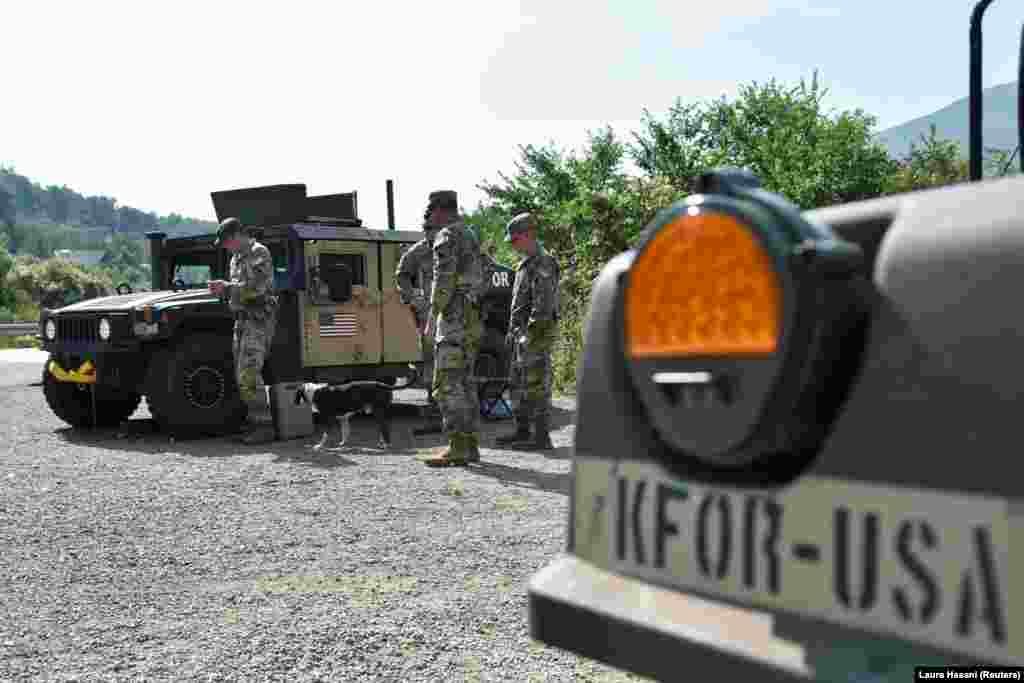
U.S. members of the NATO-led peacekeeping force stand near the border at Jarinje on September 1.<br />
<br />
Major General Ferenc Kajari, commander of NATO&#39;s peacekeeping mission in Kosovo, downplayed fears of violence over the reignited license issue, telling Reuters: &quot;We don&#39;t see any kind of indication even of a preparation for a war.... Those who think responsibly, they should not talk about war.&rdquo;
7/8 U.S. members of the NATO-led peacekeeping force stand near the border at Jarinje on September 1.

Major General Ferenc Kajari, commander of NATO's peacekeeping mission in Kosovo, downplayed fears of violence over the reignited license issue, telling Reuters: "We don't see any kind of indication even of a preparation for a war.... Those who think responsibly, they should not talk about war.”
Pristina is pressing ahead with requiring minority ethnic Serbs to use Kosovo-issued car license plates, sparking new tensions in the ethnically divided territory.
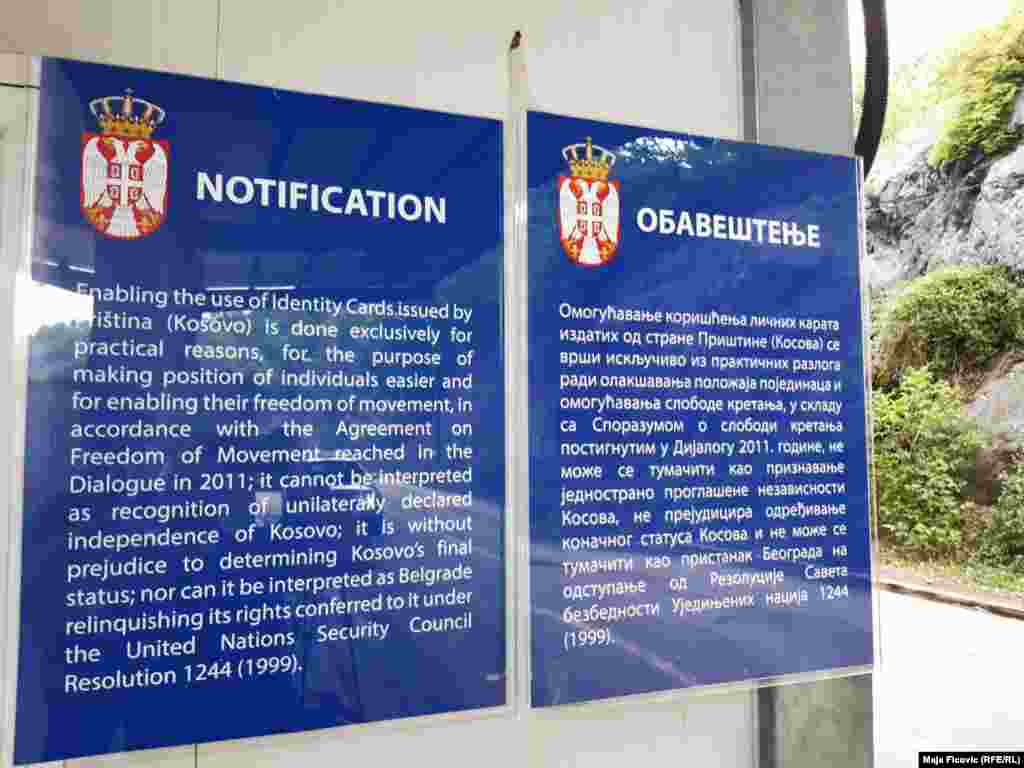
A sign on the Serbian side of the Jarinje border crossing references an agreement over identity cards on August 31.<br />
<br />
The fresh tensions come just days after a major breakthrough over identity cards was reached. On August 27, Kosovo and Serbia agreed to allow freedom of movement across the border for their citizens, ending a contentious requirement for entry-exit documents.
8/8 A sign on the Serbian side of the Jarinje border crossing references an agreement over identity cards on August 31.

The fresh tensions come just days after a major breakthrough over identity cards was reached. On August 27, Kosovo and Serbia agreed to allow freedom of movement across the border for their citizens, ending a contentious requirement for entry-exit documents.
Pristina is pressing ahead with requiring minority ethnic Serbs to use Kosovo-issued car license plates, sparking new tensions in the ethnically divided territory.
Previous slide
Next slide

The announcement prompted Goran Rakic, leader of the Serbian List party, to announce on October 27 that Kosovar Serbs will again block roads in northern Kosovo if authorities in Pristina decide to confiscate vehicles with Serbian license plates.

Rakic was speaking after talks in Belgrade with Serbian President Aleksandar Vucic.

"If Pristina starts enforcing the confiscation of vehicles, we will block all crossings and entrances from the north to central Kosovo," Rakic told a news conference in Belgrade.

Rakic said he assured Vucic there will be no violence as ethnic Serbs will "use all democratic and peaceful means" to resist the move.

Later on October 27, Besnik Bislimi, the deputy prime minister of Kosovo, was unable to make a planned two-day visit to Serbia.

Bislimi, who has served as the head of Kosovo's delegation for dialogue with Serbia, said his vehicle was pulled over by the police about 85 kilometers from Belgrade and he was told he could not continue due to "security reasons." Bislimi then returned to Kosovo.

Bislimi was on his way to take part in discussions on October 27 on the topic of Kosovo and the European perspective at the Forum for Ethnic Relations. He was expected to participate in the Belgrade Security Conference on October 28.

"We have been told that Serbia cannot provide security or that security has been compromised, which for us is a signal that Serbia is still not ready to work toward normalization,” Bislimi told reporters at a border crossing point between Serbia and Kosovo.

He added that it was “a little absurd” that Serbia publicly admitted there were security issues affecting the participants in a conference on security.

He also said it had been his goal in Belgrade to offer Kosovo's version both for current developments and for the dialogue process. He had hoped to be able to talk with diplomats and citizens to set the record straight on Kosovo's version of the developments.

“The citizens of Serbia have been exposed to a very terrible propaganda by the government of Serbia and an invented truth about the developments in Kosovo and in the dialogue with Serbia,” he said.

Kosovo and Serbia fought a bloody war in 1998-1999, with Kosovo eventually declaring independence from Serbia in 2008.

Ethnic Serbs in the north of Kosovo have been using car plates issued by Serbian institutions since the end of the war with acronyms of Kosovo cities, such as KM (Kosovska Mitrovica), PR (Pristina), or UR (Urosevac).

The government in Kosovo regards the plates as illegal but until now has tolerated them in four northern municipalities with Serb majorities.

Serbia -- as well as Russia, China, and five EU member states -- has not recognized its former province's independence and accuses Pristina of suppressing the rights of minority Serbs, who account for 5 percent of Kosovo's 1.8 million population, which is 90 percent Albanian.

  • 16x9 Image

    RFE/RL's Balkan Service

    In 2019, RFE/RL's Balkan Service marked 25 years of reporting in one of the world’s most contested regions, championing professionalism and moderation in a media landscape that is sharply divided along ethnic and partisan lines.

This item is part of
XS
SM
MD
LG